Understanding Fire Lays: A Beginner’s Guide
🔥 What Is a Fire Lay?
A fire lay is the way you arrange your tinder, kindling and firewood before and during a fire.
Different layouts change the way a fire:
- Gets air
- Builds heat
- Spreads from small fuel to larger fuel
- Burns through its fuel
- Produces flames or hot embers
- Can be controlled and maintained
Learning fire lays is therefore about much more than knowing different shapes.
You’re learning how to control a fire.
A good fire lay should suit the job you want the fire to do.
⚠️ Safety First
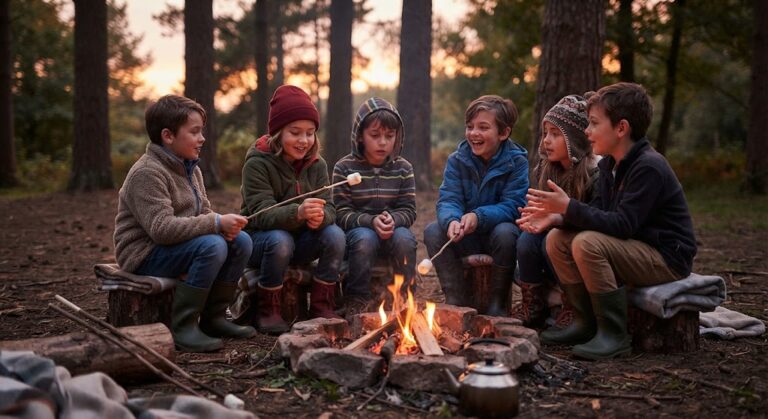
A fire lay should only be used in an appropriate, permitted location with suitable supervision and safety arrangements.
In England, government guidance advises avoiding open fires in the countryside and only having them in safe, designated areas. Always follow landowner, campsite, local and organisational rules.
During periods of high wildfire risk, the safest choice may be not to have an open fire at all.
Why Do Fire Lays Matter?
Imagine putting a pile of logs on the ground and trying to light it.
You might eventually get flames, but the fire could:
- Struggle to get enough air
- Burn unevenly
- Consume its tinder too quickly
- Be difficult to maintain
- Produce lots of smoke
- Be larger than you actually need
A fire lay solves this problem by giving the fire a planned structure.
Instead of asking:
“How much wood can I burn?”
A good firelighter asks:
“What does this fire need to do?”
That question helps you choose the right lay.
The Fire Triangle Still Matters
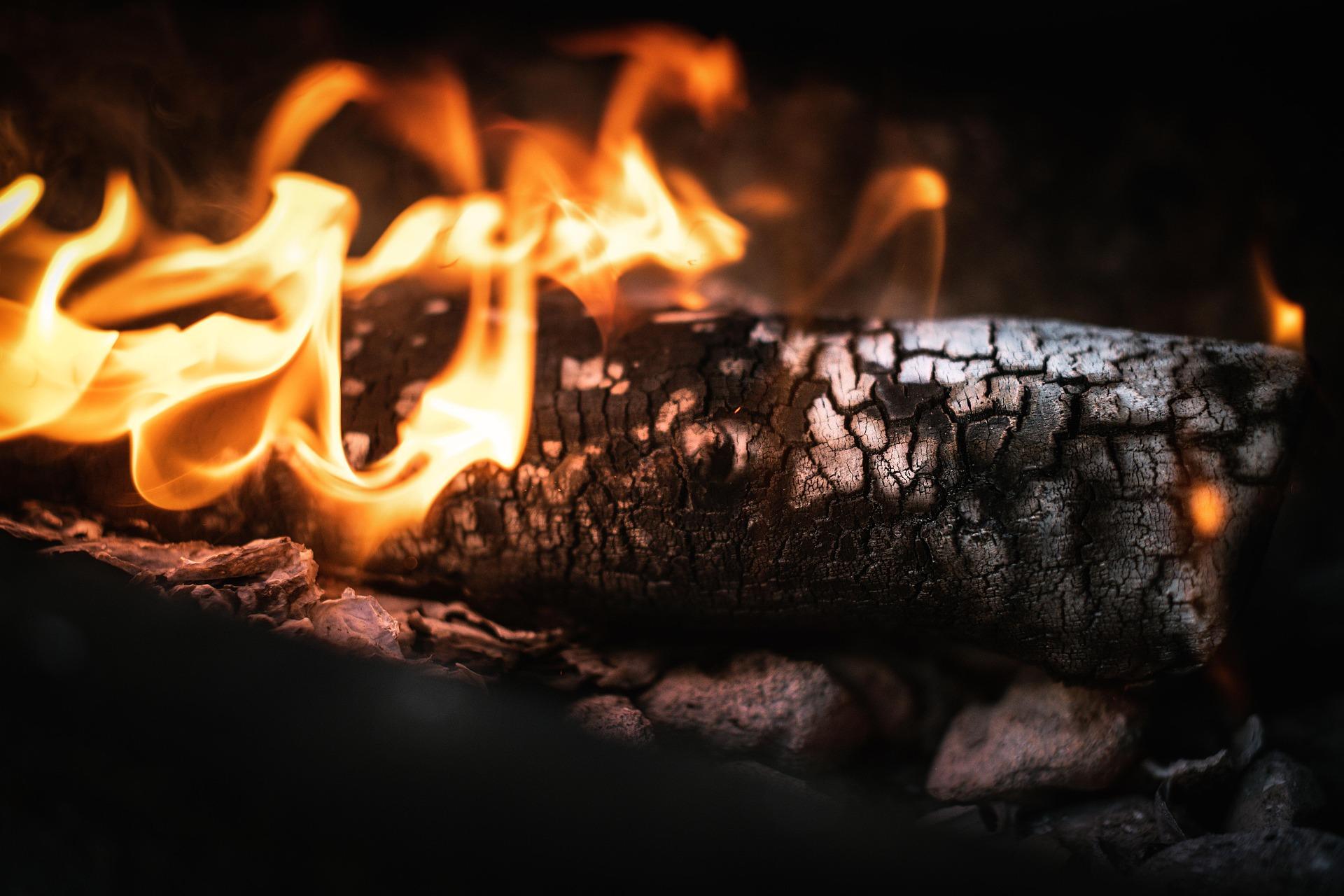
Whatever fire lay you choose, remember the fire triangle.
A fire needs:
HEAT
Enough heat to start and maintain combustion.
OXYGEN
Air allows the fire to continue burning.
FUEL
Something combustible has to keep the fire going.
A fire lay helps you manage these three things.
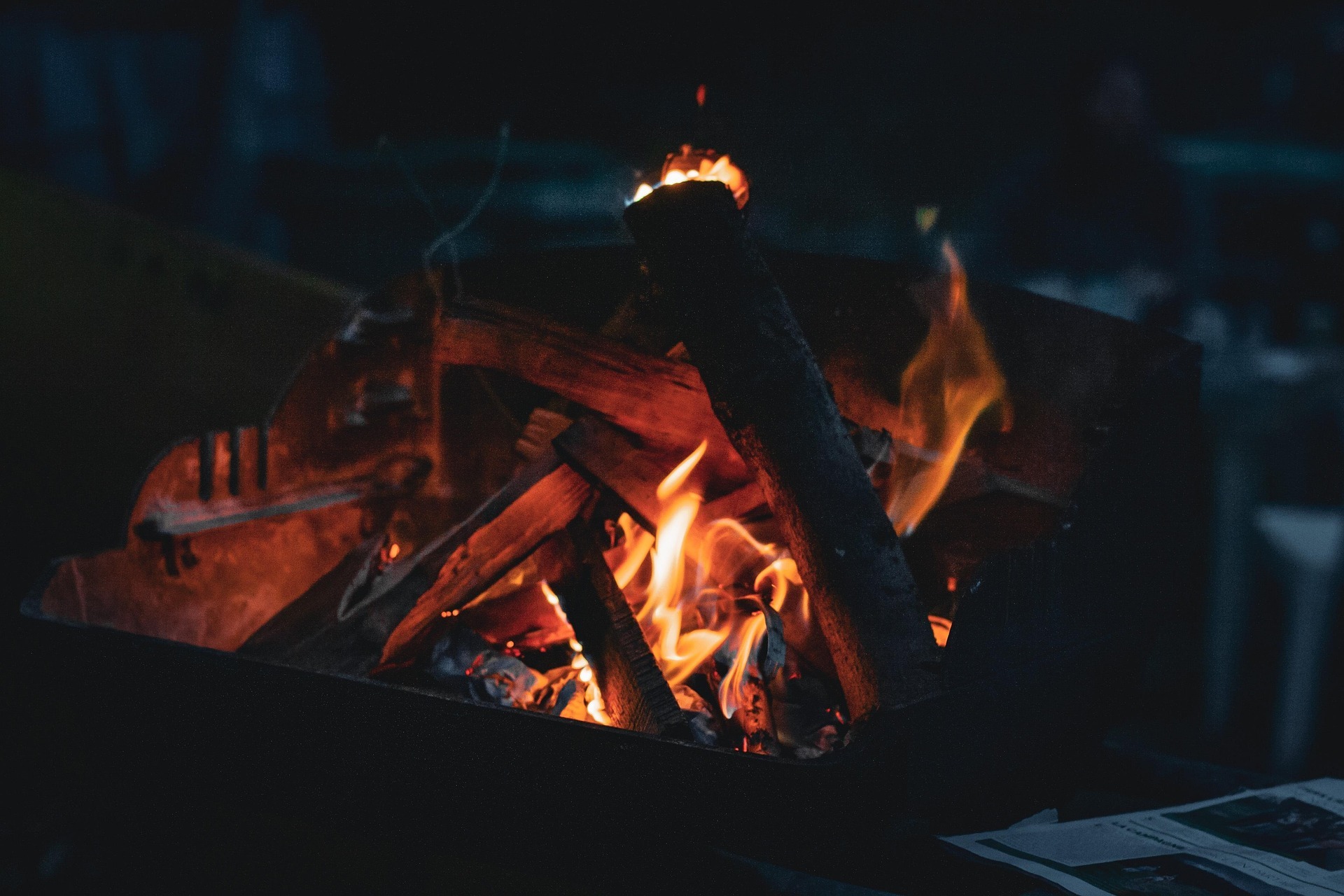
For example, a tightly packed structure may restrict airflow, while a more open structure can allow more air to reach the flames.
The best fire lay balances fuel and airflow.
The Main Parts of a Fire Lay
Before looking at different layouts, remember the three stages of fuel.
1. Tinder
The smallest and easiest-to-light material.
Its job is to produce the first sustained flame.
2. Kindling
Small pieces that catch from the tinder and produce enough heat to ignite larger fuel.
3. Firewood
Larger pieces that maintain the established fire.
Think:
Tinder → Kindling → Firewood
Your fire lay should allow the fire to progress through these stages naturally.
The Teepee Fire Lay
The teepee, or conical fire lay, is one of the easiest layouts to understand.
The kindling and smaller pieces are arranged around the tinder so that they form a cone or teepee shape.
Why use it?
The teepee structure can be useful when you want:
- A fire that establishes quickly
- Good airflow around the starting materials
- Flames that rise through the centre
- A simple layout for beginners
The open spaces between the pieces allow air to move through the structure.
The important principle
Don’t pack the wood tightly.
The fire needs room to breathe.
As the fire develops, larger fuel can be added carefully and gradually.
The Lean-To Fire Lay
The lean-to fire lay uses a larger piece of wood as a support.
Smaller kindling is arranged against it, with tinder positioned where it can transfer heat into the kindling.
Why use it?
A lean-to can be useful when you want:
- A simple structure
- A protected starting area
- A clear progression from tinder to kindling
- An easy-to-understand layout for beginners
It can also be useful for teaching because the relationship between the tinder, kindling and larger support piece is easy to see.
Remember
The support isn’t there to make the fire bigger.
Its purpose is to help create a stable structure that allows the smaller fuel to catch.
The Log Cabin Fire Lay
The log cabin fire lay is built by placing pieces of wood across one another to create a square or rectangular structure.
It looks a little like a miniature log cabin.
Why use it?
A log cabin structure can provide:
- A stable arrangement
- Good airflow through the structure
- A strong framework for a controlled fire
- A useful base for fires where a longer-lasting burn is required
The spaces between the logs are important.
Don’t build a solid wall of wood.
Air needs to reach the fire.
A common beginner mistake
Building the structure too large.
More wood does not automatically mean a better fire.
Build only what is appropriate for the location and purpose.
The Long Fire Lay
A long fire is designed around a longer burning area rather than a compact central fire.
It can be useful for situations where heat needs to be produced along a longer section.
For example, traditional outdoor skills sometimes use long fires for:
- Heating
- Group activities
- Cooking arrangements
- Extended burning periods
However, this is a more advanced fire arrangement.
For beginners, the important lesson is not to build a long fire simply because it looks impressive.
The fire should be designed around the task.
Fire Lays for Different Jobs
There isn’t one perfect fire lay.
The right choice depends on what you’re trying to achieve.
|
Fire lay |
Main characteristic |
Suitable learning point |
|---|---|---|
|
Teepee |
Fast, open structure |
Getting a fire established |
|
Lean-to |
Supported starting structure |
Understanding tinder and kindling |
|
Log cabin |
Stable, open framework |
Controlled structure and airflow |
|
Long fire |
Extended burning area |
Understanding fire for a specific task |
These are not rigid rules.
Experienced firelighters may combine or modify layouts depending on the conditions, fuel and purpose.
Airflow is the Secret
One of the biggest lessons when learning fire lays is airflow.
A fire needs oxygen.
If you put too much fuel together too quickly, you can accidentally restrict the airflow.
The result may be:
- Weak flames
- Lots of smoke
- Poor combustion
- A fire that struggles to develop
Instead, look for spaces where air can move through the structure.
Ask yourself:
Can the fire breathe?
If the answer is no, changing the structure may be more useful than adding more wood.
Match the Lay to the Job
Before building a fire, ask:
Do I need quick flames?
A more open starting structure can help the fire establish.
Do I need a steady burn?
A stable arrangement with appropriately sized fuel may be more suitable.
Do I need heat?
Think about where the heat needs to go rather than simply making the fire larger.
Do I need cooking embers?
The arrangement and fuel should be chosen with the intended cooking method in mind.
Do I simply need to practise?
Keep the fire small and manageable.
A practice fire should teach you something — not create unnecessary risk.
Don’t Confuse a Fire Lay With a Big Fire
One of the biggest mistakes beginners make is thinking that a good fire lay means a large fire.
It doesn’t.
A good fire lay is:
Controlled.
Stable.
Appropriate.
Well ventilated.
Matched to its purpose.
A small, well-designed fire is often much more useful than a huge one.
Choosing Your Firewood
The fire lay is only part of the equation.
Your fuel matters too.
Think about:
TINDER
Small and easy to ignite.
KINDLING
Small enough to catch from the tinder but large enough to build heat.
MAIN FUEL
Larger pieces that can maintain the established fire.
Avoid trying to make one piece of large wood do the job of all three.
Build the fire in stages.
Common Fire Lay Mistakes
❌ Building too large
A larger fire is harder to control.
❌ Packing the fuel too tightly
This can restrict airflow.
❌ Using large logs too early
The small flame may not have enough heat to ignite them effectively.
❌ Ignoring the wind
Wind can affect both the fire and where sparks travel.
❌ Building without a purpose
Choose the layout based on what the fire needs to do.
❌ Leaving the fire unattended
A fire should remain supervised and controlled.
❌ Using accelerants
Never use petrol, lighter fuel, alcohol or other inappropriate accelerants to make a fire burn faster.
Think About the Wind
Wind is an important part of fire planning.
A strong or changing wind can:
- Push flames in unexpected directions
- Carry sparks and embers
- Increase the rate at which fuel burns
- Make a fire more difficult to control
This is one reason why fire lighting should never be treated as simply a matter of building the right shape.
The conditions matter too.
If conditions make the fire difficult to control, don’t light it.
Reading Your Fire Lay
Once a fire is burning, watch what happens.
Is the flame:
Rising strongly?
The structure may be allowing good airflow.
Producing lots of smoke?
The fuel may be damp, or airflow may be restricted.
Burning only in one small area?
The structure may need time to develop before more fuel is added.
Consuming fuel very quickly?
You may be using too much small fuel or allowing the fire to burn too aggressively.
Learning to observe the fire is more valuable than memorising a dozen different layouts.
Fire Lay or Fire Type?
These terms are sometimes confused.
A fire lay describes how the fuel is arranged.
A fire type can describe the intended function or behaviour of the fire.
For example, you might choose a particular lay because you want:
- Quick ignition
- A steady burn
- More concentrated heat
- A longer burning area
- A suitable cooking arrangement
The layout is the structure.
The purpose is the reason for choosing it.
Fire Lays: The Skills You’re Really Learning
Learning fire lays teaches much more than wood stacking.
PLANNING
Can you decide what the fire needs to achieve before building it?
OBSERVATION
Can you recognise how wind, fuel and airflow affect the fire?
PROBLEM SOLVING
Can you work out why a fire isn’t developing properly?
CONTROL
Can you keep the fire appropriate for the situation?
PATIENCE
Can you allow the fire to develop before adding more fuel?
RESPONSIBILITY
Can you maintain a safe environment for everyone around it?
These are the skills that turn fire lighting into a genuine outdoor skill.
Your Fire Lay Challenge
The Fire Lay Recognition Challenge
Before lighting a fire, see if you can explain:
□ What a fire lay is.
□ Why airflow matters.
□ The difference between tinder, kindling and firewood.
□ What a teepee fire lay looks like.
□ What a lean-to fire lay looks like.
□ What a log cabin fire lay looks like.
□ Why you might choose one layout over another.
□ Why a bigger fire isn’t necessarily a better fire.
□ How wind can affect your fire.
□ How to keep the fire controlled.
□ How and when to extinguish it completely.
The real challenge?
Don’t just name the fire lays.
Explain why you would choose each one.
Scout Connection
Fire lays are a useful part of learning traditional outdoor and camping skills.
They can help Scouts understand:
- Fire safety
- Fire construction
- Fuel selection
- Campcraft
- Cooking
- Responsibility around flames
However, badge and programme requirements can change.
If you’re working towards a particular Scout badge or activity:
Always check the current official Scouts requirements and speak to your leader.
SurvivalGuidesUK is an independent educational resource and isn’t an official Scouts website. Always follow the current Scouts programme requirements and your leader’s instructions.
⚠️ SurvivalGuidesUK Safety Notice
Fire can cause serious injury, property damage and wildfires.
This article provides general educational information and does not replace appropriate training, supervision, risk assessment, local restrictions, landowner requirements or organisational safety procedures.
Children and young people should only participate in fire-lighting activities with appropriate adult supervision and safety arrangements.
🔒Ready to test your survival skills?
Join Survival Guides UK for free, complete challenges, earn badges and increase your Survival Level.
JOIN FREE →
CRAIG BURR
FOUNDER · SURVIVAL GUIDES UK
I'm Craig, the person behind Survival Guides UK. I created SGUK because I wanted somewhere people could learn real outdoor skills in a practical, straightforward way — from lighting a fire and tying knots to navigation, campcraft and everything in between.
You can read more about the story behind SGUK here as well as our approach here.