How to Control the Size of a Campfire
A good campfire isn’t necessarily a large campfire.
One of the most important parts of fire maintenance is keeping the fire at a suitable size for what you are trying to do. A fire that is too small may not provide enough heat, while a fire that is unnecessarily large can become difficult to manage and waste fuel.
Learning how to control the size of a campfire is a useful skill for Scouts because it teaches them to manage a fire rather than simply keep adding wood.
Why Does Campfire Size Matter?
The size of a fire affects almost everything about it.
A larger fire produces more heat, larger flames and more smoke. It also requires more fuel and creates more hot embers.
A smaller fire is generally easier to control and may be perfectly adequate for cooking, demonstrating fire skills or providing a focus for a small group.
The right size depends on the purpose of the fire.
Start With the Purpose
Before building up a fire, decide what it actually needs to achieve.
For example, a fire used for:
may all need different amounts of fuel and different arrangements.
Don’t build a large fire simply because there is plenty of wood available.
Bigger Isn’t Better
There’s a common temptation when learning fire skills to keep adding wood because a larger flame looks impressive.
However, bigger flames don’t automatically mean a better fire.
A large fire can:
A well-maintained fire should be appropriate for its purpose rather than as large as possible.
Control Starts With the Fuel
The simplest way to control a fire is to manage how much fuel goes into it.
Adding more wood generally gives the fire more material to burn.
If you continue adding fuel faster than it is being consumed, the fire will grow.
Instead, add suitable pieces gradually and observe what the fire is doing.
This allows you to respond to the fire rather than constantly feeding it.
Add Smaller Amounts More Often
For many campfires, adding a few suitable pieces of wood at a time is easier to manage than putting a large amount on all at once.
This gives you more control over the size and heat of the fire.
It also helps Scouts understand how fuel affects combustion.
There is no need to rush.
Allow the existing fuel to burn and then decide whether more is actually required.
Consider the Size of the Fuel
The size of the wood can affect how quickly the fire changes.
Smaller pieces generally catch and burn more readily.
Larger pieces can provide fuel for longer.
A mixture of appropriate fuel sizes can therefore help maintain a steady fire without constantly adding large amounts of wood.
Use suitable firewood rather than trying to burn unsuitable materials.
Don’t Build a Huge Fire at the Start
Starting with an enormous pile of wood can make the fire difficult to control.
Begin with an appropriate amount of fuel and allow the fire to establish itself.
Once it is burning well, assess whether it needs to become larger.
This is particularly useful when teaching Scouts because it encourages observation and decision-making.
Watch the Flames
The flames provide useful information about what is happening.
Large, vigorous flames may indicate that there is plenty of fuel and oxygen available.
A smaller flame may simply mean that the fire is burning through its current fuel.
Don’t automatically add more wood whenever the flames become smaller.
Ask whether the fire actually needs to be larger.
Watch the Heat
Flame size isn’t the only measure of a fire.
A fire can contain a substantial amount of heat even when the flames aren’t particularly large.
This is especially important when cooking.
You may need a good bed of hot embers rather than tall flames.
Understanding the difference between flames and useful heat is an important part of fire management.
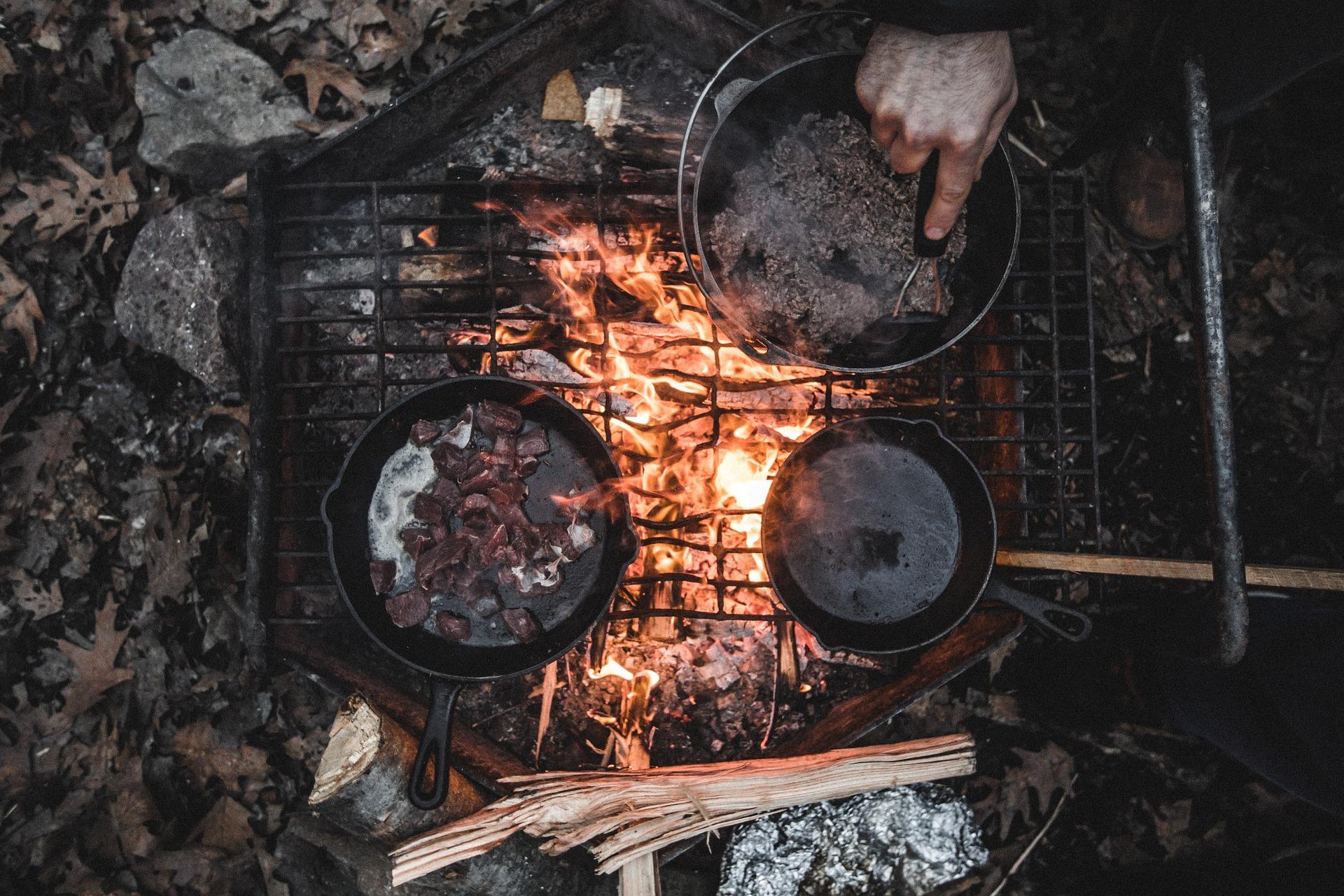
Managing a Cooking Fire
Cooking often benefits from a controlled, steady fire rather than a large blaze.
Too many flames can make it difficult to position cookware and may cause food to burn.
A smaller, well-managed fire or a suitable bed of hot embers may provide more useful heat.
The cooking method and equipment being used should determine how the fire is managed.
Move Fuel Carefully
If wood needs to be repositioned, use appropriate tools and methods.
Don’t handle burning or hot wood with bare hands.
Keep Scouts at a suitable distance and make sure anyone using fire tools has been properly instructed and supervised.
Hot wood can roll or break apart unexpectedly.
Don’t Push Burning Wood Out of the Fire
Pushing burning pieces beyond the fire area can create additional hazards.
Hot embers can land on dry vegetation or other combustible material.
If fuel needs to be rearranged, it should be done carefully and with the appropriate equipment.
Keep the fire contained within its intended area.
Airflow Affects Fire Size
A fire needs oxygen to burn.
Changing the arrangement of fuel can alter the amount of air reaching the fire.
If a fire is struggling to burn, adding large amounts of fuel may not be the answer.
The arrangement of the fire may need attention instead.
However, don’t lean over or reach into a fire to try to adjust it.
Safety comes first.
Don’t Use Wind to Make a Fire Bigger
Strong airflow can make flames increase dramatically.
Never deliberately position or expose a fire to strong wind simply to make it burn more vigorously.
Wind can carry sparks and embers and make a fire much harder to control.
If conditions become too windy, the safest option may be to reduce or extinguish the fire.
Managing Fire During Dry Weather
Dry vegetation can increase the consequences of sparks and embers escaping the fire.
In hot or dry conditions, keep the fire particularly well controlled.
A smaller fire may be more appropriate than normal.
If conditions are unsuitable for an open fire, don’t light one.
Managing Fire in Wet Weather
Wet conditions don’t necessarily mean that a fire needs to be larger.
Damp fuel may produce more smoke and burn poorly.
Instead of continually adding more wood, use suitable dry fuel and maintain the fire carefully.
If the fire is producing excessive smoke or struggling to burn, reassess what is causing the problem.
Don’t Add Wood Just Because It Is There
Having a large pile of firewood nearby can encourage unnecessary feeding of the fire.
Keep spare fuel organised and away from the immediate fire area.
Only add what is needed.
This makes the fire easier to control and reduces the amount of combustible material immediately beside it.
Maintaining an Even Fire
An even fire is generally easier to manage than one with a huge pile of fuel in one area.
How you arrange the fuel will depend on the fire lay and its purpose.
The goal should be a controlled burn rather than continually creating large flames.
Observe how the fire responds to the fuel you add.
Recognising When a Fire Is Getting Too Large
Warning signs can include:
If this happens, stop adding fuel and reassess the situation.
If the fire cannot be safely controlled, move people away and follow your emergency procedures.
Let the Fire Reduce
If a fire has become larger than needed, one of the simplest solutions is to stop adding fuel.
Allowing the existing fuel to burn down can gradually reduce the size of the fire.
Don’t try to speed the process up by unnecessarily moving burning wood around.
Let the fire settle while continuing appropriate supervision.
Reducing a Fire Before Extinguishing It
If the activity is coming to an end, reducing the fire first can make the final extinguishing process easier.
Stop adding fuel and allow the fire to burn down appropriately.
Once it has reduced sufficiently, follow the correct procedure for extinguishing the fire.
Never leave a fire unattended simply because you have stopped adding wood.
What If the Fire Is Too Small?
Fire maintenance isn’t always about making a fire smaller.
Sometimes a fire may need more fuel to achieve its intended purpose.
Add suitable fuel gradually and observe the result.
Avoid putting a large amount of wood onto a weak fire all at once.
A controlled increase is easier to manage.
Teaching Scouts to Control Fire Size
Rather than having Scouts simply add wood whenever they are told, ask them to observe the fire.
Questions could include:
Does this fire need more fuel?
What is the fire being used for?
Is the heat where we need it?
Are the flames larger than necessary?
What might happen if we add another piece of wood?
This turns fire maintenance into a practical problem-solving exercise.
A Useful Rule for Scouts
A simple principle is:
Feed the fire for the job, not for the flames.
If the fire is already doing what you need it to do, there may be no reason to make it bigger.
This encourages efficient use of fuel and better control.
Fire Size and Group Size
A larger group doesn’t necessarily require a much larger fire.
Think about what the fire is actually being used for.
A group sitting around a fire may need good visibility and warmth, but increasing the fire significantly also increases the heat and risk.
Use the smallest practical fire that achieves the purpose.
Don’t Let Scouts Crowd the Fire
As a fire grows, people may instinctively move further away.
However, Scouts should always have clear boundaries around the fire area.
Keep the group positioned safely regardless of the size of the flames.
Leaders should monitor the group as well as the fire.
When to Stop Increasing the Fire
Before adding more fuel, ask whether there is a genuine reason to do so.
You can stop increasing the fire when:
The required heat has been reached.
The fire is providing enough light.
The cooking task can be completed.
The planned activity is nearing its end.
The fire is becoming difficult to manage.
The weather conditions are deteriorating.
Knowing when not to add fuel is an important part of fire management.
Fire Maintenance Is Continuous
Controlling fire size isn’t something you do once.
A fire changes continuously as fuel burns, conditions change and more wood is added.
Keep observing it throughout the activity.
Good fire management is a process of small adjustments rather than one large intervention.
Final Thought for Leaders
A well-managed fire should be useful rather than impressive.
Teaching Scouts to control the size of a campfire helps them understand how fuel, heat, airflow and conditions all interact.
The best fire is usually the one that does the job it needs to do while remaining manageable.
Don’t build the biggest fire you can. Build the fire you actually need.
🔒Ready to test your survival skills?
Join Survival Guides UK for free, complete challenges, earn badges and increase your Survival Level.
JOIN FREE →
CRAIG BURR
FOUNDER · SURVIVAL GUIDES UK
I'm Craig, the person behind Survival Guides UK. I created SGUK because I wanted somewhere people could learn real outdoor skills in a practical, straightforward way — from lighting a fire and tying knots to navigation, campcraft and everything in between.
You can read more about the story behind SGUK here as well as our approach here.