Adding Wood to a Campfire Safely
Adding wood to a campfire seems simple, but it is an important part of maintaining a fire safely.
Adding too much fuel at once can make a fire suddenly grow, while placing wood badly can cause burning logs to roll or sparks to escape. Good fire management means adding suitable fuel gradually and paying attention to how the fire responds.
For Scouts, learning how to add wood safely is a useful practical skill that also teaches patience, observation and responsibility.
Why Does Adding Wood Need Care?
A campfire changes whenever new fuel is added.
A single piece of wood can increase the flames, disturb hot embers or cause other burning pieces to move.
Adding several pieces at once can have a much bigger effect.
This is why firewood should be added deliberately rather than simply thrown onto the fire.
Only Add Suitable Fuel
Use appropriate firewood for the fire and the location.
Avoid adding:
Only burn materials that are appropriate and permitted.
A campfire shouldn’t be used as a way of disposing of rubbish.
Prepare the Wood First
Have suitable firewood prepared before you need to add it.
This reduces the temptation to rush or search around while standing close to a live fire.
Keep spare wood in a suitable location away from the immediate fire area.
Don’t create a huge pile directly beside the flames.
Check the Fire Before Adding Wood
Before adding fuel, look at what the fire is doing.
Ask yourself:
Does it actually need more wood?
Is there enough heat already?
Are the flames too large?
Is the fire burning evenly?
Are there sparks or embers escaping?
If the fire is already large enough, adding more wood may make it harder to manage.
Add Wood Gradually
Adding one or a few suitable pieces at a time gives you much more control.
Place the wood carefully rather than dropping a large bundle onto the fire.
Allow the fire to respond before adding anything else.
This helps prevent sudden increases in flame size.
Don’t Throw Wood Onto a Fire
Throwing wood onto a fire can cause sparks and embers to fly.
It can also knock burning pieces out of position.
Place wood carefully using an appropriate technique or suitable fire tool.
The aim is to keep the fuel within the intended fire area.
Be Aware of Hot Embers
A campfire can contain extremely hot embers beneath the visible flames.
When new wood is added, these embers may shift or become exposed.
Don’t reach into the fire with your hands.
Avoid leaning directly over the flames.
Keep your face and body at a safe distance.
Watch for Rolling Logs
Round pieces of wood can roll as they burn.
If a log is placed carelessly, it may move towards the edge of the fire.
Arrange fuel so that burning pieces remain within the intended fire area.
If a burning log moves unexpectedly, don’t grab it with your hands.
Use appropriate equipment and only attempt to reposition it if it can be done safely.
Use Fire Tools Appropriately
Some fires may require suitable tools for positioning or managing fuel.
Anyone using a fire tool should understand how to use it safely.
Tools can become extremely hot, particularly if they have been close to the flames.
Return them to a safe location after use.
Don’t leave hot tools where someone could accidentally touch them.
Give Yourself Space
Don’t crowd around the fire while adding fuel.
The person managing the fire should have enough space to work safely.
Other Scouts should remain behind the agreed boundary.
This is particularly important when several people are involved in the activity.
Don’t Pass Wood Across the Fire
Avoid handing firewood across the flames or asking someone to reach over the fire.
It is safer to organise the fuel so that it can be passed or placed without people reaching across burning material.
Keep the fire area organised.
Think About the Size of the Wood
Different sizes of wood behave differently.
Small pieces may ignite quickly and produce flames rapidly.
Larger pieces may burn for longer and provide sustained heat.
Choose fuel appropriate for the purpose of the fire.
Don’t use oversized pieces simply because they are available.
Avoid Overloading the Fire
Putting several large logs onto an established fire can produce a sudden increase in heat and flame.
It may also restrict airflow and cause the fire to burn poorly.
Add enough fuel for the intended purpose rather than filling the fire with as much wood as possible.
Allow Time Between Additions
You don’t need to add wood continuously.
After adding fuel, watch what happens.
The new wood may take time to catch.
Adding more before the previous pieces have properly caught can result in too much fuel being added.
Patience is an important part of fire maintenance.
Adding Wood to a Cooking Fire
Cooking fires often need careful fuel management.
Too much wood can produce excessive flames and make cooking difficult.
Depending on the cooking method, a steady bed of hot embers may be more useful than tall flames.
Add fuel according to the cooking requirements rather than trying to keep the largest possible flame.
Adding Wood in Windy Conditions
Wind can make adding fuel more difficult.
Strong gusts can increase flames and carry sparks or embers.
If conditions are becoming windy, don’t respond by adding more wood.
Instead, reassess the fire and consider whether it remains appropriate to continue.
Adding Wood in Wet Weather
Wet wood can produce smoke and may be difficult to ignite.
Don’t keep adding more damp wood in the hope that the fire will eventually burn through it.
Use appropriate dry fuel where available and permitted.
If the fire is struggling, consider why before adding more fuel.
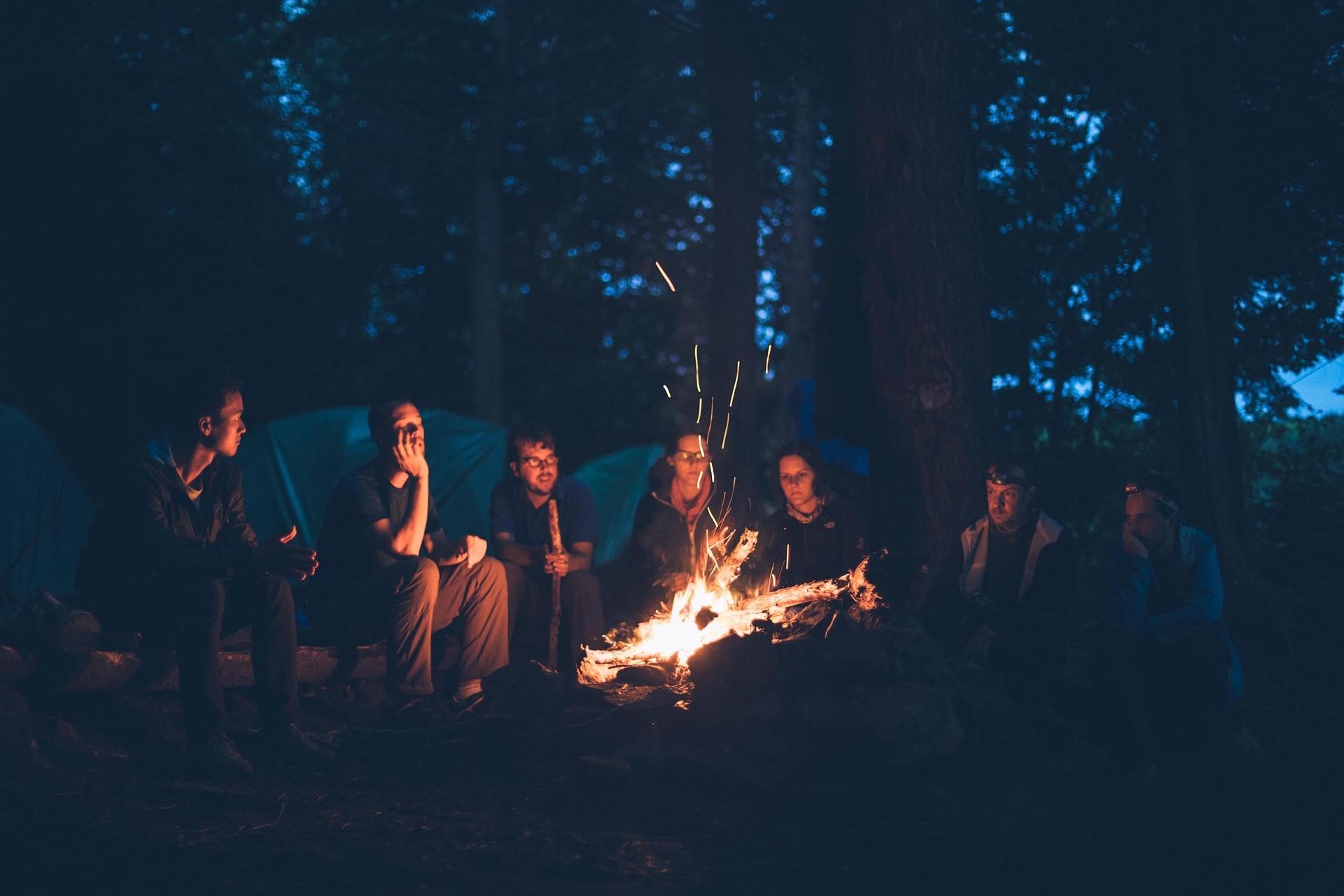
Adding Wood After Dark
Adding fuel to a fire at night requires extra care.
It can be harder to see exactly where logs and embers are positioned.
Make sure the area around the fire is adequately illuminated and free from unnecessary obstacles.
Don’t rush because you can’t see clearly.
Keep Scouts at a Safe Distance
Not every Scout needs to be close enough to add wood.
Younger or less experienced Scouts may be better suited to observing or helping with preparation away from the flames.
If Scouts are permitted to add fuel as part of a supervised activity, make sure their involvement is appropriate for their age and ability.
Teach Scouts to Ask First
A useful rule is:
Don’t add wood to a fire unless you have been told you can.
This prevents several people from adding fuel at the same time and gives the leader better control over the fire.
It also helps Scouts understand that a live fire isn’t something to experiment with independently.
Don’t Add Fuel if the Fire Is Unsafe
Stop adding wood if:
Deal with the problem first.
Adding more fuel should never be an automatic response.
What If a Piece of Wood Falls Outside the Fire?
Don’t immediately pick it up with your hands.
It may be hot, even if it doesn’t appear to be burning.
Keep people away from it and use appropriate equipment if it can be safely moved.
If it has landed on combustible vegetation or caused another fire, treat the situation seriously.
What If the Fire Suddenly Gets Bigger?
Stop adding fuel.
Move Scouts back if necessary and assess the fire.
A sudden increase may settle as the new fuel burns, but don’t assume that it will.
If the fire becomes unsafe or begins spreading, follow your emergency procedures and get everyone to a safe location.
When Should You Stop Adding Wood?
Stop adding fuel when the fire is:
Large enough for its purpose.
Producing sufficient heat.
Providing the required cooking temperature.
Approaching the end of the activity.
Becoming difficult to manage.
Stopping at the right time is just as important as knowing how to add fuel.
Reducing a Fire
When the activity is coming to an end, stop adding wood and allow the existing fuel to burn down appropriately.
This can make the final extinguishing process easier.
Continue supervising the fire until it has been properly extinguished and checked.
Firewood Storage
Spare wood should be stored where it is unlikely to catch from sparks or radiant heat.
Don’t stack large amounts directly beside a fire.
Keep the working area organised so that someone adding fuel isn’t stepping over loose logs or other equipment.
Don’t Collect Living Wood
Avoid cutting branches from living trees simply to obtain firewood.
Where fires are permitted, use suitable supplied or responsibly sourced fuel.
Collecting wood also needs to take account of campsite rules and the environmental impact of removing natural material.
Efficient Fuel Use
Adding wood carefully can also reduce waste.
A well-managed fire uses fuel for a purpose rather than burning through large amounts unnecessarily.
This is particularly useful when camping because firewood may be limited.
Scouts can learn that good firecraft is about control and efficiency rather than simply producing large flames.
A Simple Method for Scouts
A simple routine can help younger Scouts remember what to do:
Look.
Check the fire before adding anything.
Choose.
Select a suitable piece of fuel.
Place.
Put it carefully onto the fire.
Step back.
Give the fire space and observe what happens.
This is much safer than simply throwing wood into the flames.
Fire Maintenance Is About Observation
A good fire manager doesn’t constantly interfere with the fire.
They watch it.
They notice when fuel is running low, when the flames are becoming too large and when the fire has enough heat.
This is one of the most useful skills Scouts can develop from fire activities.
Final Thought for Leaders
Adding wood is a small part of running a campfire, but it is also one of the easiest places for poor fire management to cause problems.
Teach Scouts to slow down, look at the fire and think before adding fuel.
A controlled addition of suitable wood is much better than a large pile thrown onto the flames.
A good fire is maintained with attention, not simply fed with more wood.
🔒Ready to test your survival skills?
Join Survival Guides UK for free, complete challenges, earn badges and increase your Survival Level.
JOIN FREE →
CRAIG BURR
FOUNDER · SURVIVAL GUIDES UK
I'm Craig, the person behind Survival Guides UK. I created SGUK because I wanted somewhere people could learn real outdoor skills in a practical, straightforward way — from lighting a fire and tying knots to navigation, campcraft and everything in between.
You can read more about the story behind SGUK here as well as our approach here.