How to Maintain a Cooking Fire
Cooking over a campfire is a useful outdoor skill, but a good cooking fire isn’t simply a large fire with lots of flames.
The aim is to create and maintain a steady, controllable source of heat that suits the food, cookware and cooking method being used.
A well-maintained cooking fire can make outdoor cooking much easier. It can also teach Scouts valuable skills in managing heat, fuel and timing.
What Makes a Good Cooking Fire?
A useful cooking fire should provide enough heat for the job without producing unnecessary flames or excessive smoke.
The ideal fire will depend on what you’re cooking.
Boiling water may require a different heat level from gently cooking food in a pan.
Some cooking methods work best over flames, while others benefit from a bed of hot embers.
The important thing is to control the fire rather than simply make it as large as possible.
Start With the Right Fire
Before thinking about maintaining a cooking fire, make sure the fire itself is appropriate.
Use a suitable fire lay and appropriate fuel for the cooking equipment and conditions.
A well-established fire is much easier to manage than one that is struggling to burn.
Don’t put large logs onto a small, newly lit fire and expect it to immediately become a useful cooking fire.
Build a Good Bed of Embers
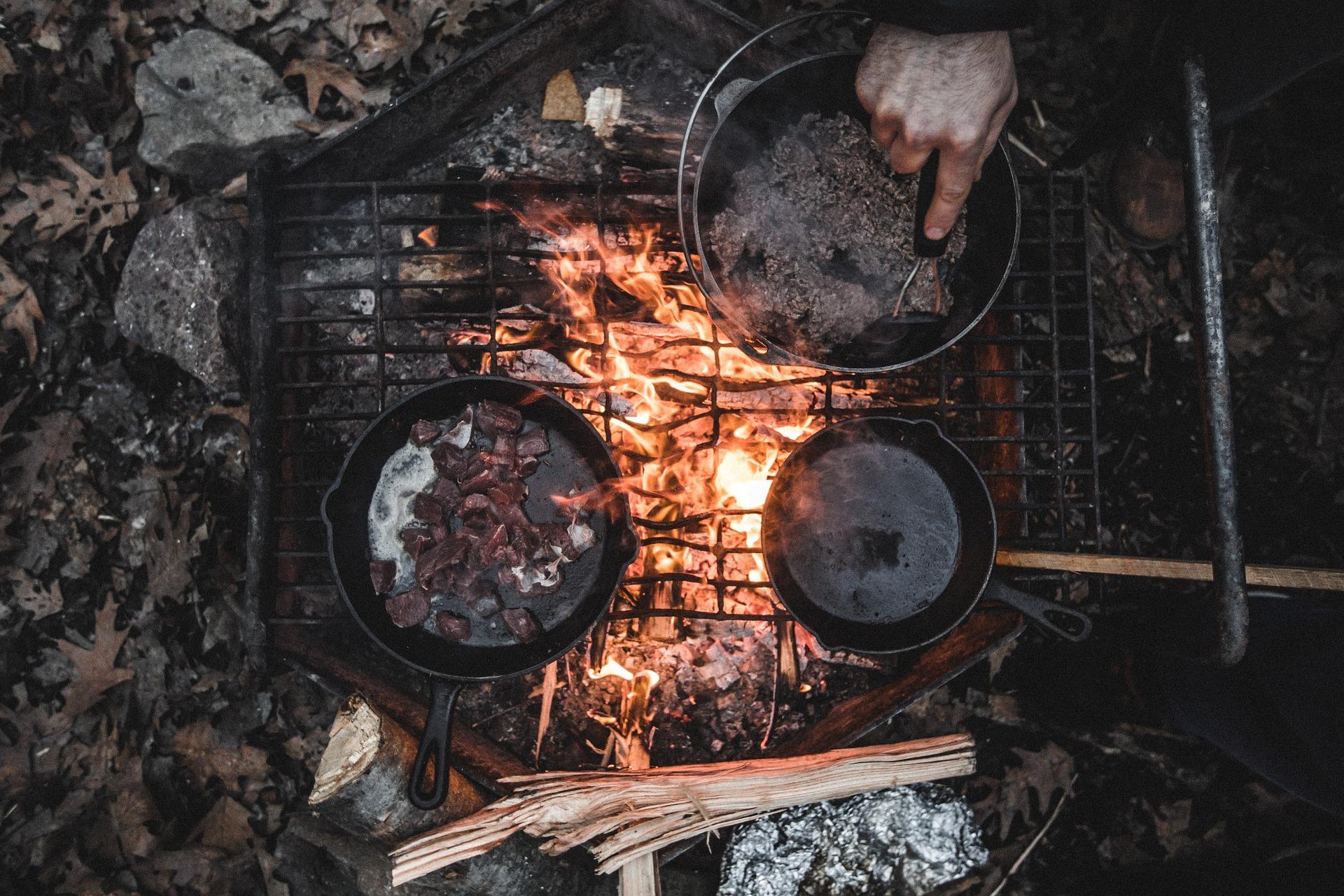
For many types of outdoor cooking, hot embers are extremely useful.
Once wood has burned down, the resulting embers can provide steady heat without the large flames produced by fresh fuel.
This can be particularly useful for pans and other cookware.
Allow the fire to develop naturally and don’t rush the process by continually adding large pieces of wood.
Flames Aren’t Always Better
Large flames can look impressive, but they aren’t necessarily what you need for cooking.
Excessive flames can:
Aim for useful heat rather than impressive flames.
Choose the Right Fuel
Use appropriate, reasonably dry firewood where fires are permitted.
Different sizes of wood can be useful at different stages.
Smaller pieces can help maintain flames, while larger pieces may provide longer-lasting heat.
Avoid unsuitable materials such as treated timber, painted wood or rubbish.
Add Fuel Gradually
Don’t overload the fire just before putting food on.
Add suitable fuel in small amounts and give it time to catch.
This makes the heat easier to predict.
If you add several large pieces at once, the fire may suddenly produce much more heat than you need.
Let the Fire Settle Before Cooking
If you’ve just added fuel, give the fire time to settle before placing cookware over it.
Freshly added wood may produce larger flames as it catches.
Waiting can make the cooking temperature easier to manage.
This is particularly useful for younger Scouts, who may otherwise be tempted to put the pan on immediately.
Positioning the Cookware
Place cookware where it receives the appropriate amount of heat.
The hottest part of the fire isn’t necessarily the best place for every cooking task.
Depending on the equipment, you may be able to adjust the height or position of the cookware.
Never place unstable cookware where it could easily tip into the fire.
Use Suitable Cooking Equipment
Only use cookware and equipment designed or suitable for the cooking method.
Check equipment before use.
Handles can become extremely hot, and some materials may not be suitable for direct exposure to fire.
Use appropriate gloves, tools or other protective equipment where required.
Keep Handles Under Control
Position pan and pot handles so they aren’t sticking into walkways or where someone could accidentally knock them.
Handles can become hot enough to cause serious burns.
Make sure Scouts understand that cookware near a fire should always be treated as hot.
Don’t Touch Cookware to Check the Heat
A pan may look harmless while being extremely hot.
Don’t allow Scouts to test cookware temperatures by touching it.
Use appropriate cooking methods and equipment instead.
Assume that anything which has been over or near the fire may be hot.
Managing Heat With Fuel
One of the simplest ways to change the heat of a cooking fire is to control the fuel.
If more heat is needed, suitable fuel can be added gradually.
If the fire is already producing enough heat, don’t add more simply to keep the flames going.
Allowing the fire to settle can often be more useful than continually feeding it.
Managing Heat With Distance
Depending on the cooking equipment, changing the distance between the cookware and the heat source can affect cooking.
Some setups allow cookware to be raised or moved away from the hottest area.
If this is possible, make changes carefully and use equipment designed for the purpose.
Never improvise unstable arrangements around a live fire.
Managing Heat With Embers
A bed of hot embers can provide a steady heat source.
If the cooking method allows it, you may be able to cook over embers rather than tall flames.
This can give more consistent heat and reduce flare-ups.
Remember that embers remain extremely hot even when there are few visible flames.
Don’t Put Too Much Wood Under a Pan
A common mistake is to keep adding wood because the food isn’t cooking quickly enough.
This can create excessive flames and make the cooking area difficult to manage.
Instead, consider whether the cookware is positioned correctly and whether the fire has an appropriate bed of heat.
What If the Fire Is Too Hot?
If the fire is producing more heat than needed, stop adding fuel.
Depending on the setup, you may be able to move the cookware away from the hottest area.
Don’t pour water onto a cooking fire simply to reduce the cooking temperature unless this is part of the appropriate procedure for the fire.
A sudden change can create steam and splattering and may interfere with cooking.
What If the Fire Is Too Cool?
First, work out why.
The fuel may be damp.
The fire may not have enough established embers.
The cookware may be positioned too far from the heat.
There may be insufficient suitable fuel.
Correct the underlying issue rather than simply adding a large amount of wood.
Managing Different Cooking Tasks
Different foods require different amounts of heat.
For example, bringing water to the boil may benefit from strong heat, while some foods may need gentler cooking.
Outdoor cooking is therefore a useful opportunity to teach Scouts that fire doesn’t have one fixed temperature.
The fire should be adjusted to the task.
Cooking in a Dutch Oven or Heavy Pot
Heavy cookware can retain heat for a long time.
This means that continually adding fuel may quickly make the cooking temperature too high.
Allow the cookware and embers to work together rather than constantly increasing the fire.
Follow the manufacturer’s instructions for any specialist cooking equipment.
Cooking on a Grill
Grilling can produce flare-ups when fat or food juices reach the heat source.
Keep the fire appropriately controlled.
If flames suddenly increase, don’t respond by adding more fuel.
Move the food or adjust the cooking arrangement if appropriate and safe.
Cooking With Skewers
Skewers should be handled carefully around the fire.
Make sure they are positioned securely and don’t create a trip hazard.
Don’t allow Scouts to wave skewers around or carry them carelessly.
Hot metal remains dangerous even after it has been removed from the fire.
Managing Smoke While Cooking
Excessive smoke can make cooking unpleasant and may affect people around the fire.
Smoke can be caused by damp or unsuitable fuel, insufficient airflow or food dripping onto the fire.
Consider the cause rather than simply adding more wood.
Position the cooking area so that people aren’t continually sitting in smoke.
Watch the Weather
Wind can have a significant effect on a cooking fire.
A gust can suddenly increase the flames or carry sparks towards the cooking area.
Rain can affect fuel and equipment.
If weather conditions deteriorate significantly, reconsider whether continuing the cooking activity is appropriate.
Don’t Leave a Cooking Fire Unattended
Someone responsible should remain with the fire while it is burning.
Cooking equipment can move, food can spill and flames can change.
Don’t leave a live cooking fire while the group goes elsewhere.
If the cooking activity is finished, deal with the fire appropriately.
Keep Scouts Organised
Cooking activities can become busy.
Scouts may be carrying ingredients, cookware and utensils while others are working around the fire.
Create clear working areas.
Keep people who aren’t involved in the fire or cooking task at an appropriate distance.
This reduces unnecessary movement around the flames.
Teach Scouts to Manage Heat
Cooking provides a practical way to teach fire management.
Rather than simply telling Scouts to “make the fire hotter”, ask:
What is causing the heat to be too low?
Do we need more fuel?
Could the cookware be repositioned?
Would embers work better than flames?
Is the fire already hot enough?
This develops useful problem-solving skills.
Don’t Chase a Constant Flame
A cooking fire doesn’t need to have a constant flame throughout the activity.
Sometimes the most useful heat comes from glowing embers.
If the food is cooking correctly and the heat is appropriate, there may be no reason to add more fuel.
Keep the Fire Area Organised
Store spare firewood away from the immediate cooking area.
Keep food, packaging and other materials organised.
Don’t allow rubbish to accumulate around the fire.
A tidy cooking area is easier to supervise and safer to work in.
Check Equipment During Cooking
Keep an eye on cookware and other equipment.
Watch for:
If equipment becomes damaged or unsafe, stop using it.
When Cooking Is Finished
Don’t assume that finishing the food means finishing the fire.
If the fire is no longer required, stop adding fuel and allow it to reduce appropriately.
Then follow the correct procedure for extinguishing it.
Deal with hot cookware carefully and allow it to cool in a safe location.
Cleaning Up
Once everything has cooled sufficiently, clean and pack away the cooking equipment according to the manufacturer’s or campsite’s instructions.
Remove food waste and rubbish appropriately.
Don’t leave scraps around the campsite where they could attract wildlife.
Efficient Cooking Uses Less Fuel
A well-maintained cooking fire can reduce wasted fuel.
Instead of constantly burning large amounts of wood, use only enough heat for the task.
This is useful when camping because firewood may be limited.
It also teaches Scouts that outdoor skills are about efficiency as well as technique.
A Simple Cooking-Fire Routine
A useful routine is:
Prepare the fire and equipment.
Establish a suitable bed of heat.
Cook using the appropriate heat level.
Adjust fuel or cookware position when necessary.
Finish the cooking and allow the fire to reduce.
Extinguish the fire properly when it is no longer required.
This gives Scouts a clear sequence to follow.
Final Thought for Leaders
A good cooking fire isn’t about producing the biggest flames.
It is about producing the right amount of heat and keeping that heat under control.
Teaching Scouts to manage fuel, flames and embers helps turn campfire cooking from simply following instructions into a genuine outdoor skill.
Cook with the heat you need, not the flames you can create.
🔒Ready to test your survival skills?
Join Survival Guides UK for free, complete challenges, earn badges and increase your Survival Level.
JOIN FREE →
CRAIG BURR
FOUNDER · SURVIVAL GUIDES UK
I'm Craig, the person behind Survival Guides UK. I created SGUK because I wanted somewhere people could learn real outdoor skills in a practical, straightforward way — from lighting a fire and tying knots to navigation, campcraft and everything in between.
You can read more about the story behind SGUK here as well as our approach here.