Fire Piston
Activity Overview
Difficulty: Advanced
Time: 45–60 minutes
Location: Indoors for demonstration or a suitable outdoor activity area
Best for: Scouts and Explorers
Skills: Fire-lighting principles, air compression, observation, experimentation, fire safety
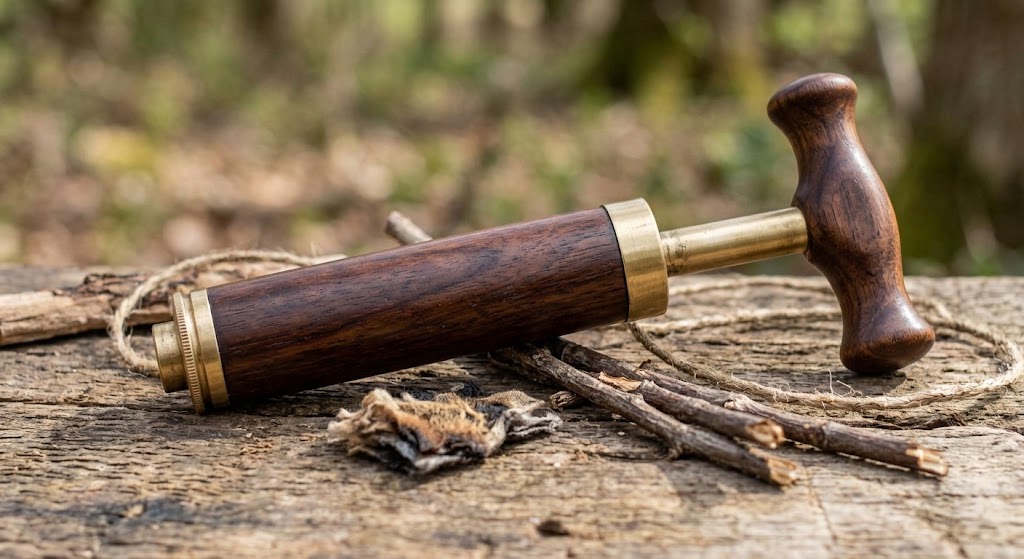
A fire piston produces heat by rapidly compressing air inside a small cylinder. The compression causes the air temperature to rise enough to ignite a small piece of suitable tinder inside the piston.
Unlike a ferrocerium rod or match, a fire piston does not rely on a flame or spark. It demonstrates how pressure and temperature are connected.
What You’ll Learn
You will learn how a fire piston works, how compression produces heat and how a tiny ember can be developed into a flame.
The activity also demonstrates a useful scientific principle while developing patience, observation and careful equipment handling.
🟡 SAFETY – LOW RISK
A fire piston can produce a hot ember capable of igniting tinder. Treat the ember and any resulting flame as a real fire.
Use the fire piston only in a suitable area with appropriate adult supervision and fire-extinguishing equipment available.
Keep combustible materials away from the working area and never leave an ember or flame unattended.
Do not modify a fire piston in ways that could cause it to fail or become unsafe. Follow the manufacturer’s instructions for any commercially produced fire piston.
Equipment
You will need a suitable fire piston, a small amount of appropriate dry tinder and a safe, non-combustible surface on which to work.
You will also need the normal equipment required for safely extinguishing a fire.
Prerequisites
Scouts should understand basic fire-lighting safety before attempting the activity.
It is useful to have experience with other fire-lighting methods so that the fire piston can be compared with techniques such as matches, ferrocerium rods and friction fire lighting.
Instructions
1. Understand the principle
A fire piston consists of a piston that fits tightly inside a cylinder.
When the piston is pushed down rapidly, the air inside the cylinder is compressed into a much smaller space.
The rapid compression produces a significant increase in temperature. This heat can ignite a tiny piece of tinder.
2. Prepare the tinder
Use a very small amount of dry, easily ignited tinder.
The tinder needs to be positioned where the compressed air will heat it effectively.
Only use the type and quantity of tinder recommended for the fire piston being used.
3. Check the equipment
Inspect the piston and cylinder before use.
The piston should move correctly and the seal should be in good condition. If the equipment is damaged or does not operate normally, do not use it.
A good seal is important because air escaping around the piston will reduce the compression.
4. Position the tinder
Place the tinder in the appropriate location on the piston according to the equipment instructions.
Make sure it is secure and correctly positioned before attempting compression.
Keep your fingers clear of areas where they could be pinched.
5. Compress the air
Hold the fire piston securely and push the piston down quickly and firmly.
The movement needs to be rapid enough to compress the air before it has time to escape.
Do not strike the piston with another object or use excessive force beyond what the equipment is designed to withstand.
6. Check for an ember
Remove or open the piston carefully and check the tinder.
If successful, you should have a small glowing ember rather than a large flame.
The ember may be extremely small, so look carefully without placing your face directly over it.
7. Develop the ember
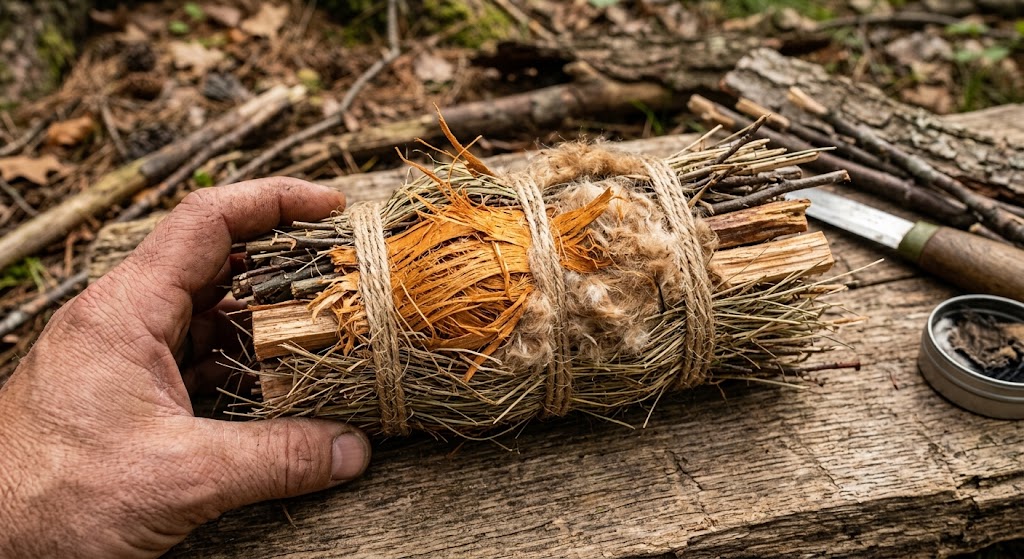
Transfer the ember carefully into a prepared tinder bundle.
Gently provide airflow to encourage the ember to grow.
Once the tinder begins to flame, gradually introduce small pieces of suitable dry fuel.
8. Experiment with the technique
If the piston does not produce an ember, consider what happened.
The tinder may be unsuitable or damp, the seal may not be effective, or the piston may not have been compressed quickly enough.
Change one factor at a time so you can work out what improves the result.
9. Compare it with other methods
Discuss how the fire piston differs from other fire-lighting techniques.
A match uses a chemical reaction, a ferrocerium rod produces sparks through friction, and a bow drill produces heat through friction between wood.
The fire piston demonstrates that compressing air can also generate enough heat to start combustion.
10. Extinguish the fire safely
When the activity is finished, make sure every ember and flame has been completely extinguished.
Allow the fire-lighting area and equipment to cool before packing everything away.
Final Tip
Speed matters more than strength. A fire piston works because air is compressed very rapidly, so a smooth, fast movement is generally more effective than simply pushing as hard as possible.
🔒Ready to test your survival skills?
Join Survival Guides UK for free, complete challenges, earn badges and increase your Survival Level.
JOIN FREE →
CRAIG BURR
FOUNDER · SURVIVAL GUIDES UK
I'm Craig, the person behind Survival Guides UK. I created SGUK because I wanted somewhere people could learn real outdoor skills in a practical, straightforward way — from lighting a fire and tying knots to navigation, campcraft and everything in between.
You can read more about the story behind SGUK here as well as our approach here.