
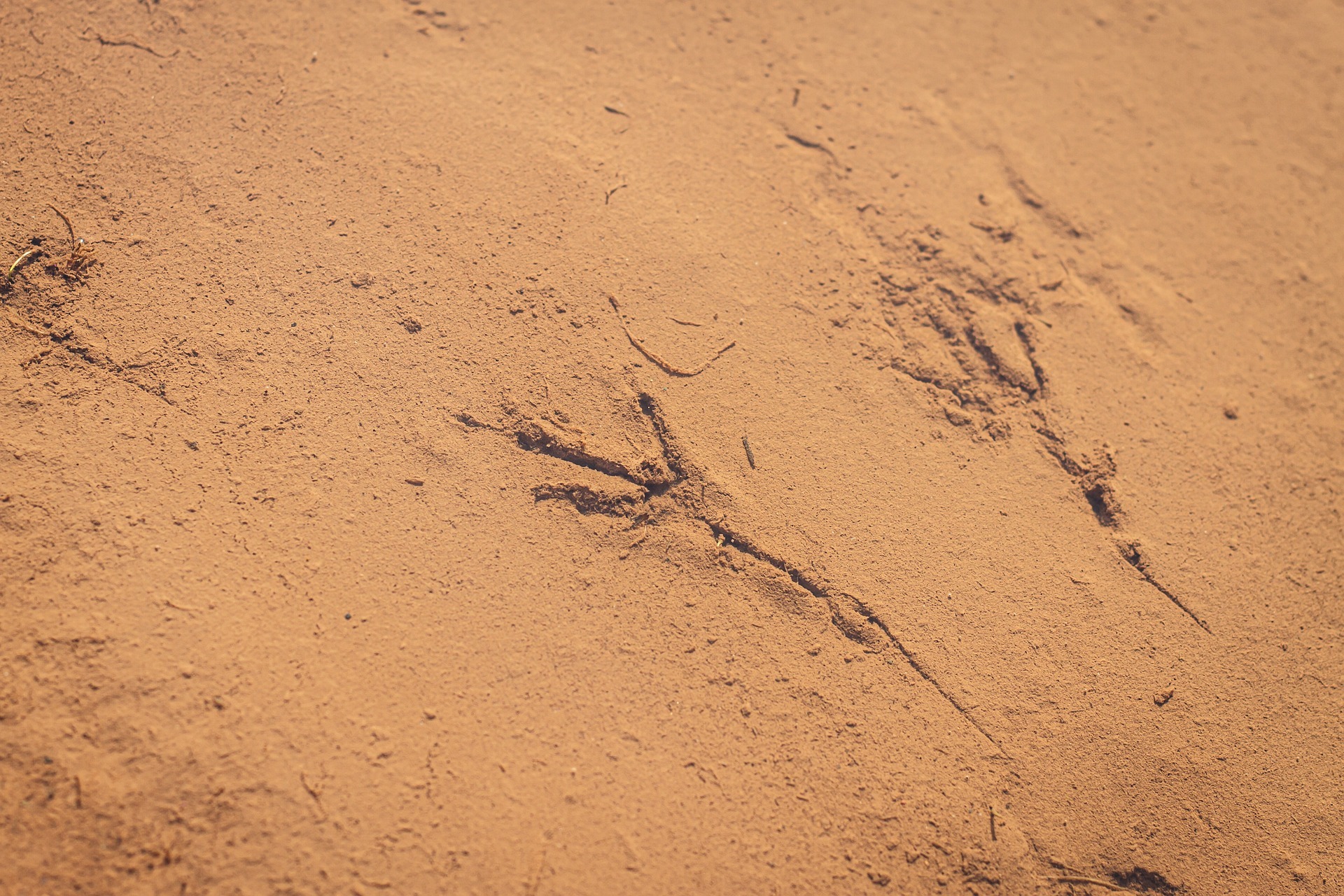
Animal Tracks for Scouts: How to Identify Wildlife Footprints
You don’t always need to see an animal to know that it has been there.
A footprint in mud, a trail through grass or marks in snow can reveal clues about wildlife nearby. Learning to recognise animal tracks is a great Scout skill because it encourages observation, patience and careful exploration.
Animal tracking doesn’t mean chasing wildlife or disturbing its habitat.
Instead, Scouts learn to notice signs, examine evidence and work out what may have passed through an area.
The UK has a wide variety of mammals, birds and other animals that leave tracks and signs behind. Once Scouts know what to look for, an ordinary woodland walk can become a wildlife investigation.
What Is Animal Tracking?
Animal tracking is the process of looking for signs that an animal has been in an area.
Footprints are one of the most obvious signs, but they are only part of the picture.
A tracker might also look for trails, feathers, feeding marks, droppings, fur, scratches or disturbed vegetation.
For beginners, footprints are a great place to start because they provide a visible clue that can be compared with photographs or field guides.
Start With the Track, Not the Animal
When Scouts discover a footprint, encourage them not to immediately guess what made it.
Start by observing it carefully.
Ask:
How large is it?
How many toes can you see?
Are claws visible?
Is there a clear heel or pad?
Are the front and rear feet different?
Are there several prints forming a trail?
What is the animal’s direction of travel?
These observations provide useful evidence.
Look at the Ground Around the Track
The surrounding ground can tell you almost as much as the footprint itself.
Look for:
Broken grass.
Flattened vegetation.
Mud displaced by the foot.
Scratches.
Feathers or fur.
Feeding remains.
Other footprints nearby.
A single print can be misleading, particularly if it is damaged or partially hidden.
A series of tracks gives you much more information.
Common UK Animal Tracks
Scouts don’t need to learn dozens of species immediately.
Start with a few common animals and gradually build knowledge.
Fox Tracks
Foxes are widespread throughout the UK and can leave distinctive footprints.
A fox footprint generally has four toes and visible claw marks.
The overall print tends to look relatively narrow and neat compared with some domestic dog prints.
However, dog tracks can look very similar.
Don’t identify a footprint as a fox simply because it looks “fox-like”.
Look at the trail, location and other evidence as well.
Dog Tracks
Dog prints vary considerably because different breeds have different foot shapes.
They can therefore be useful for teaching Scouts an important tracking lesson:
Not every footprint can be identified with certainty.
A domestic dog may leave tracks similar to those of a fox.
Look at the shape, size, gait and surrounding evidence rather than relying on one feature.
Cat Tracks
Cats generally leave prints with four toes and a central pad.
Claw marks are often absent because cats can retract their claws.
This can help distinguish cat tracks from some canine tracks.
Domestic cats are common around houses and campsites, while wildcat tracks are much less likely to be encountered.
Badger Tracks
Badgers have five toes and strong claws.
Their footprints can be quite distinctive, particularly where the claws have left clear marks.
Badgers are mainly nocturnal, so tracks may be one of the easiest ways to know they have been active nearby.
Never follow tracks into a sett.
Badger setts are important wildlife habitats and should be left undisturbed.
Deer Tracks
Deer leave hoofprints rather than paw prints.
The two halves of the hoof can create a distinctive split shape.
The size and shape can vary between deer species and individuals.
You may also find trails through vegetation where deer have passed.
Tracks are particularly useful for helping Scouts understand that different animals move through the landscape in different ways.
Rabbit Tracks
Rabbit tracks can be interesting because the front and rear feet are different.
The larger hind feet often land ahead of the smaller front feet when the rabbit is moving quickly.
This can create a distinctive pattern in mud, snow or soft ground.
Look for groups of prints rather than trying to identify one isolated mark.
Squirrel Tracks
Squirrels can leave small footprints, although they can be difficult to identify confidently.
They may also leave other clues, such as feeding remains.
Nibbled nuts and cones can sometimes provide useful evidence that squirrels have been active in an area.
This is a good reminder that tracking involves more than footprints.
Hedgehog Tracks
Hedgehog footprints are small and can be difficult to find.
They have five toes, although individual prints may not always show every toe clearly.
Because hedgehogs are small and their tracks can disappear easily, Scouts may find other signs more useful.
Otter Tracks
Otters can leave footprints near rivers, streams and other waterways.
They have five toes and can leave tracks in soft mud.
Otter signs can be difficult for beginners to identify, so use a reliable wildlife guide when examining suspected tracks.
Keep well away from river edges and fast-moving water.
Bird Tracks
Tracking isn’t limited to mammals.
Birds leave footprints too.
Bird tracks can vary considerably depending on the species.
Many birds have three toes pointing forwards, although different arrangements occur.
Waterbirds may leave particularly obvious tracks in soft mud around ponds, rivers and shorelines.
Bird tracks can be an excellent introduction to comparing different types of animal movement.
Look for Patterns
One footprint gives you limited information.
A trail provides much more.
Look at the distance between prints.
Are they close together?
Far apart?
Arranged in pairs?
Forming a straight line?
Zig-zagging?
The pattern can provide clues about how the animal was moving.
It may have been walking, running, hopping or stopping to investigate something.
Walking or Running?
Animals often produce different track patterns depending on how quickly they are moving.
A walking animal may leave relatively evenly spaced prints.
A running animal can produce a more extended pattern.
Rabbits are particularly interesting because their hopping movement produces a recognisable arrangement of larger and smaller prints.
Don’t assume every track represents normal walking.
Measure the Tracks
A ruler or tape measure can be useful.
Record:
Length.
Width.
Distance between prints.
Distance between repeated groups of prints.
These measurements can help compare your discovery with a field guide.
For older Scouts, measuring tracks can turn a simple observation into a more detailed investigation.
Photograph Tracks
Photography is one of the easiest ways to record animal tracks without disturbing them.
Take a photograph from directly above where possible.
Include something for scale, such as a ruler.
Take another photograph showing the wider trail and surrounding habitat.
This creates a much better record than photographing a single footprint from an angle.
Make a Track Casting
Casting a footprint can preserve the shape of a track for later study.
However, casting should only be done where it is appropriate and permitted, and it isn’t necessary for most Scout activities.
A safer and simpler alternative is usually photography.
If casting is used as part of a planned activity, the leader should make sure the method, materials and location are suitable and that wildlife and habitats aren’t disturbed.
Tracking in Mud
Mud is one of the best places to find footprints.
Look around:
Pond edges.
Stream banks.
Muddy paths.
Field entrances.
Woodland trails.
Soft ground.
Take care around water and don’t walk along unstable banks simply to find a better footprint.
Tracking in Snow
Snow can reveal animal movements particularly well.
Footprints may remain visible for much longer than they would on grass.
Look for trails crossing open areas.
You may be able to see where an animal entered woodland or crossed a path.
Remember that cold weather can create additional outdoor hazards, so tracking should remain part of a properly planned activity.
Tracking on Sand
Sand can preserve clear footprints, particularly when it is damp.
Beach and dune environments can contain tracks from birds, dogs and other animals.
Stay on appropriate paths and avoid disturbing nesting birds or sensitive dune habitats.
Tracking Through Grass
Grass can reveal movement even when there are no clear footprints.
Look for flattened or bent vegetation.
A trail through long grass may show where an animal has passed.
However, wind, rain and people can also flatten vegetation.
Always consider alternative explanations.
Don’t Follow Wildlife Too Closely
Finding tracks can make Scouts excited.
That’s exactly when they need to remember that the animal doesn’t know they are playing a tracking game.
Don’t chase an animal because you have found its tracks.
Don’t deliberately follow a trail directly towards a nest, den or other wildlife location.
Observe from a sensible distance and leave wildlife undisturbed.
Animal Dens and Burrows
Tracks may lead towards a den, sett or burrow.
This does not mean Scouts should investigate it.
Avoid entering or blocking burrows.
Don’t put hands into holes.
Never climb into a sett or den.
Observe signs from a safe distance and allow the animal to use its habitat undisturbed.
Look for Other Wildlife Signs
Experienced trackers don’t rely entirely on footprints.
Look for:
Feathers.
Fur.
Droppings.
Gnawed nuts.
Chewed vegetation.
Scratches.
Burrows.
Nests.
Trails through vegetation.
These signs can help build a much clearer picture of wildlife activity.
Feeding Signs
Animals leave evidence when they feed.
A squirrel may leave a damaged nut.
A deer may browse vegetation.
A rabbit may leave clipped grass.
Birds can leave opened seeds or cones.
These clues should be observed rather than collected unnecessarily.
Droppings
Animal droppings can provide useful tracking information, but they should be treated as something to observe rather than handle.
Different animals produce different types of droppings.
However, identifying them accurately can be difficult.
Use photographs or a field guide and avoid direct contact.
Feathers and Fur
Finding feathers or tufts of fur can provide another clue.
However, don’t automatically assume you know what happened.
A feather may have been naturally shed.
Fur can be caught on vegetation without indicating a dramatic event.
Tracking is about putting multiple pieces of evidence together.
Think Like a Detective
A good tracking activity can be presented as a wildlife investigation.
Give Scouts a series of questions.
What animal might have made this?
What evidence supports your idea?
What other animals could have made it?
Which direction was it travelling?
What was the animal probably doing?
This teaches Scouts to use evidence rather than simply guessing.
Create a Track Log
Scouts can keep a simple wildlife track log.
Record:
Date.
Location.
Weather.
Track size.
Number of toes.
Visible claws.
Track pattern.
Habitat.
Possible animal.
Confidence level.
A particularly useful addition is:
What else could it be?
This encourages Scouts to think about alternative explanations.
Run a Tracking Challenge
Divide Scouts into small groups.
Give each group photographs of several UK animal tracks.
Ask them to identify the likely animal and explain how they reached their conclusion.
For older Scouts, include some deliberately similar tracks.
The objective isn’t simply getting the answer.
It is explaining the evidence.
Make Your Own Practice Tracks
A leader can create artificial tracks using safe materials such as modelling clay or damp sand.
This allows Scouts to practise observation without disturbing wildlife.
You can create tracks from several different animals and ask Scouts to identify them.
This works particularly well before taking the group outside for a real tracking walk.
Tracking Games for Younger Scouts
Younger Scouts can focus on simple challenges.
Find a footprint.
Find a trail.
Find evidence of feeding.
Find a bird track.
Find an animal sign.
They can photograph or point out what they discover rather than collecting it.
Older Scout Challenges
Older Scouts can investigate track patterns in more detail.
They could measure footprints, compare similar species, identify likely movement patterns and produce a short wildlife report.
They can also learn to recognise when they cannot identify something confidently.
Knowing when you don’t have enough evidence is an important tracking skill.
Respect Wildlife
The best tracker leaves almost no impact.
Don’t move branches unnecessarily.
Don’t destroy tracks to make your own.
Don’t disturb nests or dens.
Don’t chase animals.
Don’t feed wildlife to create tracking opportunities.
Leave the area as you found it.
Safety
Animal tracking should always be carried out with appropriate supervision and a clear understanding of the location and conditions.
Scouts should observe wildlife and signs without chasing, cornering or deliberately approaching animals.
Never enter or reach into animal burrows, dens or badger setts.
Take particular care around rivers, ponds, cliffs, steep slopes, dense vegetation, woodland and other natural hazards.
Animal droppings, dead animals and other biological material should not be handled. Wash hands after outdoor activities and before eating.
Be aware of ticks when walking through long grass, woodland, heathland and vegetation. Follow appropriate tick-awareness and removal procedures.
Do not disturb nests, eggs or young animals.
If tracking takes place on farmland or private land, follow the landowner’s requirements and remain within permitted areas.
Remember that weather can change quickly and may affect the condition of tracks as well as the safety of the activity.
Learning Outcomes
Learning about animal tracks can help Scouts:
Leader Notes
Animal tracking works particularly well when Scouts are encouraged to investigate rather than simply being given answers.
Before going outside, show the group several common UK footprints and explain the features to look for.
Then take them somewhere with a reasonable chance of finding signs.
Don’t worry if you don’t find perfect footprints.
A feeding mark, trail through grass or damaged nut can become part of the investigation.
For younger Scouts, keep the focus on obvious signs and simple matching games.
Older Scouts can be challenged to measure tracks, compare similar species and explain their reasoning.
Most importantly, teach Scouts that good tracking is about evidence.
It is perfectly acceptable to say, “I’m not sure.”
In fact, recognising uncertainty is better than making a confident but unsupported identification.
Final Thought for Scouts
The woods and countryside are full of signs that animals have been there.
You might not see the fox crossing the path.
You might not spot the rabbit disappearing into the grass.
You might never see the badger that passed through during the night.
But their tracks and other signs can tell you that they were there.
Slow down.
Look carefully.
Ask questions.
Follow the evidence.
The best wildlife discoveries aren’t always the animals you see — sometimes they’re the clues they leave behind.
🔒Ready to test your survival skills?
Join Survival Guides UK for free, complete challenges, earn badges and increase your Survival Level.
JOIN FREE →
CRAIG BURR
FOUNDER · SURVIVAL GUIDES UK
I'm Craig, the person behind Survival Guides UK. I created SGUK because I wanted somewhere people could learn real outdoor skills in a practical, straightforward way — from lighting a fire and tying knots to navigation, campcraft and everything in between.
You can read more about the story behind SGUK here as well as our approach here.