Plants for Scouts: A Practical Guide to Exploring UK Plant Life
Plants are one of the easiest ways for Scouts to start exploring the natural world.
They are found almost everywhere — in woodland, fields, hedgerows, parks, gardens, heathland and even cracks in pavements. Learning to notice and identify them can turn an ordinary walk into a much more interesting outdoor adventure.
You don’t need to become a botanist to get started.
A few simple observation skills can help Scouts recognise common plants, understand where they grow and appreciate their importance to wildlife.
The key is to look carefully, learn gradually and treat plants and their habitats with respect.
Why Learn About Plants?
Plants are an essential part of almost every land-based ecosystem.
They provide food and shelter for insects, birds and mammals. They produce oxygen, help support soils and influence the habitats around them.
For Scouts, learning about plants also develops useful outdoor skills.
It encourages observation, patience and curiosity.
Instead of simply walking past a patch of woodland or grassland, Scouts can start asking questions.
What is growing here?
Why is this plant found in this particular place?
What does it look like at different times of year?
Which animals depend on it?
These questions can lead to a much deeper understanding of the outdoors.
Start by Looking Carefully
Plant identification doesn’t have to begin with memorising names.
Start with observation.
Look at the whole plant.
How tall is it?
Does it grow upright, spread across the ground or climb?
What do the leaves look like?
Does it have flowers?
Are there berries, seeds or seed heads?
Where is it growing?
These observations give you clues before you even open a field guide.
Look at the Leaves
Leaves are often one of the most useful identification features.
Consider their:
Shape
Size
Colour
Edges
Texture
Arrangement on the stem
Some leaves are smooth and rounded.
Others are narrow, pointed, lobed or divided into several leaflets.
Look carefully rather than relying on colour alone.
Look at the Flowers
Flowers can make identification much easier.
Notice their:
Colour.
Shape.
Size.
Number of petals.
Arrangement.
Position on the plant.
The time of year when they appear.
Some plants have very distinctive flowers, while others require more detailed observation.
Don’t pick flowers simply to identify them.
A photograph or careful observation is usually enough.
Look at the Fruit and Seeds
After flowering, many plants produce fruits or seeds.
These can be excellent identification clues.
You may see berries, pods, nuts, winged seeds or fluffy seed heads.
Autumn is particularly useful for learning about these features.
However, never assume that a colourful berry is safe to eat.
Identification and edibility are two completely different questions.
Look at Where the Plant Grows
Habitat is an important part of identification.
A plant growing beside a stream may be quite different from one found on dry heathland.
Some plants prefer:
Wet ground.
Woodland shade.
Open grassland.
Hedgerows.
Coastal areas.
Heathland.
Disturbed ground.
Ponds and wetlands.
The location provides another clue when identifying an unfamiliar plant.
Common UK Plants to Learn
There are thousands of plant species in the UK, so Scouts don’t need to learn them all.
Start with common and easily recognisable species.
Dandelion
Dandelions are familiar plants found in grassland, gardens, parks and many other habitats.
Their bright yellow flowers are followed by the familiar spherical seed heads.
The leaves grow in a rosette close to the ground.
Dandelions are a useful example of how a plant can change considerably during its life cycle.
Daisy
The common daisy is easy to recognise in short grass.
It has small white flowers surrounding a yellow centre.
Daisies can form large patches in lawns and grassland.
They are a good starting point for younger Scouts because their basic features are easy to observe.
Buttercup
Buttercups produce bright yellow flowers and are common in grassland.
Several buttercup species occur in the UK, so identifying the exact species can require closer examination.
For beginner activities, simply learning to recognise a buttercup is a useful first step.
Clover
White clover and red clover are common in grassland.
Clover has distinctive leaves made up of three leaflets.
Occasionally, four-leaved examples are found, although they are unusual variations rather than a separate species.
Clover is also important to pollinating insects.
Nettle
Stinging nettles are common throughout the UK.
They are an important wildlife plant but can cause painful stings.
Their leaves and stems have characteristic hairs.
Scouts should learn to recognise nettles and avoid touching them unnecessarily.
Nettles are a good reminder that learning about plants also means learning which plants require caution.
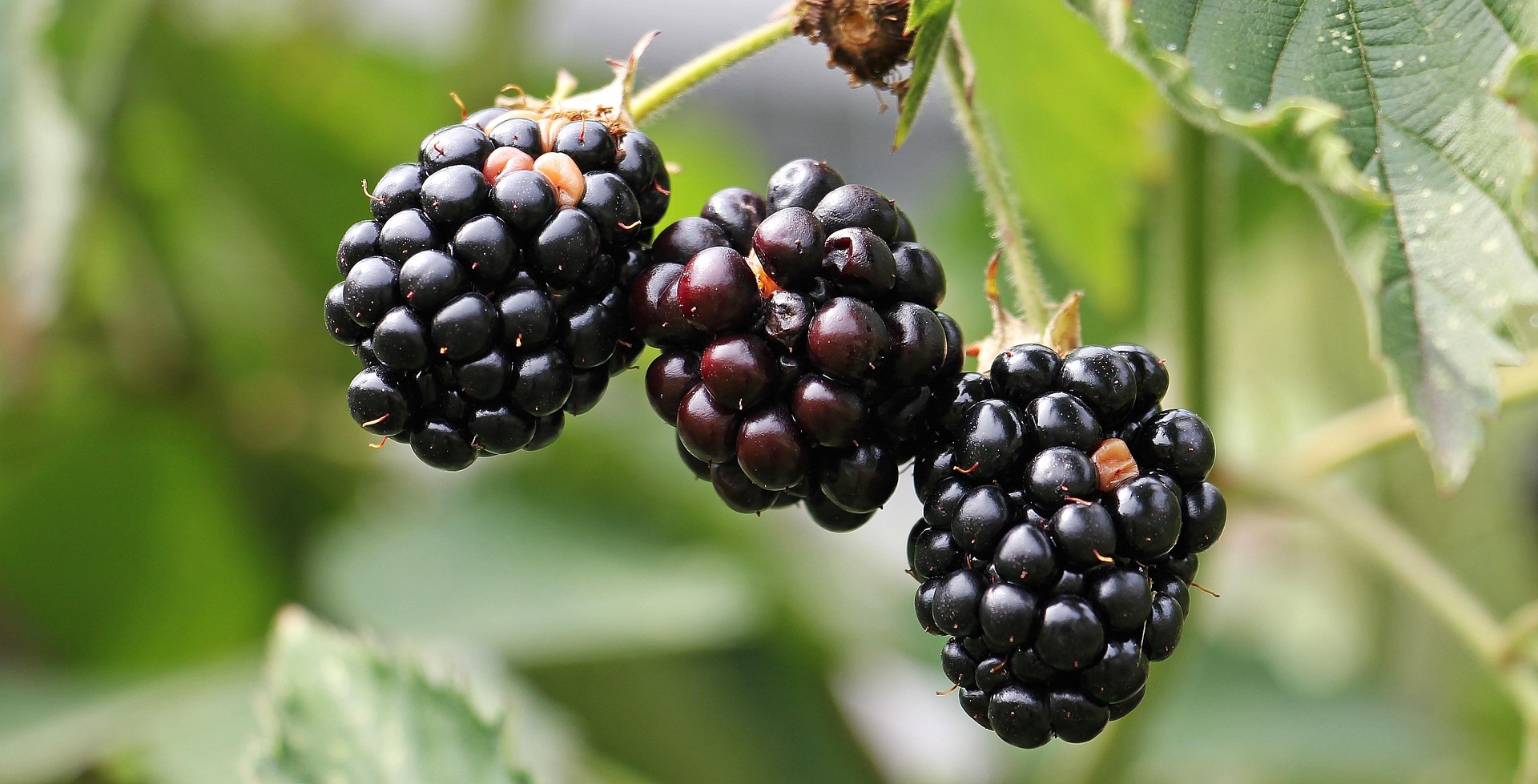
Bramble
Bramble is common in woodland edges, hedgerows and many other habitats.
It can form dense, tangled growth and has prickles.
The plant produces flowers followed by blackberries.
Blackberries are an important food source for wildlife.
Scouts should be careful around brambles because of their sharp prickles and tangled stems.
Ivy
Ivy is an evergreen climbing plant found in woodland, hedgerows, gardens and buildings.
It can climb using small structures that attach to surfaces.
Ivy provides shelter and food for wildlife and can be particularly valuable late in the year.
Scouts should avoid pulling or damaging established ivy unnecessarily.
Holly
Holly is an evergreen plant with distinctive glossy leaves.
Many holly plants have prickly leaf edges, particularly on lower growth.
Bright red berries can appear in autumn and winter.
Holly is an important wildlife plant, but its berries should never be eaten by Scouts.
Hawthorn
Hawthorn can occur as a small tree or shrub, particularly in hedgerows.
It produces flowers in spring and red berries later in the year.
Its branches can have sharp thorns.
Hawthorn is a useful species for learning how a plant can provide food and shelter for wildlife.
Elder
Elder is commonly found in hedgerows, woodland edges and disturbed ground.
It produces clusters of small flowers followed by dark berries.
Elder is a good example of why plant identification needs care.
Different parts of plants can have different properties, and simply recognising a species doesn’t mean every part is safe to handle or consume.
Cow Parsley and Similar Plants
Plants with umbrella-shaped flower clusters can be difficult to identify.
Several UK species look similar, and some related plants can be harmful.
This is an important lesson for Scouts:
Never assume a plant is safe simply because it looks familiar.
For beginner activities, it is better to observe these plants and learn identification from a reliable field guide rather than encouraging Scouts to handle or consume them.
Bluebells
Bluebells are associated with woodland and are particularly noticeable in spring.
Large carpets of blue flowers can create impressive woodland scenes.
Wild bluebells should be observed without trampling or picking them.
They are a good example of how seasonal changes can transform a habitat.
Foxglove
Foxgloves are tall plants with distinctive tubular flowers.
They can be found in woodland edges, clearings and other habitats.
However, foxgloves are poisonous if eaten.
Scouts should not pick, chew or otherwise experiment with foxgloves.
Learning to recognise potentially harmful plants is an important part of outdoor awareness.
Bracken
Bracken is a large fern that can form extensive patches on heathland, woodland edges and other habitats.
Its fronds are distinctive and can grow considerably during summer.
Bracken provides useful opportunities for discussing plant habitats and seasonal changes.
Scouts should avoid unnecessary disturbance when exploring dense vegetation.
Ferns
The UK has many fern species.
Ferns reproduce using spores rather than flowers and can often be found in shady, damp woodland environments.
Identifying individual fern species can be challenging.
For beginners, start by learning to recognise ferns as a group before progressing to individual species.
Mosses
Mosses are small plants that can grow on soil, rocks, walls and tree surfaces.
They are often associated with damp conditions but can occur in many different habitats.
Moss identification can become surprisingly detailed, so it can be a good challenge for older Scouts.
For younger Scouts, simply finding different types of moss and comparing their textures and growing locations can be enough.
Grasses
Grass is easy to overlook because it is so common.
However, the UK has many different grass species.
Look closely at seed heads, leaves and stems.
A magnifying glass can make grass identification much more interesting.
Younger Scouts can begin by comparing long grass, short grass and different seed heads without needing to identify every species.
Plant Identification Changes With the Seasons
Plants don’t look the same throughout the year.
Spring may provide flowers and fresh leaves.
Summer often gives you full foliage and flowering plants.
Autumn brings fruit, berries and seeds.
Winter may leave only stems, buds and dried seed heads.
This means the same plant can become a completely different identification challenge depending on when you see it.
Learn to Recognise Plant Families
Once Scouts become confident with individual plants, they can begin looking for similarities.
Plants belonging to the same family can share characteristics.
However, plant families can be complicated, so don’t make this the starting point for beginners.
It is usually more enjoyable to learn a few familiar plants first and then explore how they are related.
Use a Field Guide
A UK plant field guide is one of the most useful tools for learning identification.
Look for a guide with clear photographs or illustrations and information about habitat and flowering seasons.
Encourage Scouts to compare several features rather than simply finding the photograph that looks closest.
Don’t Rely Entirely on Apps
Plant-identification apps can be useful for suggesting possibilities.
They shouldn’t automatically be treated as proof of identification.
Photos can be misleading.
Several species can look similar.
Lighting and the season can also affect the appearance of a plant.
Use technology as an additional tool rather than a replacement for observation and a reliable field guide.
Take Photographs Instead of Picking Plants
Photography is an excellent way to record plant discoveries.
Scouts can photograph:
The whole plant.
The leaves.
The flowers.
The fruit or seeds.
The surrounding habitat.
This gives them useful evidence for identification later.
It also means they can learn about plants without damaging them.
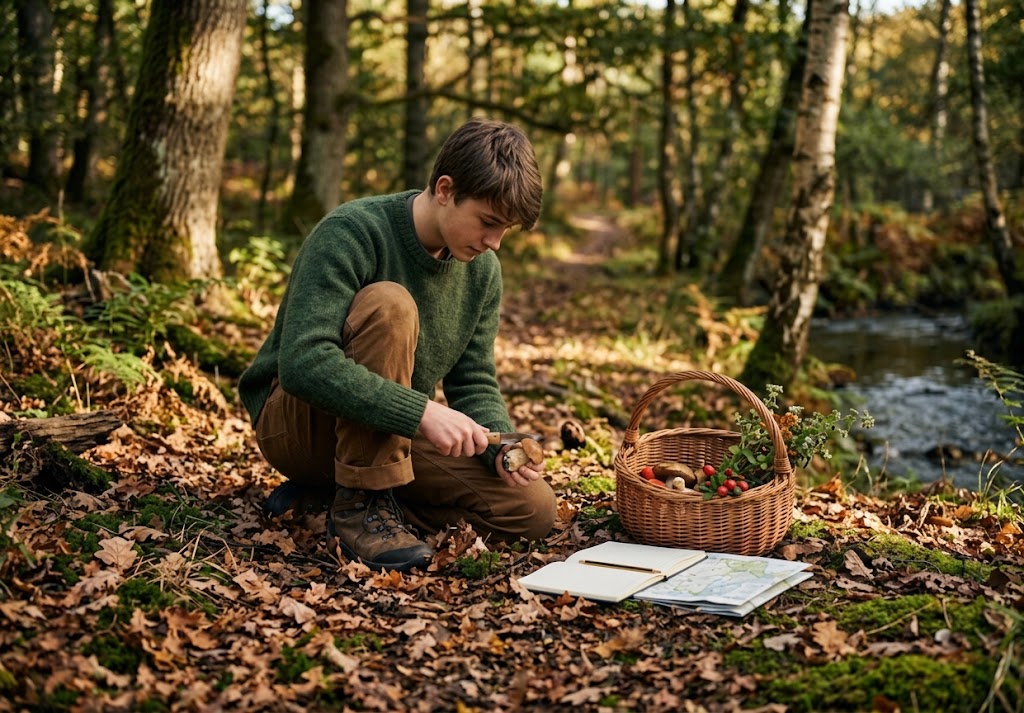
Create a Plant Journal
A plant journal can be a simple notebook or digital record.
For each plant, Scouts could record:
The plant’s name.
Where they found it.
When they found it.
What it looked like.
What habitat it was growing in.
Any insects or other wildlife nearby.
A sketch can be just as useful as a photograph.
Make a Seasonal Plant Diary
Choose a small area and revisit it throughout the year.
Record what changes.
Which plants appear in spring?
Which flowers arrive in summer?
What fruits develop in autumn?
What remains visible during winter?
This helps Scouts understand that nature is constantly changing.
Plant Identification Games
Plant identification can easily become a game.
Give each patrol a list of plants to find.
Instead of picking them, Scouts can photograph or point them out.
Award points for finding particular features.
For example:
Find a plant with yellow flowers.
Find a plant with a seed head.
Find a plant with three leaflets.
Find a plant growing beside water.
Find a plant with prickles.
This encourages observation rather than simply memorising names.
Don’t Encourage Wild Plant Eating
One of the most important rules when teaching Scouts about plants is to separate identification from foraging.
A plant that looks edible may have a poisonous lookalike.
Some plants are safe in one context but harmful in another.
Some parts of a plant may be toxic.
Preparation can also affect safety.
For general Scout activities, there is no need to eat wild plants as part of learning about them.
Observe and identify them instead.
Learn to Recognise Hazardous Plants
Scouts don’t need to memorise every poisonous plant in Britain.
They should, however, understand that some plants can cause harm.
Potential hazards include:
Poisoning if eaten.
Skin irritation.
Stings or prickles.
Allergic reactions.
Eye irritation.
Plants that look similar to edible species.
If a plant is unfamiliar, the safest approach is to avoid touching or consuming it unnecessarily.
Avoid Touching Unknown Plants
If you don’t know what a plant is, don’t automatically pick it up.
This is particularly important with plants that produce sap.
Some plants can cause skin irritation or other reactions.
Observation is usually enough for an identification activity.
Protect Habitats
Plants are part of wider ecosystems.
A patch of wildflowers may provide food for insects.
A hedgerow may provide shelter for birds.
Moss can support tiny organisms.
Even apparently ordinary grassland can contain a surprising amount of biodiversity.
Avoid trampling plants unnecessarily.
Stay on established paths where appropriate.
Follow site rules and the instructions of the responsible leader.
Don’t Remove Wild Plants
Scouts should not dig up or remove wild plants during ordinary identification activities.
Even picking a flower can prevent it from producing seeds.
Some plants are protected by law, and collecting from particular sites may be prohibited.
The safest approach is to observe and photograph plants rather than remove them.
Be Careful With Garden Plants
A garden or campsite may contain ornamental plants that Scouts don’t recognise.
Don’t assume that a plant is safe because it is growing in a garden.
The same rule applies:
Don’t eat or experiment with unidentified plants.
Plants and Wildlife
Plants and wildlife are closely connected.
Flowers provide nectar and pollen.
Berries and seeds provide food.
Leaves provide food for insects.
Dense vegetation provides shelter.
Trees and shrubs create nesting and resting places.
When Scouts learn a plant’s name, encourage them to ask what other creatures depend on it.
Look for Insects on Plants
Plants provide excellent opportunities for wildlife observation.
Look carefully at flowers and leaves for:
Bees.
Hoverflies.
Butterflies.
Beetles.
Caterpillars.
Spiders.
A simple plant walk can therefore become both a plant and wildlife activity.
Don’t Disturb Wildlife
If you discover an insect, nest or other wildlife while examining a plant, observe it without disturbing it.
Avoid moving leaves or branches unnecessarily.
Never damage a plant to get a better photograph.
The aim is to understand nature rather than interfere with it.
Plants and Survival Skills
Plants can form part of a wider understanding of the outdoor environment.
Knowing the difference between common plant types can help Scouts understand habitats, recognise seasonal changes and become more observant outdoors.
However, plant knowledge should not be presented as a reason to experiment with eating wild plants.
Survival skills are about preparation and good judgement as much as they are about using natural resources.
A Simple Plant Identification Method
Teach Scouts to work through a few basic questions:
What is the whole plant like?
What do the leaves look like?
Does it have flowers?
Are there fruits or seeds?
Where is it growing?
What time of year is it?
Then compare those observations with a reliable identification guide.
The more features that match, the more confident the identification becomes.
Younger Scouts
Younger Scouts can start with simple observation.
Ask them to find plants with different:
Leaf shapes.
Flower colours.
Sizes.
Textures.
Habitats.
You don’t need to introduce complicated botanical terminology.
The aim is to encourage curiosity and careful observation.
Older Scouts
Older Scouts can begin using identification keys and field guides.
Challenge them to identify plants using several features rather than colour alone.
They can also create their own plant records and investigate how particular species support wildlife.
Leader Notes
Plant activities work particularly well outdoors because Scouts can learn by exploring.
Choose a location with several different habitats if possible.
Start with a small number of familiar plants and gradually increase the challenge.
Make clear from the beginning that plants should be observed rather than picked or eaten.
For younger Scouts, use games and simple comparisons.
For older Scouts, introduce field guides, identification keys and seasonal recording.
Photography can be particularly useful because it allows Scouts to take their discoveries home and investigate them later.
Remember that the goal isn’t to identify every plant correctly.
It is to develop the habit of looking closely at the natural world.
Safety
Scouts should not eat, taste or deliberately handle unidentified plants.
Some UK plants can be poisonous, cause skin irritation or otherwise cause harm. Similar-looking species can also be difficult to distinguish.
Do not rely solely on an identification app to determine whether a plant is safe to eat or handle.
Avoid unnecessary contact with plants known or suspected to cause irritation, including stinging or thorny species.
Take care when moving through long grass, dense vegetation, woodland and hedgerows, and check for other hazards such as uneven ground, branches, insects and ticks.
Do not pick flowers, break branches or dig up wild plants as part of normal identification activities.
Follow site rules and any restrictions relating to protected habitats or species.
If a Scout experiences a suspected reaction after contact with a plant, stop the activity and follow the appropriate first-aid and medical procedures.
The responsible leader should consider the location, season, participants and environmental conditions when planning plant-related activities.
Learning Outcomes
Learning about plants can help Scouts:
Final Thought for Scouts
Plants are easy to overlook because they are everywhere.
But stop for a moment and look closely and you’ll find an enormous amount of variety.
A tiny flower can support insects.
A hedge can provide shelter for birds.
A berry can become food for wildlife.
A patch of grass can contain many different species.
You don’t need to know the name of every plant you see.
Start by noticing them.
Then learn a few names.
Then learn a few more.
The more you understand about the plants around you, the more interesting the outdoors becomes.
🔒Ready to test your survival skills?
Join Survival Guides UK for free, complete challenges, earn badges and increase your Survival Level.
JOIN FREE →
CRAIG BURR
FOUNDER · SURVIVAL GUIDES UK
I'm Craig, the person behind Survival Guides UK. I created SGUK because I wanted somewhere people could learn real outdoor skills in a practical, straightforward way — from lighting a fire and tying knots to navigation, campcraft and everything in between.
You can read more about the story behind SGUK here as well as our approach here.