20 Things to Practise Before Your First Scout Camp
Your first Scout camp can feel like a big adventure.
There may be a tent, sleeping bag, muddy boots, unfamiliar routines, outdoor cooking, early mornings and lots of new experiences.
You don’t need to be an expert before you arrive.
However, practising a few basic skills at home can make camp much more comfortable.
Here are 20 things worth practising before your first Scout camp.
1. Getting Into Your Sleeping Bag
It sounds obvious, but practise using your sleeping bag before camp.
Work out:
- How the zip works
- How to get comfortable
- How to keep the bag organised
- How to get out quickly when you wake up
If possible, spend a night using it at home or during a garden camp.
2. Sleeping on a Camping Mat
Camping mats feel different from beds.
Try lying on yours before camp.
This gives you a chance to discover whether you need to adjust your sleeping position or how you arrange your sleeping bag.
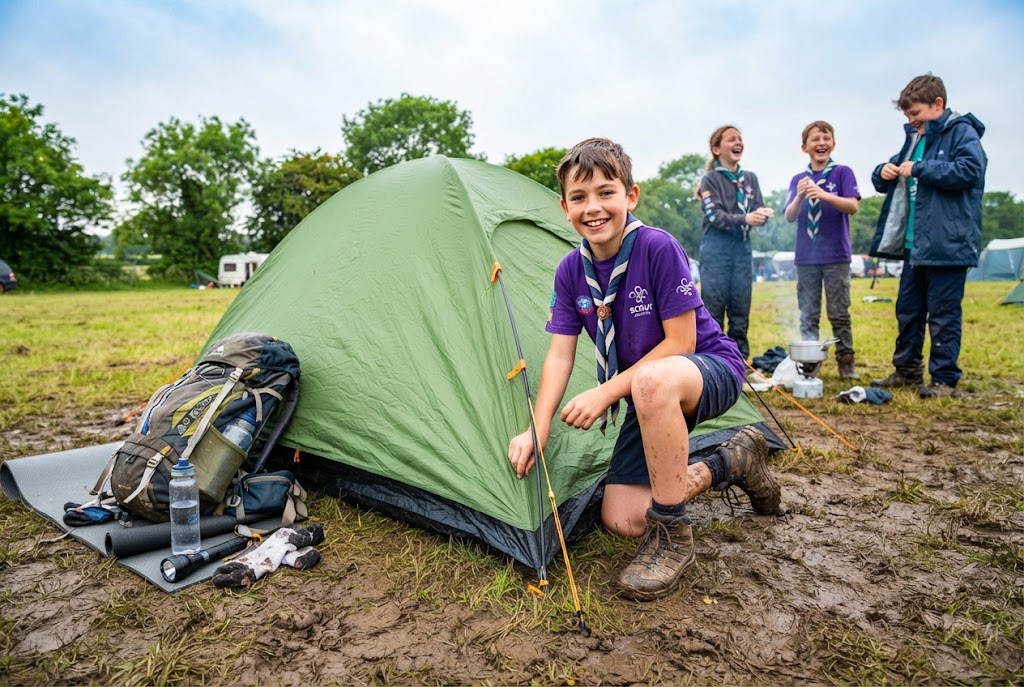
3. Pitching Your Tent
Practise pitching your tent if you are responsible for doing so.
Learn:
- Where the poles go
- Which way the tent faces
- How the outer layer fits
- How the tent is secured
- How to pack it away
Practising once is useful.
Practising several times is much better.
4. Packing a Rucksack
Don’t wait until the morning of camp to discover that your rucksack doesn’t fit everything.
Pack it beforehand.
Then unpack it and ask:
Do I actually need all of this?
Avoid taking lots of unnecessary items.
5. Finding Things in Your Bag
A well-packed bag is useful only if you can find things.
Practise locating:
- Waterproof jacket
- Spare socks
- Water bottle
- Torch
- Warm layer
- Wash kit
Try doing it without completely emptying your rucksack.
6. Wearing Your Outdoor Clothing
Practise putting on the layers you expect to use.
Make sure you know where everything is.
Try wearing your walking boots and outdoor clothing together before camp rather than discovering uncomfortable clothing problems on the first day.
7. Looking After Your Boots
Know how to clean your boots after a muddy walk.
Practise removing mud and drying them appropriately.
Avoid putting boots directly against intense heat, which can damage some materials.
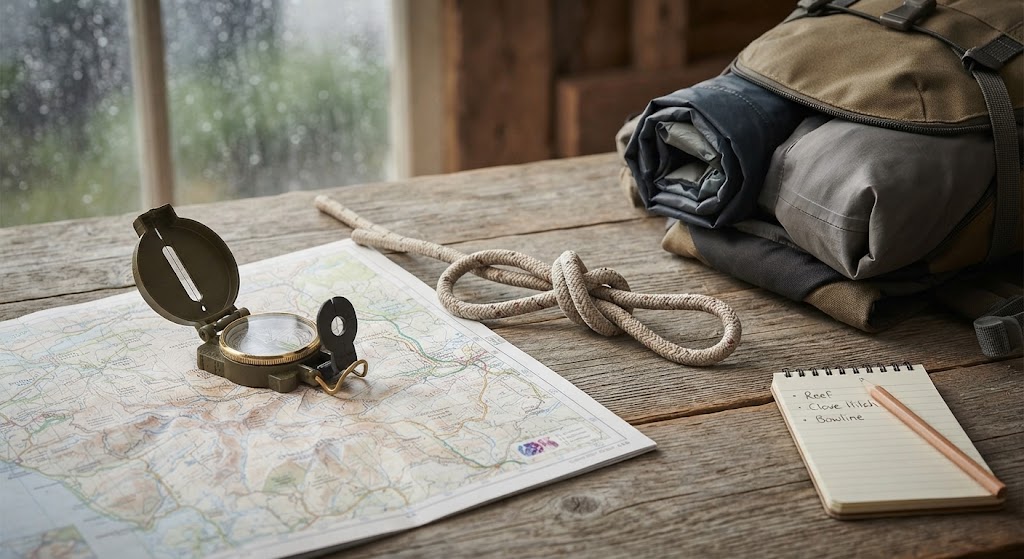
8. Tying a Few Useful Knots
You don’t need to know dozens.
Start with the knots you are actually being taught or likely to use.
Practise tying them slowly.
Then practise tying them without looking constantly at an instruction sheet.
9. Filling and Carrying Your Water Bottle
Get used to carrying your own water.
Practise remembering to refill it when appropriate rather than waiting until you’re extremely thirsty.
A water bottle should also have a consistent place in your camp kit.
10. Eating Outdoors
If camp food or outdoor cooking is going to be part of the experience, practise eating outside.
Try having a meal in the garden or at a picnic.
You will quickly discover that eating outdoors is different from sitting at the kitchen table.
11. Washing Up
Practise basic washing-up skills.
Learn how to:
- Scrape plates
- Wash equipment properly
- Rinse items
- Leave equipment clean and ready to use
This is a small job that becomes much easier with practice.
12. Keeping Your Kit Organised
At camp, your belongings can quickly become mixed together.
Use simple groups.
For example:
Clothes
Wash kit
Camping equipment
Activity equipment
Food
Keeping similar items together makes life much easier.
13. Labelling Your Belongings
Label items where appropriate.
Clothing and equipment can look very similar when several people have brought the same type of kit.
Clear labels can save a lot of confusion.
14. Getting Changed Efficiently
Practise getting changed without spreading clothes all over the room.
This becomes particularly useful when you’re dealing with wet or muddy clothing.
Have a system for deciding:
- What is clean
- What is dirty
- What is wet
- What needs drying
15. Using a Torch
Practise using your torch before camp.
Know:
- How to switch it on
- How to change the batteries if appropriate
- Where you keep it
- How to carry it safely
Keep it somewhere accessible rather than buried at the bottom of your bag.
16. Getting Used to Darkness
If you’re used to sleeping at home with familiar surroundings, a tent at night can feel very different.
A garden camp can be a useful introduction.
You can practise finding your torch, getting out of your sleeping bag and moving around calmly when it is dark.
17. Following Instructions
Camp involves plenty of instructions.
Practise listening carefully and repeating back important information if you’re unsure.
If a leader says something you haven’t understood, ask.
18. Asking for Help
This might be the most important skill on the list.
You don’t need to solve every problem yourself.
Ask for help if:
- You are worried
- You are hurt
- You feel unwell
- You cannot find something
- You are struggling with equipment
- You are unsure what you are supposed to do
Asking early is much easier than waiting until a small problem becomes a big one.
19. Practising a Night Away From Home
If possible, spend a night somewhere away from home before your first camp.
It could be:
- A family camping trip
- A garden camp
- Staying with relatives
- Another organised activity
This gives you a chance to experience sleeping somewhere unfamiliar.
20. Practise Getting Wet and Muddy
This might sound strange, but outdoor camping isn’t always clean.
There may be mud.
There may be rain.
Your boots may get wet.
Your clothes may need changing.
Understanding that this is part of the experience can make the first camp much easier.
Make Practice Fun
You don’t need to spend weeks doing formal training.
Turn preparation into small challenges.
For example:
Rucksack challenge: Pack everything you need and organise it logically.
Tent challenge: Pitch and pack away the tent.
Knots challenge: Tie three knots correctly.
Darkness challenge: Find your torch and get ready for bed using only your normal camp equipment.
Organisation challenge: Pack a complete camp kit and explain where everything is.
A First Camp Is About Learning
Nobody should expect a first-time camper to know everything.
The purpose of practising beforehand is simply to make the unfamiliar feel a little more familiar.
You’ll still learn new skills at camp.
You’ll probably forget something.
You may get muddy.
You may discover that your carefully planned system doesn’t work quite as expected.
That’s all part of learning to become more confident outdoors.
The most useful things to take to your first Scout camp are curiosity, patience and a willingness to have a go.
🔒Ready to test your survival skills?
Join Survival Guides UK for free, complete challenges, earn badges and increase your Survival Level.
JOIN FREE →
CRAIG BURR
FOUNDER · SURVIVAL GUIDES UK
I'm Craig, the person behind Survival Guides UK. I created SGUK because I wanted somewhere people could learn real outdoor skills in a practical, straightforward way — from lighting a fire and tying knots to navigation, campcraft and everything in between.
You can read more about the story behind SGUK here as well as our approach here.