What to Take on a Short Hike
A short hike does not require a huge backpack full of specialist equipment.
But “short” does not necessarily mean “risk-free”.
A two-hour walk can still involve rain, cold weather, muddy ground, navigation problems, a twisted ankle or simply taking longer than expected.
The right things to take on a short hike depend on the length, location, weather, terrain and people in your group.
For most ordinary countryside walks, the aim is to carry enough to deal with the conditions without filling your bag with unnecessary equipment.
The Short Hike Essentials
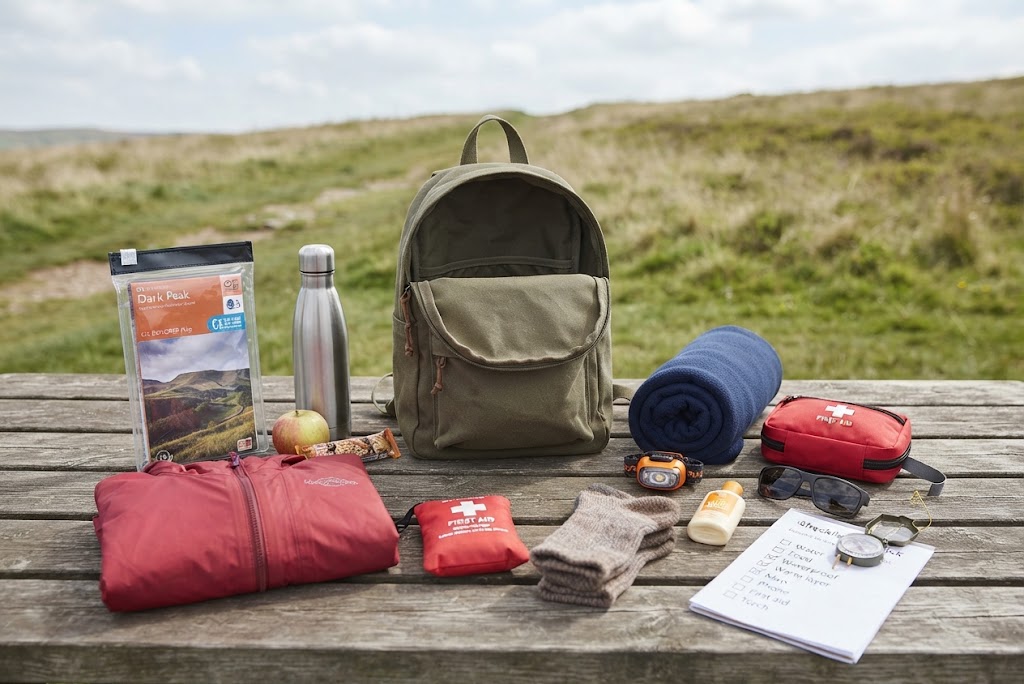
For a typical short countryside walk, consider taking:
- Water
- A small amount of food
- Waterproof jacket
- Extra warm layer
- Map
- Phone
- Basic first aid supplies
- Torch
- Spare socks
- Personal medication
- Small backpack
- Weather-appropriate clothing
The exact list should change depending on the route and conditions.
A short walk close to home in good weather is very different from a short walk across exposed hills.
Water
Water should be one of the first things you consider.
Even if you expect to be out for only an hour or two, take enough to remain comfortable if the walk takes longer than planned.
How much you need depends on:
- Temperature
- Walking speed
- Distance
- Terrain
- Your age and individual needs
- How much you have already drunk
A bottle that is easy to reach while walking is often more useful than one buried at the bottom of your bag.
Food and Snacks
You don’t necessarily need a full packed lunch for a short hike.
A small snack can nevertheless be useful.
Consider something easy to carry and eat, such as:
- Fruit
- Sandwiches
- Cereal bars
- Dried fruit
- Crackers
- Other familiar snacks
Food becomes particularly useful if the route takes longer than expected.
A walk that was supposed to take two hours can quickly become three hours if you take a wrong turn, stop to investigate wildlife or encounter a blocked path.
A Waterproof Jacket
One of the most useful items in a walking bag is a waterproof jacket.
The weather can change during a walk, and rain can make a comfortable outing considerably less pleasant.
Even when the forecast looks reasonable, think about the location of your walk.
An exposed hilltop gives you fewer opportunities to shelter than a woodland path.
For a short walk, a lightweight waterproof jacket can be easier to justify than carrying lots of spare clothing.
An Extra Warm Layer
A waterproof jacket protects against rain, but it isn’t necessarily a substitute for warmth.
Consider carrying an additional layer such as:
- Fleece
- Lightweight insulated jacket
- Warm jumper
This becomes particularly important in cooler weather or when walking somewhere exposed.
Remember that conditions can feel different when you stop moving.
A Map
A map is still useful even on a short walk.
You don’t have to be miles from home to become unsure of your position.
A map can help you understand:
- Where paths lead
- Nearby roads
- Streams
- Woodland
- Hills
- Alternative routes
- Your position
A suitable walking map can also help you understand the terrain before you start.
Your Phone
A phone can be useful for:
- Communication
- Navigation
- Weather information
- Emergency calls
- Taking photographs
But don’t make it your only navigation method.
Battery life can disappear surprisingly quickly when using GPS, taking photographs or dealing with poor signal.
Keep your phone protected from rain and avoid relying on it as your sole source of information.
A Basic First Aid Kit
You don’t need a large expedition first aid kit for an ordinary short walk.
A small kit might contain useful basics such as:
- Plasters
- Gauze
- Tape
- Antiseptic wipes
- Disposable gloves
The contents should reflect your group and the type of walking you are doing.
If someone needs medication, make sure it is available and being carried appropriately.
A Torch
A torch might seem unnecessary when you expect to finish during daylight.
It becomes much more useful if the walk takes longer than planned.
Darkness can arrive while you are still:
- Finding your way back
- Dealing with an injury
- Looking for a route
- Waiting for assistance
A small torch or headtorch takes up little space compared with the inconvenience of not having one.
Spare Socks
Spare socks are particularly useful if the route is muddy, wet or involves streams.
Wet feet can become uncomfortable surprisingly quickly.
Keep spare socks in a waterproof bag so they remain dry even if the rest of your equipment gets wet.
Sun Protection
Even in the UK, consider the conditions.
Depending on the season and weather, you may want:
- Sun cream
- Hat
- Sunglasses
The important point is to think about the conditions rather than assuming that a short walk means you won’t need protection.
Personal Medication
If you need regular medication, make sure it is available for the duration of the walk.
This sounds obvious, but it is an easy thing to overlook when preparing for a short outing.
For group walks, leaders should also follow their organisation’s procedures for medication and medical information.
What to Wear on a Short Hike
What you wear can matter just as much as what you put in your bag.
Think about:
- Weather
- Temperature
- Terrain
- Distance
- Ground conditions
- Exposure
Avoid choosing clothing based solely on how the weather looks when you leave home.
A route through sheltered woodland is different from an exposed ridge.
Do You Need Walking Boots?
Not necessarily.
Footwear should match the route.
A short, well-maintained park path may require very different footwear from a muddy countryside route with steep sections.
Consider:
- Grip
- Comfort
- Ankle support
- Waterproofing
- Terrain
The longer or rougher the route becomes, the more important appropriate footwear becomes.
What to Take on a Short Hike With Children
Children may need additional consideration.
Take account of:
- Their age
- Walking ability
- Weather
- Route length
- Food
- Water
- Spare clothing
For younger children, spare clothes can be particularly useful.
A simple rule is to prepare for the possibility that the walk takes longer than expected.
What Not to Take
Packing everything you own is not the answer.
You probably don’t need:
- Huge quantities of food
- Excessive spare clothing
- Specialist equipment for a simple walk
- Heavy equipment you don’t know how to use
- Multiple gadgets that all perform the same job
The goal is to carry useful equipment that matches the actual walk.
The Five-Minute Packing Check
Before leaving, ask yourself five questions:
Where am I going?
How long could I realistically be out?
What is the weather doing?
What happens if something goes wrong?
Can I find everything quickly in my bag?
If you can answer those questions, you’re already thinking like a prepared walker.
Short Hike Checklist
Before leaving, check:
A short walk doesn’t need to become an expedition.
But a little preparation can make a huge difference when something unexpected happens.
🔒Ready to test your survival skills?
Join Survival Guides UK for free, complete challenges, earn badges and increase your Survival Level.
JOIN FREE →
CRAIG BURR
FOUNDER · SURVIVAL GUIDES UK
I'm Craig, the person behind Survival Guides UK. I created SGUK because I wanted somewhere people could learn real outdoor skills in a practical, straightforward way — from lighting a fire and tying knots to navigation, campcraft and everything in between.
You can read more about the story behind SGUK here as well as our approach here.