Why Should Children Learn Survival Skills?
Survival skills are not just about knowing how to light a fire, build a shelter or find your way through the woods. For children, learning these skills can be a fun and practical way to develop confidence, independence and an understanding of the world around them.
Outdoor survival skills give children the opportunity to learn by doing. Instead of simply being told how something works, they can practise making decisions, solving problems and working with others.
These skills can also help children become more comfortable outdoors and teach them how to behave safely when exploring nature.
What You’ll Learn
In this guide, we’ll look at some of the main reasons children can benefit from learning survival skills, including:
- Building confidence and independence
- Developing problem-solving skills
- Learning to work as part of a team
- Understanding outdoor safety
- Developing resilience and patience
- Connecting with nature
- Learning useful practical skills
- Becoming more aware of their surroundings
Equipment
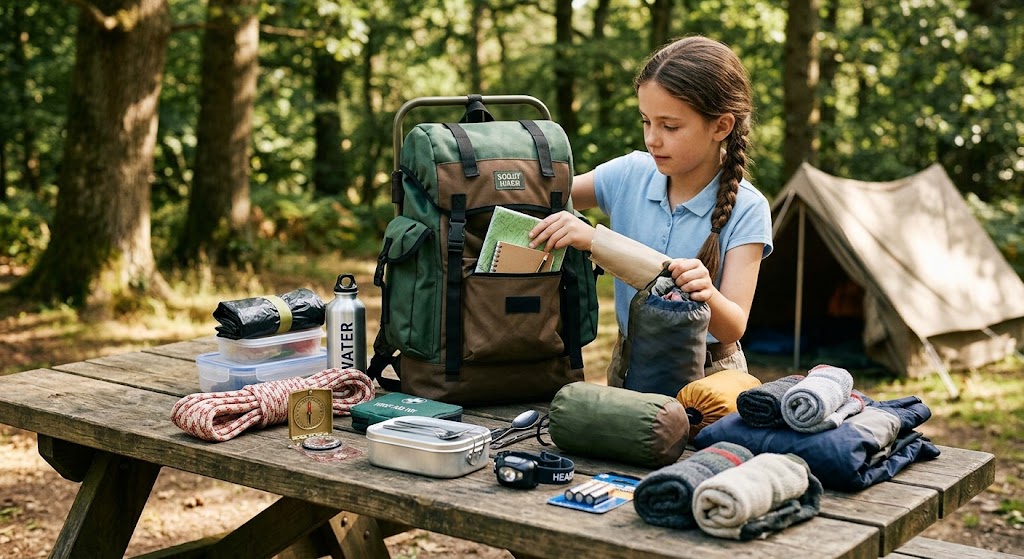
No specialist equipment is needed to understand the benefits of survival skills. However, when children begin practising these skills, suitable equipment might include:
- A first aid kit
- Suitable outdoor clothing
- A whistle
- A map and compass
- A torch or headtorch
- Water bottle
- Basic shelter-building materials
- Rope or cord
- Suitable fire-lighting equipment when supervised
The equipment should always be appropriate for the child’s age and experience.
Prerequisites
Children do not need to have previous survival experience to start learning.
The most important prerequisite is appropriate adult supervision. Some activities, particularly fire lighting, knife skills, cooking and activities near water, carry additional risks and should only be introduced when the child is ready.
Start with simple skills and gradually introduce more advanced activities as confidence and ability develop.
Instructions
Learning survival skills is best treated as a gradual process rather than expecting a child to become an expert.
Start With Basic Outdoor Safety
Before teaching children how to build shelters or light fires, teach them how to stay safe.
Children should understand simple rules such as:
- Tell an adult where you are going.
- Stay with your group.
- Know what to do if you become separated.
- Recognise hazards such as roads, cliffs, deep water and unstable ground.
- Dress appropriately for the weather.
- Know how and when to use a whistle.
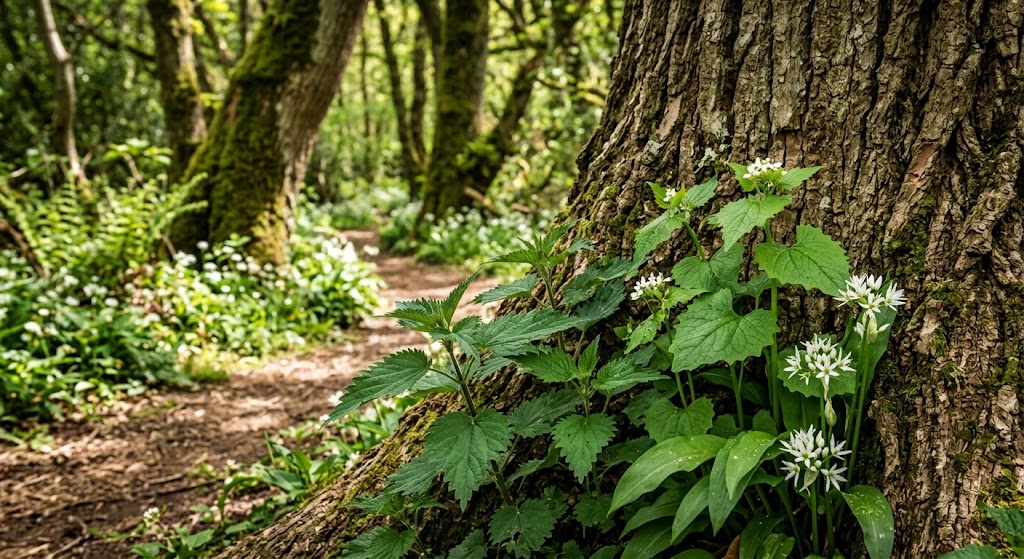
- Understand why they should never eat unknown plants, berries or fungi.
These basic lessons provide a foundation for more advanced outdoor skills.
Build Confidence Through Small Challenges
Survival skills can give children achievable challenges.
For example, a child might learn to:
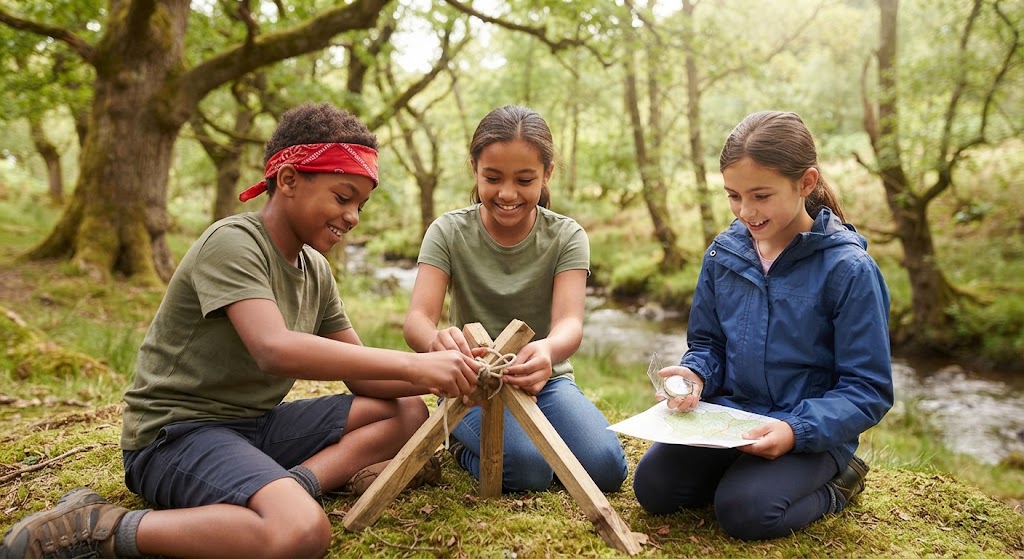
- Put up a simple shelter
- Tie a basic knot
- Read a simple map
- Follow a trail
- Collect and carry water safely
- Identify suitable places to shelter
- Pack a small outdoor bag
Completing a task that initially seems difficult can give children a real sense of achievement.
The important thing is to make the challenge appropriate to their age and ability.
Encourage Problem Solving
Outdoor activities rarely go exactly according to plan.
A shelter might not stand properly. A knot might come undone. The route on a map might look different from the terrain on the ground.
Instead of immediately solving the problem for the child, give them time to think about what they could try next.
This encourages children to look at a problem, consider their options and make a decision.
Those problem-solving habits are useful well beyond outdoor activities.
Teach Children About Their Surroundings
Survival skills can encourage children to pay attention to the environment around them.
Teach them to notice things such as:
- Changes in weather
- Different types of terrain
- Natural hazards
- Signs of animal activity
- Paths and landmarks
- Sources of shelter
- Their position in relation to familiar locations
This develops observation skills and helps children understand that the environment can provide useful information.
Develop Teamwork
Many survival activities work better when people cooperate.
Building a shelter, navigating a route or preparing an outdoor activity can involve several people with different jobs.
Encourage children to communicate with one another, listen to different ideas and share responsibilities.
They learn that being part of a team is not simply about having a job to do. It also means helping others and communicating when something is not working.
Teach Patience and Resilience
Not every outdoor skill works on the first attempt.
A child learning to tie knots may make mistakes. A shelter may collapse. A navigation exercise may require them to retrace their steps.
These experiences can teach an important lesson: making a mistake does not necessarily mean that the activity has failed.
Encouraging children to try again helps develop patience and resilience.
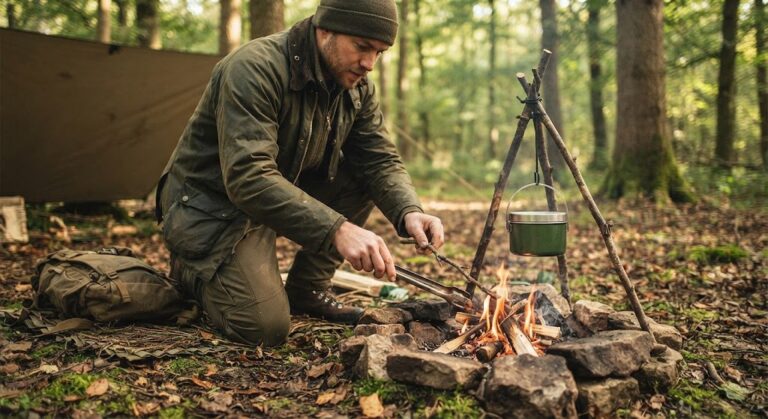
Introduce Fire Skills Responsibly
Fire lighting is one of the traditional survival skills that many children find particularly exciting.
It can also be dangerous.
Children should only learn fire skills in a suitable location, with appropriate adult supervision and proper fire-safety precautions. They should understand that fire is a tool that requires respect, not a toy.
Before attempting to light a fire, teach the child about the risks of burns, spreading fire, smoke and leaving embers behind.
Where fires are permitted, make sure they are fully extinguished and the site is left safe afterwards.
Teach Basic Navigation
Navigation is another valuable survival skill for children.
Start with simple concepts such as recognising landmarks and understanding directions before progressing to maps and compasses.
A child who understands where they are, where they are going and how to communicate their location is better prepared for outdoor adventures.
Navigation exercises can also be turned into games, treasure hunts and simple challenges.
Introduce Basic First Aid
Children can learn age-appropriate first aid skills without being expected to deal with serious emergencies themselves.
For example, they can learn:
- How to tell an adult that someone is injured
- How to contact the emergency services when appropriate
- How to recognise that someone may need help
- Basic treatment of minor cuts and grazes
- Why protective equipment such as gloves can be important
First aid teaching should always be appropriate for the child’s age and follow recognised first aid guidance.
Teach Them What To Do If They Get Lost
One of the most useful survival lessons for a child is knowing what to do if they become separated from their group.
A simple set of instructions can be easier for children to remember than a complicated procedure.
Depending on the environment and circumstances, children can be taught to stop, stay calm, make themselves easier to find and attract attention, while following the specific instructions given by the responsible adult.
Practising this scenario in a controlled environment can help children understand what to do without creating unnecessary fear.
Make Learning Fun
Perhaps the most important part of teaching survival skills to children is making the experience enjoyable.
Skills can be turned into games, challenges and adventures.
For example, you could have a navigation challenge, shelter-building competition or knot-tying challenge. Children can learn the same underlying skills while remaining engaged and motivated.
The aim is not to make children afraid of what could go wrong outdoors. It is to give them the knowledge and confidence to deal with situations sensibly.
Safety When Teaching Children Survival Skills
Children should always be taught survival skills at a level appropriate to their age, maturity and experience.
Activities involving fire, knives, axes, climbing, water, heights or potentially dangerous plants and animals require particular care and appropriate adult supervision.
Never assume that a child understands a hazard simply because they have been told about it. Demonstrate safe behaviour, establish clear rules and supervise practical activities closely.
It is also important to teach children that survival skills are not a substitute for seeking help. If they are lost, injured or facing a serious emergency, getting help should be a priority.
Final Tip
The biggest benefit of teaching children survival skills is not necessarily the individual skills themselves. It is the confidence that comes from learning how to approach unfamiliar situations.
A child who has learned how to solve a problem, work with others, stay calm and think about their surroundings is developing skills that can be useful both outdoors and in everyday life.
Start small, keep activities enjoyable and gradually build their abilities. Survival skills should give children confidence in the outdoors, not fear of it.
🔒Ready to test your survival skills?
Join Survival Guides UK for free, complete challenges, earn badges and increase your Survival Level.
JOIN FREE →
CRAIG BURR
FOUNDER · SURVIVAL GUIDES UK
I'm Craig, the person behind Survival Guides UK. I created SGUK because I wanted somewhere people could learn real outdoor skills in a practical, straightforward way — from lighting a fire and tying knots to navigation, campcraft and everything in between.
You can read more about the story behind SGUK here as well as our approach here.