Why Do Scouts Learn to Light Fires?
Scouts learn to light fires because it teaches useful outdoor skills, responsibility, problem solving and fire safety.
A fire can also be used for cooking, warmth and practical camping activities. Learning how to light one in a controlled and supervised setting helps young people understand both the benefits and dangers of fire.
What You’ll Learn
In this article, you will learn:
- Why fire lighting is a useful outdoor skill.
- How it teaches responsibility.
- Why fire safety is an important part of learning.
- How fire lighting develops teamwork and problem solving.
- How the skill can build confidence.
Equipment
The equipment will depend on the activity, but may include:
- Suitable fire-lighting materials
- Firewood
- Matches or another suitable fire-lighting method
- Fire pit or designated fire area
- Water or suitable means of extinguishing the fire
- Heat-resistant gloves where appropriate
- Cooking equipment for supervised cooking activities
Prerequisites
Fire lighting should always be taught with appropriate supervision and clear safety rules.
Young people should understand the basic rules before taking part, including where they may work, what they must not touch and what to do if something goes wrong.
Instructions
1. Learn a Practical Outdoor Skill
Knowing how to light and maintain a controlled fire is a traditional outdoor skill.
It can be useful when camping and can introduce young people to practical skills that are rarely taught in everyday life.
2. Learn About Fire Safety
Learning about fire is also learning about the dangers of fire.
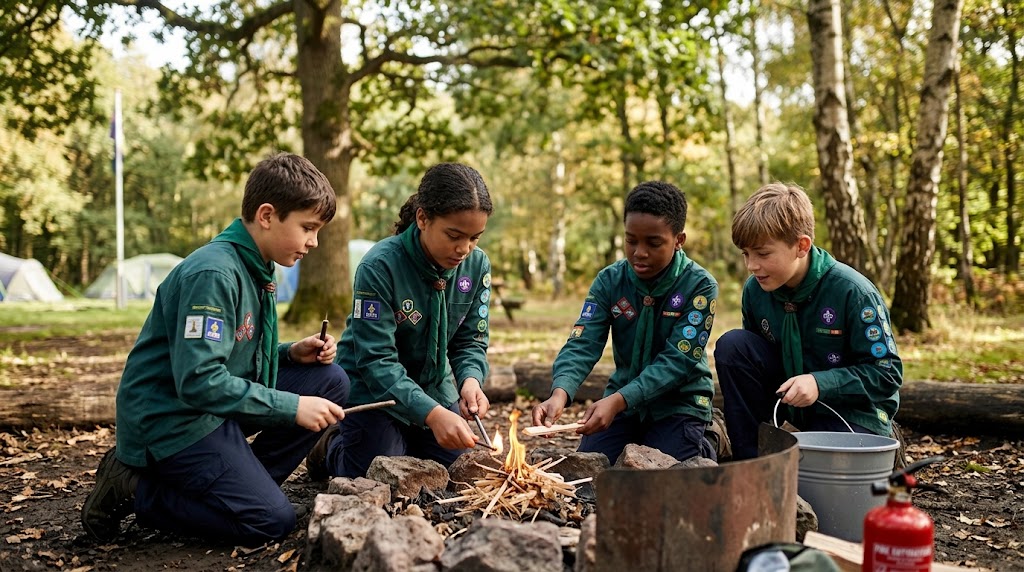
Scouts can learn how quickly fire can spread, why the fire area needs to be controlled and why fires must never be left unattended.
The aim is not simply to make a fire, but to understand how to use fire safely.
3. Develop Responsibility
Fire activities require young people to follow instructions and take responsibility for their actions.
They learn that small mistakes around fire can have serious consequences and that safety rules need to be taken seriously.
4. Build Problem-Solving Skills
Sometimes a fire doesn’t light straight away.
Young people have to think about the materials they are using, the conditions around them and what they could change.
This makes fire lighting a useful practical problem-solving activity.
5. Encourage Teamwork
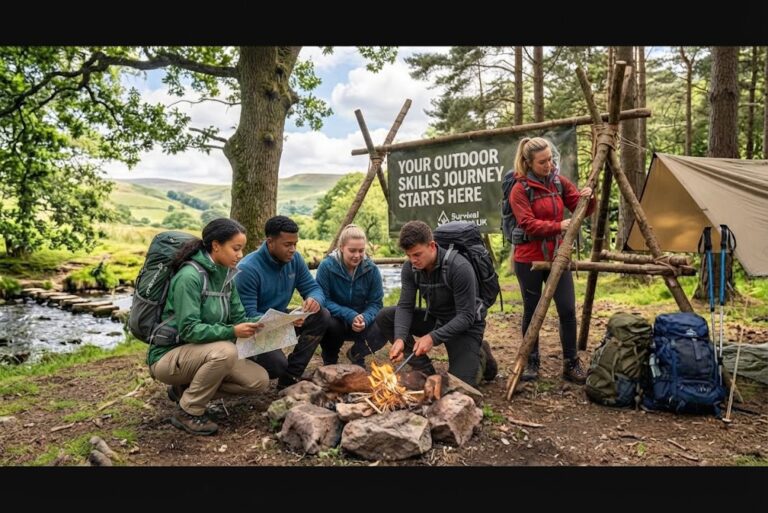
Fire lighting can be a team activity.
One person might prepare the fire area, another might collect suitable fuel and others might help organise equipment.
Working together gives young people a practical reason to communicate and cooperate.
6. Learn About Nature
Fire lighting can also introduce young people to the natural environment.
They can learn about different types of wood, how dry and wet materials behave and how weather conditions can affect a fire.
This helps connect practical camping skills with an understanding of the outdoors.
7. Use Fire for Camping Skills
Once young people understand the safety principles, fire can be used as part of other outdoor skills.
For example, a supervised fire might be used for cooking or as part of a traditional campfire activity.
This makes the skill useful rather than simply being about starting a fire.
8. Build Confidence
Learning a practical skill can be rewarding.
Successfully completing a supervised fire-lighting activity can give young people confidence in their ability to learn, follow instructions and solve problems.
The confidence comes from learning to manage a challenging skill safely, rather than simply being allowed to use fire independently.
9. Learn to Respect Fire
One of the most important lessons is that fire should be respected.
Scouts should understand that fire is a useful tool but can also cause burns, damage property and start wildfires if it is not controlled properly.
Good fire-lighting activities therefore teach respect, control and responsibility as much as the practical skill itself.
Final Tip
The real value of teaching Scouts to light fires isn’t simply being able to start one.
It is about learning how fire works, how to use it responsibly and how to stay safe around it.
When taught properly and supervised carefully, fire lighting can become a valuable part of learning practical outdoor skills.
🔒Ready to test your survival skills?
Join Survival Guides UK for free, complete challenges, earn badges and increase your Survival Level.
JOIN FREE →
CRAIG BURR
FOUNDER · SURVIVAL GUIDES UK
I'm Craig, the person behind Survival Guides UK. I created SGUK because I wanted somewhere people could learn real outdoor skills in a practical, straightforward way — from lighting a fire and tying knots to navigation, campcraft and everything in between.
You can read more about the story behind SGUK here as well as our approach here.