Safe Practice for Children Taking Part in Outdoor Activities
Outdoor activities can give children some of their most memorable experiences.
Camping, walking, exploring, building shelters, learning practical skills and spending time outside all provide opportunities to develop confidence and independence.
For parents, however, it is natural to wonder how to keep children safe while still allowing them to enjoy those experiences.
Safe practice doesn’t mean removing every risk or stopping children from trying new things. It means preparing properly, understanding the environment, providing suitable supervision and helping children learn how to recognise sensible boundaries for themselves.
What Does Safe Practice Mean?
Safe practice is about the everyday decisions that help reduce avoidable risks.
It starts before an activity begins.
You might check the weather, make sure your child has suitable clothing, read the information provided by the organisers and make sure they understand what is expected of them.
During the activity, safe practice means paying attention to changing conditions and making sensible decisions when circumstances change.
The goal is simple:
Give children enough freedom to explore while providing the support they need to do so safely.
Preparation Is the First Step
Good preparation can prevent many common problems.
Before your child takes part in a camping or outdoor activity, find out what they will actually be doing.
Will they be walking?
Camping overnight?
Using outdoor equipment?
Taking part in water-based activities?
Exploring woodland?
Playing games outside?
The activity will determine what preparation is needed.
Read any information provided by the organisers and make sure you understand what your child is expected to bring and do.
Check the Weather
Weather can make a significant difference to outdoor activities.
Before your child leaves home, check the forecast and consider whether they have suitable clothing for the expected conditions.
Remember that a forecast is not a guarantee.
Outdoor conditions can change during the day.
Rain, strong wind, heat, cold, snow, ice or poor visibility can all affect how an activity should be carried out.
Children should have appropriate clothing rather than relying on the weather remaining exactly as predicted.
Dress for the Activity
Children often don’t think about clothing in the same way adults do.
They may happily leave the house in trainers and a light jacket because the weather looks fine.
Outdoor activities can be different.
Suitable footwear, waterproof clothing and warm layers can make a major difference to comfort and safety.
For camping or longer outdoor activities, spare clothing can also be useful.
Wet clothes aren’t just uncomfortable. They can become a much bigger problem when a child is outside for an extended period.
The Importance of Waterproofs
A warm coat isn’t necessarily a waterproof coat.
For activities where children may be outside in rain, proper waterproof outer clothing can be important.
Check that waterproof clothing fits properly and is in reasonable condition.
If your child is going on camp, make sure they know where their waterproofs are packed.
There isn’t much benefit in having a waterproof jacket at the bottom of a large bag if your child can’t find it when the rain starts.
Suitable Footwear
Footwear should match the activity.
A short walk around a smooth park is very different from walking over muddy or uneven countryside.
Make sure footwear fits properly and is comfortable.
If children are taking part in longer walks, avoid giving them brand-new footwear immediately before the activity.
Allow them to wear it beforehand so you can identify any problems.
Encourage Children to Drink
Children can become distracted while playing and may forget to drink.
For outdoor activities, make sure they have access to suitable drinking water and encourage regular drinking, particularly in warm conditions or during energetic activities.
A reusable water bottle is often an easy solution.
Make sure your child knows where it is and can open it independently.
Sun Protection
Sun protection remains important during outdoor activities.
Children may spend hours outside without realising how much sun exposure they are getting.
Depending on the conditions, this can include suitable clothing, shade, a hat, sunglasses and sunscreen.
Follow the instructions for the sunscreen you use, including how often it should be reapplied.
Don’t assume that a cloudy day means there is no need to think about sun protection.
Cold Weather
Cold conditions require a different approach.
Layers allow children to adjust what they are wearing as conditions and activity levels change.
Pay attention to wet clothing as well as temperature.
A child who is active may feel warm initially but become cold later when they stop moving.
If conditions are particularly cold, wet or windy, consider whether the planned activity remains appropriate.
Teach Children to Notice Their Surroundings
Safe outdoor practice isn’t just about adults watching children.
Children can learn to identify hazards themselves.
Ask simple questions:
“What do you notice here?”
“Where would you walk?”
“What might be slippery?”
“Where would you stay away from?”
“What should we do if the weather changes?”
This helps develop awareness without making outdoor activities frightening.
Explain Boundaries Clearly
Children should understand where they are allowed to go.
This is particularly important outdoors because there may be roads, water, steep ground, dense woodland or other areas nearby.
Make sure your child understands any boundaries set by the adult supervising the activity.
For younger children, boundaries may need to be very simple.
Older children can be encouraged to think about why a particular boundary exists.
Teach the “Stop and Listen” Habit
A simple instruction such as “Stop and listen” can be useful during outdoor activities.
Children should understand that when a supervising adult gives a stop signal or calls everyone back, they need to stop what they’re doing and pay attention.
This is particularly important when groups are spread across an outdoor area.
The exact signal will depend on the activity and the organisers.
Encourage Children to Speak Up
Children should know that it is okay to tell an adult when something doesn’t feel right.
They might be:
Too cold.
Too hot.
Tired.
Thirsty.
Unwell.
Worried.
Lost.
Uncomfortable.
Unsure how to use a piece of equipment.
Encourage your child to speak to a leader or supervising adult rather than trying to hide a problem.
This is an important part of outdoor safety.
Don’t Encourage Children to “Push Through”
There can sometimes be a temptation to tell children to keep going when they’re tired or uncomfortable.
While perseverance is valuable, children should also learn to recognise when something is becoming a genuine problem.
Being tired after a long walk can be normal.
Feeling dizzy, unwell or unusually weak is something that should be reported.
Children need to understand the difference between a healthy challenge and a situation where they need help.
Equipment Should Be Used Properly
Outdoor activities often involve equipment.
This might include tents, ropes, cooking equipment, tools, compasses, torches or other camping gear.
Children should be shown how unfamiliar equipment works before using it.
They should also understand when they need adult help.
A child shouldn’t be expected to know how to use a piece of equipment safely simply because they’ve seen someone else use it.
Fires and Stoves
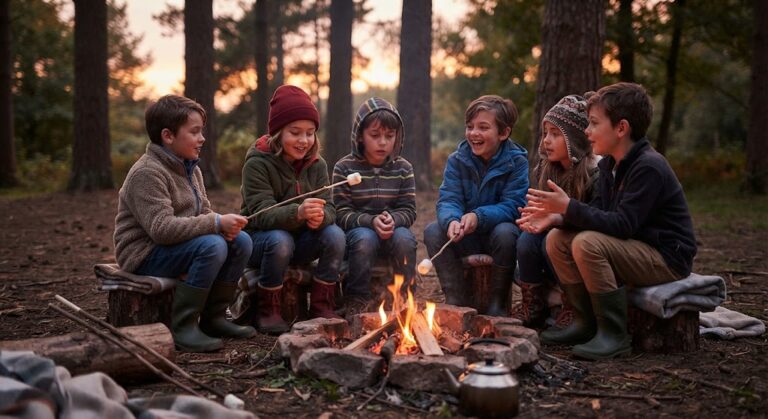
Campfires and cooking equipment can be enjoyable parts of camping, but they introduce additional hazards.
Children should only use fires, stoves or hot cooking equipment within the arrangements and supervision provided by the responsible adults.
Make sure children understand that equipment can remain hot even after a flame has gone out.
Never encourage children to experiment with fuel, flames or camping stoves without appropriate adult supervision and instruction.
Sharp Tools
Some outdoor activities may involve knives, axes, saws or other sharp tools.
These require clear rules and appropriate supervision.
Children should understand where they can work, how the tool should be handled and what to do when they have finished.
If your child is unsure about how to use a tool, the safest response is to stop and ask an adult.
Water and Outdoor Activities
Water deserves particular attention.
Ponds, rivers, lakes, streams, beaches and swimming areas can all present different hazards.
Never assume that a child who can swim is automatically safe around every type of open water.
Conditions can change, water can be cold or fast-moving and hazards may not be visible from the surface.
Follow the activity organiser’s arrangements and make sure children understand the boundaries around water.
Roads and Traffic
Road safety remains important during outdoor activities.
Children may be more distracted when walking as part of a group or exploring somewhere unfamiliar.
Teach children to follow the instructions of supervising adults and to use designated crossing points or other arrangements provided for the activity.
Don’t assume that a quiet-looking road is automatically safe.
Wildlife and Plants
Outdoor exploration may bring children into contact with animals, insects and unfamiliar plants.
Teach children not to touch or eat plants, fungi or berries unless they have been specifically identified as safe.
Avoid disturbing wildlife.
Some animals can become defensive if they feel threatened, particularly when young are nearby.
A good rule is:
Look, observe and leave wildlife alone.
Hygiene Outdoors
Outdoor activities can involve mud, soil, shared equipment and food preparation.
Encourage children to wash their hands before eating and after activities where appropriate.
Keep food and drinking water protected from contamination.
Follow any hygiene arrangements provided by the organisers, particularly on camps.
Simple habits can prevent many avoidable illnesses.
What If the Weather Changes?
One of the most important lessons children can learn is that plans can change.
A walk might need to be shortened.
An outdoor game might move indoors.
A campsite activity might be postponed.
This isn’t a failure.
It is good decision-making.
Children benefit from seeing adults recognise when conditions have changed and adapt accordingly.
Supervision Doesn’t Mean Constant Hovering
As children get older, they need opportunities to develop independence.
Safe supervision isn’t necessarily about standing beside a child every second.
It means providing an appropriate level of oversight for the child’s age, ability, the environment and the activity.
A young child may need close supervision.
An older child may be able to carry out more tasks independently while still having responsible adults nearby.
The right balance changes as children gain experience.
Talk About Safety Before the Activity
A short conversation before an activity can be surprisingly useful.
You might ask:
“What are you looking forward to?”
“What do you think might be difficult?”
“What should you do if you get lost?”
“Who would you talk to if you felt unwell?”
“What would you do if you didn’t know how to use something?”
These questions help children think about safety without turning preparation into a list of frightening possibilities.
Teach Children How to Ask for Help
One of the most useful safety skills is knowing when and how to ask for help.
Children should know who the responsible adults are and understand that they can approach them if something goes wrong.
Make it clear that asking for help isn’t getting into trouble.
It is exactly what they should do when they are unsure.
What Parents Should Ask Organisers
If you’re unsure about an activity, it is perfectly reasonable to ask questions.
You might want to know:
What will the children be doing?
Where will the activity take place?
What should they bring?
What happens if the weather changes?
What supervision arrangements are in place?
What should you do if your child has a specific need or concern?
You don’t need to interrogate the organisers about every detail.
A few sensible questions can help you understand what your child is going to experience.
Don’t Let Safety Become Fear
Safety guidance should give children confidence rather than make them afraid of the outdoors.
There are hazards outside, but children also need opportunities to explore and learn.
Instead of saying:
“Don’t go near anything because it might be dangerous.”
try:
“Let’s work out which areas are safe to explore.”
This changes the focus from avoiding everything to understanding how to behave sensibly.
Helping Children Become More Independent
Parents naturally want to make sure everything is done correctly.
However, outdoor activities can be an excellent opportunity for children to develop independence.
Let them practise:
Packing their own bag.
Checking their clothing.
Carrying their water bottle.
Putting on waterproofs.
Looking after their equipment.
Recognising when they’re getting tired.
Asking for help.
Older children can gradually take more responsibility for preparing themselves.
A Simple Safe-Practice Check Before an Activity
Before your child leaves, consider:
Do they have suitable clothing?
Do they have appropriate footwear?
Do they have enough water?
Do they have any required medication or personal items?
Do they understand what the activity involves?
Do they know who to speak to if they have a problem?
Have they got the equipment requested by the organisers?
Are the expected weather conditions suitable?
You don’t need to make this a formal checklist every time.
With experience, these checks become routine.
Safety
Children should take part in activities that are appropriate for their age, ability and experience.
Parents and carers should follow the instructions provided by the activity organisers and ensure relevant medical, dietary or other important information has been communicated through the appropriate channels.
Outdoor environments can contain hazards including traffic, water, uneven ground, weather extremes, fire, tools, wildlife and unstable surfaces.
Children should receive appropriate supervision for the activity and should not use potentially hazardous equipment without suitable instruction and adult oversight.
If conditions become unsuitable, the activity should be adapted, postponed or stopped.
This article provides general educational guidance and should not replace the specific safety procedures, risk assessments, safeguarding arrangements or instructions provided by the organisation running an activity.
Learning Outcomes for Parents
Good safe practice can help parents:
Final Thought for Parents
Keeping children safe outdoors isn’t about wrapping them in cotton wool.
Children need opportunities to explore, get muddy, try something difficult and discover what they’re capable of.
The role of safe practice is to provide a sensible framework around those experiences.
Prepare properly.
Know what your child is doing.
Make sure they have what they need.
Teach them to notice their surroundings.
And, most importantly, help them understand that being safe doesn’t mean being afraid to explore.
The aim is to raise children who can enjoy the outdoors while gradually learning how to make sensible decisions for themselves.
FAQ:
How can parents keep children safe during outdoor activities?
Good preparation, suitable clothing and equipment, appropriate supervision and clear communication can all help. Children should also know how to recognise hazards and ask an adult for help.
What should children wear for outdoor activities?
Children should wear clothing and footwear appropriate for the activity and weather. Layers and waterproof outer clothing are particularly useful when conditions may change.
How much supervision do children need outdoors?
The appropriate level depends on the child’s age, ability, experience, activity and environment. Younger children generally require closer supervision, while older children can gradually develop more independence.
Should children be allowed to take risks outdoors?
Reasonable challenge can be a valuable part of outdoor learning. The aim of safe practice is to manage significant hazards sensibly rather than remove every element of risk.
What should a child do if they feel unsafe outdoors?
They should stop what they are doing and tell a responsible adult. Children should be encouraged to ask for help whenever they are unsure, unwell, lost or uncomfortable.
🔒Ready to test your survival skills?
Join Survival Guides UK for free, complete challenges, earn badges and increase your Survival Level.
JOIN FREE →
CRAIG BURR
FOUNDER · SURVIVAL GUIDES UK
I'm Craig, the person behind Survival Guides UK. I created SGUK because I wanted somewhere people could learn real outdoor skills in a practical, straightforward way — from lighting a fire and tying knots to navigation, campcraft and everything in between.
You can read more about the story behind SGUK here as well as our approach here.