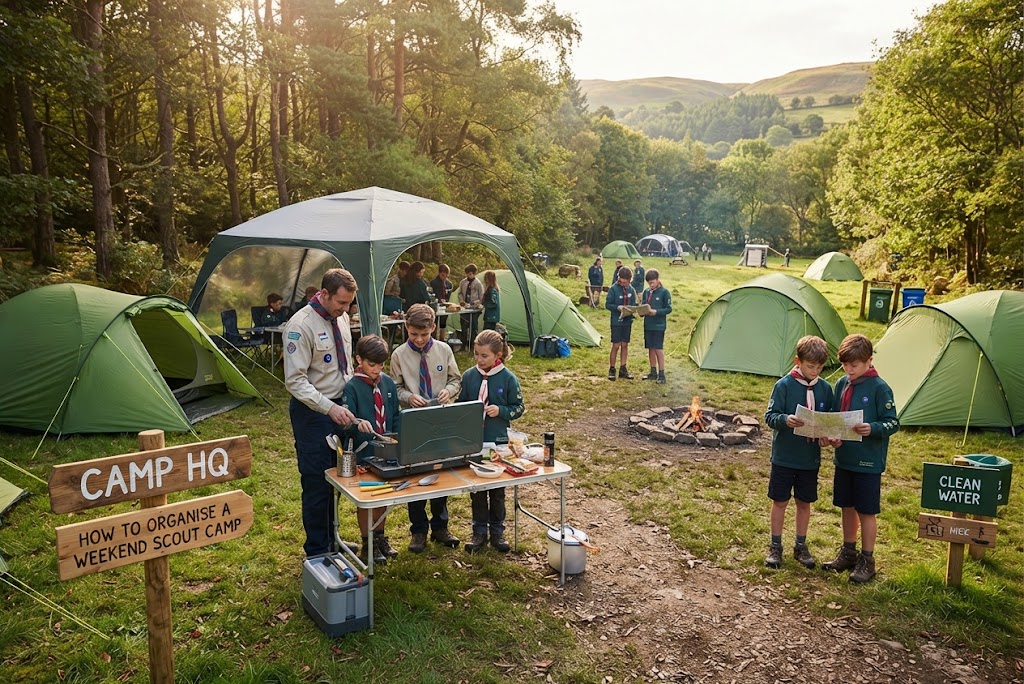
How to Organise a Weekend Scout Camp
Organising a weekend camp becomes much easier when you break it into smaller jobs.
Start by choosing a suitable campsite and agreeing the dates, then plan the group, activities, food, equipment, transport and safety arrangements. Finish by checking the weather and equipment before you leave.
The key is to plan early and have a simple backup plan if the weather or other circumstances change.
What You’ll Learn
In this guide, you will learn how to:
- Choose and prepare a campsite.
- Plan a simple weekend programme.
- Organise food and equipment.
- Prepare for different weather conditions.
- Plan transport and arrival.
- Organise safety and emergency arrangements.
- Make sure everyone knows what to expect.
Equipment
The exact equipment will depend on the camp, but you may need:
Prerequisites
No specialist knowledge is required to use this guide.
Before planning the camp, make sure you understand any requirements that apply to your group, campsite and planned activities.
Instructions
1. Choose Your Dates
Choose dates that give you enough time to organise the camp properly.
Check for possible clashes with other group activities and consider the likely weather for the time of year.
2. Choose the Campsite
Look for a campsite that suits the age and experience of your group.
Check:
If possible, visit the site before the camp.
3. Decide What the Weekend Will Include
Avoid trying to fit too much into two days.
A simple weekend might include:
Friday: Arrival, pitching tents, food and a short evening activity.
Saturday: Breakfast, main activities, lunch, afternoon activity, dinner and an evening activity.
Sunday: Breakfast, morning activity, pack-up and departure.
Leave some spare time between activities so the group can eat, rest and get organised.
4. Plan the Activities
Choose activities that suit the group, location and weather.
For each activity, consider:
Having one or two simple backup activities can save the day if the weather changes.
5. Plan the Food
Plan every meal before you go.
For a typical weekend, this could include:
Check dietary requirements and allergies in advance.
Keep meals simple enough to prepare safely with the equipment and facilities available.
6. Organise the Equipment
Create a master equipment list and divide it into sections.
For example:
Camping: tents, pegs, sleeping bags and mats.
Cooking: stove, fuel, pans, utensils and cleaning equipment.
Activities: equipment needed for each planned activity.
Safety: first aid kit, torches, emergency equipment and contact information.
Check equipment before leaving rather than discovering something is missing after arriving.
7. Plan the Safety Arrangements
Before the camp, identify the main hazards at the campsite and during planned activities.
Think about:
Make sure leaders know their responsibilities and everyone understands the basic camp rules.
8. Prepare for the Weather
Check the forecast before travelling and again shortly before the camp.
Have suitable clothing and equipment for the expected conditions.
Also decide what you will do if the weather becomes unsuitable for a planned activity.
A wet-weather activity can be as simple as an indoor game, craft activity, quiz or practical skills session.
9. Organise Transport
Confirm:
Make sure everyone knows where to go when they arrive at the campsite.
10. Give a Camp Briefing
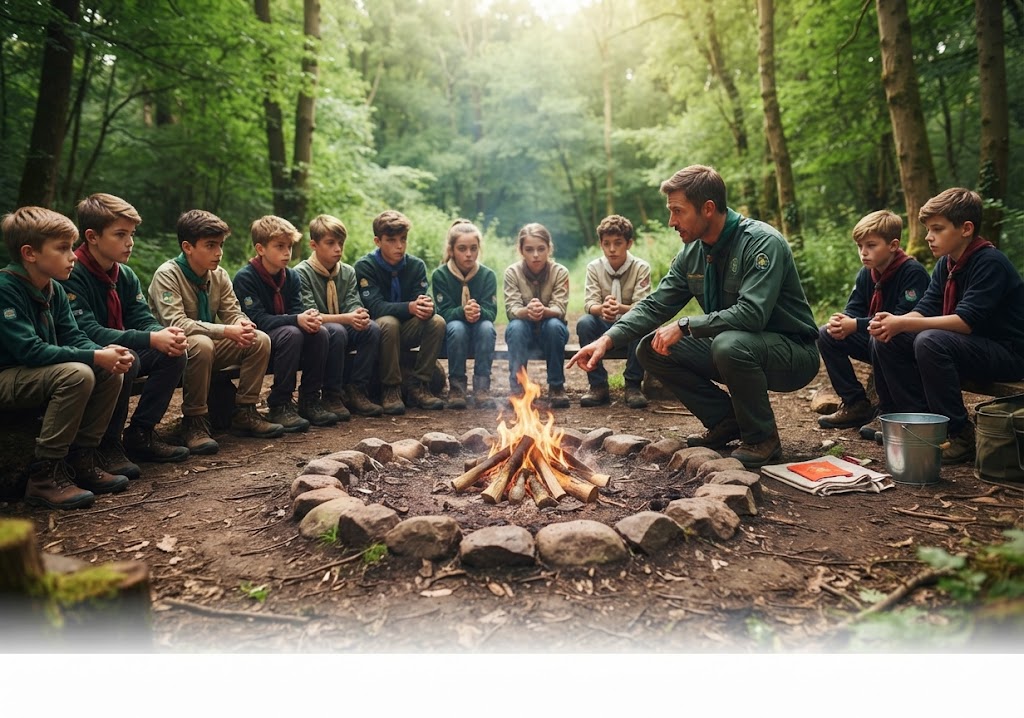
When everyone arrives, explain the important information before the weekend gets underway.
Show the group:
Keep the briefing short and allow questions.
11. Keep the Weekend Flexible
Things rarely go exactly according to plan.
A meal may take longer than expected, an activity may finish early or bad weather may force a change.
Don’t be afraid to adjust the programme.
The timetable is there to help you organise the weekend, not to prevent you from making sensible decisions.
12. Pack Up Properly
Before leaving:
Leave the campsite clean and tidy.
Final Tip
The best weekend camps usually aren’t the ones with the most activities.
Give the group enough time to enjoy being outdoors, with a mixture of planned activities, practical camping skills, games and free time.
Plan carefully, keep the safety arrangements clear and leave enough flexibility to change your plans when circumstances require it.
🔒Ready to test your survival skills?
Join Survival Guides UK for free, complete challenges, earn badges and increase your Survival Level.
JOIN FREE →
CRAIG BURR
FOUNDER · SURVIVAL GUIDES UK
I'm Craig, the person behind Survival Guides UK. I created SGUK because I wanted somewhere people could learn real outdoor skills in a practical, straightforward way — from lighting a fire and tying knots to navigation, campcraft and everything in between.
You can read more about the story behind SGUK here as well as our approach here.