Good camp planning starts well before you arrive at the campsite.
Use this checklist to work through the important details, from choosing a suitable site and planning activities to checking equipment, food, transport, weather and emergency arrangements.
You do not need to complete everything at once. Start early, work through the list and review your plans as the camp gets closer.
Camp Planning Timeline
Use this simple timeline to spread the preparation out and avoid leaving everything until the last minute.
8–12 Weeks Before
Confirm the camp dates.
Choose and check the campsite.
Confirm the group and leaders attending.
Start planning activities.
Identify any specialist equipment or requirements.
Consider transport arrangements.
Start your main risk assessments.
Check any relevant permissions, bookings or site requirements.
4–8 Weeks Before
Confirm activities and backup activities.
Check camping and cooking equipment.
Plan meals and snacks.
Check dietary requirements and allergies.
Review emergency arrangements.
Check routes and activity locations.
Share the essential information with everyone attending.
Check what clothing and personal equipment people will need.
1–2 Weeks Before
Check the weather forecast and likely conditions.
Review the risk assessments.
Check the first aid kit.
Check torches, batteries and other essential equipment.
Confirm transport and arrival arrangements.
Finalise the activity programme.
Prepare safety briefings.
Check food supplies.
Make sure emergency contact information is available.
The Day Before
Pack equipment.
Check the weather again.
Charge phones and other essential devices.
Check all camping equipment is present and working.
Pack food and cooking supplies.
Check first aid and emergency equipment.
Confirm meeting and arrival arrangements.
Review the plan for any last-minute changes.
On Arrival
Check the campsite before the group settles in.
Look for new hazards.
Check ground conditions.
Check trees, water, roads and access points.
Identify safe areas for tents and activities.
Identify emergency access and assembly points.
Give the group a short safety briefing.
Check everyone knows the campsite boundaries.
During the Camp
Keep checking the weather.
Monitor the group and activity areas.
Check equipment regularly.
Keep cooking and fire areas safe.
Keep paths and shared areas clear.
Review risks if conditions change.
Use your Plan B when necessary.
Before Going Home
Check all equipment.
Pack tents and camping equipment.
Collect rubbish.
Check the cooking and fire areas.
Check toilets and other facilities.
Walk around the entire site.
Make sure nothing has been left behind.
Check the group before departure.
What You’ll Learn
This checklist will help you plan:
The campsite and facilities.
Leaders and group arrangements.
Activities and equipment.
Food and drinking water.
Transport and arrival arrangements.
Weather and clothing.
First aid and emergency procedures.
Safety checks before and during camp.
Equipment
Keep a copy of this checklist with your camp planning paperwork.
Useful items include:
Notebook or clipboard
Pens
Camp equipment list
Activity plans
First aid supplies
Emergency contact information
Maps and route information
Weather information
Prerequisites
No specialist knowledge is needed to use this checklist.
Some camps and activities may have additional requirements depending on the location, activities, group and equipment involved. Check these well before the camp rather than leaving them until the last minute.
Instructions
1. Choose and Check the Campsite
Is the campsite suitable for the group?
Is there enough space for tents and activities?
Are there suitable toilet and washing facilities?
Is there a reliable supply of drinking water?
Is there somewhere suitable for cooking?
Is there suitable shelter if the weather becomes poor?
Are there obvious hazards around the site?
Are there safe access and exit routes?
Is there suitable access for emergency services if required?
Have you checked the site’s rules and restrictions?
2. Plan the Group
Confirm who is attending.
Confirm the leaders and other adults attending.
Make sure everyone knows their responsibilities.
Consider the needs and abilities of the young people attending.
Check that appropriate supervision arrangements are in place.
Keep the necessary emergency contact information available.
Make sure everyone knows the basic camp rules.
3. Plan the Activities
List all planned activities.
Check the location for each activity.
Identify the main hazards.
Decide how the risks will be controlled.
Check the equipment required.
Prepare instructions and safety briefings.
Have an alternative activity ready if weather or conditions change.
Make sure everyone knows where and when activities are taking place.
4. Check the Equipment
Tents
Tent pegs and mallet
Sleeping bags
Sleeping mats
Cooking equipment
Fuel and suitable storage
Torches or headtorches
Spare batteries or charging equipment
First aid kit
Cleaning equipment
Rubbish bags
Maps and navigation equipment
Emergency equipment
Spare clothing and waterproofs where appropriate
Check equipment before leaving rather than discovering a problem when you arrive.
5. Plan Food and Water
Plan all meals and snacks.
Check dietary requirements and allergies.
Work out how much food is required.
Make sure there is enough safe drinking water.
Plan how food will be stored.
Plan how chilled food will be kept cold.
Check cooking equipment before departure.
Plan how food waste and rubbish will be dealt with.
Make sure everyone knows the basic kitchen and cooking safety rules.
6. Check Clothing
Remind everyone that outdoor clothing should match the conditions.
Depending on the season and activity, this could include:
Waterproof jacket
Waterproof trousers
Warm layers
Spare socks
Suitable footwear
Hat
Sun protection
Personal medication where required
Spare dry clothing can make a big difference if someone gets wet.
7. Check the Weather
Check the forecast before the camp.
Check it again shortly before travelling.
Consider temperature, rain and wind.
Consider the effect of weather on the campsite.
Check whether paths or access routes could become difficult.
Decide what activities may need to change.
Have a plan for very hot, cold or wet conditions.
Remember that a weather forecast is useful for planning, but conditions can still change.
8. Plan Transport and Arrival
Confirm arrival and departure times.
Confirm meeting points.
Make sure everyone knows where to go.
Check parking arrangements.
Plan how equipment will be unloaded safely.
Make sure the group knows where to assemble when they arrive.
Have contact details available in case someone is delayed.
9. Prepare Emergency Arrangements
Identify the nearest suitable emergency access point.
Make sure leaders know how to raise the alarm.
Check that a suitable first aid kit is available.
Know where the nearest appropriate medical help is located.
Make sure emergency contact details are available.
Decide where the group will assemble in an emergency.
Consider what you would do if someone became separated.
Consider what you would do if the campsite became unusable.
Have a backup plan for severe weather.
10. Prepare the Safety Briefing
Before activities begin, explain:
The boundaries of the campsite.
Areas that are out of bounds.
Where toilets and other facilities are located.
What to do if someone becomes separated.
The main hazards around the site.
Fire and cooking safety.
Water safety where relevant.
What to do in an emergency.
Who to speak to if something goes wrong.
Keep the briefing short enough that everyone can remember the important points.
11. Check the Campsite When You Arrive
Do not assume the site is exactly as you expected.
Walk around and check:
Ground conditions.
Tent areas.
Water and drainage.
Trees and branches.
Fences and gates.
Roads and vehicle access.
Water hazards.
Fire and cooking areas.
Any new hazards caused by weather or other campsite users.
Update your plans if anything has changed.
12. During the Camp
Keep checking:
Weather conditions.
Group numbers.
Equipment.
Food and water.
Fire and cooking areas.
Campsite boundaries.
General cleanliness and trip hazards.
The condition and energy levels of the group.
A safe camp is not simply about good preparation. Leaders should continue making sensible decisions throughout the camp.
13. Before Leaving
Check all equipment.
Check tents and camping areas.
Collect rubbish.
Check fire areas are completely safe.
Check toilets and facilities have been left properly.
Make sure nothing has been left behind.
Check the group before departure.
Complete a final campsite walk-around.
Leave the campsite clean and tidy and report any significant problems to the site owner or manager.
Final Tip
Don’t wait until the week before camp to start planning.
Break the checklist into smaller jobs and work through it gradually. A little preparation each week is much easier than trying to remember everything the night before.
Most importantly, have a Plan B. Weather, equipment, transport and activities can all change, so being prepared to adapt is one of the most useful camping skills a leader can have.
🔒Ready to test your survival skills?
Join Survival Guides UK for free, complete challenges, earn badges and increase your Survival Level.
I'm Craig, the person behind Survival Guides UK. I created SGUK because I wanted somewhere people could learn real outdoor skills in a practical, straightforward way — from lighting a fire and tying knots to navigation, campcraft and everything in between.
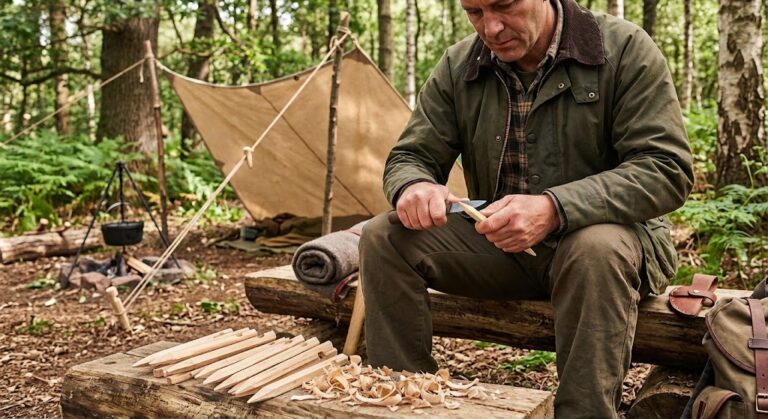
Making your own tent pegs is a simple campcraft skill that is surprisingly satisfying. You don’t need much equipment, and once you know what makes a good peg, you can make one to suit the ground and the shelter you’re putting up. A homemade wooden peg doesn’t need to look perfect. In fact, a roughly…
Campcraft is the collection of practical skills used to set up, run and look after a campsite. For Scouts, it can include everything from pitching tents and organising equipment to setting up cooking areas, managing camp routines and leaving a site clean and tidy. Campcraft isn’t about making camping complicated. It’s about learning how to…
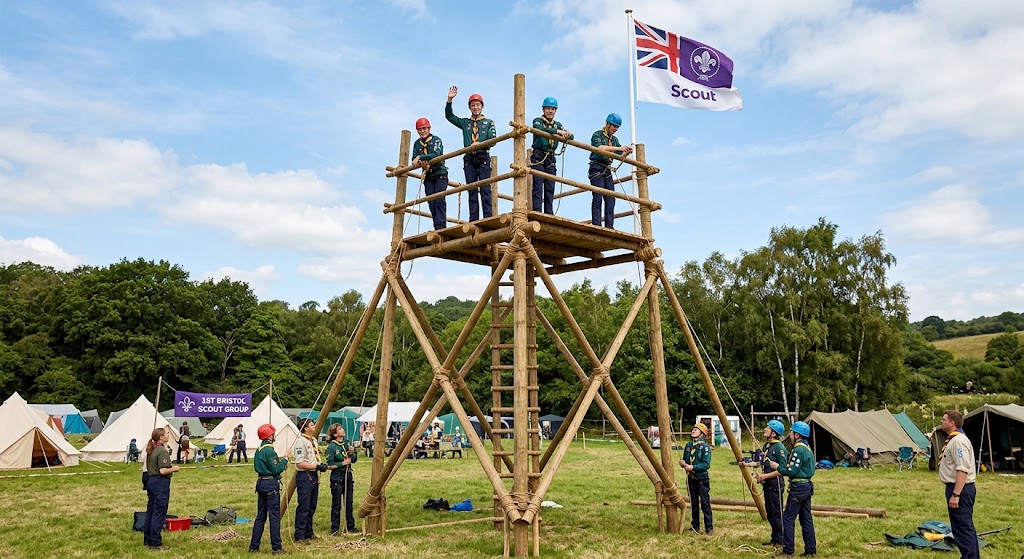
Activity Overview Difficulty: ChallengingTime: 3–5 hoursLocation: Scout campsites and suitable pioneering areasBest for: Scouts, Explorers, Patrol Leaders and experienced pioneering teamsSkills: Pioneering, knots, lashings, teamwork, planning, structural awareness and campcraft A pioneering tower is a temporary structure made from poles joined with rope lashings. It is an advanced pioneering project requiring careful planning, sound construction…
Activity Overview Difficulty: EasyTime: 20–30 minutes to learn; roles develop through regular activitiesLocation: Scout hut, campsite or outdoor activity areaBest for: Scouts, Patrol Leaders, Assistant Patrol Leaders and adult volunteersSkills: Leadership, teamwork, communication, organisation, decision-making and responsibility A Scout Patrol is a small team within a Scout Troop. Each member has a part to play,…
A campsite doesn’t organise itself. Once you arrive, there is usually plenty to do before everyone can settle down and enjoy being there. Learning how to help prepare a campsite teaches children that camping is a shared job, and even small tasks can make a big difference. You don’t have to be the person in…
Activity Overview Difficulty: EasyTime: 45–90 minutesLocation: Campsites and outdoor campsBest for: Cubs, Scouts, Explorers, Patrol Leaders, campers and outdoor enthusiastsSkills: Camp organisation, teamwork, personal hygiene, equipment care, time management and campcraft An evening camp routine gives everyone time to eat, clean up, organise equipment, wash, prepare for bed and settle down safely. A good routine…