Campfire Equipment Checklist for Scouts and Cubs
A practical campfire equipment checklist for Scout leaders, covering the equipment needed to plan, prepare, run and safely clear up a campfire activity.
A campfire can be one of the most memorable parts of a Scout or Cub camp, whether you’re cooking, telling stories, singing songs or simply enjoying time outdoors. Good preparation makes the experience much easier to manage and helps leaders concentrate on the young people rather than searching for missing equipment.
The exact equipment you’ll need depends on the site, weather, type of fire and planned activity. A cooking fire will need different equipment from a small supervised campfire used for stories and songs.
Who Is This Checklist For?
This checklist is primarily aimed at Scout and Cub leaders planning an outdoor campfire or fire-lighting activity.
It can also be useful for:
Beavers can be introduced to fire safety and supervised around suitable activities, but the equipment and level of participation should always be appropriate to their age and the activity being run.
Essential Campfire Equipment
The first priority is not the fire itself. It’s having everything needed to establish a safe, controlled activity area.
A useful basic kit might include a suitable fire container, pit or established fire area where permitted, along with a means of controlling and extinguishing the fire.
You’ll also want suitable fuel, such as dry firewood, stored so that it remains usable in changing weather.
For a leader-managed campfire, consider having:
Don’t assume that every campsite allows fires. Always check the rules of the site before planning one.
Fire Lighting Equipment
If the session includes teaching fire lighting, keep the equipment simple.
Young people don’t need a huge collection of fire-starting gadgets to learn the principles.
Depending on the activity, you might use:
Any fire-lighting equipment should be controlled by leaders and used according to the activity plan and risk assessment.
Avoid turning fire lighting into a competition where speed is rewarded over safe working.
A good fire-lighting activity should teach preparation, control and responsibility.
Water and Fire Control
Never treat water as an afterthought.
Have the equipment required to extinguish the fire available before the fire is lit.
Depending on the location and fire arrangement, this may include buckets, a suitable water supply or other approved extinguishing arrangements.
The exact method will depend on the fire type and campsite requirements.
The important rule for leaders is simple:
Don’t light a fire until you know how you’re going to put it out.
Keep the extinguishing equipment close enough to use quickly but positioned safely so it doesn’t create a trip hazard.
Fire Gloves and Tools
Suitable gloves can make handling certain equipment easier and help protect hands from heat.
Long-handled tools can also be useful for leader-controlled fire management.
Choose equipment that is appropriate for the size of the fire rather than assuming bigger equipment is better.
Young people should only use tools that are suitable for their age, ability and the activity being supervised.
A fire poker or similar tool should never become a toy or be passed around casually.
Campfire Cooking Equipment
If your campfire includes cooking, you’ll need a separate collection of equipment.
Depending on the planned food, this could include:
Think about the entire cooking process rather than only the cooking itself.
You’ll need equipment for preparation, cooking, serving and cleaning up.
Keep food and cooking equipment organised away from the main fire area until required.
Campfire Seating
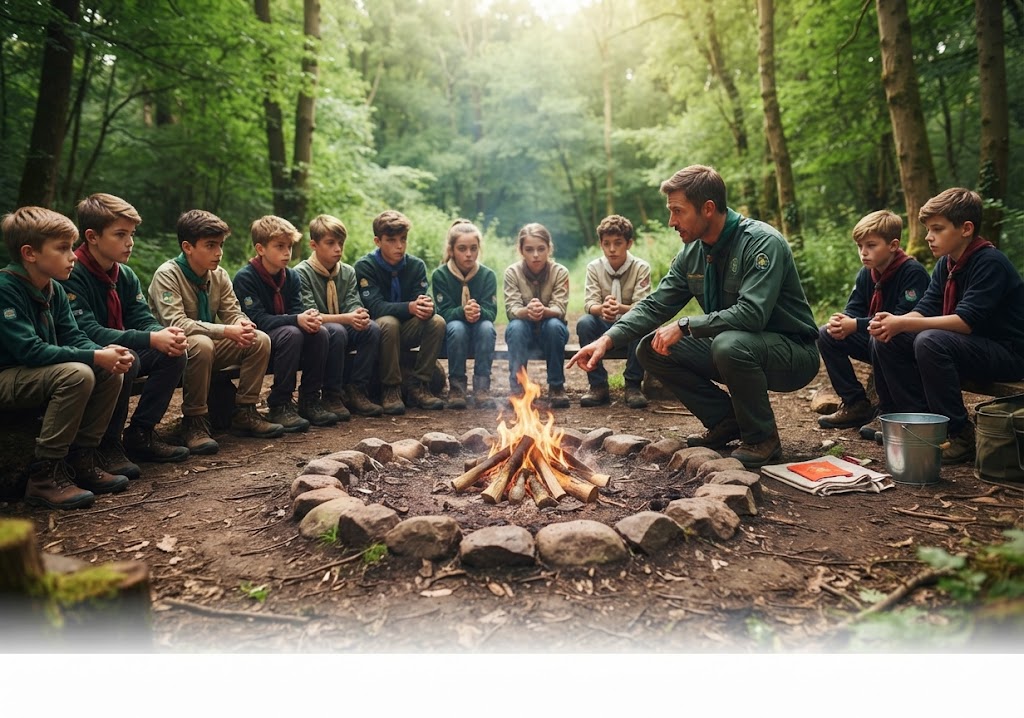
A good campfire doesn’t require everyone to sit right beside the fire.
Provide a sensible amount of space between the fire and the seating area.
Depending on the site, you might use:
Don’t use unstable logs or improvised seating that could roll or tip.
Arrange seating so that leaders can maintain a clear view of the group and the fire.
Lighting
A campfire shouldn’t be your only source of light.
Bring torches or headtorches for moving around the campsite, particularly if the activity continues into darkness.
A useful leader’s kit should include at least one reliable torch and ideally a backup.
Use lighting around paths, equipment areas and other potential hazards where necessary.
Avoid placing loose candles, lanterns or other flames where they could easily be knocked over.
First Aid and Emergency Equipment
Keep your normal first-aid provision available.
The exact first-aid kit should reflect the activity and your group’s arrangements.
Also consider having:
You don’t need to turn the campfire into an emergency exercise, but leaders should know what they would do if something went wrong.
Weather Protection
Weather can have a major effect on a campfire.
Rain can make fuel difficult to light and maintain.
Wind can make fire management more difficult and can increase the risk of sparks travelling beyond the intended fire area.
Have suitable weather information available and be prepared to cancel or modify the activity if conditions aren’t appropriate.
Useful equipment may include:
Never position a shelter or tarp so that it creates an unsafe arrangement around a fire.
Campfire Clean-Up Equipment
The activity isn’t finished when the flames disappear.
You’ll need to leave the site in an appropriate condition.
Consider keeping:
Check the fire area carefully before leaving.
Don’t assume that because flames are no longer visible, everything has cooled sufficiently to be left unattended.
Leader’s Campfire Box
For leaders who regularly run outdoor activities, it can be useful to keep a dedicated campfire equipment box.
The contents can vary depending on your group’s activities, but having a single organised box means you aren’t searching through several equipment stores before every camp.
A sensible box might contain fire gloves, basic fire-management tools, fire-lighting materials, torches, waterproof storage bags, waste bags and other frequently used equipment.
Keep fuel separate where appropriate and store all equipment safely.
Regularly check the contents and replace anything damaged, wet or used up.
What Not to Bring
More equipment doesn’t necessarily make a campfire safer.
Avoid taking unnecessary items simply because they might be useful.
Particular care should be taken with anything that could introduce additional fire, chemical or injury risks.
You should also avoid bringing equipment that young people are not trained or authorised to use.
The best campfire kit is appropriate to the activity, the site and the people taking part.
Safety
Fire activities require careful planning and supervision.
Before running a campfire, check the campsite’s rules and your group’s current procedures.
Choose a suitable location and consider the surrounding vegetation, weather, wind, nearby structures and escape routes.
Establish a clear boundary around the fire and make sure everyone understands it before lighting begins.
Young people should not run around the fire area, play with fire or handle hot equipment without appropriate supervision.
Keep flammable materials away from the fire.
Never leave a lit fire unattended.
Make sure the fire is properly extinguished and checked before the group leaves.
If conditions become unsuitable, put the fire out and stop the activity.
Before You Leave for Camp
A quick equipment check can prevent a lot of problems.
Check that:
It’s much easier to discover that something is missing before the activity starts.
Quick Campfire Checklist
Fire area: Suitable and permitted
Fuel: Dry wood and suitable kindling
Lighting: Appropriate fire-lighting equipment
Control: Water or suitable extinguishing equipment
Protection: Fire gloves and appropriate tools
Cooking: Pots, utensils and food equipment if required
Lighting: Torches or headtorches
First aid: Appropriate kit available
Weather: Conditions checked
Supervision: Leaders allocated
Boundaries: Clearly explained
Clean-up: Waste and extinguishing equipment ready
Adapting the Kit for Different Activities
A simple campfire storytelling session doesn’t require the same equipment as campfire cooking.
For a Scout campfire, your priority might be seating, lighting, fire management and entertainment equipment.
For a fire-lighting skills session, you’ll need suitable demonstration materials and controlled fire-lighting equipment.
For campfire cooking, add food preparation, cooking and cleaning equipment.
For a survival skills activity, you might introduce natural fuel identification or shelter-related challenges, but these should still be planned around the specific site and safety requirements.
The best approach is to start with the activity and then build the kit list around what you’ll actually need.
Final Thought for Leaders
A good campfire can become one of the highlights of a Scout or Cub camp.
But the magic of a campfire isn’t created by having the biggest fire or the most impressive equipment.
It’s created by good preparation, sensible supervision and giving young people the opportunity to enjoy the experience safely.
Pack the right equipment, know how you’re going to control and extinguish the fire, check the weather and campsite rules, and keep the activity appropriate to the group.
The simpler and better organised your setup is, the more time you can spend enjoying the campfire with your Scouts.
🔒Ready to test your survival skills?
Join Survival Guides UK for free, complete challenges, earn badges and increase your Survival Level.
JOIN FREE →
CRAIG BURR
FOUNDER · SURVIVAL GUIDES UK
I'm Craig, the person behind Survival Guides UK. I created SGUK because I wanted somewhere people could learn real outdoor skills in a practical, straightforward way — from lighting a fire and tying knots to navigation, campcraft and everything in between.
You can read more about the story behind SGUK here as well as our approach here.