Advanced Fire Lighting for Explorers
⚠️ SAFETY FIRST
Fire activities should only take place with appropriate adult supervision, suitable facilities, permission and a completed risk assessment. Follow your organisation’s current fire-safety guidance and any restrictions applying to the site.
Keep suitable extinguishing equipment immediately available and never leave a fire unattended. The objective of advanced fire lighting is better judgement and fire management, not bigger flames or faster ignition.
By the time young people reach Explorers, they may already have experience lighting and managing a small campfire.
This gives you an opportunity to move beyond the basic question of:
“Can you light it?”
Advanced fire skills are really about answering:
“Can you decide what fire you need, prepare for it properly, manage it safely and know when it should be extinguished?”
That requires much more thought.
Start With Preparation
Before introducing more advanced techniques, make sure the basics are secure.
Explorers should understand:
Why the fire site matters.
The fire triangle.
The difference between tinder, kindling and fuel.
How to control fire size.
How weather affects fire safety.
How to extinguish a fire properly.
If those foundations aren’t reliable, there’s little benefit in moving on to more complicated activities.
Challenge Them to Choose the Fire Lay
Rather than telling Explorers which fire lay to use, give them a situation and ask them to choose an appropriate design.
For example:
“You need a small, controlled fire for a short campcraft activity.”
Ask:
“What would you build and why?”
The important part isn’t memorising names.
It’s understanding why different arrangements behave differently.
Compare Different Fire Lays
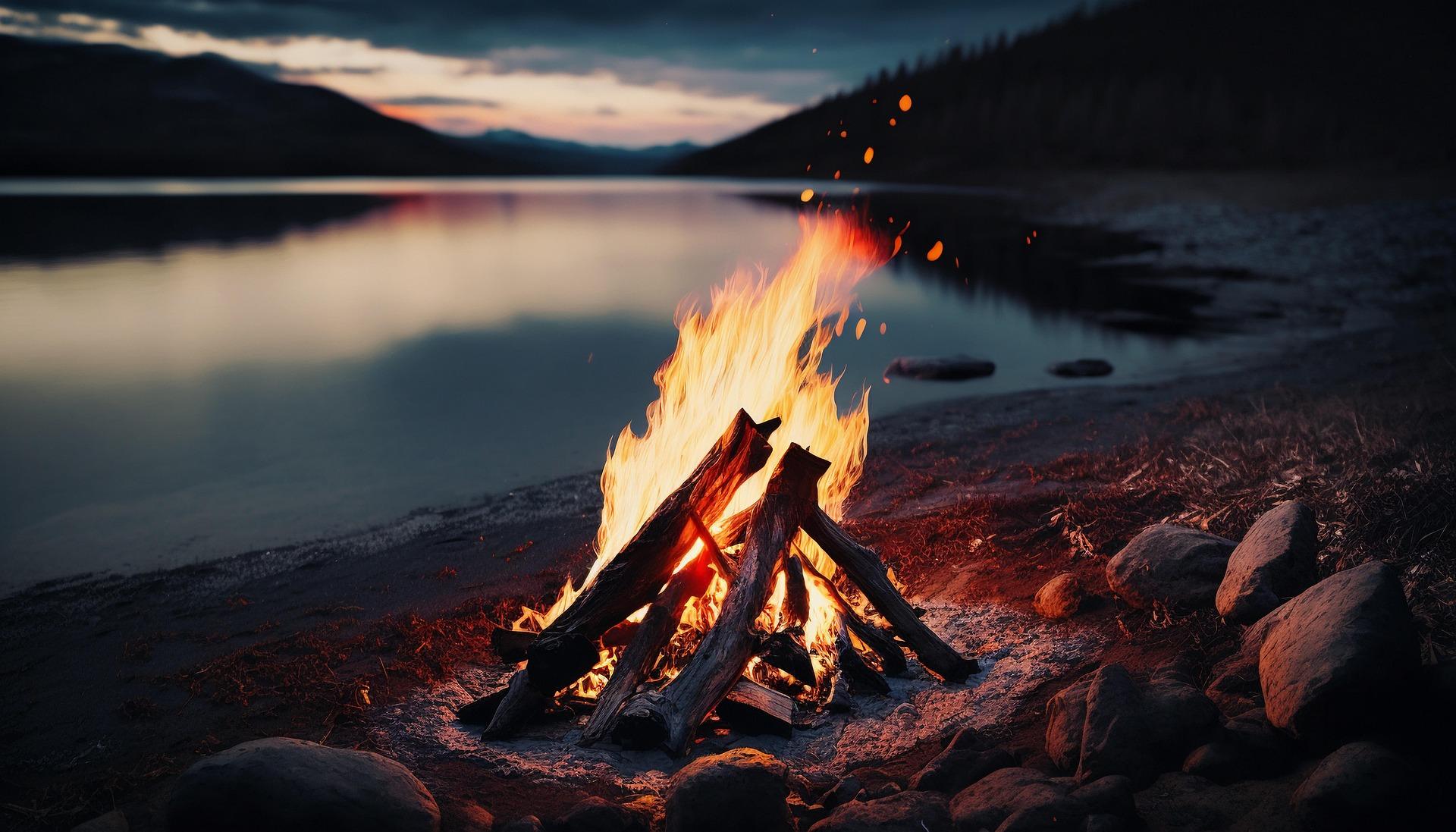
You can demonstrate several traditional fire-lay designs in a controlled setting and discuss their characteristics.
Ask Explorers:
Which one is easiest to control?
Which uses fuel efficiently?
Which provides a concentrated area of heat?
Which might be appropriate for a particular task?
The session becomes a lesson in fire behaviour and decision-making rather than simply construction.
Fuel Selection
Fuel selection is another area where Explorers can develop their judgement.
Give them a collection of suitable examples and ask them to sort materials according to their likely use.
What would work as tinder?
What could be used as kindling?
What would make suitable fuel?
Why might damp material cause problems?
This reinforces a simple principle:
A fire works best when the fuel matches the stage of the fire.
Teach Fuel Preparation
Larger pieces of wood don’t necessarily make a fire easier to manage.
Explorers can learn to prepare appropriate-sized fuel for the fire they’re actually maintaining.
The emphasis should be on controlled preparation rather than collecting enormous quantities of wood.
Where tools are involved, use only equipment appropriate to the group and your organisation’s guidance, with proper supervision and protective measures.
Introduce Fire Management
Once a fire is established, the challenge becomes maintaining it appropriately.
Ask Explorers to observe:
Is the fire getting too large?
Does it need more fuel?
Is the fuel positioned safely?
Is the fire remaining within its intended area?
Has the wind changed?
A well-managed fire doesn’t require constant interference.
Explorers should learn to make deliberate adjustments rather than repeatedly adding fuel.
Weather Changes Everything
Give the group a hypothetical change:
“The wind has increased.”
Ask:
“What would you do?”
The answer may be to reduce the fire or extinguish it.
This is an important lesson.
Advanced fire skills aren’t about keeping a fire going regardless of circumstances.
They’re about recognising when continuing is no longer sensible.
Fire Size Challenge
Give teams a specific objective:
“Maintain a small, controlled fire suitable for this task.”
Don’t tell them to make the biggest fire.
Assess them on:
Control.
Preparation.
Fuel management.
Safety.
Awareness of surroundings.
Ability to extinguish it properly.
This encourages good habits.
Fire Lighting in Difficult Conditions
Once Explorers understand the fundamentals, you can discuss how environmental conditions affect fire lighting.
Wet ground.
Damp fuel.
Wind.
Cold temperatures.
Recent rain.
The key lesson is not necessarily to overcome every problem.
Sometimes the correct decision is:
“This isn’t a suitable time or place for a fire.”
That’s an advanced survival decision in itself.
Teach Adaptation
Give Explorers a controlled scenario.
“Your original fire site has become unsuitable. What do you do?”
They might need to consider whether there is a safer permitted location or whether the activity should be abandoned.
The important thing is learning that outdoor plans aren’t fixed.
Conditions change.
Good outdoor practitioners adapt.
Fire Lighting as a Team Exercise
Give each Explorer a role.
One person can check the fire area.
Another can prepare materials.
Another can monitor the surroundings.
Another can organise suitable fuel.
Another can oversee the extinguishing process.
Rotate the roles.
This makes the activity about teamwork rather than one person demonstrating that they can light a fire.
Introduce Cooking Carefully
Fire skills naturally connect with camp cooking.
A controlled cooking activity can demonstrate why fire size, stability and heat management matter.
The objective should be to produce an appropriate cooking fire rather than a large campfire.
Food preparation also introduces additional considerations such as burns, hot equipment and food hygiene, so follow the relevant safety procedures.
The “Something Goes Wrong” Scenario
Give Explorers a fictional situation:
“The fire has become larger than intended.”
Ask:
“What are your priorities?”
Or:
“The wind has changed direction.”
What should happen?
Or:
“You no longer need the fire.”
What happens next?
These scenarios encourage Explorers to think rather than simply follow a sequence of instructions.
Teach Extinguishing as an Advanced Skill
Extinguishing shouldn’t be an afterthought.
The group should understand that the job isn’t finished when visible flames disappear.
The fire needs to be thoroughly extinguished and checked according to the requirements of the site and your organisation’s procedures.
Ask:
“How do we know this fire is actually out?”
That question is more important than:
“How quickly can we put it out?”
Fire Safety Inspection
After the fire has been extinguished, ask Explorers to inspect the area.
Are there hot materials?
Are there remaining embers?
Could anything nearby have been affected?
Has the site been left safely?
Has all equipment been accounted for?
This reinforces the idea that responsibility continues after the activity itself.
Advanced Fire Planning Challenge
Give Explorers a fictional campsite and ask them to plan where the fire should go.
They should consider:
Wind.
Nearby vegetation.
Shelters.
Cooking areas.
Access.
People moving around the site.
Safe extinguishing.
They can mark their proposed fire area on a simple plan and explain their reasoning.
This is an excellent way to teach fire safety without actually lighting anything.
Teach When Not to Light a Fire
This may be the most advanced lesson of all.
Ask:
“Would you light a fire today?”
Then introduce different conditions.
Very dry vegetation.
Strong winds.
A restricted area.
A poorly prepared fire site.
Insufficient supervision.
No suitable way to extinguish it.
The correct answer can be:
“No.”
Knowing when not to use a skill is part of mastering it.
Don’t Turn Advanced Fire Lighting Into a Competition
Avoid competitions based on:
Fastest ignition.
Largest flame.
Longest-burning fire.
Most fuel consumed.
These encourage poor habits.
Instead, assess:
Preparation
Control
Safety
Teamwork
Decision-making
Environmental awareness
Extinguishing
A team that decides not to light a fire because conditions are unsuitable may have demonstrated better judgement than a team that successfully lights one.
Combine Fire With Survival Scenarios
For Explorers, fire can become part of a larger outdoor scenario.
For example:
“Your group has reached a planned campsite late in the day. The weather has changed and you have limited time. Decide whether a fire is appropriate, where it should be located and how you would manage it.”
Now they’re thinking about:
Weather.
Shelter.
Time.
Fuel.
Safety.
Fire.
The skill becomes part of a wider decision-making exercise.
Final Thoughts
Advanced fire lighting isn’t really about learning increasingly complicated ways to make flames.
It’s about developing judgement.
Explorers should be able to look at a situation and ask:
Do we need a fire?
Is it safe to have one?
What type of fire is appropriate?
How will we control it?
What has changed?
When should we put it out?
Those are skills that will remain useful long after they’ve forgotten the name of a particular fire lay.
🔥 THE BIG IDEA
The most advanced fire-lighting skill isn’t lighting a difficult fire. It’s knowing exactly what fire you need — and when you shouldn’t have one at all.
🔒Ready to test your survival skills?
Join Survival Guides UK for free, complete challenges, earn badges and increase your Survival Level.
JOIN FREE →
CRAIG BURR
FOUNDER · SURVIVAL GUIDES UK
I'm Craig, the person behind Survival Guides UK. I created SGUK because I wanted somewhere people could learn real outdoor skills in a practical, straightforward way — from lighting a fire and tying knots to navigation, campcraft and everything in between.
You can read more about the story behind SGUK here as well as our approach here.