20 Things to Look for on a Woodland Walk
A woodland walk can be much more interesting when you stop simply walking from one place to another and start looking at what is happening around you.
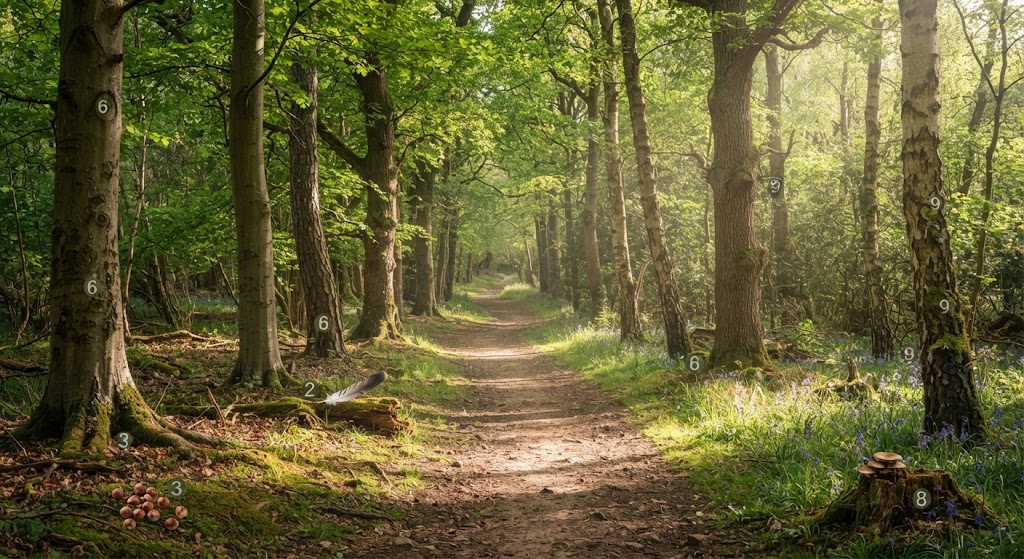
Woodlands are full of clues. Animals may be difficult to see, but they leave behind tracks, feathers, chewed nuts, droppings, nests and other signs. Trees, plants, fungi and insects can also turn an ordinary walk into a brilliant outdoor exploration.
You don’t need specialist equipment to get started. A notebook, pencil and perhaps a pair of binoculars can be useful, but the most important things to take with you are patience and curiosity.
Here are 20 things to look for the next time you visit a woodland.
1. Animal Tracks
Look carefully at muddy paths, soft ground and patches of bare earth for footprints.
Different animals leave different shaped tracks, although identifying them isn’t always straightforward. Dogs, foxes and other animals can sometimes leave surprisingly similar prints.
Rather than looking for just one footprint, look for a trail.
Ask yourself:
- How many toes can you see?
- Are there claws?
- How large is the print?
- Are the prints in a straight line or scattered?
- Are there several prints following the same route?
2. Feathers
Finding a feather can be a great clue that birds are active nearby.
Look at its size, shape and colouring, but don’t assume that a feather always allows you to identify the bird that dropped it with certainty.
You can also look for several feathers in the same area. A collection of feathers may tell a different story from finding a single feather on a path.
If you find feathers, observe them where they are rather than disturbing wildlife unnecessarily.
3. Nibbled Nuts
Woodland floors can be covered with nuts, seeds and shells.
Look closely at hazelnuts, acorns and other food items. Are they untouched, broken open or covered in small tooth marks?
Squirrels and other animals leave characteristic feeding remains, although identifying exactly which animal was responsible can sometimes be difficult.
This is a good reminder that wildlife can be nearby even when you can’t see it.
4. Gnawed Wood
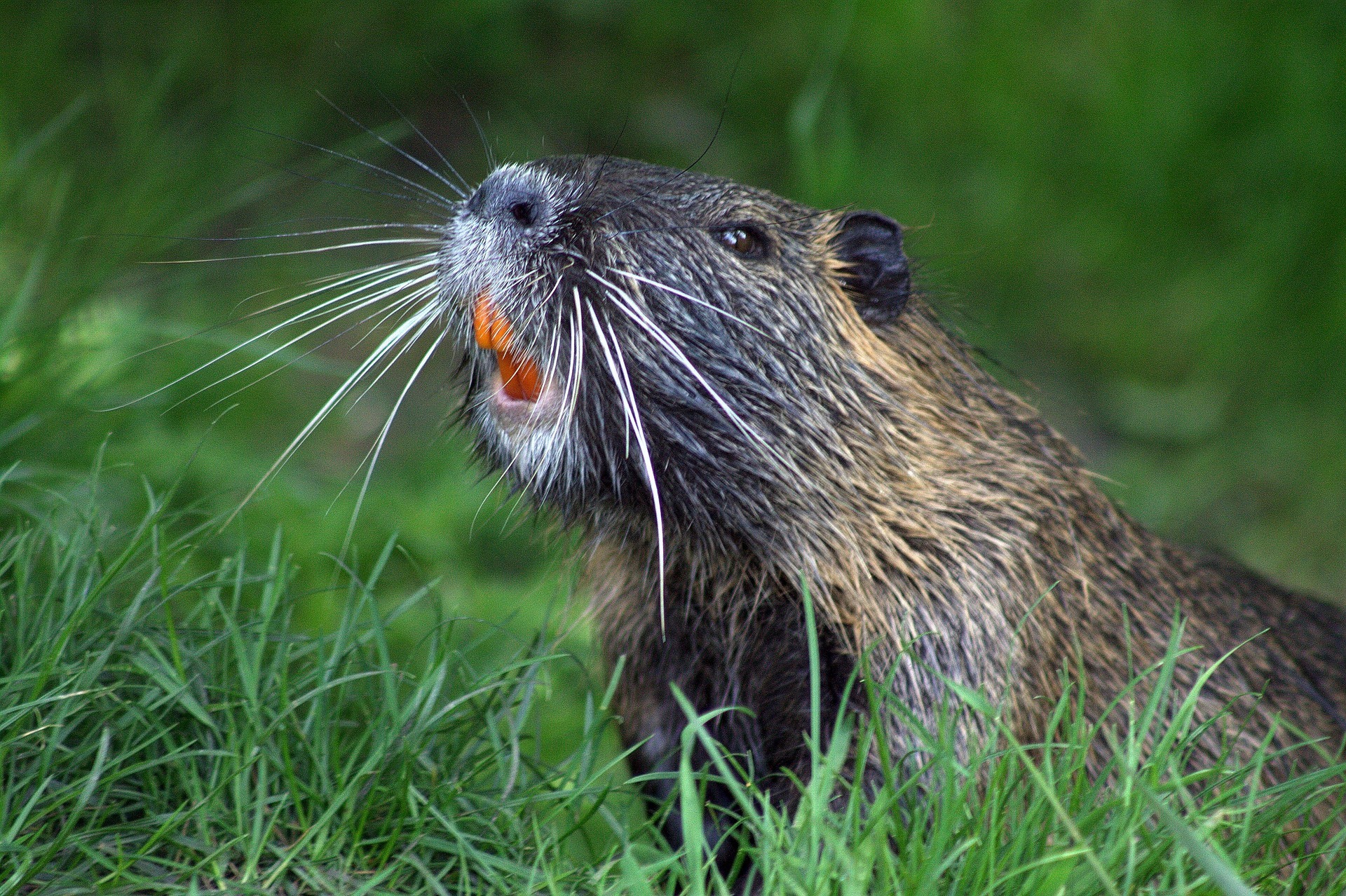
Look at fallen branches and the bases of trees for signs of chewing.
Small mammals can gnaw wood for food, access or other reasons. Larger marks may have a different explanation.
Try to work out whether the marks are fresh or old.
Freshly exposed wood is usually much lighter than weathered wood, making recent activity easier to spot.
5. Animal Droppings
Droppings can provide clues about what animals are using an area.
However, don’t touch them.
Instead, look at their size, shape, location and surroundings. You may also be able to spot seeds, berries or other food remains nearby.
Remember that droppings can carry harmful organisms, so observation from a safe distance is the best approach.
6. Tree Bark
Stop and examine the trees around you.
Bark varies enormously between species. Some trees have smooth bark, while others have deep ridges, flakes or distinctive patterns.
Look at:
- Colour
- Texture
- Ridges
- Cracks
- Flakes
- Moss and lichen
- Damage from animals
Learning to recognise trees by their bark is particularly useful when leaves aren’t available.
7. Different Leaf Shapes
Leaves are one of the easiest things to start identifying.
Look for differences in:
- Shape
- Size
- Edge pattern
- Arrangement
- Colour
- Veins
Don’t worry about identifying every leaf immediately. Start by finding several that look different from one another.
8. Fungi
Woodlands can contain an amazing variety of fungi, particularly during damp conditions and in autumn.
Look for mushrooms growing on the woodland floor, tree trunks, fallen branches and old stumps.
Never eat wild fungi simply because you think you have identified it correctly. Many species can look similar, and some are poisonous.
For a woodland walk, identification is enough.
9. Moss and Lichens
Look closely at tree trunks, rocks and fallen branches.
Mosses and lichens come in many shapes and textures. Some form soft green coverings while others appear crusty, leafy or branching.
They can make excellent subjects for close observation.
Try finding three different types without needing to name them.
10. Spider Webs
Spider webs are often much easier to spot early in the morning when dew catches the silk.
Look between:
- Branches
- Shrubs
- Grasses
- Tree trunks
- Fences
- Low vegetation
See how many different web shapes you can find.
Don’t deliberately disturb the webs. The aim is to observe them, not destroy them.
11. Bird Calls
You don’t always need to see a bird to know it is nearby.
Stop walking for a minute and listen.
How many different bird sounds can you hear?
Try to identify where each sound is coming from. Is it above you, somewhere in the canopy, in a hedge or on the woodland floor?
Listening rather than constantly looking can completely change the way you experience a woodland.
12. Animal Homes
Look for possible signs of animal homes without approaching or disturbing them.
You might spot:
- Burrow entrances
- Holes in trees
- Bird nests
- Dens
- Tunnels through vegetation
- Dreys
Some holes and structures may have been abandoned, and not every hole in a tree is an animal home.
Keep your distance and never put your hands into holes, burrows or hidden spaces.
13. Fallen Trees
A fallen tree is more than just a piece of dead wood.
Look closely and you may find insects, fungi, mosses, lichens and other organisms using it.
Rotting wood is an important part of the woodland ecosystem.
See how many different forms of life you can find on a single fallen branch or log.
14. Insects
Slow down and look closely at leaves, flowers, bark and the ground.
You might find:
- Beetles
- Ants
- Butterflies
- Moths
- Flies
- Bees
- Hoverflies
- Spiders
You don’t need to catch anything.
Watching insects going about their normal behaviour can be much more interesting than collecting them.
15. Seeds and Conkers
Woodland floors change throughout the year.
Look for acorns, conkers, beech nuts, sycamore seeds and other fallen seeds.
Try to work out which tree they came from.
This is an especially easy activity for younger children because the objects are easy to find and compare.
16. Tree Damage
Not all marks on trees are natural growth.
Look for scratches, holes, stripped bark and other signs of activity.
Some may have been caused by animals, insects, weather or falling branches.
Be careful about assuming you know the cause. The challenge is to find clues and form a theory, not necessarily to get the answer immediately.
17. Different Types of Woodland Plants
Look beyond the trees.
The woodland floor can contain grasses, ferns, flowering plants, mosses and seedlings.
Try finding five different plants.
You can make this more challenging by asking participants to find plants with different leaf shapes or different colours.
18. Signs of the Seasons
A woodland changes throughout the year.
In spring you might notice buds, flowers and new leaves.
Summer brings dense foliage and increased insect activity.
Autumn can bring falling leaves, fungi, nuts and seeds.
Winter reveals branches and tree structures that are hidden during the rest of the year.
Take photographs during different seasons and compare them.
19. Signs That People Have Been There
Not every clue in a woodland comes from wildlife.
Look for paths, old fences, cut branches, benches, tyre marks and other evidence of human activity.
Some woodlands have been managed by people for hundreds of years.
Learning to notice these signs can reveal a completely different side of the landscape.
20. Something You Have Never Seen Before
Perhaps the best thing to look for is something you don’t recognise.
It could be a strange fungus, an unusual leaf, an insect, a track or a pattern in a tree.
Take a photograph or make a note of it and investigate it later.
Outdoor learning isn’t about already knowing everything. Finding something unfamiliar is often where the most interesting questions begin.
How to Make a Woodland Walk More Interesting
Instead of trying to find all 20 things, give everyone a smaller challenge.
For younger children, choose five things.
For older children, ask them to find ten clues and explain what they think each one means.
You could also split into teams and give each team a different subject:
- Trees
- Birds
- Mammals
- Insects
- Signs of animals
- Woodland plants
At the end of the walk, compare what everyone found.
A Simple Woodland Spotting Challenge
Choose ten things from this article and make a simple checklist.
Participants must find evidence of each item without damaging plants, disturbing animals or collecting wildlife.
For an additional challenge, ask them to record:
- Where they found it
- What it looked like
- What they think caused it
- Whether they are confident about their identification
The aim isn’t to find the most things.
It’s to slow down, observe carefully and start noticing details that would normally be missed.
Leave the Woodland as You Found It
A good woodland explorer leaves as little impact as possible.
Avoid disturbing nests, dens and other animal homes. Don’t pick plants unnecessarily and don’t remove wildlife simply because it would make a good souvenir.
Take photographs, make notes and leave the woodland for the next person to enjoy.
The more you learn to notice, the more there is to discover on even the most familiar woodland path.
🔒Ready to test your survival skills?
Join Survival Guides UK for free, complete challenges, earn badges and increase your Survival Level.
JOIN FREE →
CRAIG BURR
FOUNDER · SURVIVAL GUIDES UK
I'm Craig, the person behind Survival Guides UK. I created SGUK because I wanted somewhere people could learn real outdoor skills in a practical, straightforward way — from lighting a fire and tying knots to navigation, campcraft and everything in between.
You can read more about the story behind SGUK here as well as our approach here.