Emergency Fishing Awareness
What Is Emergency Fishing Awareness?
Emergency fishing awareness is understanding how fishing might provide a potential source of food in a survival situation, while also knowing its limitations, legal requirements and environmental responsibilities.
For Scouts, this is primarily an awareness and planning skill rather than a reason to catch wildlife unnecessarily. In a genuine emergency, finding safe drinking water, shelter, warmth and a way to raise the alarm should normally take priority over trying to obtain food.
Knowing how fishing works can nevertheless be useful when learning about traditional survival skills and preparing for remote outdoor situations.
Important Safety Disclaimer
Fishing should never be treated as a substitute for contacting the emergency services or following an established survival plan. Never put yourself or others at risk to catch fish.
The information in this guide is for general outdoor education and Scout skills awareness. Fishing near rivers, lakes, ponds and other waterways can involve serious hazards, including deep or fast-moving water, unstable banks, slippery surfaces, hooks and other sharp equipment.
Always follow local laws, landowner permissions, water-safety guidance and the instructions of a qualified leader. Children and young people should only take part in fishing activities under appropriate adult supervision.
If you are lost or in a genuine emergency, prioritise raising the alarm, staying safe, finding shelter, keeping warm and obtaining safe drinking water. Do not enter dangerous water or take unnecessary risks in an attempt to obtain food.
When Might Fishing Be Useful?
Fishing could potentially provide food when someone is stranded for an extended period near suitable water and other options are unavailable.
However, fish should not be regarded as an immediate emergency food source. Catching fish is not guaranteed, and attempting to fish can use valuable energy.
Before considering fishing, deal with the most important survival priorities:
Food becomes increasingly important if the situation continues, but it is rarely the first priority in a short-term emergency.
Understanding the Water
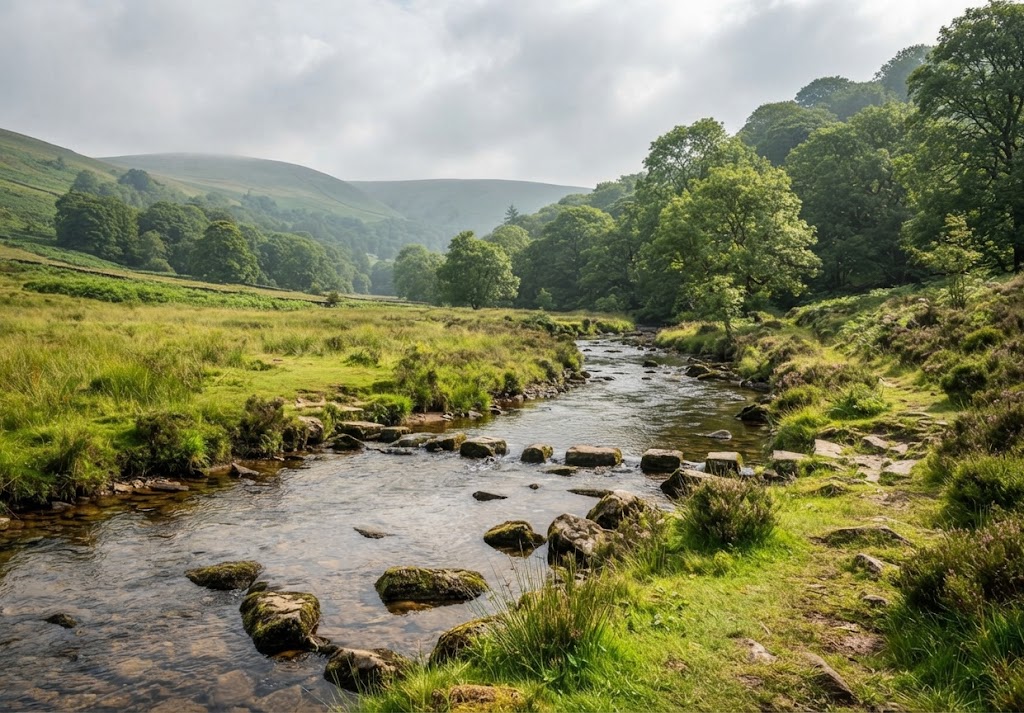
Before attempting to fish, consider the type of water you are beside.
Different environments contain different species and present different hazards. Rivers, lakes, ponds and coastal waters all require different approaches.
Never enter water simply to catch fish.
Look for hazards such as:
Being close to water does not mean it is safe to approach.
Emergency Fishing Equipment
A normal fishing kit can contain many specialist items, but emergency awareness does not require carrying a complete fishing setup.
A simple fishing kit might include:
If carrying fishing equipment, store hooks and other sharp items securely so that they cannot injure anyone or damage other equipment.
Never improvise with dangerous materials simply to create fishing equipment.
Learning to Use a Handline
A handline is a simple fishing method in which the fishing line is controlled directly by hand rather than using a conventional fishing rod and reel.
For a supervised Scout activity, a handline can be used to demonstrate basic fishing principles without requiring a large amount of equipment.
The basic idea is to attach a suitable hook and bait to the line and lower it into an appropriate area of water.
Always follow local fishing regulations and use suitable equipment. A practice activity should not involve harming wildlife unnecessarily.
Choosing a Fishing Location
If fishing is permitted, look for a safe position beside the water.
Fish may be found around areas offering shelter, food or changes in water depth, but there is no guarantee that a particular location will produce a catch.
Avoid standing on unstable rocks, steep banks or muddy edges.
A safe fishing position is more important than finding what appears to be the perfect fishing spot.
Bait and Food Sources
Different fish species are attracted to different types of food.
Common fishing baits can include worms, insects or commercially prepared bait, depending on local regulations and the type of fishing.
Never assume that an animal, plant or insect found outdoors is safe to use as bait or food.
In particular, do not eat fish or other wildlife unless you are confident about its identification and that it is safe and legal to take.
Fishing Laws and Permissions
Fishing is not automatically permitted simply because you are beside a river, lake or pond.
In England and Wales, most freshwater fishing requires an appropriate rod licence, and permission from the owner or fishing rights holder may also be required.
Rules can vary depending on the location, species and time of year.
For Scouts, any fishing activity should therefore be organised with the appropriate permissions and checked against current local regulations before taking place.
Handling Fish Safely
If fishing as part of a permitted activity, fish should be handled carefully to reduce unnecessary stress or injury.
Keep the fish out of the water for as little time as possible when releasing it, and follow the rules and guidance applying to the water you are fishing.
If a fish is legally retained for food, it should be handled hygienically and prepared properly.
Never eat fish that you cannot confidently identify or that may have come from contaminated water.
Emergency Fishing Should Be a Last Resort
Fishing can require considerable patience and energy.
Spending hours beside a river trying to catch a fish may be counterproductive if you are already cold, tired or lost.
In an emergency, consider whether the effort involved is worthwhile.
If rescue is likely, remaining in a safe location and making yourself visible may be much more important than searching for food.
A Simple Emergency Fishing Scenario
A useful Scout exercise is to imagine that your group has become stranded near a river.
Rather than immediately starting to fish, work through the situation logically.
Step 1: Assess the Situation
Establish where you are, what resources you have and whether anyone is injured.
Step 2: Raise the Alarm
If possible, contact the emergency services and provide your location.
Step 3: Secure Shelter and Warmth
Protect the group from wind, rain and cold before worrying about food.
Step 4: Find Safe Water
Identify a safe drinking-water source and consider how it can be treated appropriately.
Step 5: Consider Food
Only after the immediate priorities are addressed should you consider whether fishing is practical, legal and worthwhile.
This exercise demonstrates an important survival principle: having a possible food source does not mean it should be your first priority.
Responsible Fishing
Emergency skills should never be used as an excuse to ignore wildlife or fishing regulations.
Responsible fishing means:
Discarded fishing line can be particularly dangerous to birds and other wildlife.
Final Tips for Emergency Fishing Awareness
Emergency fishing awareness is mainly about understanding when fishing could be useful and, equally importantly, when it is not.
Remember to:
For Scouts, learning about emergency fishing is a useful way to explore survival priorities, outdoor awareness and responsible use of the natural environment. The most important lesson is knowing that good survival is about making sensible decisions, not simply finding ways to obtain food.
🔒Ready to test your survival skills?
Join Survival Guides UK for free, complete challenges, earn badges and increase your Survival Level.
JOIN FREE →
CRAIG BURR
FOUNDER · SURVIVAL GUIDES UK
I'm Craig, the person behind Survival Guides UK. I created SGUK because I wanted somewhere people could learn real outdoor skills in a practical, straightforward way — from lighting a fire and tying knots to navigation, campcraft and everything in between.
You can read more about the story behind SGUK here as well as our approach here.