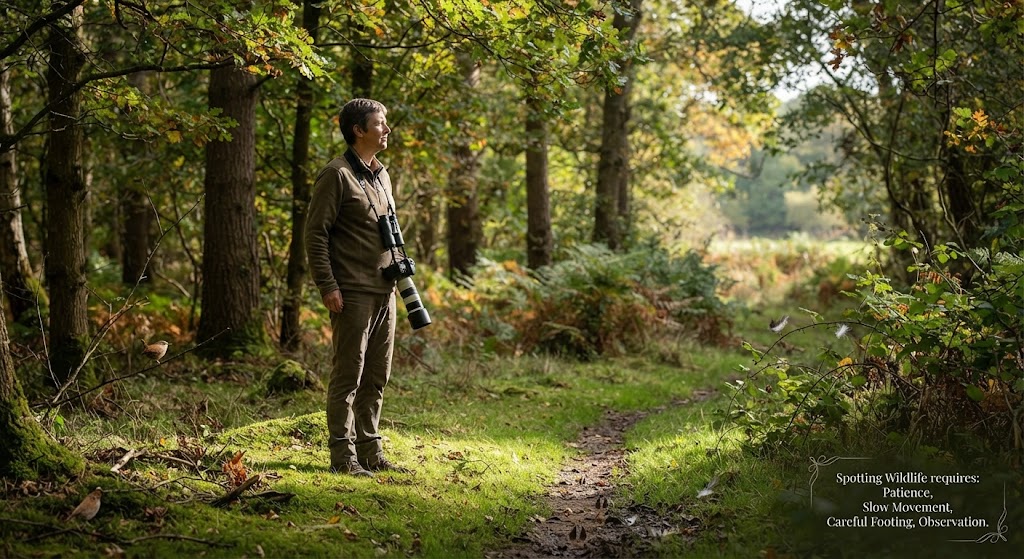
How to Walk Quietly in the Woods and Spot Wildlife
Seeing wildlife in the woods can feel like a matter of luck.
You walk along a path and see nothing. Someone else visits the same woodland a few hours later and spots a deer, fox, squirrel or dozens of birds.
The difference isn’t always luck.
Wildlife spotting is a skill. The more you learn to slow down, listen and look for signs, the more you begin to notice what is happening around you.
You don’t need expensive equipment. A quiet approach, patience and an understanding of animal behaviour can make a huge difference.
Slow Down
One of the simplest ways to see more wildlife is to walk more slowly.
Fast movement creates noise and catches the attention of animals.
Instead of constantly walking, try this:
Walk for a short distance.
Stop.
Stand still for a minute or two.
Look.
Listen.
Then continue.
You may be surprised by how much appears once you stop moving.
Watch Where You Put Your Feet
A lot of woodland noise comes from your own feet.
Dry leaves, twigs and gravel can be surprisingly loud.
Try to place your feet carefully rather than stepping heavily.
You don’t need to creep around on tiptoes. Walking naturally but deliberately is usually enough.
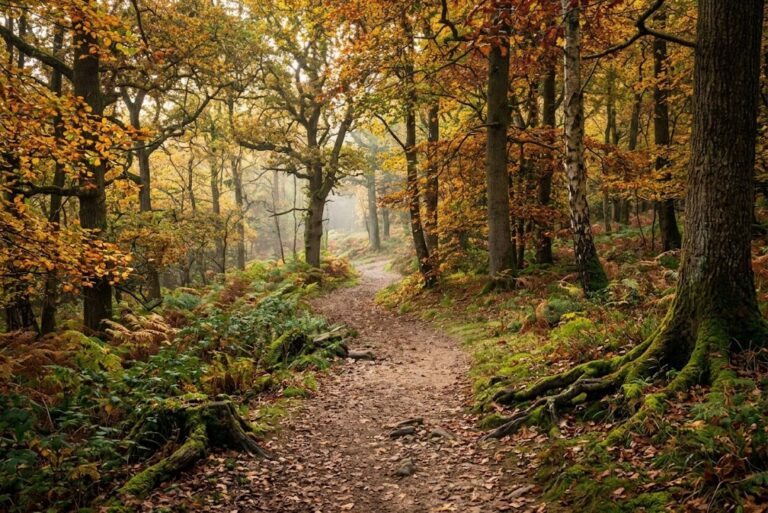
Pay particular attention during dry autumn conditions when fallen leaves and twigs can make every step obvious.
Avoid Sudden Movements
Animals are very good at detecting movement.
A sudden turn of the head or rapid arm movement can attract attention.
When you notice something moving, slow down.
If possible, stop rather than immediately walking towards it.
Use your eyes first and your feet second.
Stop and Listen
Hearing is one of the most useful wildlife spotting tools.
Find a quiet place and stand still.
Listen for:
- Bird calls
- Wingbeats
- Rustling leaves
- Animals moving through vegetation
- Branches snapping
- Water movement
- Insects
Try to work out the direction of each sound.
You may hear an animal long before you see it.
Look for Movement
Don’t stare at one spot expecting an animal to appear.
Instead, scan slowly.
Look for movement between branches, changes in vegetation and shapes that don’t seem to belong.
Wild animals are often surprisingly difficult to see because their colours and movements blend into their surroundings.
A flicking tail or moving ear may be easier to notice than an entire animal.
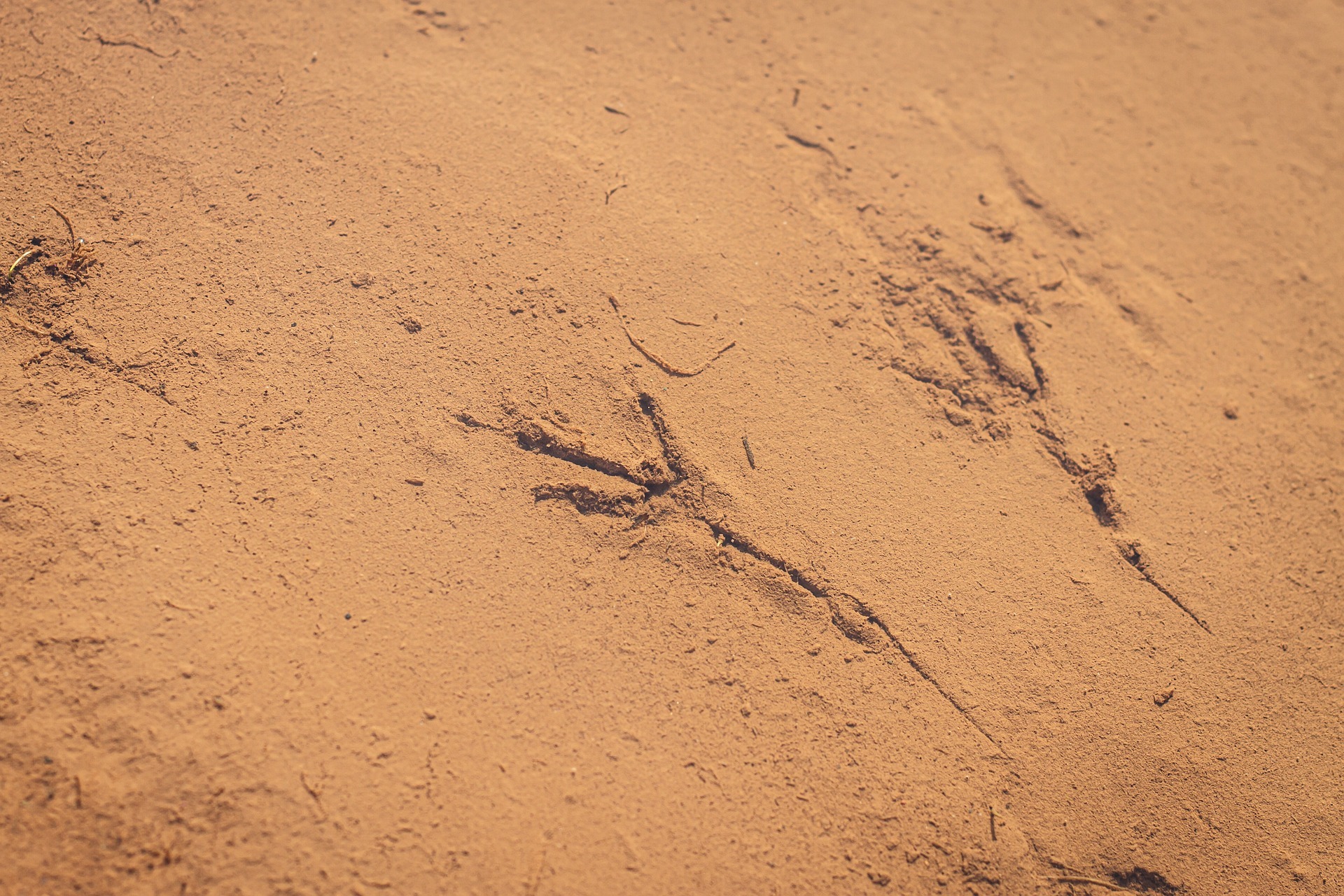
Learn to Spot Signs Rather Than Animals
Wildlife isn’t always visible.
Sometimes the best clue is something an animal has left behind.
Look for:
- Tracks
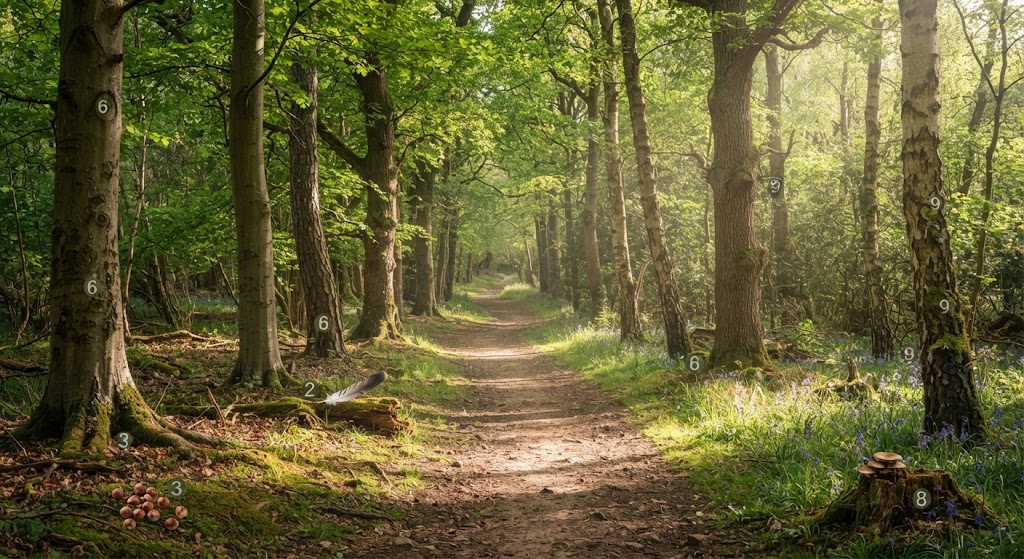
- Feathers
- Droppings
- Gnawed nuts
- Scratched bark
- Holes
- Burrows
- Nests
- Fur caught on vegetation
- Trails through grass
These clues can tell you that animals are using an area even when you don’t see them.
Use the Wind
Wind can carry sound and scent.
Pay attention to the direction the wind is travelling and avoid deliberately approaching animals from downwind where possible.
This isn’t about guaranteeing that an animal won’t detect you. Wildlife has excellent senses and conditions change constantly.
It is simply another clue to consider.
Use Cover Carefully
Trees, bushes and natural features can sometimes help break up your outline.
However, don’t push through dense vegetation simply to get closer to an animal.
Stay on appropriate paths and observation areas where possible.
The goal is to watch wildlife without disturbing it.
Choose the Right Time
Wildlife activity changes throughout the day.
Early morning can be particularly productive because many people haven’t arrived yet and the woodland may be quieter.
Late afternoon can also provide opportunities to see animals becoming active.
The best time depends on the species and habitat you are visiting.
Don’t Forget to Look Up
It’s easy to spend an entire woodland walk looking at the ground.
Look into the trees too.
Birds, squirrels and other animals may be moving through the branches above you.
Check:
- Tree canopies
- Branches
- Tree holes
- Dead trees
- Nest sites
- Woodland edges
Binoculars can help you observe animals without needing to approach them.
Look at the Woodland Edge
The boundary between two habitats can be particularly interesting.
A woodland edge might meet:
- A field
- A hedgerow
- A stream
- A meadow
- A path
- A clearing
Different habitats provide different food and shelter, so these transition areas can be worth observing.
Don’t Chase Wildlife
If an animal notices you, don’t follow it around trying to get a better view.
Give it space.
Chasing wildlife can cause unnecessary stress and may interfere with feeding, resting or caring for young.
A brief observation from a distance is a much better experience than forcing an encounter.
Keep Dogs Under Control
If you’re visiting a woodland with a dog, consider how its presence affects wildlife.
Dogs can detect and chase animals that you may never even notice.
Follow local rules about dogs and keep them under control where required.
Be Especially Careful Around Nests and Young Animals
Young animals can look vulnerable and may tempt people to approach.
Don’t assume that a young animal has been abandoned simply because an adult isn’t immediately visible.
Keep your distance and leave wildlife alone.
The same applies to nests, dens and other places where animals may be sheltering.
Wildlife Spotting Without Binoculars
You can become a better wildlife spotter without buying equipment.
Try the following exercise.
Find a safe place to sit or stand.
Spend ten minutes without talking.
Write down every animal, bird or insect you see or hear.
Then repeat the exercise another day.
You’ll probably notice different things each time.
A Simple Wildlife Spotting Challenge
Choose a woodland area and spend 20 minutes observing without deliberately approaching animals.
Record:
- Number of different birds heard
- Number of animals seen
- Animal tracks found
- Feathers discovered
- Signs of feeding
- Interesting sounds
- Other wildlife clues
For a group activity, divide participants into pairs and give each pair a different observation task.
One pair can look for tracks.
Another can look for feeding signs.
Another can listen for birds.
At the end, compare the results.
The Most Important Wildlife Spotting Skill
Patience is probably the most useful skill of all.
You don’t need to cover miles of woodland to have a successful wildlife walk.
Sometimes sitting quietly beside a woodland path for ten minutes will reveal more than walking several kilometres while talking loudly.
Slow down.
Listen.
Look carefully.
And remember that seeing no animals doesn’t mean there was no wildlife around you.
Often, the tracks, sounds and feeding signs tell the story.
🔒Ready to test your survival skills?
Join Survival Guides UK for free, complete challenges, earn badges and increase your Survival Level.
JOIN FREE →
CRAIG BURR
FOUNDER · SURVIVAL GUIDES UK
I'm Craig, the person behind Survival Guides UK. I created SGUK because I wanted somewhere people could learn real outdoor skills in a practical, straightforward way — from lighting a fire and tying knots to navigation, campcraft and everything in between.
You can read more about the story behind SGUK here as well as our approach here.