How to Follow Simple Directions Outdoors: Navigation for Children
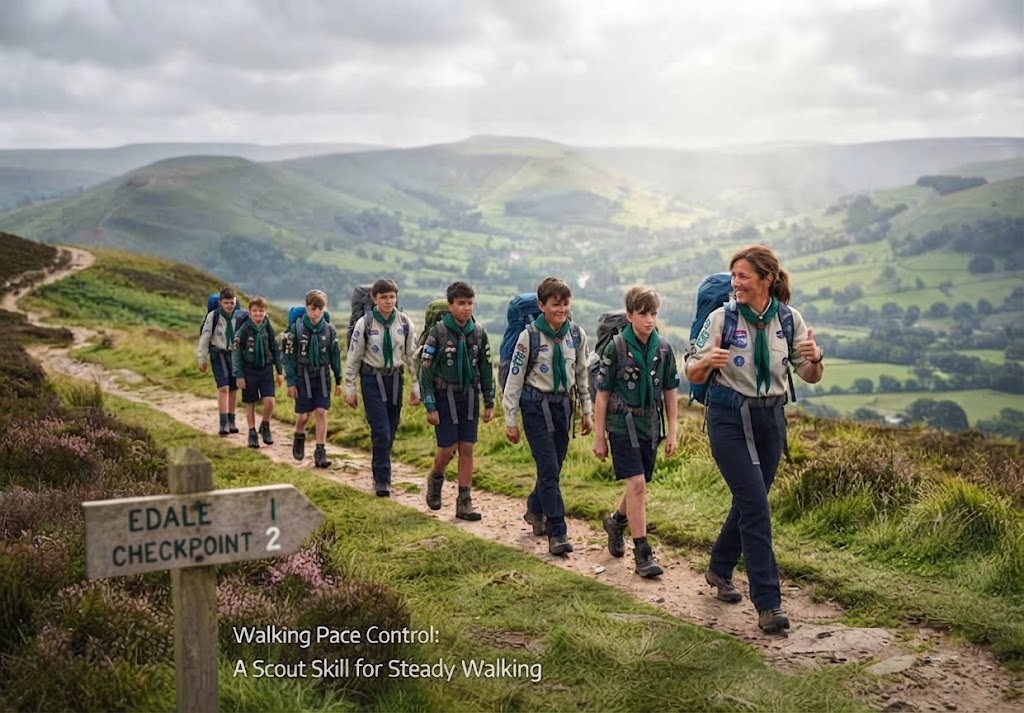
Being able to follow simple directions is an important outdoor skill. Whether you’re walking with your family, taking part in an activity or exploring with a group, you need to be able to listen, understand what you’ve been told and use the information around you to work out where to go next.
It doesn’t mean you need to be an expert navigator. Simple instructions such as “follow the path until you reach the gate, then turn left” are often all you need. The important thing is learning to pay attention and check that you’re still going the right way.
What You’ll Learn
By the end of this guide, you should understand:
- How to listen carefully to directions
- How to remember simple instructions
- How to use landmarks to help you
- How to check that you’re still following the correct route
- What to do if you’re unsure where to go
Listen Before You Set Off
The first step is to listen properly.
If someone gives you directions while you’re already walking, it can be tempting to start moving straight away without taking in what they’ve said. Instead, stop for a moment and listen to the whole instruction.
Try to remember the important parts. You might be told to follow a path, pass a particular tree, cross a bridge and then turn right. You don’t necessarily need to memorise every word, but you do need to understand what you are looking for and what happens next.
If you’re not sure, ask the person to repeat the instructions before you set off.
Look for Landmarks
Landmarks are things that are easy to recognise and can help you know where you are.
A landmark could be a bridge, gate, large tree, building, signpost, stream, path junction or distinctive hill. Good directions often use these features because they’re easier to recognise than simply being told to walk a certain distance.
For example, “Follow the path until you reach the wooden gate, then turn left” gives you something specific to look for.
As you walk, keep an eye out for the landmarks you’ve been told about. Finding each one gives you confidence that you’re still on the correct route.
Follow One Step at a Time
If you’re given several instructions, don’t worry about remembering everything at once.
Concentrate on the next part of the route. Once you’ve reached the first landmark, think about what you need to do next.
For example, your instructions might be:
- Follow the main path.
- Go through the gate.
- Continue until you reach the stream.
- Turn right at the stream.
You can work through these one at a time rather than trying to picture the entire journey before you start.
Pay Attention to Changes
Good navigation means noticing when your surroundings change.
If you’ve been walking along a wide path and the instructions said to turn at a narrow path, look out for that change. If you were told to cross a bridge and haven’t seen one yet, don’t assume you’ve somehow missed it.
Paying attention to what is around you helps you connect the instructions with the actual route.
Check That You’re Still on the Right Route
Don’t simply keep walking and hope you’re going the right way.
Every so often, think about where you are and what you have already passed. Have you seen the landmarks you were expecting? Are you still following the correct path? Does what you’re seeing make sense with the instructions you were given?
This habit becomes particularly useful as routes become longer or more complicated.
Ask If You’re Unsure
One of the most important parts of following directions is knowing when you don’t understand them.
If you become unsure, stop rather than guessing. Tell the person who gave you the directions that you’re not sure what to do next.
There is nothing wrong with asking for clarification. In fact, it is much better to ask than to confidently head in the wrong direction.
If you’re exploring as part of a group, stay with the group and speak to your leader or responsible adult if you become confused.
Practise Following Directions
You can practise this skill almost anywhere.
Ask a parent, leader or another responsible adult to give you a short route using simple instructions and landmarks. For example, they might tell you to walk to a gate, turn left, follow the path to a bench and then return to where you started.
As you become more confident, the instructions can become slightly longer or include more landmarks.
You can also take turns giving directions to someone else. Teaching another person how to reach a particular place is a good way of finding out whether you really understand the route yourself.
Final Tip
Don’t rush when you’re following directions. Listen, look, check and ask if you’re unsure.
The more you practise connecting instructions with the real world around you, the easier navigation will become. Simple directions are the starting point for more advanced skills such as map reading, route planning and using a compass.
🔒Ready to test your survival skills?
Join Survival Guides UK for free, complete challenges, earn badges and increase your Survival Level.
JOIN FREE →
CRAIG BURR
FOUNDER · SURVIVAL GUIDES UK
I'm Craig, the person behind Survival Guides UK. I created SGUK because I wanted somewhere people could learn real outdoor skills in a practical, straightforward way — from lighting a fire and tying knots to navigation, campcraft and everything in between.
You can read more about the story behind SGUK here as well as our approach here.