Understand The Four Main Directions: Navigation for Children
Understanding directions is one of those outdoor skills that seems simple at first, but becomes incredibly useful once you start exploring. Knowing the difference between north, south, east and west gives you a basic way of describing where things are and helps you make sense of maps, paths and the landscape around you.
You don’t need a compass to start learning this skill. The first step is simply to understand what the four directions mean and how they relate to one another.
What You’ll Learn
By the end of this guide, you should understand:
- The four main directions
- How the directions relate to each other
- Where north, south, east and west are on a simple map
- Why directions are useful when exploring outdoors
Learn the Four Main Directions
The four main directions are north, south, east and west.
North and south are opposites, just as east and west are opposites. If you face north, south is directly behind you. East will be on your right and west will be on your left.
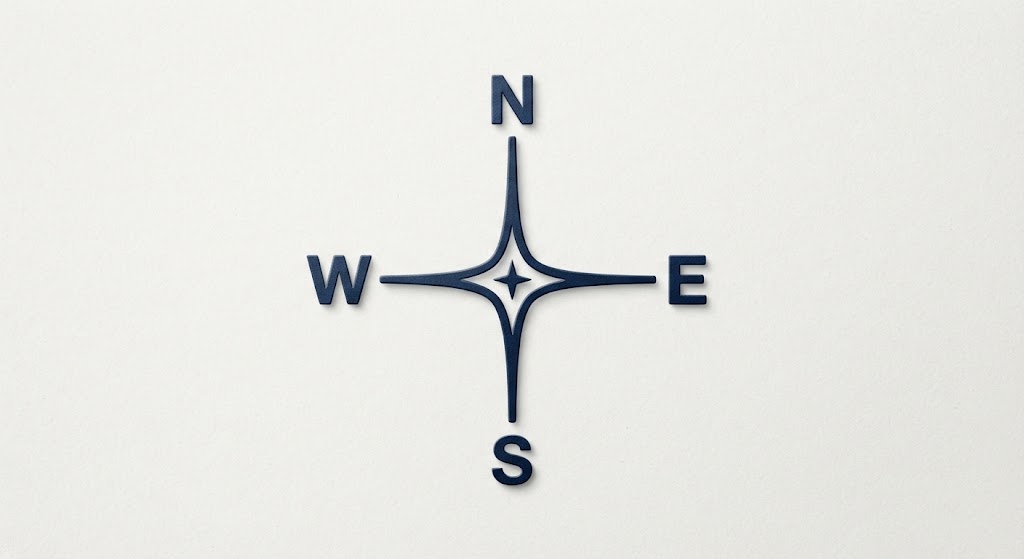
A simple way to remember this is to picture the four directions as a cross:
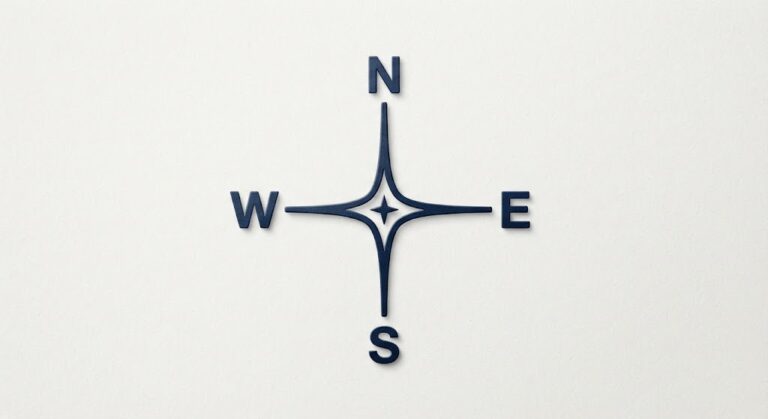
You will often see the same arrangement on a compass or map.
Understand Where They Are
The directions are fixed. They don’t change depending on which way you are facing.
For example, if you are standing facing north and turn around, you are now facing south. If you turn to your right from north, you are facing east. Turn left from north and you are facing west.
Try standing outside and choosing one direction to face. Then practise turning around and identifying the opposite direction. Once this starts to feel natural, try facing different directions and working out where the other three would be.
This is a useful little exercise because it helps you think about directions rather than simply memorising four words.
Use Directions Around You
Directions become much more useful when you start applying them to things you can actually see.
You might notice that a path leads north, a hill is to the west or a building is south of your position. You don’t need to know the exact distance to make this information useful. Being able to describe where something is can help other people understand your location too.
For example, instead of saying, “The stream is over there,” you could eventually say, “The stream is to the east of the path.”
That’s a much more useful description when you’re exploring somewhere unfamiliar.
Learn to Use a Map
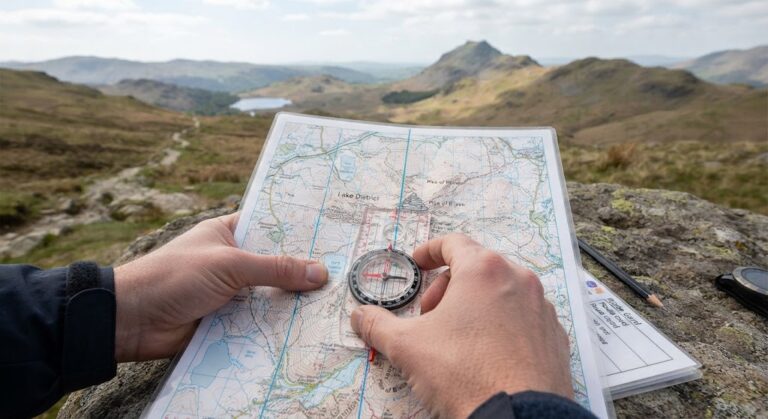
Maps are normally drawn with north at the top, although you should always check the map rather than assuming.
Once you know where north is, you can work out the other three directions. South is at the bottom, east is to the right and west is to the left.
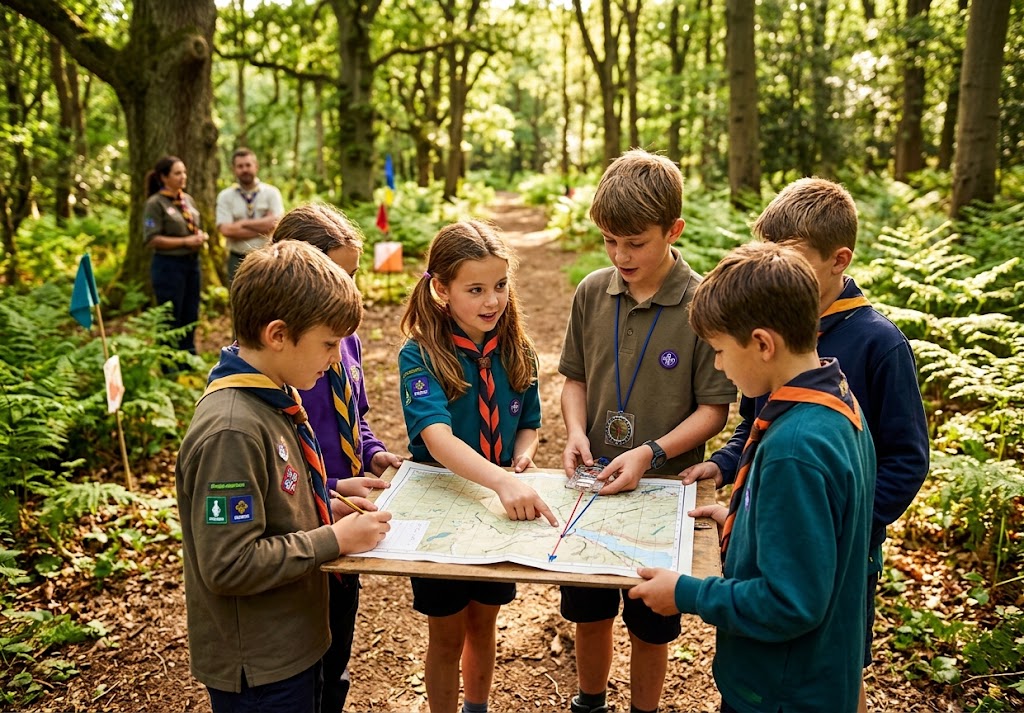
This makes understanding a map much easier because you can start connecting what you see on the paper with what you see around you.
If a map shows a lake to the east of your route, for example, you know roughly which side of the route you should expect to find it.
Make It a Game
Learning directions doesn’t have to involve sitting down and memorising them.
When you’re outside, choose a direction and ask yourself or someone else questions such as, “Which way is north?” or “If we were walking east and turned around, which direction would we be facing?”
You can also choose landmarks and describe where they are in relation to you. With practice, you’ll start using the four directions naturally rather than having to stop and think about them.
Why This Skill Matters
The four main directions are the foundation for more advanced navigation skills. Once you understand north, south, east and west, you can start learning how to use a compass, follow bearings, read maps and describe routes more accurately.
You don’t need to become an expert navigator straight away. Start by getting comfortable with the four basic directions, then build from there.
Final Tip
Don’t worry if north, south, east and west feel confusing at first. The easiest way to learn them is to practise outside and connect each direction to something you can actually see.
Once the four directions become familiar, you’ll have taken your first real step towards understanding navigation.
🔒Ready to test your survival skills?
Join Survival Guides UK for free, complete challenges, earn badges and increase your Survival Level.
JOIN FREE →
CRAIG BURR
FOUNDER · SURVIVAL GUIDES UK
I'm Craig, the person behind Survival Guides UK. I created SGUK because I wanted somewhere people could learn real outdoor skills in a practical, straightforward way — from lighting a fire and tying knots to navigation, campcraft and everything in between.
You can read more about the story behind SGUK here as well as our approach here.