Foraging Awareness: A Beginner’s Guide
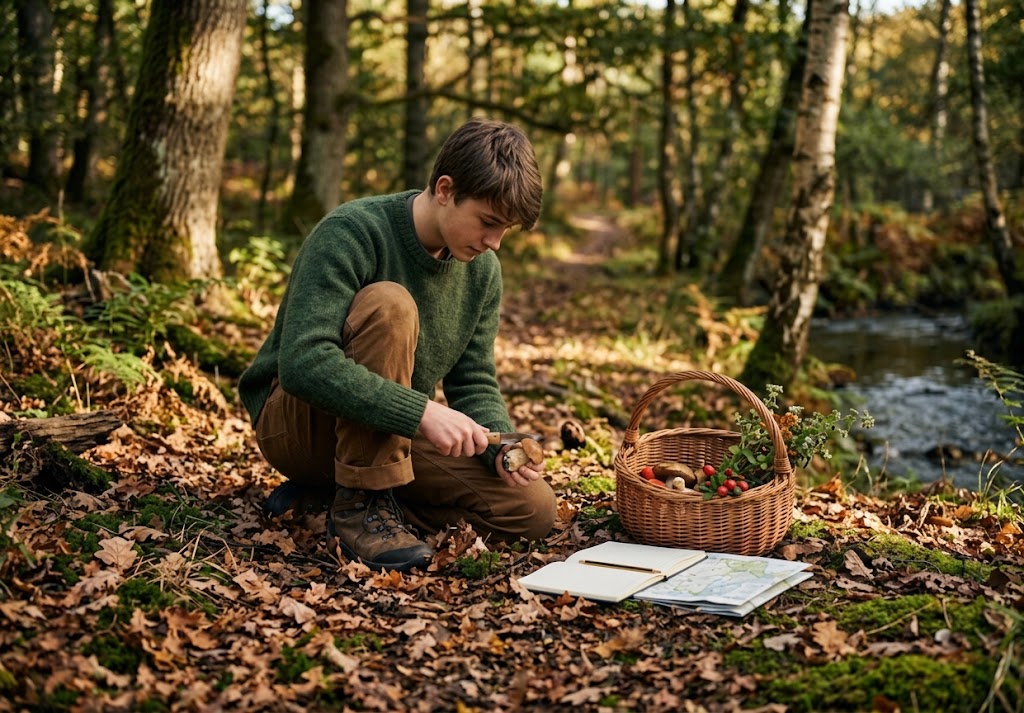
Foraging means finding naturally occurring food in the wild.
It can be a fascinating way to learn about the natural world, improve your observation skills and understand what grows around you.
But foraging also comes with serious risks.
Some edible plants have poisonous lookalikes. Some plants are unsafe to eat at certain stages of growth, and even correctly identified species can be harmful if eaten in the wrong quantities or prepared incorrectly.
For that reason, the most important foraging skill isn’t knowing what you can eat.
It’s knowing what you shouldn’t eat.
This guide introduces the principles of safe foraging awareness. It is designed to help you observe and learn about wild plants without encouraging inexperienced foragers to consume unknown species.
Safety First
Never eat a wild plant, mushroom, berry or other natural food unless you are completely certain of its identification and suitability.
A photograph or quick internet search isn’t enough to confirm identification.
Some poisonous species can look extremely similar to edible ones.
When learning, it’s perfectly acceptable to identify and observe plants without eating them.
For children and young people, foraging activities should be supervised by a competent adult with appropriate knowledge.
What is Foraging?
Foraging is the practice of collecting naturally occurring resources.
This could include:
- Plants
- Berries
- Fruits
- Nuts
- Seeds
- Fungi
- Seaweed
- Other naturally occurring foods
Humans have used wild foods for thousands of years.
Modern foraging, however, should be approached with knowledge, restraint and respect for the environment.
You don’t need to eat something to learn from it.
In fact, observation is one of the best ways to start learning.
1. Start With Observation
Before worrying about whether something is edible, learn to observe it.
Look at:
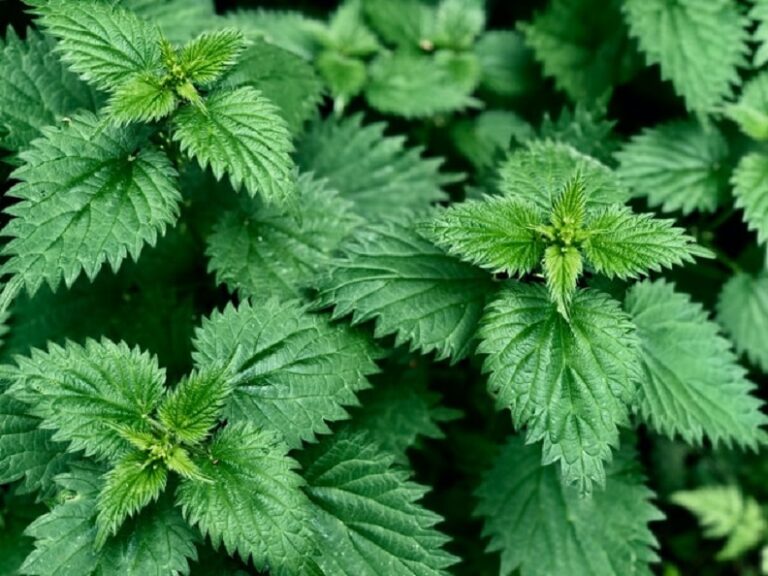
THE WHOLE PLANT
What does its overall shape look like?
THE LEAVES
Consider:
1. Shape
2. Arrangement
3. Size
4. Texture
5. Edges
THE FLOWERS
Look at:
1. Colour
2. Number of petals
3. Shape
4. Arrangement
THE STEM
Look at:
1. Colour
2. Texture
3. Shape
4. Markings
THE FRUIT OR BERRIES
Look at:
1. Colour
2. Shape
3. Size
4. Arrangement
WHERE IS IT GROWING?
The habitat can be an important identification clue.
2. Learn Where Plants Grow
Plants don’t appear randomly.
Different species prefer different environments.
You might find different plants around:
- Woodland
- Meadows
- Hedgerows
- Wetlands
- Heathland
- Coastal areas
- Riverbanks
- Gardens and parks
Knowing the habitat can help narrow down what you’re looking at.
But remember:
Habitat is a clue, not proof of identification.
A plant growing somewhere you’d expect doesn’t automatically mean you’ve identified it correctly.
3. Learn One Species at a Time
One of the biggest mistakes beginners can make is trying to memorise dozens of plants at once.
Instead:
Pick one species.
Learn:
- What does it look like?
- Where does it grow?
- When does it appear?
- What are its distinctive features?
- What could it be confused with?
- Is every part of it safe?
- Are there any restrictions on collecting it?
Then move on to another species.
Your aim isn’t:
“I know hundreds of edible plants.”
Your aim is:
“I can confidently identify a small number of species and recognise when I’m not sure.”
Knowing when to say “I don’t know” is an important survival skill.
4. Learn About Lookalikes
This is one of the most important parts of foraging awareness.
Some edible species have poisonous relatives or lookalikes.
A beginner may notice:
“That plant looks like the one I’ve seen before.”
An experienced forager asks:
“What features prove that it is the plant I think it is?”
Never identify something based on just one characteristic.
For example:
Instead, learn the combination of identifying features.
5. Don’t Rely on a Single Photograph
Photographs are useful for learning, but they can be misleading.
A plant can look very different depending on:
- Its age
- The season
- Lighting
- Weather
- Damage
- Growth conditions
A photograph may also fail to show important identifying features.
Use multiple reliable sources when learning.
Ideally, compare:
Field guide + trusted reference + real plant
rather than relying on a single image.
6. The “100% Certain” Rule
For SurvivalGuidesUK, I’d teach a very simple rule:
If you’re not certain, don’t eat it.
Not:
“I’m pretty sure.”
Not:
“It looks right.”
Not:
“Someone online said it was edible.”
Not:
“My friend thinks it’s safe.”
If you cannot confidently identify it using reliable information:
Leave it alone.
You haven’t failed.
You’ve made the correct decision.
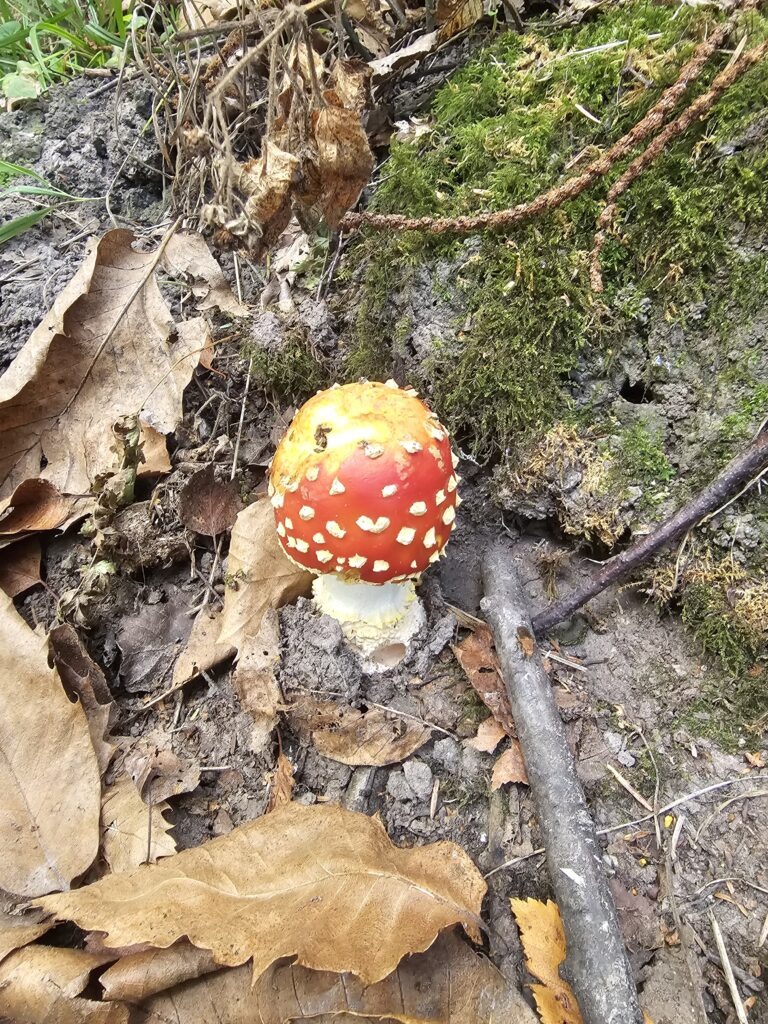
7. Be Especially Careful With Fungi
Fungi deserve their own warning.
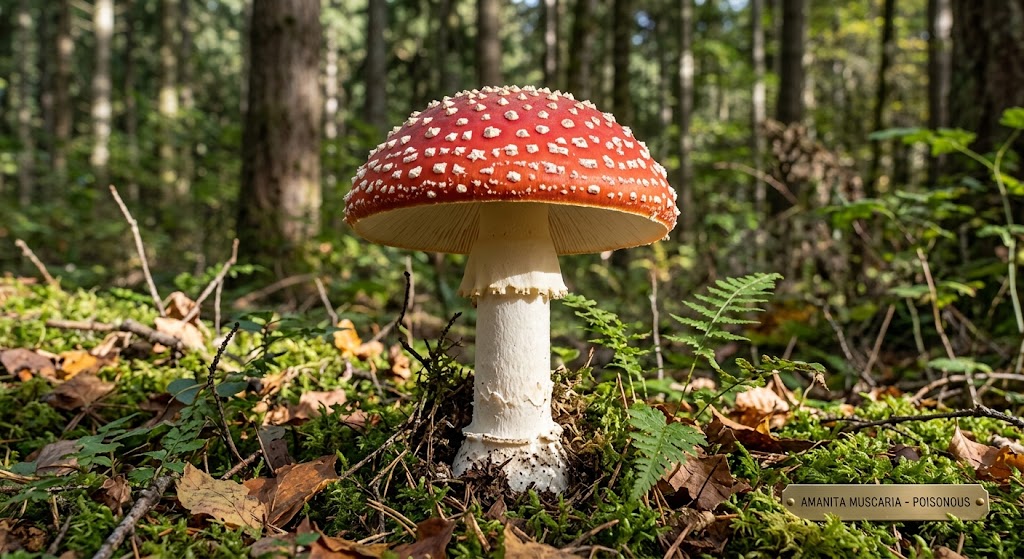
Some edible mushrooms have extremely poisonous lookalikes.
Identifying fungi safely can require considerable knowledge and experience.
For beginners:
Don’t eat wild mushrooms based on a photograph, an app or a casual identification.
A mushroom identification activity can still be a fantastic learning exercise.
You can:
Find → Photograph → Identify → Compare → Learn
without eating anything.
8. Remember That “Natural” Doesn’t Mean “Safe”
It’s easy to think:
“It’s natural, so it must be safe.”
That’s not true.
Nature contains many substances that can be harmful.
Plants can contain natural toxins.
Some species can cause:
- Poisoning
- Skin irritation
- Allergic reactions
- Stomach problems
- More serious effects
This is why identification comes before consumption.
9. Consider the Plant’s Location
Even if you correctly identify a species, where it grows matters.
Avoid collecting from areas that may be contaminated by:
Don’t assume that something growing beside a road is suitable simply because it is an edible species.
10. Look After the Environment
Foraging isn’t just about what you can take.
It’s about what you leave behind.
Wild plants provide food and habitat for insects, birds and other animals.
When observing plants:
- Don’t unnecessarily uproot them
- Avoid damaging surrounding vegetation
- Don’t strip an entire plant
- Don’t take more than you need
- Avoid disturbing wildlife
- Follow local restrictions
- Leave rare or protected species alone
A responsible forager should have as little impact as possible.
11. Know the Rules
You also need to understand that not everything growing in the countryside is yours to collect.
Land ownership and access rules matter.
Some species may have additional legal protection.
The Wildlife and Countryside Act 1981 provides protection for certain wild plants in England and Wales, including restrictions on uprooting protected plants.
The Countryside Code also encourages visitors to respect nature, avoid damaging habitats and leave things as they find them.
Before collecting anything, understand:
- Where you are
- Who owns the land
- Whether collection is permitted
- Whether the species is protected
- Whether local restrictions apply
12. Don’t Take More Than You Need
Responsible foraging means thinking beyond yourself.
Imagine you find a patch of berries.
You could collect everything.
But then:
- Birds lose their food
- Other animals lose a food source
- Seeds aren’t dispersed
- Other people can’t enjoy the plants
- The plant population may be affected
Instead:
Take little, leave plenty.
And when you’re learning, consider simply leaving the plant where it is.
The Foraging Awareness Process
Here’s the process I want SurvivalGuidesUK readers to remember:
STOP → LOOK → IDENTIFY → CHECK → DECIDE
STOP
Don’t immediately pick it.
LOOK
Observe the entire plant and its surroundings.
IDENTIFY
Use reliable identification information.
CHECK
Look for potential lookalikes and safety warnings.
DECIDE
If you’re not completely confident:
Leave it alone.
A Beginner’s Foraging Kit
You don’t need lots of equipment to begin learning.
A simple learning kit could include:
Notice what’s missing?
You don’t need a basket.
You can learn an enormous amount by simply observing and identifying.
Keep a Foraging Journal
This is a brilliant way for Scouts to develop the skill.
For every plant you find, record:
- Date:
- Location:
- Habitat:
- Plant name:
- How I identified it:
- Key identifying features:
- Possible lookalikes:
- Edibility information:
- Any warnings:
- Photo:
Over time you’ll build your own field reference.
Your First Foraging Challenge
The Five-Plant Challenge
Find five different wild plants.
You don’t need to eat any of them.
For each plant:
Bonus point:
Can you identify all five without using the plant’s flower or fruit?
This forces you to look carefully at leaves, stems, habitat and other characteristics.
Bonus Challenge: The Mystery Plant
Choose a plant you don’t recognise.
Don’t immediately search for it.
Instead, write down everything you can observe.
What can you see?
- Leaf shape: __________
- Leaf arrangement: __________
- Stem: __________
- Flower: __________
- Fruit/seed: __________
- Habitat: __________
- Height: __________
- Other features: __________
Now use a reputable field guide to try to identify it.
The final question:
What would make you decide NOT to eat it?
That’s the question that separates identification from safe foraging.
Explorer Challenge
Now try this with a partner.
One person chooses a plant.
The other person has to identify it without being told the answer.
But there’s a rule:
You aren’t allowed to say “I think it’s…”
You must explain why.
For example:
“I think this is X because the leaves have these characteristics, it grows in this habitat and the flowers have these features.”
Then look for evidence that could prove you wrong.
This teaches one of the most important outdoor skills:
Don’t just look for evidence that you’re right. Look for evidence that you’re wrong.
What Have You Learned?
Foraging isn’t simply about finding something edible.
You’ve learned how to:
And perhaps the most important skill:
Knowing when you don’t know enough.
Scout Connection
Foraging awareness is a great way to develop several Scout skills.
NATURE
Learn to recognise plants and understand their habitats.
OBSERVATION
Look closely at small differences between species.
DECISION-MAKING
Evaluate evidence before making a decision.
NAVIGATION
Record where different plants are found.
TEAMWORK
Work with others to identify and research species.
ENVIRONMENTAL RESPONSIBILITY
Understand how our actions affect wildlife and habitats.
A leader can turn this into a fantastic group activity without anyone needing to eat anything.
For example:
“Find five plants, identify them and explain how you know what they are.”
That teaches genuine outdoor knowledge while keeping the activity much safer for beginners.
SurvivalGuidesUK is an independent educational resource and isn’t an official Scouts website. Always follow the current Scouts programme requirements and your leader’s instructions.
SurvivalGuidesUK Safety Notice
Wild plants, fungi and other natural materials can cause serious illness or injury if incorrectly identified or used.
Never eat a wild plant, mushroom, berry, nut or other natural material unless you have an appropriate level of knowledge and are completely confident in its identification and suitability.
Children and young people should only undertake foraging activities under appropriate adult supervision.
This guide is for foraging awareness and education, not a substitute for expert identification, specialist training or medical advice.
If someone may have eaten a poisonous plant or fungus, seek urgent medical advice rather than waiting for symptoms to develop.
🔒Ready to test your survival skills?
Join Survival Guides UK for free, complete challenges, earn badges and increase your Survival Level.
JOIN FREE →
CRAIG BURR
FOUNDER · SURVIVAL GUIDES UK
I'm Craig, the person behind Survival Guides UK. I created SGUK because I wanted somewhere people could learn real outdoor skills in a practical, straightforward way — from lighting a fire and tying knots to navigation, campcraft and everything in between.
You can read more about the story behind SGUK here as well as our approach here.