Mushroom Safety: Scout Outdoor Skills Guide
Activity Overview
Difficulty: Easy–Moderate
Time: 30–60 minutes
Location: Woodlands, fields, parks and other suitable outdoor areas
Best for: Cubs, Scouts, Explorers, Patrol Leaders and adult leaders
Skills: Observation, identification, outdoor awareness, responsible countryside access and risk management
The safest rule for Scouts is never eat a wild mushroom unless it has been positively identified as safe by someone suitably qualified and the activity is specifically supervised.
Mushrooms can be difficult to identify, and poisonous species can resemble edible ones. Some can cause serious illness or worse.
Scouts can safely learn about mushrooms by observing, photographing and identifying them without eating them.
What You’ll Learn
You’ll learn how to recognise the risks associated with wild mushrooms and why appearance alone isn’t enough to establish whether one is safe.
You’ll also learn how to carry out mushroom observations without unnecessary contact, how to avoid accidental ingestion and what to do if someone eats an unknown mushroom.
🔴 SAFETY – HIGH RISK
Some wild mushrooms are poisonous and can cause severe illness.
Never taste an unidentified mushroom, even in a tiny quantity.
Don’t assume that an animal eating a mushroom means it is safe for people.
Don’t rely on a single feature such as colour, shape or smell to identify a mushroom.
Some poisonous mushrooms can look very similar to edible species, and cooking does not necessarily make poisonous mushrooms safe.
Wash hands after handling wild mushrooms, particularly before eating.
If a Scout may have swallowed a wild mushroom, seek urgent medical or poisons advice rather than waiting for symptoms.
Equipment
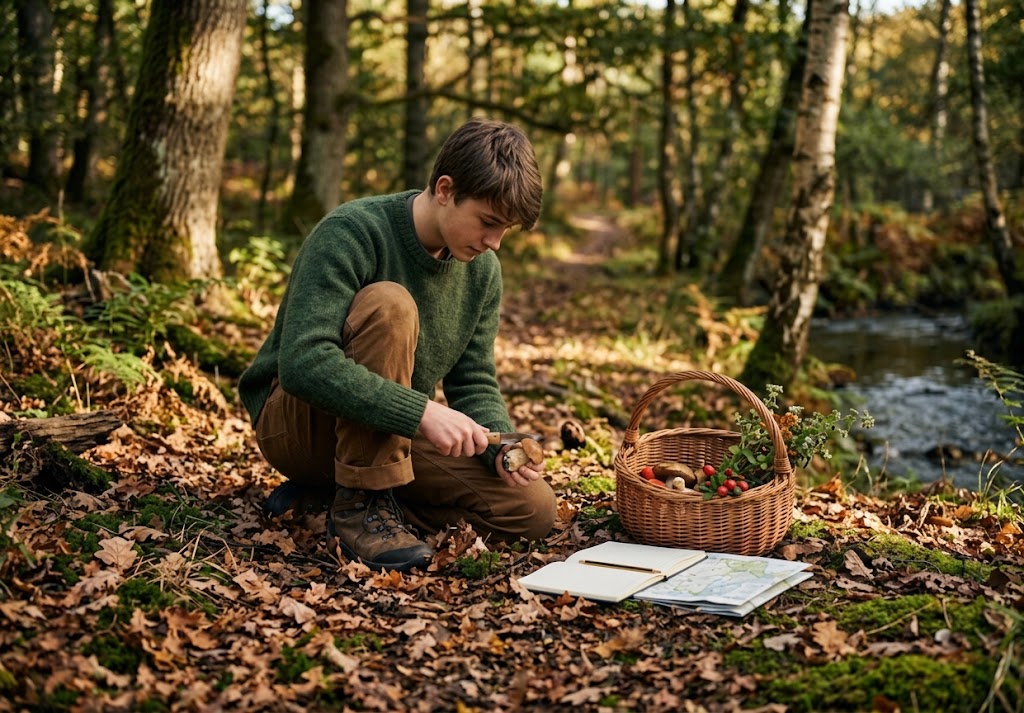
A camera or phone is useful for photographing mushrooms without picking them.
A reputable mushroom identification guide can help with learning and observation.
A notebook and pencil can be used to record features such as habitat, colour and shape.
Gloves may reduce direct contact, but they are not a guarantee of safety and shouldn’t encourage handling unknown mushrooms.
Prerequisites
Scouts should understand that wild mushrooms are not suitable for casual tasting or foraging activities.
Before a mushroom-identification activity, explain that the objective is observation and identification, not collecting food.
Instructions
1. Look Before Touching
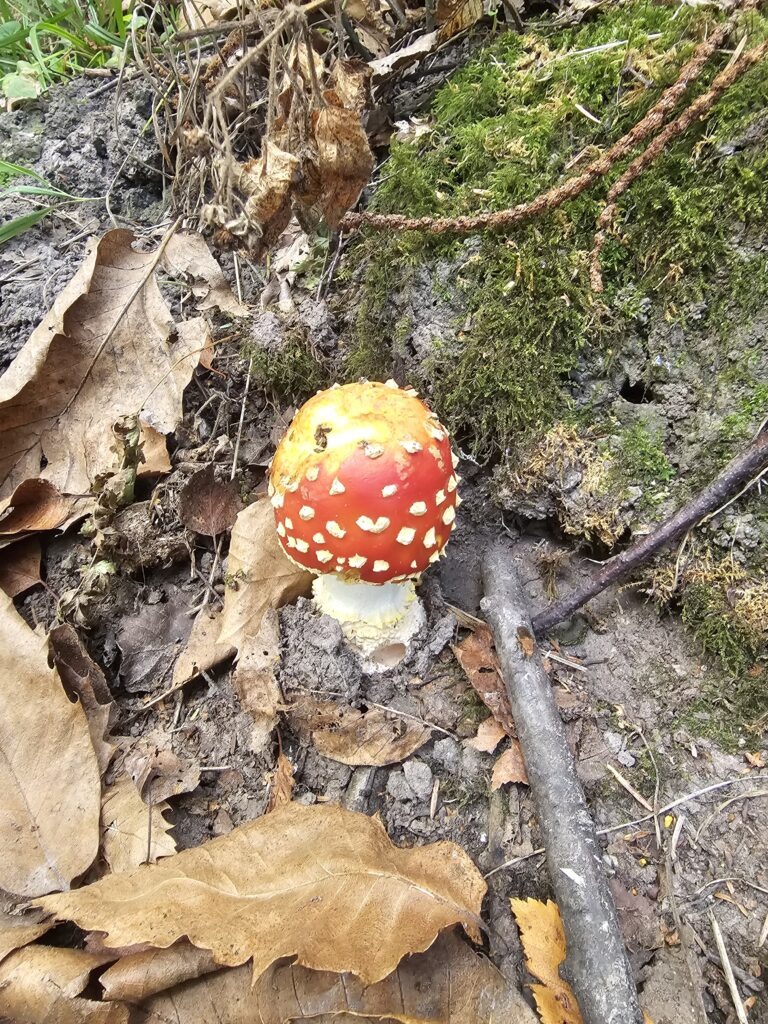
When you find a mushroom, observe it where it is growing.
Look at its cap, stem, underside and surrounding habitat.
Take photographs rather than automatically picking it.
2. Never Taste an Unknown Mushroom
Do not use taste as an identification technique.
A tiny piece can potentially cause poisoning.
This applies even if another person claims that the mushroom is edible.
3. Don’t Rely on Colour
Mushrooms can vary considerably in colour as they age or depending on their growing conditions.
Several different species can also look broadly similar.
Use multiple identifying characteristics rather than colour alone.
4. Examine the Whole Mushroom
If you’re studying mushrooms with an appropriately knowledgeable adult, consider features such as the cap, gills or pores, stem, base and habitat.
Some identification characteristics are difficult to see without disturbing the specimen, which is another reason photography and observation are preferable for Scout activities.
5. Don’t Collect Mushrooms for Food
For Scout activities, leave wild mushrooms where they are.
This avoids accidental consumption and reduces unnecessary damage to fungi and their habitats.
If specimens need to be collected for a specific educational activity, this should be planned and supervised appropriately.
6. Keep Hands Away From Food
Don’t handle mushrooms and then immediately eat.
Wash hands after outdoor identification activities.
This is particularly important with younger Scouts who may touch their face or food without thinking.
7. Don’t Crush or Burn Unknown Mushrooms
Avoid deliberately crushing, burning or experimenting with unidentified mushrooms.
There is no benefit to a Scout activity from exposing participants to potentially irritating material or smoke.
8. Photograph Interesting Finds
Take photographs from several angles.
Record the habitat and surrounding vegetation.
A photograph can then be used for identification without requiring the mushroom to be removed.
9. Use Reliable Identification
If you’re learning mushroom identification, use a reputable field guide or an experienced specialist.
Do not treat an automated identification app as proof that a mushroom is safe to eat.
Identification and edibility are different questions.
10. Leave the Mushroom Alone
Once you’ve observed and photographed it, move on.
There’s rarely a reason for Scouts to repeatedly handle wild mushrooms.
11. Be Careful During Foraging Activities
Foraging is different from simply learning about wild foods.
If an activity involves collecting wild mushrooms for consumption, it requires a much higher level of specialist knowledge and supervision than ordinary Scout plant-identification activities.
For most Scout activities, observation rather than mushroom foraging is the safer choice.
12. Know What to Do If One Is Eaten
If someone eats an unidentified mushroom, don’t wait to see whether they develop symptoms.
Keep any remaining mushroom material, photographs or other identification information if safely available.
Seek professional medical or poisons advice promptly.
Don’t induce vomiting unless specifically instructed to do so.
Mushroom Poisoning
Symptoms vary depending on the species and amount consumed.
Possible symptoms can include nausea, vomiting, abdominal pain, diarrhoea, dizziness and confusion.
Some dangerous mushroom poisonings can have delayed symptoms, so someone appearing well immediately afterwards does not necessarily mean they are safe.
If a potentially poisonous mushroom has been swallowed, obtain professional advice promptly.
Mushroom Identification Activities for Scouts
Mushrooms make an excellent observation exercise.
A patrol could photograph several different mushrooms and record where they were found, their approximate size, cap shape, underside structure and surrounding habitat.
The group can then attempt to identify them using a field guide or with help from a knowledgeable person.
The important lesson is that identification is an outdoor skill, while eating is an entirely separate decision.
What About Touching Mushrooms?
Simply touching a mushroom is not the same as eating one, and many mushrooms can be handled without causing harm.
However, Scouts don’t need to handle unknown species unnecessarily.
Some fungi can cause irritation, and hand-to-mouth contact is an avoidable route of exposure.
Observation and photography are therefore the preferred approach.
Final Tip
Mushrooms are fascinating to study, but they’re one area where “it looks edible” is never good enough.
For Scouts, keep mushroom activities focused on observation, photography and identification. Never encourage tasting, and treat any accidental ingestion of an unidentified mushroom seriously by seeking professional advice promptly.
🔒Ready to test your survival skills?
Join Survival Guides UK for free, complete challenges, earn badges and increase your Survival Level.
JOIN FREE →
CRAIG BURR
FOUNDER · SURVIVAL GUIDES UK
I'm Craig, the person behind Survival Guides UK. I created SGUK because I wanted somewhere people could learn real outdoor skills in a practical, straightforward way — from lighting a fire and tying knots to navigation, campcraft and everything in between.
You can read more about the story behind SGUK here as well as our approach here.