How to Avoid Poisonous Plants and Fungi
There is a big difference between recognising a plant or fungus and knowing that it is safe to eat. When you’re learning to forage, the safest habit you can develop is being comfortable leaving something alone when you cannot identify it with certainty.
Some poisonous species are surprisingly common, and some can look very similar to edible plants or fungi. That is why foraging should never be based on a quick photograph, a guess or the fact that something looks familiar. Good identification takes time, and sometimes the correct decision is simply not to collect it at all.
Beginner Summary
If you’re completely new to foraging, don’t worry about learning hundreds of plants and fungi straight away. Start with a few common species, learn exactly what they look like and become familiar with the poisonous or inedible species they could be confused with and the specific characteristics between them.
The most important rules are simple:
- Never eat anything you cannot identify with complete confidence.
- Learn several features of a plant or fungus, not just one.
- Learn the dangerous lookalikes as well as the edible species.
- Don’t rely on taste, smell, folk tests or an identification app to prove something is safe. (A folk test is an unreliable, unscientific rule of thumb used to determine if a wild plant or mushroom is safe to eat)
- Be especially careful with wild fungi and berries.
- Don’t collect from polluted or chemically treated areas.
- If you’re unsure, leave it where it is.
You don’t need to become an expert before you can enjoy learning about wild plants. In fact, spending time identifying plants without eating them is one of the best ways to build your confidence safely.
Learn What You Are Looking At
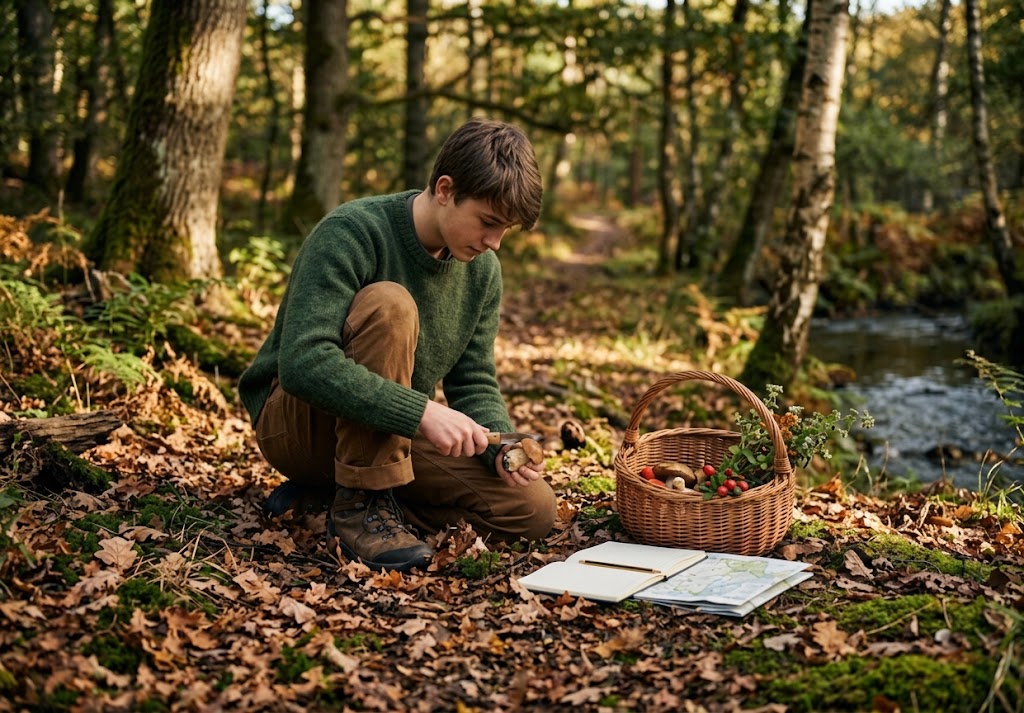
Before you start collecting wild food, spend time learning the plants and fungi in your area without eating them.
Look at their shape, colour, leaves, stems, flowers, caps, gills, pores, habitat and the way they grow. The more familiar you become with a species in different conditions, the easier it becomes to recognise when something doesn’t match.
This is particularly important because plants and fungi can change considerably as they mature. A photograph of a young specimen may look very different from the same species later in the season.
Never Identify Something From One Feature
One of the easiest mistakes is deciding what something is because of a single characteristic.
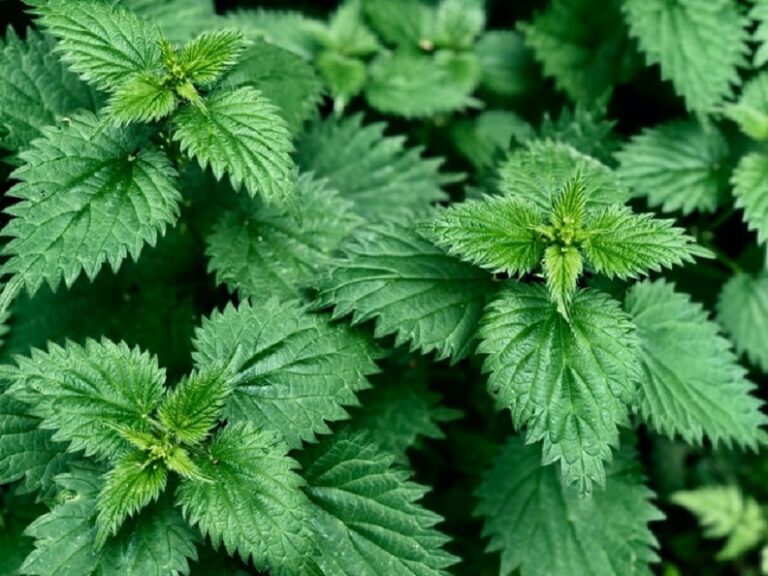
A mushroom might have a familiar-looking cap, for example, but that tells you very little on its own. Similarly, two plants might have similar leaves while having completely different flowers, stems or growth patterns.
You need to use several identifying features together and make sure the whole specimen matches what you expect to see.
Learn the Dangerous Lookalikes
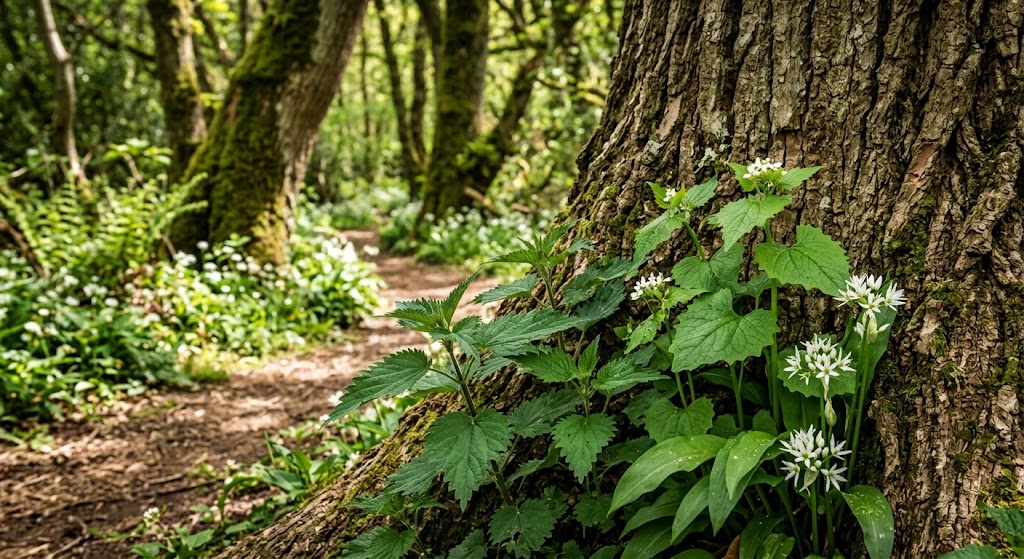
When learning an edible species, don’t stop once you know what the edible one looks like. Find out what poisonous species could potentially be confused with it.
This is one of the most valuable habits in foraging because it changes the question from “Does this look like the edible plant?” to “What else could this be?“
If you cannot confidently rule out a poisonous lookalike, don’t eat it.
Be Particularly Careful With Fungi
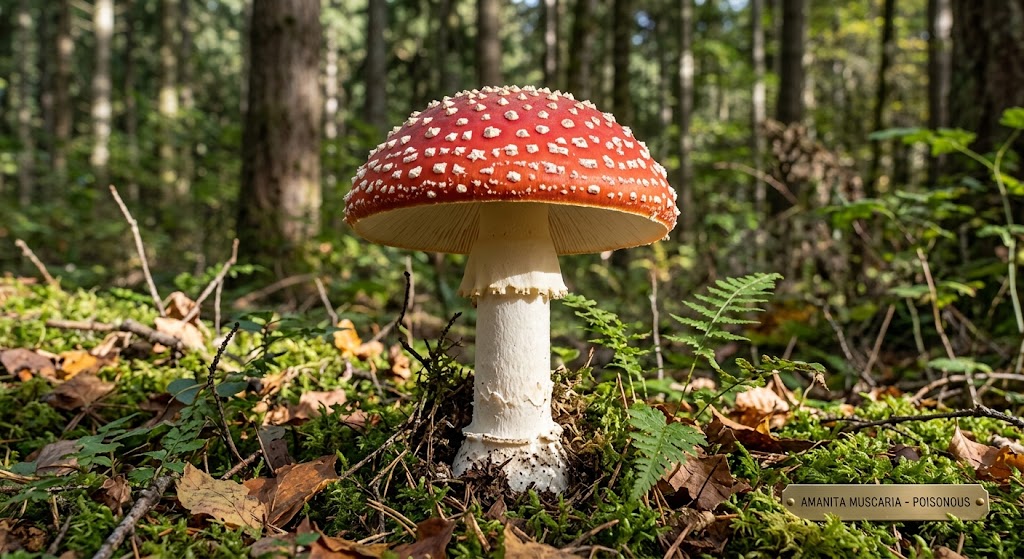
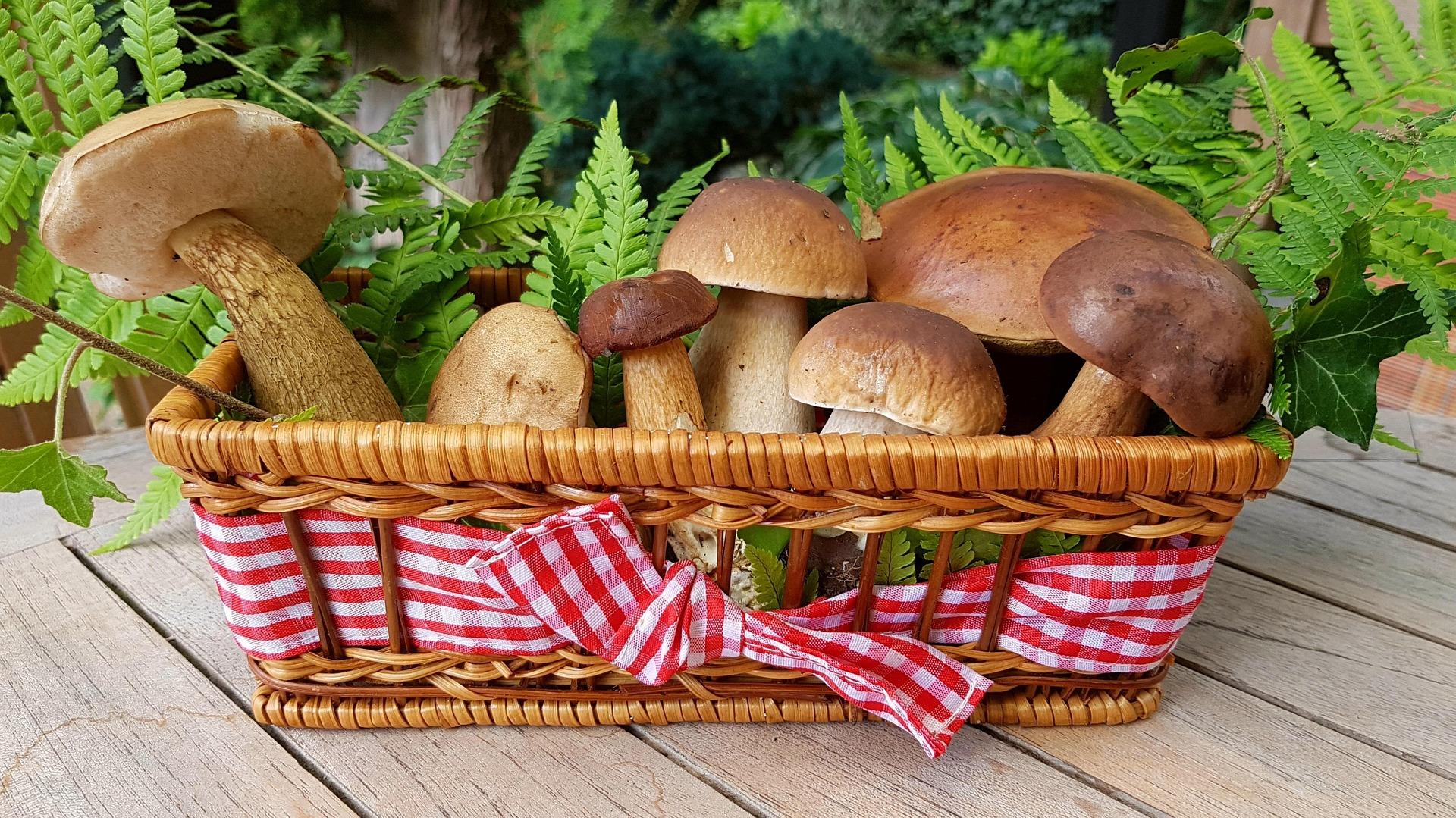
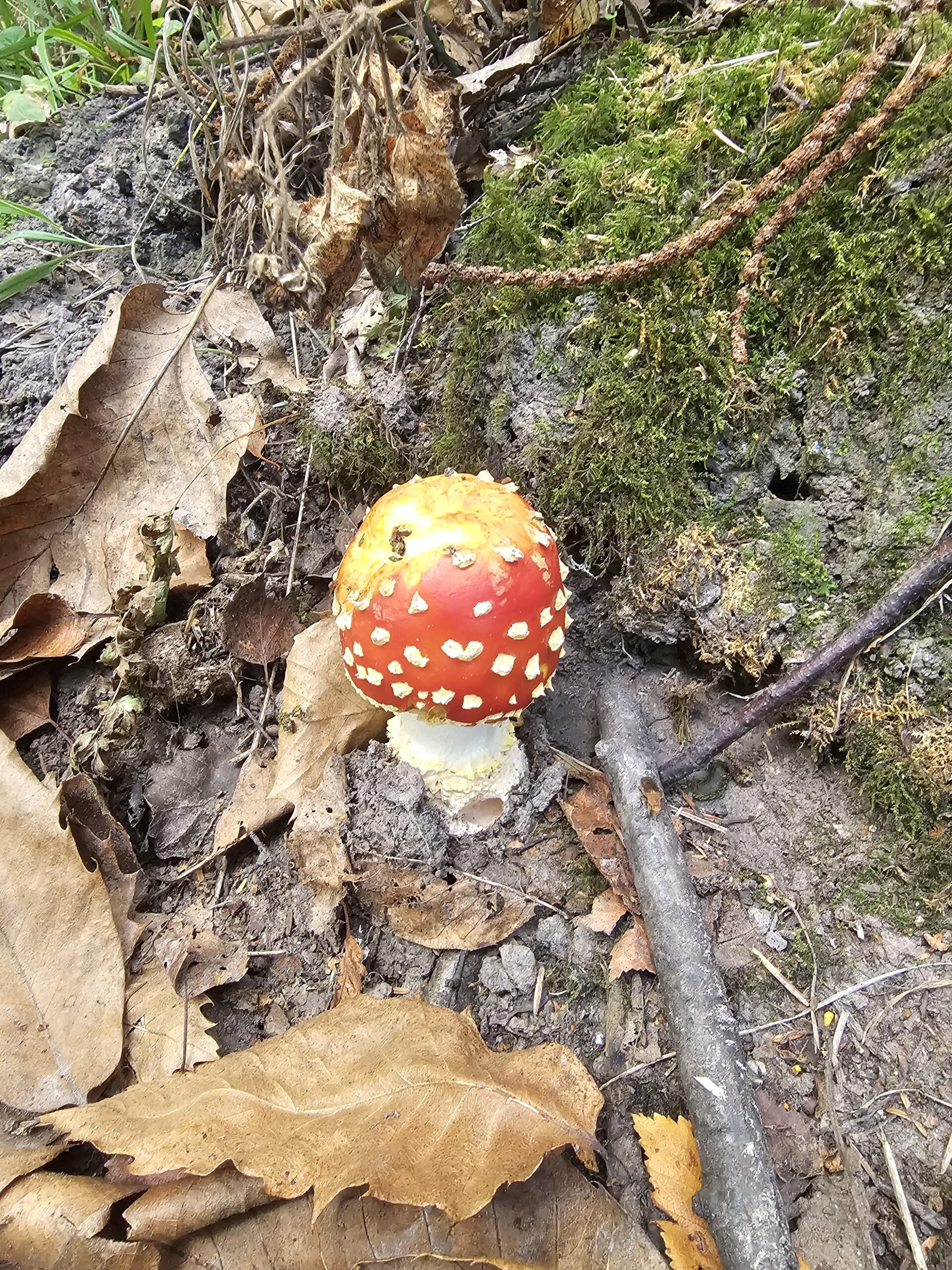
Wild fungi deserve extra caution. There are many different species, some of which can be difficult to distinguish from one another without specialist knowledge.
Do not assume that a mushroom is safe because it looks like one you have seen in a shop, because animals have eaten it or because someone online says it is edible. (This is the exact reason why I am choosing not to give a list of edible fungi as it is just too dangerous from a photo alone).
Fungi identification can require close examination of features that are easy to miss, and some dangerous species can look deceptively ordinary.
Don’t Use Old Foraging Myths
There are many traditional “tests” for poisonous plants and mushrooms that should not be relied upon.
A plant is not safe because insects have eaten it. A mushroom does not become safe because it changes colour when bruised, because it smells pleasant or because it has been cooked. Silver spoons, milk tests and other folk methods are not reliable ways to determine whether wild food is poisonous.
There is no simple universal test that tells you whether an unknown plant or fungus is safe to eat.
Don’t Rely on Identification Apps Alone
Phone apps can be useful for learning and for suggesting possible identifications (we have our own coming too), but they should not be your only source of identification when deciding whether something is safe to eat.
A photograph can miss important features, and an app may suggest the wrong species. Lighting, growth stage and image quality can all affect the result.
Use technology as an aid to learning rather than as permission to eat something you cannot identify yourself.
Check More Than One Reliable Source
If you’re learning a new species, compare it with more than one reliable source.
A good field guide, reputable botanical or mycological resource and experienced local knowledge can all help you understand the distinguishing features. Pay particular attention to descriptions of poisonous lookalikes rather than simply reading the section about the edible species.
If reliable sources don’t give you enough information to identify the specimen confidently, don’t collect it for food.
Don’t Taste Unknown Plants
Never put an unknown plant into your mouth to see what it tastes like.
Some poisonous plants can cause harm in very small quantities, and tasting something is not a reliable identification method. You should be able to identify the plant before deciding whether it is edible, not use eating it as part of the identification process.
This is especially important when children are exploring outdoors. Teach them that unknown berries, leaves, mushrooms and other natural objects are for looking at, not for eating.
Don’t Assume Berries Are Safe
Brightly coloured berries can be particularly tempting, but appearance tells you nothing about whether they are edible.
Some poisonous plants produce attractive berries that can look inviting, especially to children. Never pick a berry simply because you recognise the general type of plant or because birds are eating it.
If you cannot identify the plant and confirm that the particular fruit is edible, leave it alone.
Be Careful With Young Plants
Young plants can be harder to identify because they may not yet have developed their characteristic flowers or other features.
This can make early-season foraging more difficult than it first appears. If an important identifying feature has not developed yet, wait until you can make a confident identification rather than guessing.
Being able to say “not yet” is a useful foraging skill.
Think About Where You Are Collecting
Correct identification is not the only consideration.
Plants growing beside busy roads, in areas treated with pesticides or herbicides, around polluted water or in places contaminated by animal waste may be unsuitable for eating even if the species itself is edible.
Avoid collecting from places where you cannot be confident about the conditions the plant has been exposed to.
Keep Your Collection Separate
If you’re collecting several species, keep unfamiliar specimens separate from plants you have already identified.
This helps prevent accidental mixing and makes it easier to check anything you’re uncertain about later. Don’t put an unidentified plant into the same bag as your edible collection simply because you intend to identify it when you get home.
If you aren’t sure what something is, keep it separate or leave it where it is.
Learn the Plants Around You
You don’t need to know every poisonous plant and fungus before you can start learning about foraging.
A better approach is to learn a small number of common edible species alongside the species they could realistically be confused with. Over time, you’ll build up a much better understanding of the plants and fungi in your local area.
This also makes outdoor walks more interesting because you begin noticing species that you previously walked straight past.
Safety When You Find Something You Cannot Identify
If you find a plant or fungus that you cannot identify confidently, do not eat it.
Don’t let someone else convince you that it is probably safe, and don’t take a chance because you have seen something similar before. Leave it alone and identify it properly later if you’re interested in learning what it was.
When you’re responsible for children, make the rule especially simple: if you don’t know what it is, don’t put it in your mouth.
What to Do If Someone Eats an Unknown Plant or Fungus
If someone has eaten a plant or fungus that you cannot identify, don’t wait for symptoms before seeking appropriate advice.
In the UK, contact the NHS or seek urgent medical help if there are concerning symptoms. If the person is seriously unwell, has collapsed, is having difficulty breathing, is having a seizure or is otherwise in immediate danger, call 999.
If it can be done safely, keep a sample or take clear photographs of the plant or fungus, including the whole specimen and where it was growing. This may help professionals identify what was eaten.
Do not make someone vomit unless a medical professional specifically tells you to do so.
Teach Children the Rule
Children are naturally curious about berries, flowers and fungi, so they need a very clear rule rather than a complicated list of exceptions.
Teach them that wild plants, berries and mushrooms are for looking at unless a responsible adult who knows exactly what they are has said that they are safe. Encourage them to show you interesting things they find rather than picking and tasting them.
That simple habit can prevent a dangerous mistake.
When in Doubt, Leave It Out
The most important foraging skill isn’t being able to identify hundreds of species. It’s knowing when your identification is good enough and when it isn’t.
If something doesn’t match your identification guide, an important feature is missing, a lookalike cannot be ruled out or you simply aren’t completely sure, leave it alone. There is always another opportunity to learn what it was, but there isn’t a safe way to undo eating a poisonous plant or fungus.
Good foraging starts with curiosity, but it depends on caution. Learn slowly, identify carefully and never let the desire to find something edible override the decision to leave an uncertain specimen where you found it.
🔒Ready to test your survival skills?
Join Survival Guides UK for free, complete challenges, earn badges and increase your Survival Level.
JOIN FREE →
CRAIG BURR
FOUNDER · SURVIVAL GUIDES UK
I'm Craig, the person behind Survival Guides UK. I created SGUK because I wanted somewhere people could learn real outdoor skills in a practical, straightforward way — from lighting a fire and tying knots to navigation, campcraft and everything in between.
You can read more about the story behind SGUK here as well as our approach here.