
Equipment Maintenance for Scouts: Keeping Outdoor Gear Ready to Use
Good equipment can last for years if it is looked after properly.
For Scouts, learning how to maintain camping and outdoor equipment is an important practical skill. Looking after a tent, cleaning a cooking stove, checking a compass or drying a sleeping bag may not seem as exciting as using the equipment, but it is part of being properly prepared.
Equipment maintenance also helps Scouts understand responsibility.
If you use something, you should know how to look after it.
If you notice a problem, you should know what to do about it.
And if equipment belongs to the Scout group, everyone has a responsibility to leave it ready for the next person.
Why Equipment Maintenance Matters
Outdoor equipment gets used in conditions that can be hard on it.
Mud gets into boots.
Rain soaks tents.
Ropes become dirty.
Cooking equipment collects grease and soot.
Zips become clogged with dirt.
Batteries run flat.
Tools can become damaged or blunt.
Ignoring these problems can shorten the life of equipment and may mean that something isn’t ready when it is needed.
Regular maintenance keeps equipment usable and helps identify problems before the next camp or activity.
Get Into the Habit of Checking Equipment
Maintenance shouldn’t only happen after something has broken.
A quick check after an activity can prevent small problems from becoming bigger ones.
When equipment comes back from camp, take the opportunity to inspect it before putting it away.
Ask:
“Is it clean?”
“Is it dry?”
“Is anything damaged?”
“Are all the parts there?”
“Will this be ready for the next activity?”
These simple questions can become part of the normal routine.
Clean Equipment After Outdoor Activities
Mud and dirt are unavoidable parts of outdoor activities.
That doesn’t mean equipment should be put away dirty.
Remove obvious mud and dirt using a method appropriate for the equipment.
Some items can be washed with water.
Others may require a specific cleaning method recommended by the manufacturer.
Don’t assume that every piece of equipment can simply be put under a tap or into a washing machine.
The manufacturer’s instructions should take priority.
Dry Wet Equipment Properly
One of the most important maintenance habits for camping equipment is making sure it is properly dry before long-term storage.
This is particularly important for:
Tents.
Tarpaulins.
Groundsheets.
Sleeping bags.
Clothing.
Rucksacks.
Ropes and cordage.
Packing wet equipment away can lead to unpleasant smells, mould and deterioration.
After a wet camp, give equipment enough time to dry properly before storing it.
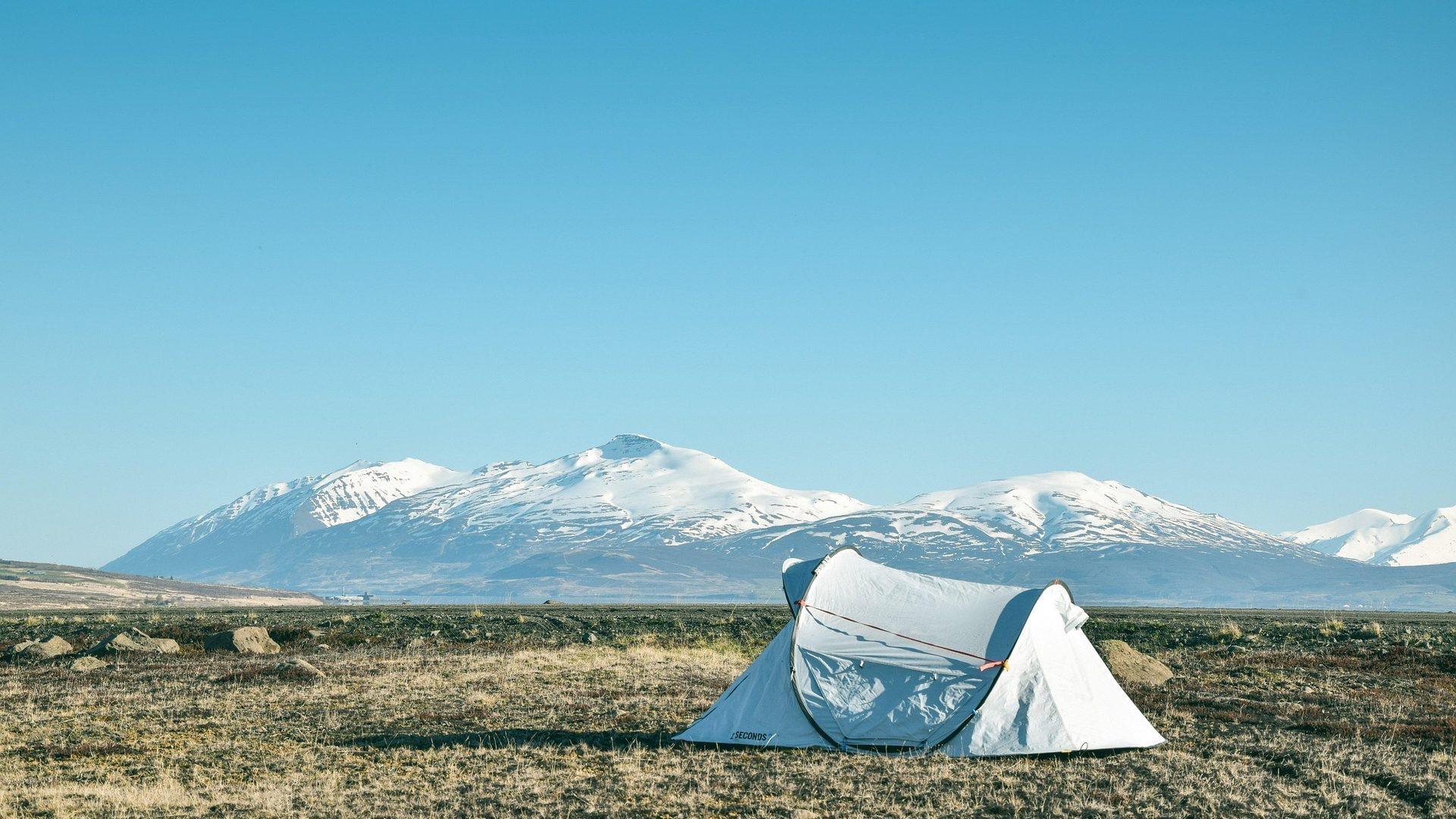
Looking After Tents
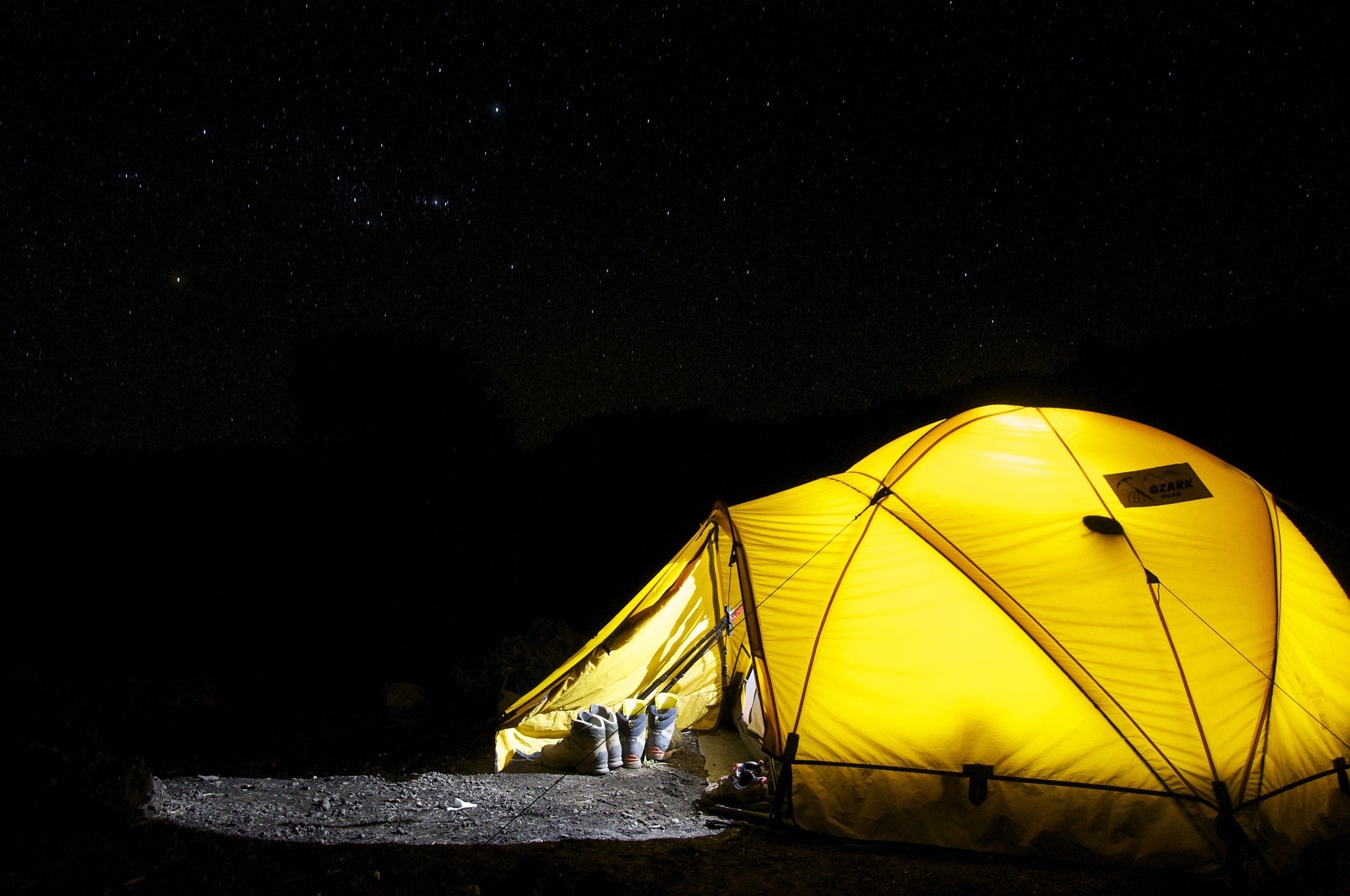
Tents can last a long time when they are treated properly.
After use, remove dirt and allow the tent to dry completely.
Check the fabric, seams, zips, poles and pegs.
Look for tears or damage.
Check that poles are not bent or cracked.
Make sure all pegs and other components are accounted for.
Don’t force a zip that is stuck with mud or dirt.
If a tent needs a repair, report it rather than simply putting it back into the storage bag.
Don’t Store a Damp Sleeping Bag
Sleeping bags need particular care.
After a night outdoors, allow the sleeping bag to air and dry appropriately before long-term storage.
Follow the manufacturer’s cleaning and storage instructions.
Avoid compressing a sleeping bag unnecessarily for long periods if the manufacturer advises against it.
A sleeping bag that is clean, dry and properly stored will generally remain in better condition.
Look After Sleeping Mats
Sleeping mats can suffer from punctures, leaks and damaged valves.
Before putting one away, check it carefully.
Inflatable mats should be inspected for obvious leaks or damage.
Foam mats should be checked for tears and excessive wear.
If a mat has developed a problem, make sure it is identified and dealt with before the next camp.
Maintain Camping Stoves
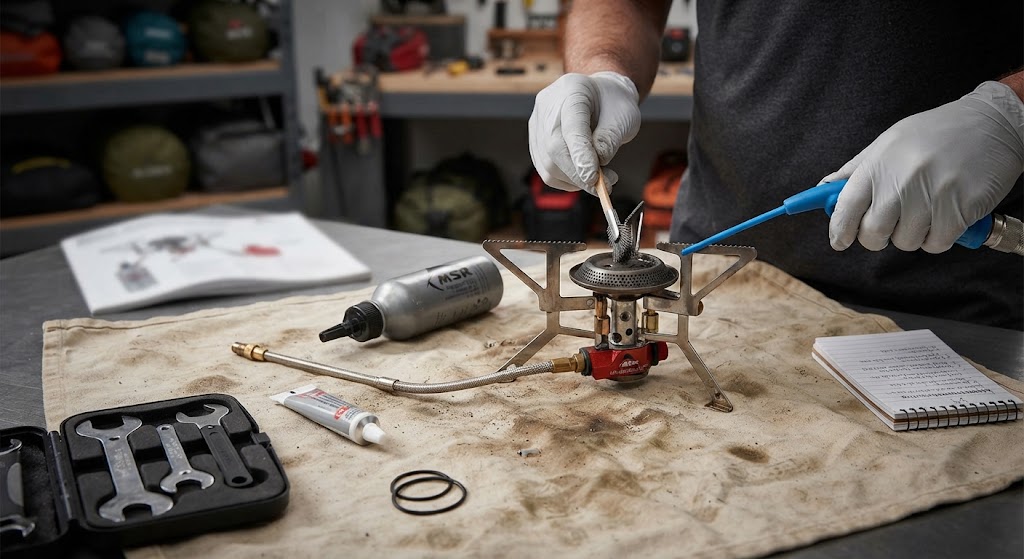
Camping stoves require careful maintenance.
After use, allow the stove to cool completely before cleaning or storing it.
Remove dirt and food residue using the manufacturer’s recommended method.
Check the stove for visible damage and make sure components are present.
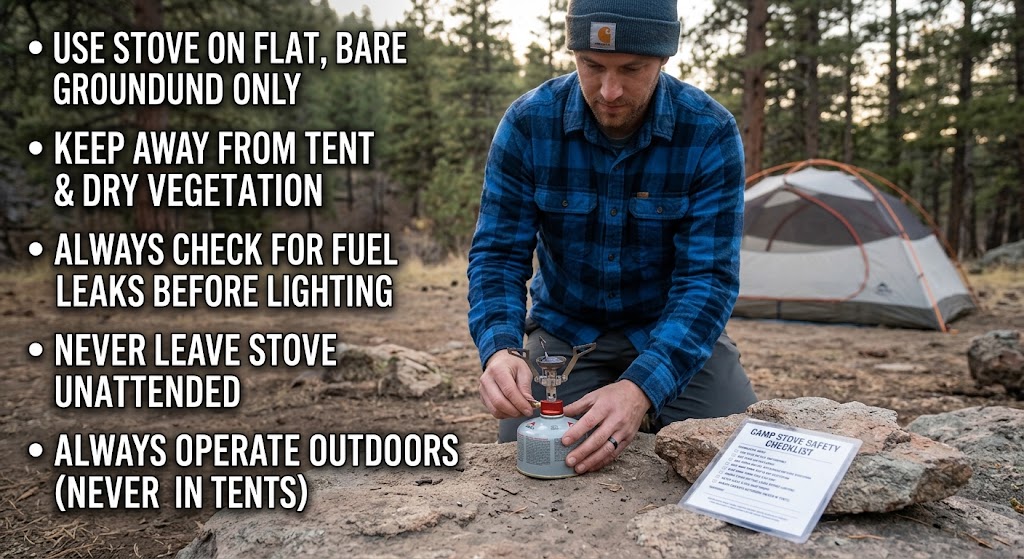
Fuel systems require particular care.
Follow the manufacturer’s instructions for connecting, storing and checking fuel systems.
Never attempt to repair or modify a stove or fuel system unless the manufacturer specifically allows it and you are suitably competent to do so.
Look After Cooking Equipment
Pots, pans, mugs and cooking utensils should be cleaned after use.
Remove food residue and allow everything to dry before storage.
Check handles and other fittings for damage.
Keep cooking equipment separate from items that should remain clean and dry.
A simple cleaning routine at the end of a camp can prevent equipment becoming unpleasant to use next time.
Cleaning Outdoor Tools
Tools used for outdoor skills need to be looked after carefully.
Depending on the tool, maintenance may include cleaning, drying, checking for damage and keeping moving parts in good condition.
Sharp tools should be maintained according to the manufacturer’s instructions and by people who are appropriately trained to do so.
Don’t attempt complicated repairs simply because a tool looks easy to take apart.
If you aren’t sure, ask a suitably experienced adult.
Looking After Saws
A saw should be cleaned after use and checked for damage.
Keep the blade protected during storage and transport.
Inspect handles, fixings and guards where fitted.
A damaged saw should not simply be returned to the equipment box.
Tell the person responsible for the equipment so it can be assessed.
Caring for Rope and Cordage
Rope and cord should be kept clean and stored appropriately.
Check for:
Cuts.
Fraying.
Burn damage.
Chemical contamination.
Unusual stiffness.
Other signs of deterioration.
Rope used for safety-critical purposes requires much more specific inspection and care than ordinary camping cord.
Never assume that general-purpose rope is suitable for climbing, lifting people or other life-support applications.
Follow the manufacturer’s guidance for any rope used in a specialist activity.
Maintain Navigation Equipment
Navigation equipment can be easy to overlook because it doesn’t appear to get dirty or damaged in the same way as camping equipment.
However, it still needs checking.
Compasses should be kept clean and protected from damage.
Maps should be kept dry and stored appropriately.
GPS devices and other electronic equipment should be checked, charged and stored according to their instructions.
Before an activity, make sure you have the navigation equipment you actually need.
Check Torches and Head Torches
A torch isn’t very useful if its batteries are flat.
Check torches after use and before important activities.
Look for damaged switches, battery compartments, seals and lenses.
If the torch uses replaceable batteries, follow the manufacturer’s advice for storage.
Rechargeable devices should be charged appropriately and stored according to their instructions.
Don’t leave leaking or damaged batteries inside equipment.
Batteries Need Maintenance Too
Batteries can leak, lose charge or become damaged.
Check battery-powered equipment periodically, particularly if it is going to be stored for a long time.
Follow the manufacturer’s instructions for removing batteries during storage.
Use the correct battery type.
Never mix batteries in ways the manufacturer advises against.
Damaged or leaking batteries should be dealt with appropriately rather than returned to an equipment box.
Check Backpacks and Rucksacks
Rucksacks take a lot of punishment.
Mud, rain, heavy loads and rough handling can all cause wear.
Check:
Straps.
Buckles.
Zips.
Stitching.
Fabric.
Attachment points.
Small problems are much easier to deal with before a long walk.
A broken buckle discovered at home is an inconvenience.
A broken buckle halfway through a hike can become a much bigger problem.
Maintain Outdoor Clothing
Clothing is equipment too.
After an outdoor activity, allow wet clothing to dry appropriately.
Remove mud and dirt according to the garment’s care instructions.
Check waterproof clothing for damage.
Don’t automatically use ordinary detergents, fabric softeners or cleaning products on technical outdoor clothing without checking the manufacturer’s instructions.
Incorrect washing can affect the performance of some specialist fabrics and waterproof treatments.
Footwear Needs Looking After
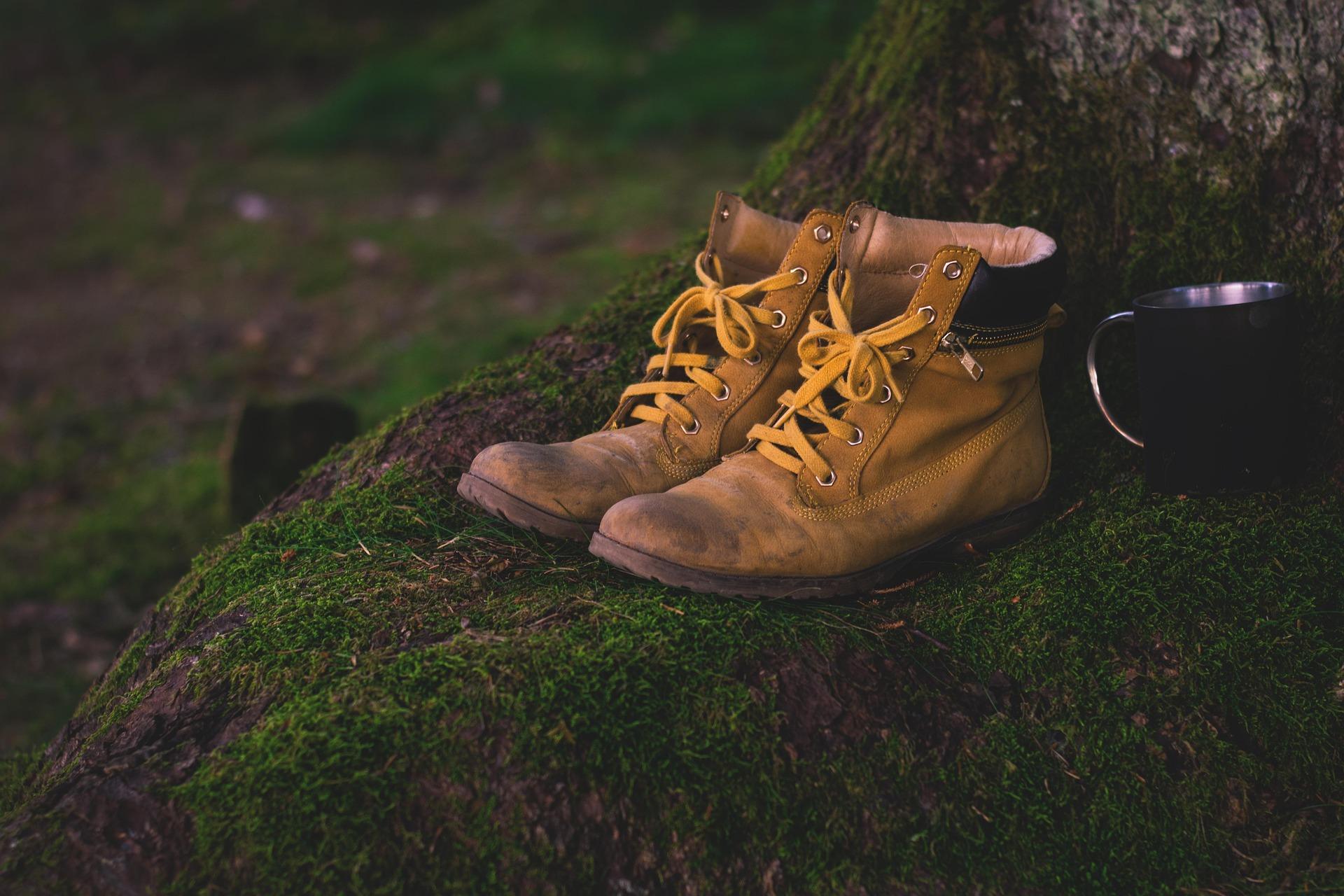
Clean muddy boots and footwear appropriately after use.
Allow them to dry naturally and follow the manufacturer’s care instructions.
Avoid placing footwear directly against intense heat to dry it quickly, as excessive heat can damage some materials and adhesives.
Check soles, laces, stitching and other areas for wear.
Good footwear maintenance can also help identify when replacement is becoming necessary.
Equipment Boxes Should Be Organised
Good maintenance includes knowing where equipment is kept.
After a camp, return items to their correct storage locations.
Keep similar equipment together.
Make sure smaller components don’t disappear into unrelated boxes.
If a tent has specific poles, pegs or accessories, keep them together.
An organised equipment store makes preparation much easier.
Keep an Equipment Inventory
Scout groups with a larger collection of equipment can benefit from a simple inventory.
This doesn’t need to be complicated.
Record what equipment exists and identify items that are damaged, missing or awaiting repair.
This is particularly useful after camps.
If something is missing, it’s much easier to investigate while everyone still remembers using it.
Create a Repair Box
A basic equipment-repair box can be useful for minor, appropriate repairs.
Depending on the equipment, this might contain items such as:
Repair tape.
Cord.
Spare buckles.
Patches.
Basic sewing supplies.
Cable ties.
Replacement tent pegs.
The contents should match the equipment being maintained.
Don’t use a quick repair as an excuse to continue using equipment that is no longer safe.
Know When Something Should Be Replaced
Not every piece of equipment can or should be repaired.
If equipment is badly damaged, excessively worn or no longer suitable for its intended use, replacement may be the right option.
This is especially important for safety-critical equipment.
A cheap replacement is preferable to relying on equipment that has reached the end of its safe working life.
Keep a Maintenance Record
For frequently used equipment, a simple maintenance record can be helpful.
You might record:
When it was checked.
What condition it was in.
Any damage found.
Repairs carried out.
Parts replaced.
Whether it is ready for use.
This can be particularly useful for group equipment that is used by many different people.
Make Maintenance Part of Scout Activities
Equipment maintenance doesn’t have to be a boring job at the end of camp.
It can become part of learning.
A patrol could be responsible for checking camping equipment.
Scouts could learn how to inspect a tent.
A group could practise packing equipment correctly.
Older Scouts could help younger members understand why equipment needs to be dried and stored properly.
This turns maintenance into another practical outdoor skill.
The End-of-Camp Routine
A good end-of-camp routine can make equipment maintenance much easier.
Before equipment disappears into storage, check that it has been:
Cleaned where necessary
Dried properly
Inspected
Repaired or reported if damaged
Returned with all components
Stored correctly
This simple process can save a lot of work later.
Don’t Ignore Small Problems
A small tear can become a large tear.
A loose buckle can eventually break.
A dirty zip can become difficult to operate.
A small leak can become a major problem.
Reporting minor issues early is one of the most useful maintenance habits Scouts can develop.
It shows responsibility and helps protect shared equipment.
Maintenance Before a Camp
Don’t wait until the night before camp to discover that something is broken.
Give equipment a proper check before it is needed.
Put up tents.
Check sleeping equipment.
Test torches.
Inspect cooking equipment.
Check tools.
Look over rucksacks.
Confirm that important components are present.
A short preparation session can prevent a lot of frustration on camp.
Safety
Equipment maintenance should always be carried out in a safe environment and with appropriate supervision.
Follow manufacturer instructions for cleaning, maintenance, storage and repair.
Do not use damaged equipment until it has been assessed and, where appropriate, repaired or replaced.
Sharp tools, stoves, fuel systems and other potentially hazardous equipment should only be maintained or serviced by people with appropriate knowledge and supervision.
Never attempt to repair safety-critical equipment unless you are competent and the repair is permitted by the manufacturer or relevant safety guidance.
Do not use improvised repairs where equipment failure could cause serious injury.
Particular care is required with equipment used for climbing, water activities, lifting, fire, cooking or other higher-risk activities.
When in doubt, remove the equipment from use and ask a suitably qualified or experienced person to assess it.
Learning Outcomes
Learning about equipment maintenance can help Scouts:
Leader Notes
Equipment maintenance works particularly well as a practical Scout activity rather than simply a talk.
Set up several pieces of used equipment and ask Scouts to inspect them.
They might identify a dirty tent, a damaged buckle, a wet sleeping bag, a torch with a problem or a backpack with worn stitching.
Ask them what they would do next.
For younger Scouts, concentrate on cleaning, drying, checking and storing.
Older Scouts can take more responsibility for inspection, minor appropriate repairs and equipment inventories.
The important lesson is that maintenance isn’t about making equipment look perfect.
It is about keeping equipment ready, usable and appropriate for its next activity.
Final Thought for Scouts
Looking after equipment is part of being prepared.
The person who checks their kit after a camp, dries their equipment properly and reports damage is helping themselves and everyone who uses that equipment afterwards.
Good outdoor skills aren’t only about knowing what to do when you’re outside.
They also include knowing how to prepare beforehand and how to look after your equipment afterwards.
Use it. Check it. Clean it. Dry it. Store it properly.
That simple routine can keep good equipment working for many more adventures.
FAQ:
Why is equipment maintenance important for Scouts?
Maintaining equipment helps keep it clean, usable and ready for future activities. It also teaches Scouts responsibility for their own and shared equipment.
How should Scout camping equipment be stored?
Equipment should be cleaned where appropriate, dried thoroughly and stored according to the manufacturer’s instructions. Wet tents, sleeping bags and clothing should not normally be placed into long-term storage while damp.
How often should outdoor equipment be checked?
Equipment should be checked after use and before important activities. Frequently used or safety-critical equipment may require more detailed inspection according to its instructions and intended use.
What should Scouts do if they find damaged equipment?
They should stop using it if appropriate and tell the responsible leader or person looking after the equipment. Damaged equipment should be assessed before being returned to use.
Can Scouts repair camping equipment themselves?
Scouts can learn suitable basic maintenance and repair skills under appropriate supervision. However, safety-critical equipment should only be repaired or serviced by suitably competent people and according to relevant manufacturer guidance.
🔒Ready to test your survival skills?
Join Survival Guides UK for free, complete challenges, earn badges and increase your Survival Level.
JOIN FREE →
CRAIG BURR
FOUNDER · SURVIVAL GUIDES UK
I'm Craig, the person behind Survival Guides UK. I created SGUK because I wanted somewhere people could learn real outdoor skills in a practical, straightforward way — from lighting a fire and tying knots to navigation, campcraft and everything in between.
You can read more about the story behind SGUK here as well as our approach here.