Rope Identification
Activity Overview
Difficulty: Easy
Time: 15–30 minutes
Location: Scout campsites, activity centres and outdoor settings
Best for: Cubs, Scouts, Explorers, Patrol Leaders and adult leaders
Skills: Ropework, campcraft, equipment care, observation and outdoor safety
Rope identification means being able to recognise what a rope is made from, how it is constructed and what it is suitable for.
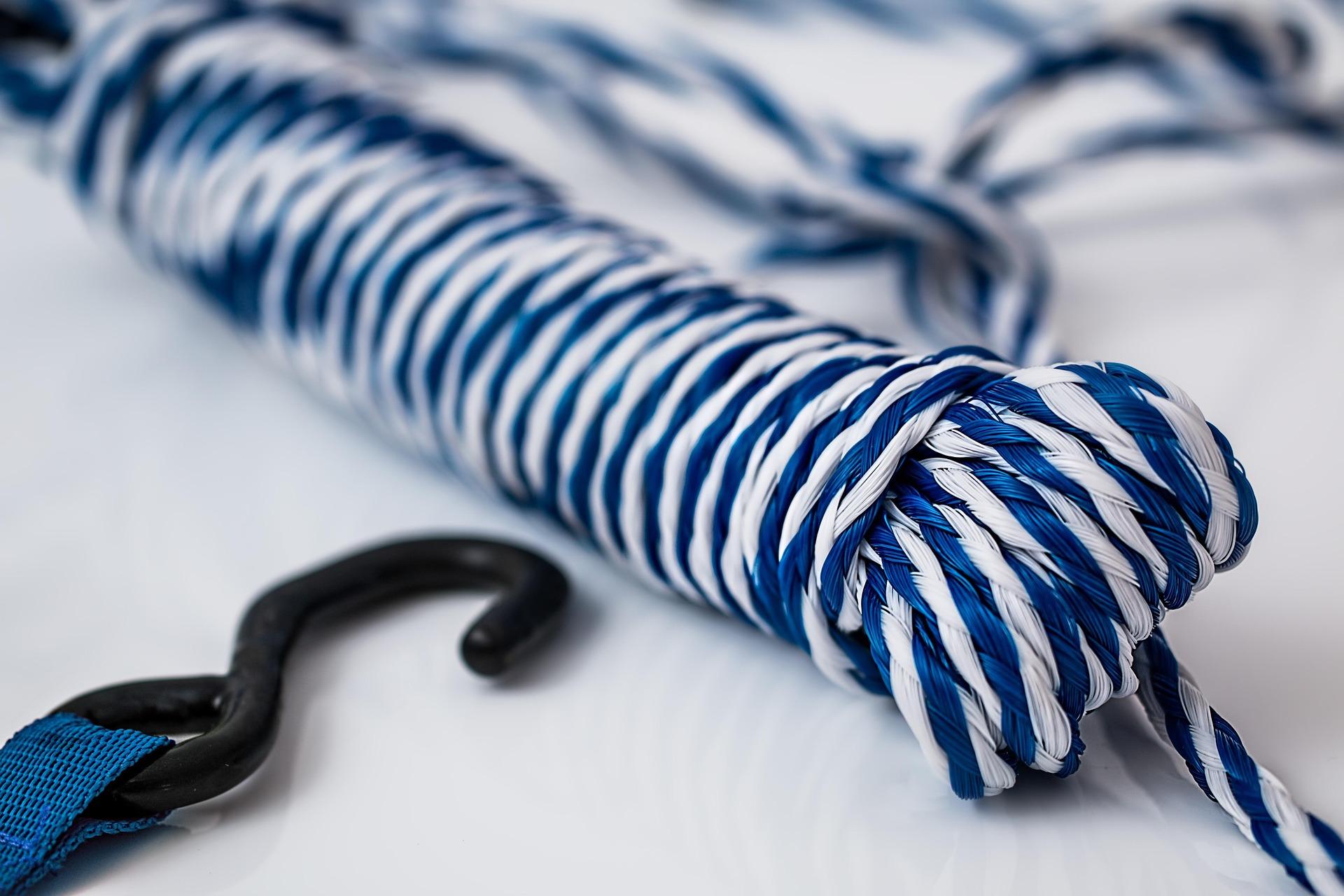
Common ropes found around camp include natural-fibre ropes such as manila and synthetic ropes such as polypropylene, polyester and nylon.
Knowing the difference matters because ropes have different properties. Some stretch more than others, some absorb water, some float and some are better suited to particular campcraft jobs.
Never assume that a rope is suitable for a particular task simply because it looks strong.
What You’ll Learn
You’ll learn how to identify the main types of rope you are likely to encounter during campcraft and outdoor activities.
You’ll also learn how rope construction and material affect handling, strength, stretch, water resistance and appropriate use.
🟢 SAFETY – LOW TO MODERATE RISK
Rope can fail if it is damaged, incorrectly used or overloaded.
Never use an unidentified or damaged rope for a task where failure could cause injury.
Ordinary campcraft rope should not be treated as climbing or life-safety equipment.
For activities involving climbing, abseiling, rescue or supporting a person’s weight, use equipment specifically designed and rated for that purpose and follow the relevant procedures.
Equipment
To practise rope identification, you need several different examples of rope if available.
Useful examples include natural-fibre rope, polypropylene, polyester and nylon.
A ruler or tape measure can help you compare diameter, while examining the ends of ropes will help you identify their construction.
Prerequisites
No previous ropework experience is required.
It helps to understand the difference between rope, cord and string, but you can learn these distinctions as part of the activity.
Instructions
1. Look at the Rope’s Construction
Start by examining how the rope is made.
Traditional rope is commonly laid, meaning several groups of fibres are twisted together to form strands, which are then twisted together to form the rope.
Other ropes are braided, with fibres interwoven to create the rope.
The construction gives you an initial clue about what you are looking at.
2. Look at the Fibres
Examine the individual fibres if they are visible.
Natural-fibre ropes often have a more fibrous, hairy appearance.
Synthetic ropes tend to have smoother, more consistent fibres.
Don’t rely on appearance alone, however. Different manufacturers and rope constructions can look quite different.
3. Identify Natural-Fibre Rope
Natural fibres commonly used for rope include manila, hemp and sisal.
Manila rope has traditionally been popular for campcraft because it has good handling characteristics and provides useful grip for many ropework tasks.
Natural-fibre ropes can absorb water and may deteriorate if repeatedly left wet or stored poorly.
4. Identify Polypropylene Rope
Polypropylene is a common synthetic rope found in general outdoor and camp use.
It is lightweight and floats on water, which makes it useful for some applications around water.
It is also relatively resistant to absorbing water.
Its characteristics make it useful for many general-purpose tasks, but it should still be used only for purposes appropriate to its construction and rating.
5. Identify Polyester Rope
Polyester rope is a strong synthetic option with good resistance to weather and UV exposure.
It generally has relatively low stretch compared with nylon.
You may encounter polyester rope in camping, sailing and other outdoor applications.
6. Identify Nylon Rope
Nylon is a strong synthetic fibre that is known for its elasticity and ability to stretch under load.
This can be useful in some applications but undesirable in others.
Nylon can also absorb some water, which can affect its characteristics.
Again, identification doesn’t automatically tell you that a rope is suitable for a particular job.
7. Compare Rope Diameter
Compare the thickness of different ropes.
A thicker rope isn’t automatically better for every task.
Diameter affects handling, weight and strength, but the material and construction also matter.
If a rope has a manufacturer’s rating, use that information rather than trying to estimate its safe capacity from thickness alone.
8. Examine the Rope’s End
The end of a rope can provide useful information about its construction.
A laid rope will show its individual strands clearly.
A braided rope has a different appearance, with fibres forming an interwoven structure.
A poorly finished or badly damaged end can also reveal that the rope needs attention.
9. Check for Damage
Identification should always include a condition check.
Look for:
If a rope is damaged, don’t simply use it because you recognise the material.
10. Check the Manufacturer’s Information
Where available, look for information printed on the rope, its packaging or manufacturer’s documentation.
This can tell you the material, diameter, construction and intended purpose.
For safety-critical equipment, manufacturer’s specifications should always take priority over visual identification.
11. Learn to Recognise Rope by Handling
With experience, different ropes begin to feel noticeably different.
Some are soft and flexible, while others are relatively stiff.
Some grip well in the hand, while others are slippery.
Handling characteristics can help with identification, but they should be treated as clues rather than definitive proof.
12. Compare Similar Ropes
Place several examples side by side.
Compare their colour, texture, construction, flexibility and behaviour when bent.
Try to identify them before checking the labels.
This is a useful practical exercise for learning rope identification.
Common Rope Types
Manila: Natural fibre, good grip and traditional campcraft use. Can absorb water and needs appropriate storage.
Sisal: Natural fibre, relatively stiff and commonly used for general-purpose tasks. Not suitable for every outdoor application.
Polypropylene: Lightweight synthetic rope that floats and has good resistance to water absorption.
Polyester: Durable synthetic rope with relatively low stretch and good weather resistance.
Nylon: Strong and relatively elastic synthetic rope with more stretch than many other common rope materials.
Rope Identification and Campcraft
For campcraft, the most important lesson isn’t memorising every type of rope.
It’s understanding that different ropes behave differently.
A rope chosen for pioneering or general campcraft may be quite different from one designed for sailing, lifting or climbing.
Always match the rope to the job.
Rope Identification and Rope Ratings
Never estimate whether a rope is safe for a load simply by looking at it.
Manufacturers may provide breaking strength, working load limits or other specifications, depending on the type of rope and its intended application.
These figures are not interchangeable, and a breaking strength is not the same thing as a safe working load.
For any task where rope failure could seriously injure someone, use correctly specified equipment and follow the relevant manufacturer’s guidance.
Final Tip
The easiest way to learn rope identification is to handle real examples and compare them side by side.
Look at the construction, fibres, texture, stretch and condition, then check the manufacturer’s information where available.
Most importantly, remember that identifying a rope doesn’t automatically mean knowing what it is safe to do with it. The rope’s intended purpose and specifications always matter.
🔒Ready to test your survival skills?
Join Survival Guides UK for free, complete challenges, earn badges and increase your Survival Level.
JOIN FREE →
CRAIG BURR
FOUNDER · SURVIVAL GUIDES UK
I'm Craig, the person behind Survival Guides UK. I created SGUK because I wanted somewhere people could learn real outdoor skills in a practical, straightforward way — from lighting a fire and tying knots to navigation, campcraft and everything in between.
You can read more about the story behind SGUK here as well as our approach here.