Walking Pace Control: A Scout Skill for Steady Walking
Walking pace control is the ability to maintain a steady, controlled walking speed over a set distance or period of time. It is a useful outdoor skill for Scouts because it helps you manage energy, stay together as a group and make better progress on hikes and expeditions.
Walking too quickly at the beginning of a walk can leave you tired before you reach your destination. Walking too slowly can make it difficult to keep to a planned route or timetable. Learning to find the right pace makes longer walks more comfortable and predictable.
Why Is Walking Pace Important?
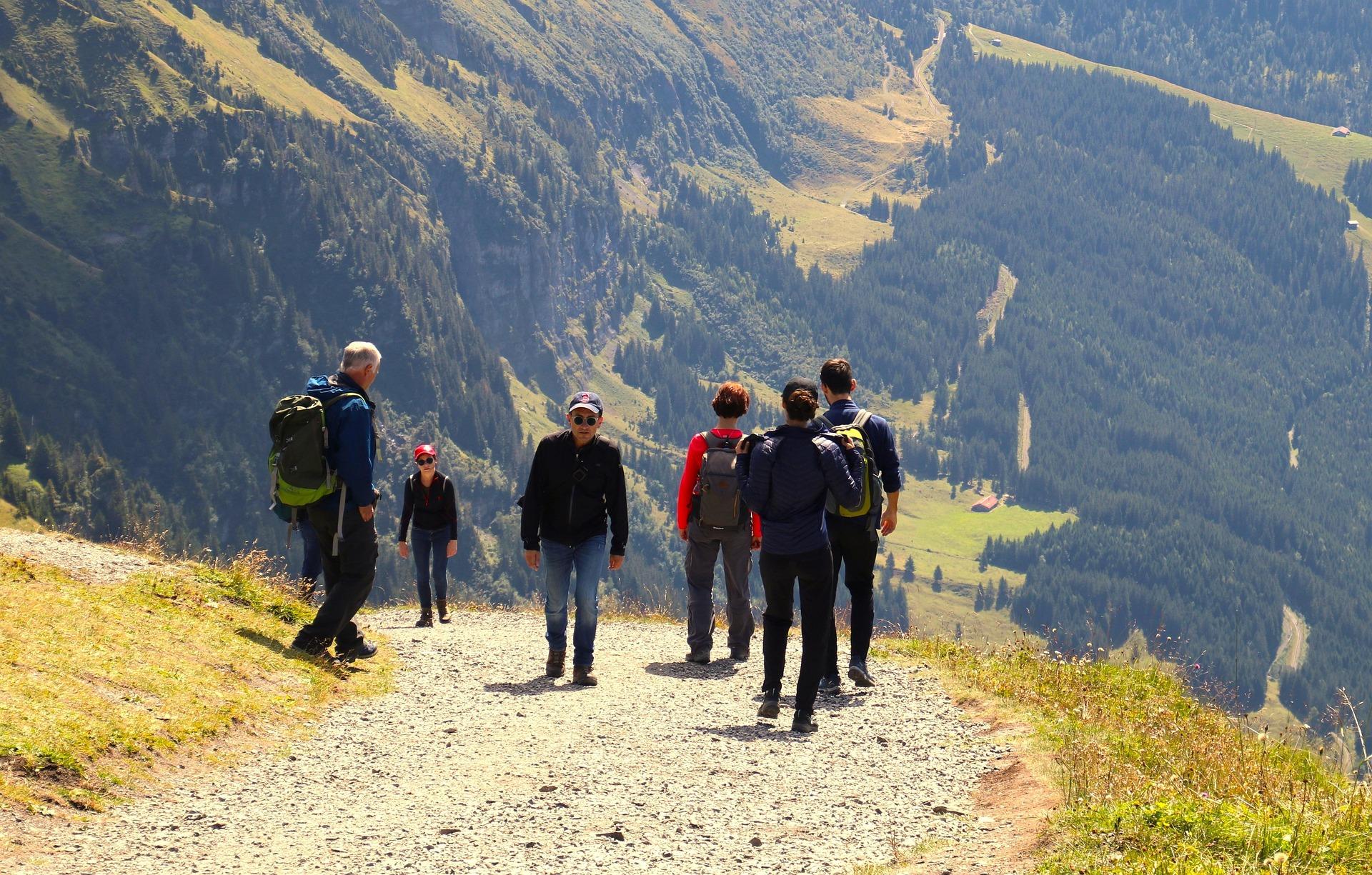
A controlled pace is particularly useful when walking as part of a group. Different people will naturally walk at different speeds, so the group needs to find a pace that everyone can maintain.
Good pace control can help you:
Pace control becomes especially important during longer Scout hikes, expeditions and activities where you need to reach checkpoints or camps at planned times.
Finding Your Natural Walking Pace
Your natural walking pace is the speed you can maintain without feeling that you are rushing.
Start by walking normally on reasonably level ground. Pay attention to your breathing and how your legs feel. You should be able to hold a conversation without becoming noticeably out of breath.
This is a useful starting point because your comfortable pace is more sustainable than simply trying to walk as quickly as possible.
Remember that your pace will change depending on the terrain, weather, your backpack and how far you have already walked.
How to Practise Walking Pace Control
One of the simplest ways to practise is to walk a known distance and time yourself.
For example, choose a measured 1 km route and walk it at a comfortable pace. Record how long it takes. Repeat the exercise while trying to maintain roughly the same speed.
You can then use your results to estimate your average walking speed.
Practise With a Group
Walking in a group provides another good opportunity to practise pace control.
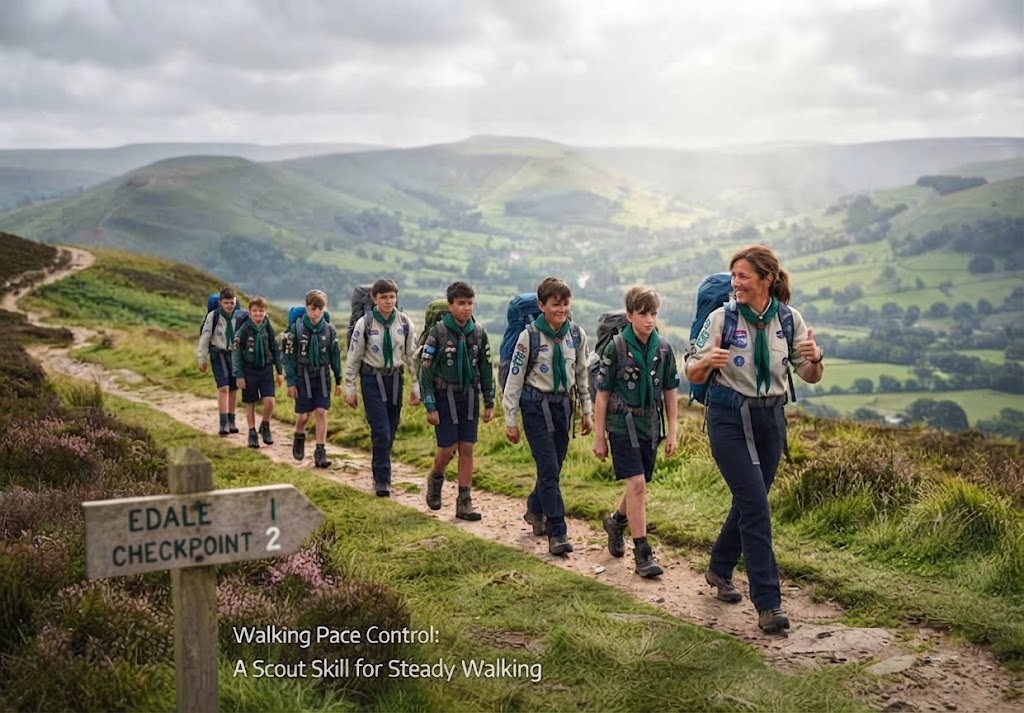
Choose a pace that allows the whole group to walk comfortably. The person at the front should avoid continually speeding up, while those at the back should not have to keep rushing to catch up.
A good group walking pace should feel steady rather than stop-start.
Use Regular Checkpoints
When practising on a longer route, use obvious points such as gates, junctions, bridges or map features as checkpoints.
Estimate when you expect to reach each checkpoint and compare your actual time with your estimate.
This helps you develop a better understanding of how quickly you are travelling.
Walking Pace and Navigation
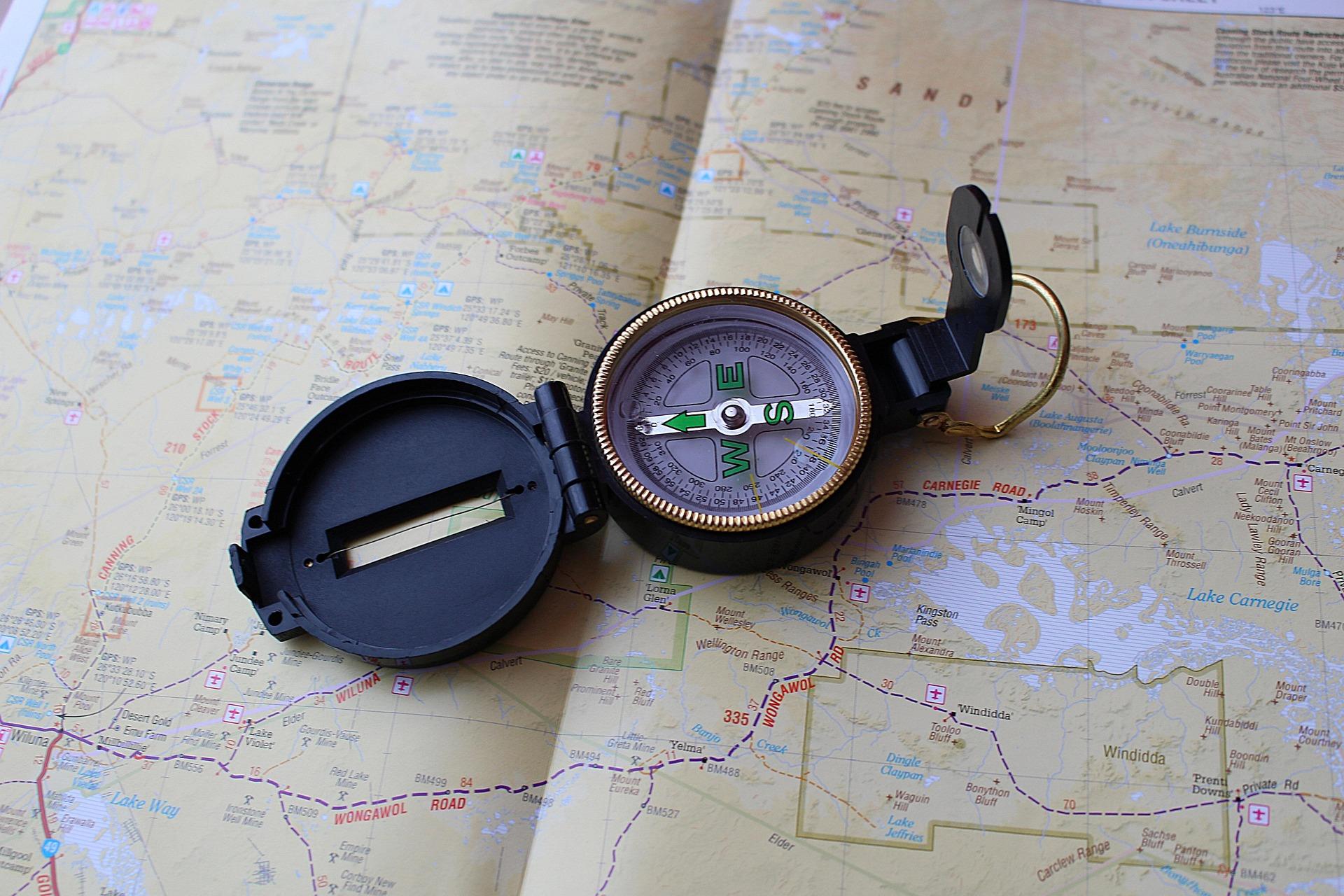
Walking pace control is closely linked to navigation.
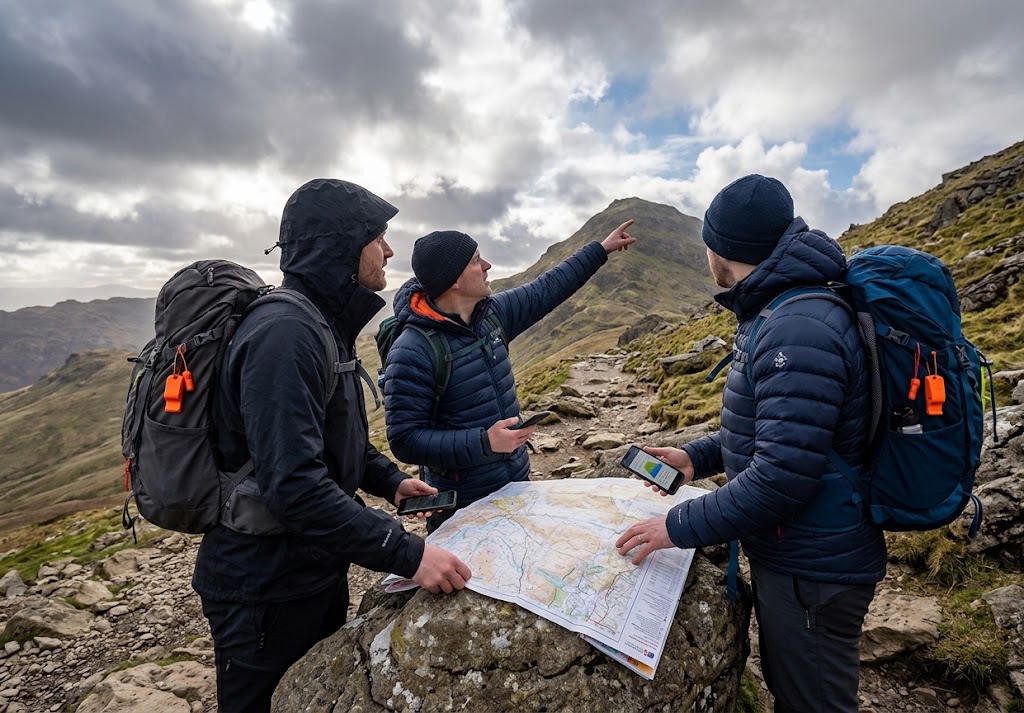
When using a map, you may need to estimate how long it will take to travel between two points. Knowing your approximate walking speed makes these calculations much more useful.
For example, if you know that you normally walk at around 4 km per hour on level ground, you can make a rough estimate for a 4 km section of a route.
However, you should never assume that every kilometre will take the same amount of time.
Hills, muddy paths, rough ground, obstacles and poor weather can all reduce your speed.
Allow for Terrain
A measured distance on a map does not tell you how difficult that distance will be to walk.
A kilometre of flat track may be much quicker than a kilometre of steep, muddy hillside.
When planning a route, consider:
Good navigation involves understanding these factors rather than relying solely on an average walking speed.
Walking Pace on Hills
Hills are one of the best places to learn pace control.
A common mistake is to attack a steep climb too quickly. This can cause tiredness and make the rest of the walk much harder.
Instead, shorten your stride and settle into a steady rhythm. Concentrate on taking consistent steps rather than trying to reach the top quickly.
On descents, avoid rushing simply because walking downhill feels easier. Uneven ground can increase the risk of slips and trips, particularly when carrying a backpack.
Keeping a Steady Rhythm
A steady rhythm can make walking feel easier, particularly over longer distances.
Try to avoid repeatedly changing between a fast pace and a slow pace. Instead, find a speed that feels comfortable and maintain it for as long as the terrain allows.
Your breathing can be a useful guide. If you are becoming noticeably breathless, slow down before you become exhausted.
Small adjustments to your pace are usually better than allowing yourself to become tired and then having to stop for a long break.
Walking Pace and Group Management
For Scout groups, pace control is not just about individual performance. It is also about looking after the whole group.
The fastest walker should not automatically set the pace. The group should normally move at a speed that is suitable for everyone, particularly on longer activities.
Leaders should also monitor how the group is coping. Someone who is struggling may need a slower pace, a short rest or a change to the planned route.
Keeping the group together makes navigation and communication easier and can make the walk more enjoyable for everyone.
How to Improve Your Walking Pace
Improving pace control does not necessarily mean becoming a faster walker.
Instead, focus on becoming more consistent.
Try these exercises during training walks:
- Walk a measured distance at your normal pace.
- Record the time taken.
- Repeat the route and try to maintain the same pace.
- Practise walking uphill without starting too quickly.
- Walk with a group and practise maintaining a consistent speed.
- Compare your estimated arrival time with your actual arrival time.
- Repeat the exercises on different types of terrain.
Over time, you will develop a better understanding of how quickly you can comfortably travel.
Common Walking Pace Mistakes
Starting Too Fast
One of the most common mistakes is walking quickly at the beginning because you feel fresh.
This can be particularly tiring on long hikes. Start at a comfortable pace and increase your speed later if you still have plenty of energy.
Trying to Match Someone Else
Everyone has a slightly different natural walking speed.
Trying to constantly match a much faster walker can leave you exhausted, while repeatedly slowing down to match a much slower pace can make the walk unnecessarily difficult.
Groups should agree on a sensible pace that works for everyone.
Ignoring the Terrain
A walking pace that works on a flat path may not be suitable on a steep or muddy section.
Good pace control means adapting your speed to the conditions rather than trying to maintain exactly the same speed everywhere.
Forgetting About the Return Journey
When planning a walk, remember that reaching a destination is only half of the journey if you need to return.
Do not use all your energy getting to a viewpoint, checkpoint or destination. A controlled pace should leave you with enough energy to complete the rest of the route.
Walking Pace Control Challenge
A simple Scout challenge is to choose a measured route and predict how long it will take you to walk it.
Walk the route at a comfortable, controlled pace without deliberately trying to go faster.
When you finish, compare your actual time with your prediction.
Repeat the challenge on a different route containing hills or rougher ground. See how accurately you can estimate your time while taking the terrain into account.
This combines walking skills, observation, planning and navigation.
Final Tips for Walking Pace Control
Walking pace control is a simple skill, but it can make a significant difference on longer outdoor activities.
Remember to:
The aim is not always to walk as quickly as possible. Good pace control means finding a sustainable speed that allows you to keep moving safely and comfortably for the entire journey.
🔒Ready to test your survival skills?
Join Survival Guides UK for free, complete challenges, earn badges and increase your Survival Level.
JOIN FREE →
CRAIG BURR
FOUNDER · SURVIVAL GUIDES UK
I'm Craig, the person behind Survival Guides UK. I created SGUK because I wanted somewhere people could learn real outdoor skills in a practical, straightforward way — from lighting a fire and tying knots to navigation, campcraft and everything in between.
You can read more about the story behind SGUK here as well as our approach here.