How to Pack a Rucksack for Scout Camp
Affiliate disclosure: This article contains affiliate links. If you purchase something through one of our links, we may earn a commission at no additional cost to you.
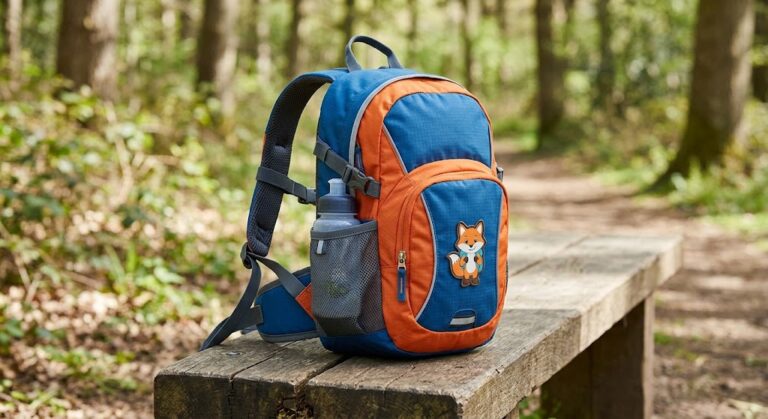
Packing a rucksack for Scout camp can seem straightforward until you realise just how much equipment a child may need to carry.
The trick isn’t simply getting everything inside.
A well-packed rucksack should be comfortable, organised and easy for your child to use.
Your child should be able to find their waterproof jacket when it starts raining, reach their water bottle when they’re thirsty and know where their spare clothes are without emptying the entire contents of the bag onto the ground.
Learning how to pack a rucksack is also a useful outdoor skill in its own right. Rather than doing everything for your child, involve them in the process so they gradually learn how to organise and carry their own equipment.
Always follow the specific kit list and instructions provided by your Scout group.
Choose the Right Rucksack
Before worrying about how to pack the rucksack, make sure your child has a suitable one.
The correct size will depend on your child’s age, size, the length of the camp and how much equipment they are expected to carry.
A rucksack that is too large can encourage unnecessary packing, while one that is too small may force equipment to be crammed inside.
Look for a rucksack that:
Don’t choose a rucksack simply because it has the biggest capacity.
More space isn’t always better.
Start With the Scout Camp Kit List
Before putting anything into the rucksack, check the kit list provided by the Scout leaders.
This should be your starting point rather than a generic camping checklist.
Different camps can require completely different equipment.
A summer weekend at a local campsite won’t necessarily need the same equipment as a longer or colder camp.
Once you’ve established exactly what your child needs, lay everything out where you can see it.
This makes it much easier to identify unnecessary items before they end up in the rucksack.
Don’t Pack More Than Your Child Needs
One of the most common mistakes parents make is overpacking.
It’s understandable.
You want your child to be prepared for every possible situation, but every extra item adds weight.
Before packing something, ask:
Does my child actually need this?
If the answer is no, leave it at home.
Your child shouldn’t be carrying several changes of clothing, enormous toiletries or unnecessary gadgets simply because there’s room in the bag.
A lighter rucksack is generally easier and more comfortable to carry.
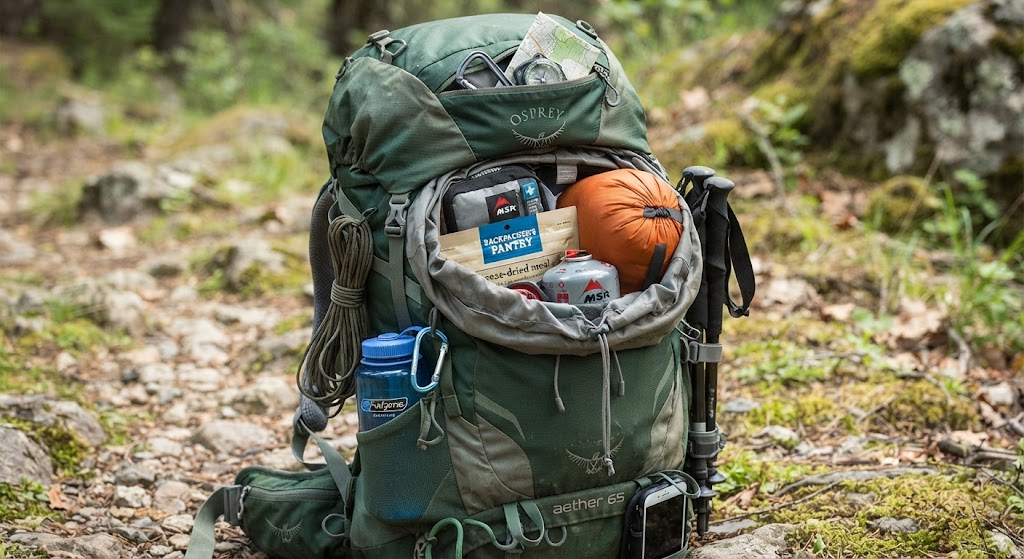
Use the Rucksack’s Compartments
Modern outdoor rucksacks often have several compartments and pockets.
Use them logically rather than putting things wherever they happen to fit.
For example:
Main compartment: clothing and larger items
Top pocket: small items needed regularly
Side pockets: water bottle or other suitable items
External compartments: waterproofs or equipment that may need quick access
The exact arrangement will depend on the rucksack.
The important thing is that your child knows where everything is.
Put Heavy Items Close to the Centre of the Back
When packing a rucksack, heavier items generally need to sit close to the body rather than hanging far away from the back.
This helps keep the load more stable and can make the rucksack feel more comfortable.
Avoid putting heavy items right at the bottom or right at the outer edge of the bag.
A sensible general arrangement is:
Don’t become obsessed with getting the packing arrangement perfect, particularly with a child’s relatively small camping load.
The main priorities are comfort, balance and accessibility.
Put Sleeping Equipment at the Bottom
Items such as a sleeping bag are relatively bulky but usually aren’t needed until your child reaches the campsite.
This makes the bottom of the rucksack a sensible place for them.
Depending on the rucksack and equipment, you may also be able to place other lightweight items around the sleeping bag.
If the sleeping bag is stored inside a compression sack, don’t rely on it being completely waterproof.
If conditions are wet, use a suitable waterproof liner or dry bag to protect important equipment inside the rucksack.
Keep Clothing Organised
Clothing can quickly become a tangled mess inside a rucksack.
Instead of simply pushing everything in, organise it into groups.
For example:
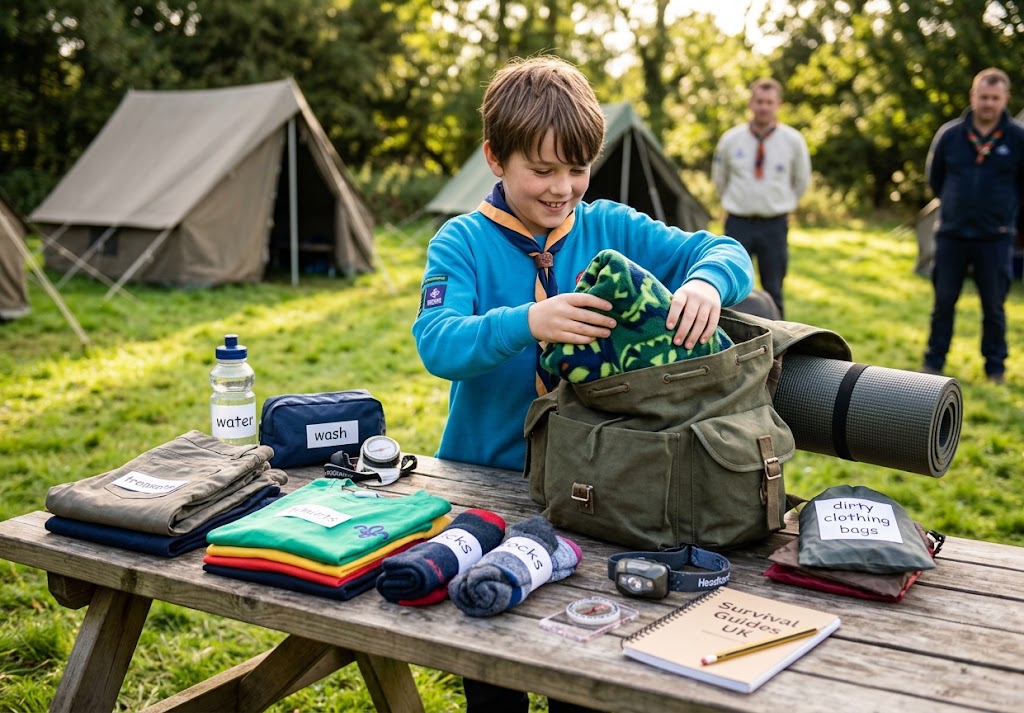
Packing clothing into separate lightweight bags can make this even easier.
Your child can then take out the bag containing the clothes they need instead of searching through the entire rucksack.
Keep Waterproofs Easy to Reach
A waterproof jacket is one of the worst things to bury at the bottom of a rucksack.
If rain starts, your child needs to be able to get to it quickly.
Put waterproof clothing somewhere accessible, such as the top of the main compartment or an external pocket if the rucksack is designed for it.
The same principle applies to other equipment your child may need during the day.
If they’ll need it while walking, don’t bury it underneath everything else.
Keep a Water Bottle Accessible
Your child should be able to get to their water bottle without unpacking their rucksack.
A suitable side pocket is often ideal.
Make sure the bottle fits securely and can’t easily fall out when the rucksack is being moved around.
Before camp, get your child to practise taking the bottle out and putting it back while wearing the rucksack.
Small details like this become much easier when they’ve already practised them.
Protect Important Items From Rain
A rucksack may be water-resistant without being completely waterproof.
Don’t assume that everything inside will stay dry during prolonged rain.
There are several ways to protect equipment, including:
Particularly important items such as spare clothes and sleeping equipment should be kept dry.
There is nothing worse than discovering that your supposedly dry sleeping clothes have become soaked because water has made its way into the bottom of the rucksack.
Separate Wet and Dirty Clothing
Pack a couple of strong bags specifically for wet and dirty clothing.
Once your child has worn something, it doesn’t need to go back in with their clean clothes.
This simple system keeps the rucksack much more organised.
It also means that if something gets soaked during the day, your child can keep it away from the rest of their equipment.
Keep Small Essentials Together
Small items are easy to lose inside a large rucksack.
Use a small wash bag or pouch for things such as:
A separate pouch means your child knows exactly where to look when they need something.
The same principle can be used for other small items.
Don’t Put Everything in Plastic Bags
Using bags to organise equipment can be useful, but don’t wrap every single item in layers of plastic.
It creates unnecessary waste and can make packing and unpacking more difficult.
Use suitable reusable waterproof bags or dry bags where they genuinely provide a benefit.
Simple organisation is usually better than creating a complicated packing system that your child won’t maintain.
Pack With Your Child
This is perhaps the most important part.
Don’t pack your child’s entire rucksack while they’re watching television.
Get them involved.
Lay the equipment out and explain why you’re putting things in particular places.
Then let them have a go.
Your child should gradually learn:
These skills become increasingly useful as children become more independent outdoors.
Let Your Child Practise Carrying It
Once the rucksack is packed, your child should try it on.
Don’t wait until the morning of camp to discover that something is uncomfortable.
Have them walk around the house or garden with it.
If appropriate, take a short walk together.
Look for problems such as:
Make adjustments before camp day.
Check the Rucksack Weight
There isn’t one universal maximum rucksack weight that is appropriate for every child.
Age, body size, fitness, experience, distance and the type of terrain all matter.
More importantly, follow any guidance given by your Scout group.
If your child’s rucksack feels excessively heavy or they are struggling to carry it comfortably, speak to the leaders.
Don’t simply assume that carrying a heavy pack is something they need to “get used to”.
Don’t Hang Everything From the Outside
It’s tempting to attach equipment to every available strap.
However, lots of dangling equipment can catch on branches, become damaged or make the rucksack awkward to carry.
Keep external attachments to a minimum unless there is a good reason for them.
Anything attached to the outside should be secure and shouldn’t interfere with your child’s movement.
Make Sure Your Child Knows Where Everything Is
Before they leave home, give your child a quick test.
Ask:
“Where’s your waterproof?”
“Where’s your torch?”
“Where are your spare socks?”
“Where’s your toothbrush?”
They don’t need to memorise every single item, but they should understand the basic organisation of their bag.
This becomes particularly important when they are tired, cold or trying to find something in poor weather.
Label the Rucksack and Its Contents
Scout camps often involve groups of children with similar equipment.
Label the rucksack itself and as many important belongings as practical.
Consider labelling:
A name label can prevent a surprising amount of confusion.
A Simple Rucksack Packing Order
There is no single correct way to pack every rucksack, but the following approach works well as a starting point.
Bottom of the Rucksack
Pack lightweight equipment that your child won’t need until they reach camp.
This might include:
Middle of the Rucksack
Keep heavier equipment close to your child’s back.
This helps keep the load stable.
Top of the Rucksack
Put items that may be needed relatively soon.
This could include:
Accessible Pockets
Use these for items your child may need regularly.
For example:
The exact arrangement will depend on your child’s rucksack and the equipment they’re carrying.
A Final Rucksack Check
Before leaving for Scout camp, check the following:
Equipment
Organisation
Rucksack Packing Is an Outdoor Skill
Learning how to pack a rucksack is about much more than fitting everything inside.
Your child is learning how to plan, organise equipment, think about changing conditions and take responsibility for their own belongings.
You don’t need to get everything perfect on the first attempt.
The more camps your child attends, the more they’ll learn about what they actually use and how they prefer to organise their equipment.
Start simple, keep the weight manageable and involve your child in the process.
By the time they’ve been on several camps, you may find they’re the one telling you where everything needs to go.
🔒Ready to test your survival skills?
Join Survival Guides UK for free, complete challenges, earn badges and increase your Survival Level.
JOIN FREE →
CRAIG BURR
FOUNDER · SURVIVAL GUIDES UK
I'm Craig, the person behind Survival Guides UK. I created SGUK because I wanted somewhere people could learn real outdoor skills in a practical, straightforward way — from lighting a fire and tying knots to navigation, campcraft and everything in between.
You can read more about the story behind SGUK here as well as our approach here.