Scout Camping Checklist for Parents
Preparing your child for a Scout camp can sometimes feel like a military operation.
There are clothes to organise, sleeping equipment to find, toiletries to pack and the inevitable question of whether they’ve actually remembered where their torch is.
The good news is that packing for Scout camp doesn’t have to be complicated.
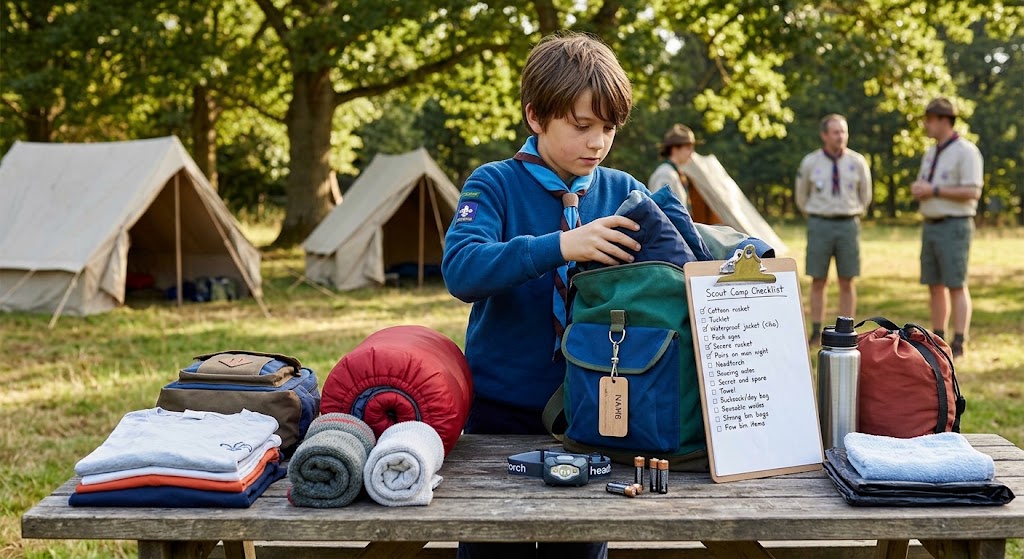
This Scout camping checklist covers the main things your child may need for a typical camping trip, while also highlighting some of the items that are easy to forget.
Always check the kit list provided by your child’s Scout group before packing. Requirements can vary depending on the location, time of year, activities and length of the camp.
Scout Camp Clothing Checklist
The British weather can be unpredictable, so suitable clothing is one of the most important parts of your child’s camping kit.
Pack clothing that can cope with changing conditions rather than relying on one outfit.
Essential Clothing
Spare socks are particularly important.
A wet pair of socks can make an otherwise enjoyable day miserable, so make sure your child has enough pairs for the length of the camp, plus a couple of spares.
Pack for the Weather
Don’t pack solely according to the forecast.
Even during summer, evenings can become surprisingly cold, while a sunny morning can quickly turn into a wet afternoon.
Layers are usually more practical than one very thick item of clothing.
Your child can add or remove layers as conditions change.
Sleeping Equipment Checklist
Your child’s sleeping equipment will depend on what the Scout group provides and what type of camp they’re attending.
For many camps, you may need:
If you’re buying a sleeping bag, check that it is suitable for the expected conditions.
A sleeping bag designed for warm summer nights may not be appropriate for a cold-weather camp.
Likewise, there’s little point buying an extremely heavy winter sleeping bag if your child will mainly be attending summer camps.
Washing and Toiletries
Children don’t need to take their entire bathroom cabinet camping.
A small wash bag containing the essentials is usually enough.
Pack:
A quick-drying camping towel can be useful because it takes up less space and doesn’t stay wet for as long as a large bath towel.
Food and Drinks
Always check what food arrangements have been made before packing food.
Some Scout camps provide meals, while others may ask children to bring particular items.
Your child will usually need a suitable water bottle.
Consider packing:
If your child has allergies or dietary requirements, make sure the leaders know before the camp.
Don’t assume that your child will simply manage their own dietary requirements once they arrive.
Personal Items
There are several everyday items that can easily get forgotten when you’re concentrating on camping equipment.
Your checklist may include:
Avoid expensive or sentimental possessions unless they are genuinely needed.
Camping isn’t the best environment for valuable items.
Useful Camping Extras
A few simple extras can make life much easier at camp.
Consider:
Bin bags are one of the simplest and most useful additions to a child’s camping kit.
They can be used to separate dirty clothing from clean clothing or keep wet items away from the rest of the kit.
What to Pack for Rainy Weather
Rain is a fact of life when camping in the UK.
Make sure your child has proper waterproof clothing rather than relying on an umbrella.
A useful wet-weather kit includes:
Teach your child that waterproof clothing is most useful when they put it on before they become soaked.
It sounds obvious, but children aren’t always enthusiastic about stopping an activity to put waterproofs on when the first drops of rain appear.
What to Pack for Cold Weather
Cold-weather camping requires a little more preparation.
Depending on the conditions, your child may need:
Make sure your child understands that staying warm is easier than trying to warm up after becoming very cold.
They should tell an adult if they’re feeling excessively cold or unwell.
What to Pack for Summer Camp
Summer camping can be easier in some ways, but there are still a few things parents should remember.
Consider:
Never assume that summer means guaranteed sunshine.
A lightweight waterproof jacket can still be extremely useful.
How to Pack Dirty and Wet Clothes
One of the easiest ways to keep a child’s rucksack organised is to separate clean clothing from dirty or wet clothing.
Use strong bags to create simple sections.
For example:
Clean clothes
Keep these together and dry.
Dirty clothes
Put worn clothing into a separate bag.
Wet clothing
Keep genuinely wet items separate from everything else.
This prevents one wet pair of trousers from turning the entire contents of the rucksack into a damp mess.
Label Your Child’s Equipment
A Scout camp can involve lots of children using similar equipment.
Black sleeping bags, identical water bottles and similar fleeces can quickly become difficult to identify.
Put your child’s name on as much of their equipment as practical.
Consider labelling:
Name labels can be particularly useful for younger Scouts.
Don’t Forget the Small Things
Some of the most important items are also the easiest to forget.
Before leaving home, check:
A final check against the Scout group’s own kit list is always worthwhile.
What Not to Pack for Scout Camp
A good Scout camping checklist isn’t just about what to take.
It’s also about what to leave at home.
Unless specifically requested, there’s usually little reason for your child to take:
Remember that your child may have to carry their own equipment.
Every unnecessary item adds weight.
Check the Rucksack Before Leaving
Once everything is packed, don’t simply zip the bag up and leave it by the front door.
Get your child to put it on.
Check that:
Ideally, your child should know what they’ve packed rather than relying on an adult to find things for them.
This is particularly important for younger children.
Let Your Child Pack With You
It’s tempting to pack everything yourself because it’s quicker.
However, getting your child involved has a much bigger benefit.
They learn:
These are useful skills that go far beyond Scout camp.
Learning how to prepare and organise yourself is an important part of becoming more independent.
Scout Camping Checklist: Quick Reference
For a final check before your child leaves, work through this list.
Clothing
Sleeping
Toiletries
Food and Drink
Useful Extras
Before Leaving Home
Remember That Every Scout Camp Is Different
There isn’t one universal Scout camping checklist that works for every camp.
A weekend at a local campsite in summer will require different equipment from a winter expedition or a longer activity camp.
Always follow the instructions provided by the Scout leaders.
If you’re unsure whether your child needs something, ask before buying it or packing it.
The leaders will know what activities are planned and what equipment is actually required.
A Good Checklist Makes Camping Easier
Preparing for Scout camp shouldn’t mean buying a mountain of expensive equipment.
The aim is simply to make sure your child has suitable clothing, sleeping equipment, personal items and anything specifically requested by their Scout group.
Keep their kit organised, label their belongings and involve them in the packing process.
Most importantly, help your child understand what they’ve packed and how to use it.
That way, the checklist isn’t just helping them get ready for one camping trip. It’s helping them develop the practical skills and independence they’ll use on many more adventures.
🔒Ready to test your survival skills?
Join Survival Guides UK for free, complete challenges, earn badges and increase your Survival Level.
JOIN FREE →
CRAIG BURR
FOUNDER · SURVIVAL GUIDES UK
I'm Craig, the person behind Survival Guides UK. I created SGUK because I wanted somewhere people could learn real outdoor skills in a practical, straightforward way — from lighting a fire and tying knots to navigation, campcraft and everything in between.
You can read more about the story behind SGUK here as well as our approach here.