25 Hiking Tips for Beginners
Your first few hikes don’t need to be complicated. You certainly don’t need the most expensive equipment, an enormous rucksack or years of outdoor experience. What matters most is choosing a suitable walk, knowing what you’re getting yourself into and being prepared for conditions to change.
Hiking gets easier as you gain experience, but there are a few simple things that can make your early walks more enjoyable. These 25 hiking tips cover the things that are easy to overlook when you’re starting out.
1. Start With a Walk That You Can Manage
It can seem easy to jump straight in to the deep end but there’s no prize for choosing the hardest route you can find.
For your first few hikes, choose a distance and level of difficulty that you’re reasonably confident you can complete. A shorter walk that you enjoy is far better than an ambitious route that leaves you exhausted halfway round and wishing you never started.
You can always increase the distance as your confidence grows.
2. Check the Route Before You Leave
Don’t judge a walk purely by its distance.
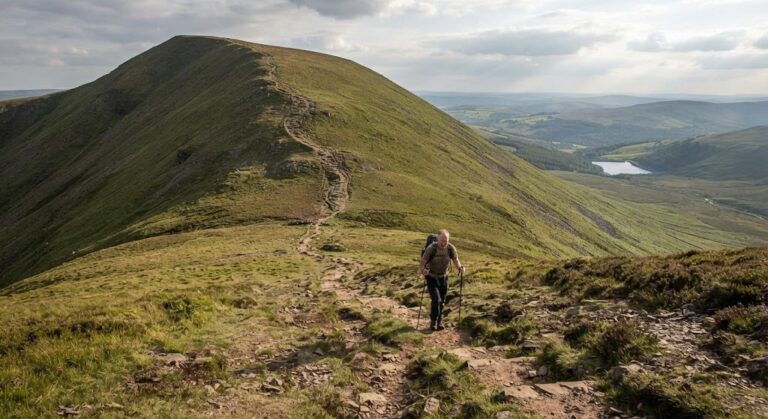
Look at the terrain, amount of ascent, type of paths and whether there are any sections that could be difficult in poor weather.
A 10-kilometre walk on relatively easy paths can feel very different from a 10-kilometre route over steep or rough ground.
3. Check the Weather
Look at the forecast before setting off, and think about how the weather could affect the route rather than simply checking the temperature.
Rain can make paths muddy and slippery. Wind can make exposed ridges uncomfortable or dangerous. Hot weather can make a long walk considerably harder.
If the forecast is poor, there’s nothing wrong with changing your plans.
4. Wear Comfortable Footwear
You don’t necessarily need expensive hiking boots when you’re starting out.
What you do need is footwear that fits properly, is comfortable over the distance you’re walking and provides suitable grip for the terrain.
Don’t try a new pair of boots for the first time just before a long hike. Give yourself time to find out whether they rub or cause problems.
5. Wear Layers
Conditions can change surprisingly quickly outdoors.
Several thinner layers are often more useful than one very thick item of clothing because you can add or remove them as your temperature changes.
A waterproof layer is particularly useful in the UK, even when the morning starts dry.
6. Take More Water Than You Think You Need
How much water you’ll need depends on the weather, distance, terrain and availability of water along the route.
Don’t assume you’ll be able to find a suitable stream or spring when you’re thirsty, and certainly never assume that it is safe to drink.
For a straightforward beginner’s walk, carrying enough water for the planned journey with some allowance for delays is a sensible starting point.
7. Take Food
You don’t need elaborate hiking meals for a day walk.
A sandwich, fruit, cereal bar or other easy-to-carry food can make a big difference when your energy starts dropping.
It’s particularly useful to have something available even if you don’t expect to need it. A walk can take longer than planned.
8. Carry a Map
Even if you know the area, take a map suitable for the route.
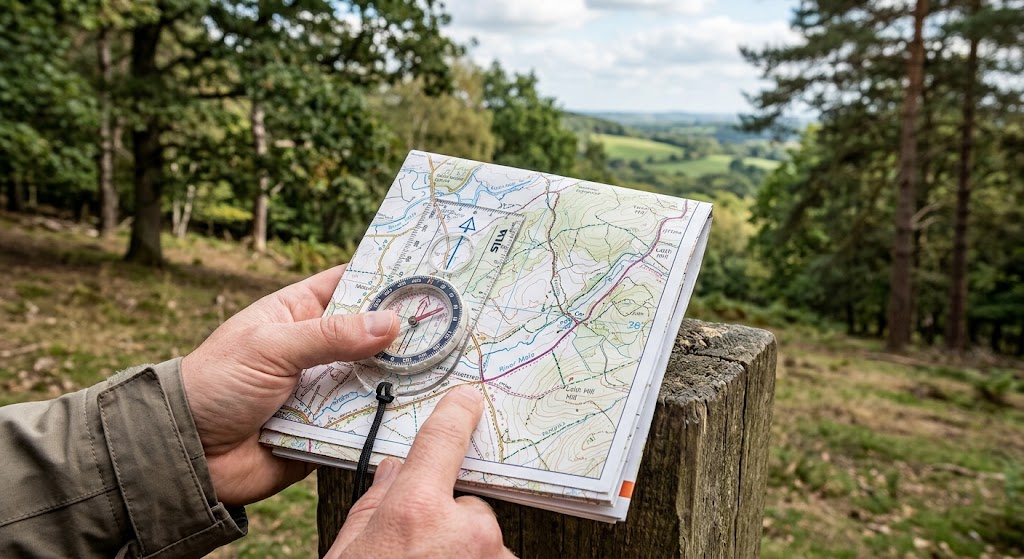
A map gives you much more information than a phone screen alone. It can show paths, contours, streams, roads, buildings and other features that help you understand where you are.
Learning to read a map is one of the most useful skills you can develop as a hiker.
9. Don’t Rely Entirely on Your Phone
A phone can be an excellent navigation tool, but it shouldn’t be your only plan.
Battery can run low, signal can disappear and electronic devices can fail.
Download anything you need before leaving, and consider carrying a physical map and compass as a backup.
10. Tell Someone Where You’re Going
Before setting off, let someone know your plans.
Tell them roughly where you’re walking, where you’re starting and when you expect to return.
You don’t need to make this complicated. A simple route message can provide useful information if your plans change or someone needs to raise the alarm.
11. Start Walking Slowly
It can be tempting to set off quickly when you’re feeling fresh.
Try not to.
A steady pace that you can maintain is usually much more comfortable than walking quickly for the first hour and struggling later.
Give your body time to warm up and find a rhythm.
12. Take Breaks Before You’re Exhausted
Don’t wait until you have completely run out of energy before stopping.
A short break can give you time to drink, eat something and recover before continuing.
You’ll also start to learn how often you naturally need to stop. This will help you plan longer walks in the future.
13. Learn to Read the Terrain
Start paying attention to the ground beneath your feet.
Notice how the terrain changes as you move. Learn to recognise steep slopes, uneven ground, muddy sections and places where water is likely to collect.
Good hiking isn’t just about following a line on a map. It’s about understanding the ground you’re actually walking across.
14. Don’t Ignore Small Problems
A small hot spot on your heel can become a painful blister.
A damp layer can become a cold and uncomfortable problem.
A slight headache may be an early sign that you need water, food or a rest.
Deal with small problems while they’re still small rather than hoping they’ll disappear and having a bigger problem to deal with later.
15. Keep an Eye on the Time
It’s easy to lose track of time when you’re enjoying a walk.
Before setting off, have a rough idea of how long the route should take and remember that your return journey may take longer if conditions change.
If you’re running significantly behind schedule, stop and reassess rather than simply pushing on.
16. Know Where You Are
You don’t need to know your exact location every second, but you should regularly have a good idea of where you are on the route.
Use obvious features such as junctions, bridges, buildings, streams and hilltops to confirm your progress.
Getting into the habit of checking your position makes navigation much easier.
17. Don’t Follow a Route Blindly
A line on a map or an app isn’t necessarily the safest way through the landscape.
If a path has become flooded, eroded or blocked, don’t blindly follow it because your phone says you should.
Look at the terrain and decide whether the route still makes sense.
18. Respect Other People Outdoors
You’ll meet other walkers, runners, cyclists and sometimes people working on the land.
Give people space and be considerate when paths are busy.
If you’re walking through gates, leave them as you found them unless there are clear instructions saying otherwise.
A little courtesy makes outdoor spaces better for everyone.
19. Be Careful Around Livestock
Cows, horses and other animals may be encountered on hiking routes.
Give livestock plenty of space and don’t approach them unnecessarily.
If you’re walking with a dog, pay particular attention to livestock and follow local access guidance.
20. Leave the Countryside as You Find It
Take your rubbish home with you.
Don’t damage vegetation, disturb wildlife or leave unnecessary marks on the landscape.
If everyone leaves a little less impact behind, the places we enjoy walking through remain enjoyable for the next person.
21. Don’t Be Afraid to Turn Around
One of the most useful hiking skills is knowing when to change your plans.
If the weather deteriorates, you’re running out of daylight, someone is struggling or the terrain is more difficult than expected, turning around isn’t failure.
It’s good judgement.
A route will still be there another day.
22. Learn a Few Basic Navigation Skills
You don’t need to become an expert navigator before your first walk.
Start with the basics: understanding map symbols, reading grid references, identifying contours and using a compass.
Then practise them on easy routes where you already know roughly where you are.
Your confidence will build surprisingly quickly.
23. Carry a Small Emergency Kit
The contents will depend on the type and length of your walk, but a basic emergency kit can be useful.
This might include a small first-aid kit, spare warm layer, waterproof clothing, torch, whistle and some extra food.
You may never need most of it. That’s exactly what you want.
24. Don’t Compare Yourself With Other Hikers
You’ll eventually meet people who walk much further, climb much higher or move much faster than you.
That’s irrelevant to your walk.
Your aim should be to choose routes that suit your current ability and gradually build your skills and fitness.
A successful hike is one where you finish safely and enjoyed yourself, not one where you kept up with someone else.
25. Enjoy the Walk
It’s easy to become so focused on distance, speed and reaching the next waypoint that you forget why you’re outside in the first place.
Stop occasionally, look around and take in the beauty that surrounds you.
Notice the landscape, listen to the sounds around you and pay attention to things you might normally walk straight past.
Hiking isn’t a race.
The more comfortable you become outdoors, the more you’ll start noticing that the journey itself is just as important as reaching the destination.
A Final Tip for Your First Hikes
You don’t need to master everything before you start.
Choose a manageable route, check the conditions, take the essentials and tell someone where you’re going. Then get outside and pay attention to how the walk feels.
Every hike teaches you something that the previous hikes didn’t.
You’ll discover what clothing works for you, how much water you need, how quickly you walk and which navigation skills you need to practise. Those small lessons gradually turn a beginner into someone who feels at home outdoors.
🔒Ready to test your survival skills?
Join Survival Guides UK for free, complete challenges, earn badges and increase your Survival Level.
JOIN FREE →
CRAIG BURR
FOUNDER · SURVIVAL GUIDES UK
I'm Craig, the person behind Survival Guides UK. I created SGUK because I wanted somewhere people could learn real outdoor skills in a practical, straightforward way — from lighting a fire and tying knots to navigation, campcraft and everything in between.
You can read more about the story behind SGUK here as well as our approach here.