Water Safety in Cold Conditions
Water becomes a different hazard when temperatures fall.
Cold weather can affect rivers and streams, make banks slippery, create ice and increase the consequences of falling into water. Even a relatively short immersion can become dangerous when the water is very cold.
Cold-weather water safety therefore involves more than avoiding deep water. You need to understand cold water, ice, exposure and changing conditions.
What You’ll Learn
By the end of this lesson, you will understand:
- Why cold water can be dangerous
- What happens during cold water shock
- How cold conditions increase the risk of hypothermia
- Why ice should never be assumed to be safe
- How to reduce the consequences of an accidental fall
- How to manage drinking water during cold-weather journeys
- What to do if someone becomes dangerously cold
Equipment
Depending on the activity, you may need:
- Suitable cold-weather clothing
- Waterproof outer clothing
- Spare dry clothing
- Waterproof footwear
- A suitable water container
- Insulated protection for drinking water
- A means of keeping essential equipment dry
- Appropriate buoyancy equipment for activities where it is required
The equipment needed will depend on the environment and activity.
Prerequisites
You should already understand the basic principles of water safety, stream crossing and recognising unsafe water.
You should also understand how to recognise the early signs of becoming excessively cold.
Why Is Cold Water Dangerous?
Cold water can remove heat from the body much faster than cold air.
A sudden fall into cold water can trigger cold water shock.
This can cause an involuntary gasp, rapid breathing and a sudden increase in heart rate and blood pressure.
The initial reaction can make it difficult to control your breathing.
This is one reason why an unexpected fall into cold water can be dangerous even before hypothermia develops.
Cold Water Shock
If you unexpectedly enter cold water, your first priority is to regain control of your breathing.
Try not to panic.
If you are able to float, focus on keeping your airway clear and allowing your breathing to settle.
Do not immediately attempt a long swim unless necessary to reach safety.
The initial shock can make controlled swimming difficult.
Once your breathing is under control, work out the safest way to reach the bank or another place of safety.
Hypothermia
Prolonged exposure to cold can cause the body’s core temperature to fall.
This is known as hypothermia.
Early signs can include:
- Shivering
- Cold or pale skin
- Tiredness
- Confusion
- Slurred speech
- Poor coordination
As hypothermia becomes more severe, shivering may stop and the person’s condition can deteriorate significantly.
Hypothermia is a medical emergency when severe.
Preventing Excessive Heat Loss
The best approach is to prevent excessive cooling before it becomes a problem.
In cold and wet conditions:
- Wear suitable layers
- Keep yourself dry where possible
- Protect yourself from wind
- Carry suitable spare clothing
- Avoid unnecessary exposure
- Deal with wet clothing promptly
- Monitor yourself and others for signs of becoming dangerously cold
Wet clothing can increase heat loss, particularly when combined with wind and low temperatures.
Water and Winter Clothing
Cold-weather clothing should not make water emergencies more dangerous.
Bulky clothing can restrict movement, become heavy when wet and make swimming more difficult.
For activities where entering water is a realistic possibility, use equipment specifically appropriate to that activity.
If you are simply walking near water, do not assume that ordinary winter clothing provides protection against immersion.
The safest strategy is still to avoid falling in.
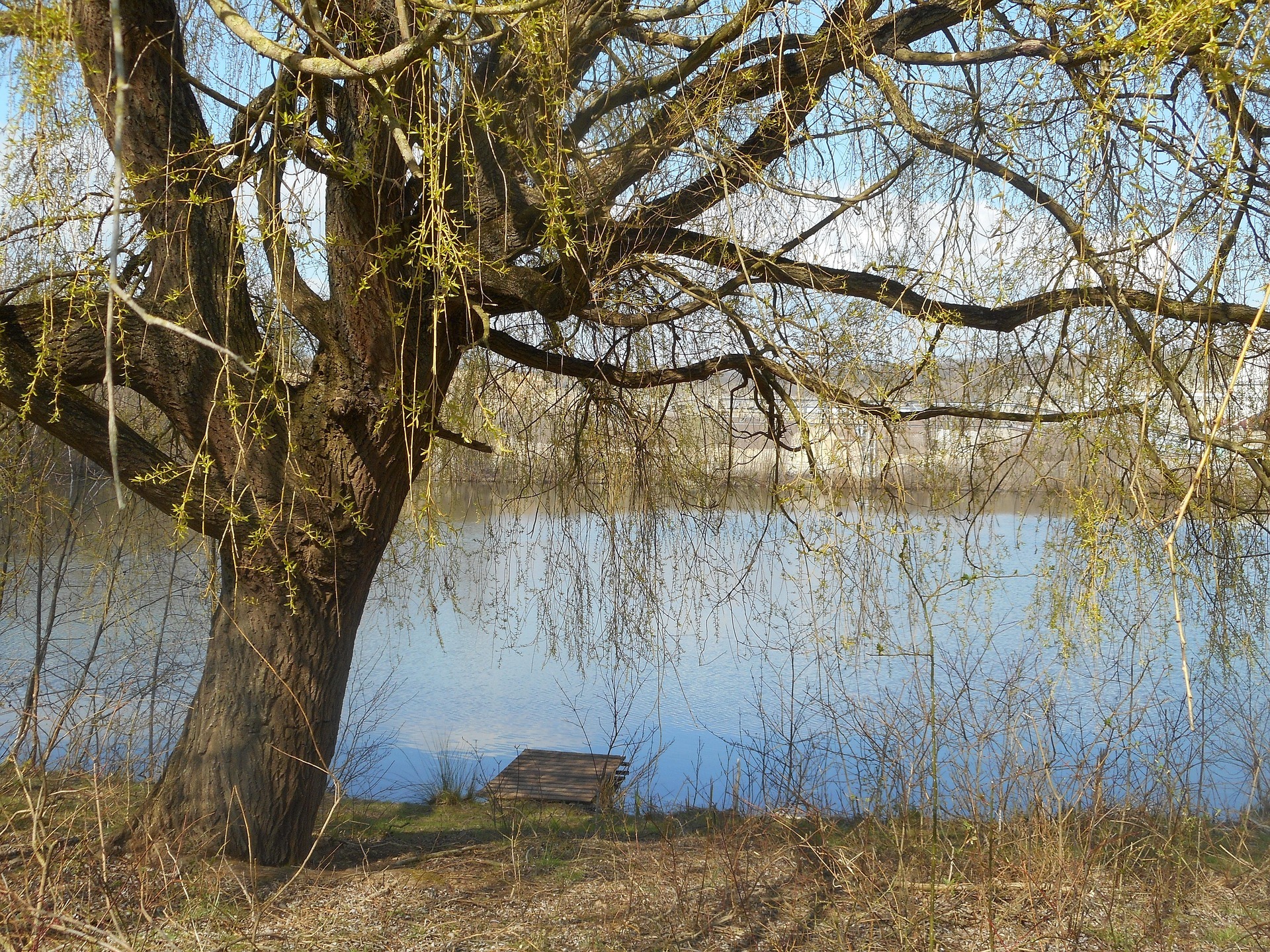
Be Careful Near Riverbanks
Cold weather can make riverbanks particularly hazardous.
Frost, ice, mud and wet vegetation can all reduce your grip.
Stay away from unstable edges and avoid getting unnecessarily close to the water.
An apparently solid bank may be undercut beneath the surface.
Take particular care when visibility is poor or darkness makes hazards difficult to see.
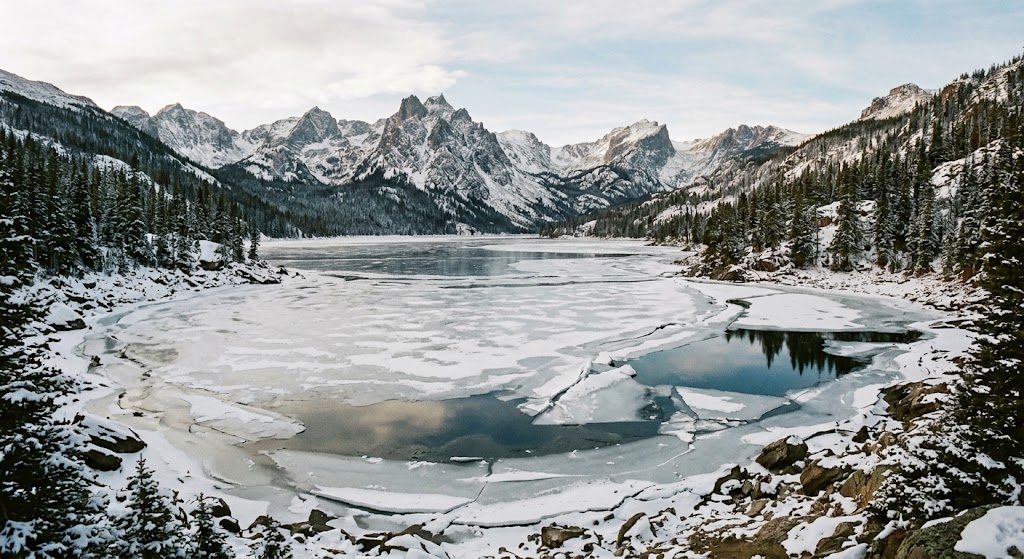
Ice Is Not Automatically Safe
One of the biggest cold-weather water hazards is ice.
Never assume that ice is safe to walk on simply because it looks thick.
Its strength can vary considerably depending on:
- Thickness
- Temperature
- Water movement
- Cracks
- Snow cover
- The size of the water body
- Local conditions
Moving water is particularly unpredictable.
A frozen-looking section of a river may be thinner or weaker than it appears.
Never Test Ice With Your Feet
Do not step onto ice simply to find out whether it will support you.
A person falling through ice can suddenly be immersed in extremely cold water, creating a serious emergency.
If you need to cross an area where ice is present, find a safer route around it.
For organised activities involving ice, use properly trained personnel and appropriate risk controls.
What If Someone Falls Through Ice?
If someone falls through ice, do not rush onto the ice after them.
You could fall through as well.
Keep yourself away from the weak ice and call 999 if emergency assistance is required.
From a safe position, encourage the person to remain calm and keep their airway clear.
If there is a safe way to extend or throw suitable rescue equipment from firm ground, this may provide assistance without placing another person on the ice.
Do not put yourself into the same danger.
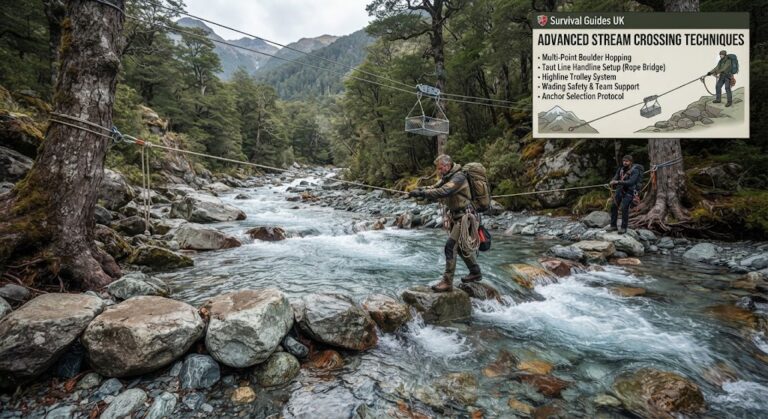
Cold Water and Stream Crossings
Cold conditions make stream crossings more demanding.
A fall that might otherwise result in wet clothing can become much more serious when the water is very cold.
Before crossing, ask:
Do I actually need to cross here?
If a bridge or alternative route exists, it may eliminate the water hazard completely.
If the crossing conditions are uncertain, rising or fast moving, find another route.
Cold Weather Can Change Water Levels
Winter weather can rapidly alter rivers and streams.
Heavy rain, melting snow and changes in temperature can increase water levels and current speed.
A familiar crossing may therefore become unsuitable.
Do not rely solely on your memory of what the water looked like previously.
Assess the conditions you actually have on the day.
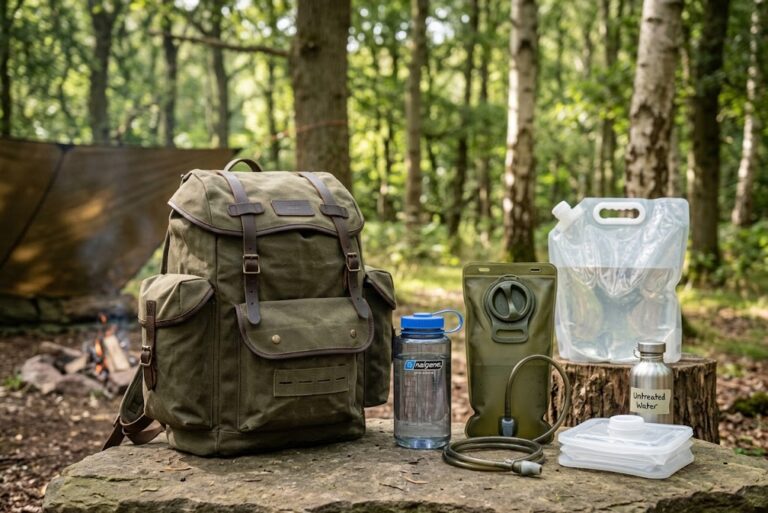
Keep Drinking Water From Freezing
Cold-weather journeys create another water problem: your drinking water can freeze.
A frozen water bottle is not useful when you need a drink.
Protect water containers from extreme cold where practical.
Keep bottles inside your pack or insulated where appropriate, and consider how easily you can access them.
Hydration tubes can also freeze in very cold conditions, so check your system regularly if you rely on one.
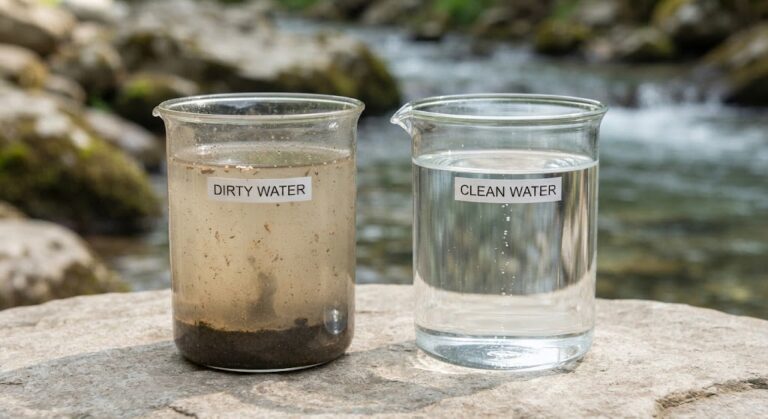
Don’t Let Cold Reduce Your Water Planning
Cold weather can reduce your awareness of thirst, but you still need to manage your water supply.
Do not assume that because you are not sweating heavily you do not need to drink.
Plan where you will obtain water, how you will treat it and how you will prevent it from freezing.
If you are relying on natural water sources, remember that snow and ice are not automatically safe sources of drinking water simply because they look clean.
If You Fall Into Cold Water
If you unexpectedly enter cold water:
1. Stay calm.
The initial shock can make it difficult to think clearly.
2. Keep your airway clear.
Focus on controlling your breathing.
3. Float if possible.
Use available flotation and conserve energy.
4. Look for the safest exit.
Move towards a stable bank or other safe location when you can.
5. Get out of the water.
Once you are in a safe position, leave the water as quickly as practical.
6. Get warm.
Remove wet clothing where appropriate, replace it with dry insulation and protect yourself from wind.
7. Get medical help if needed.
Seek emergency assistance if someone is severely cold, confused, very drowsy, struggling to breathe or otherwise seriously unwell.
After a Cold-Water Incident
Someone can continue becoming colder after leaving the water.
Do not assume that getting onto dry land immediately solves the problem.
Move the person somewhere sheltered and remove wet clothing where practical.
Replace it with dry, insulating layers and keep them protected from wind.
If the person is seriously affected, call 999 and follow the emergency operator’s instructions.
Do not give an unconscious person anything to eat or drink.
Practical Exercise
This lesson should not be practised by deliberately entering cold water or walking onto ice.
Instead, choose a safe location near water and carry out a cold-weather risk assessment.
Identify:
- The nearest water hazards
- Slippery or unstable banks
- Any areas where ice may form
- Safe routes around the water
- A sheltered location nearby
- What clothing or equipment would help keep someone warm
- Where you would call for emergency assistance
Then imagine that someone has fallen into the water.
Talk through your response without entering the water yourself.
The aim is to make the correct decisions familiar before a real emergency occurs.
Final Tip
Cold water gives you less time to make mistakes.
Treat rivers, streams, ponds and ice with extra caution in cold conditions. Avoid unnecessary exposure, protect yourself from the cold and always have a plan for what you would do if someone entered the water.
In winter, the safest water crossing is very often the one you choose not to make.
🔒Ready to test your survival skills?
Join Survival Guides UK for free, complete challenges, earn badges and increase your Survival Level.
JOIN FREE →
CRAIG BURR
FOUNDER · SURVIVAL GUIDES UK
I'm Craig, the person behind Survival Guides UK. I created SGUK because I wanted somewhere people could learn real outdoor skills in a practical, straightforward way — from lighting a fire and tying knots to navigation, campcraft and everything in between.
You can read more about the story behind SGUK here as well as our approach here.