What to Do If Someone Falls Into Water
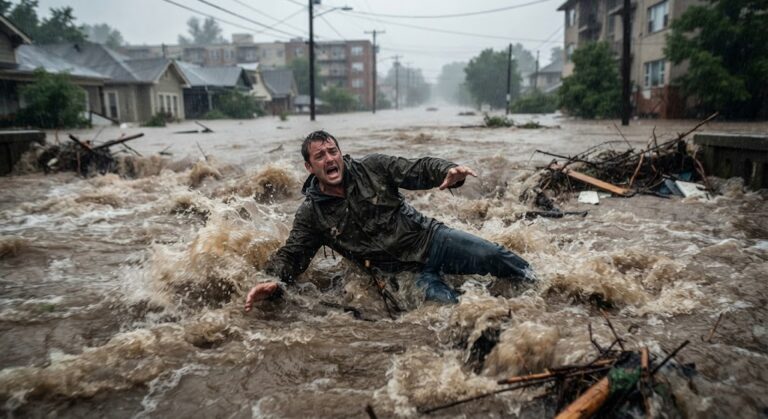
Seeing someone fall into a river, lake or pond can be frightening, but the most important thing is to avoid becoming a second casualty.
Scouts should understand that attempting to jump in after someone without the right training and equipment can make the situation much worse.
The safest response is to raise the alarm, get help and use safe rescue methods where appropriate.
Stay Calm
If someone falls into water, try to stay calm.
Shouting or panicking can make it harder to think clearly.
Immediately alert the nearest leader or responsible adult and follow the group’s emergency procedures.
Don’t Jump In
One of the most important rules is:
Don’t enter the water to rescue someone unless you are appropriately trained and equipped to do so.
Even strong swimmers can struggle against cold water, currents, depth and panic.
A person attempting a rescue can quickly become another casualty.
Raise the Alarm
Get help immediately.
Shout for assistance and alert the leader or other responsible adults.
If there is no immediate help available and the situation is a genuine emergency, contact the emergency services.
In the UK, call 999 or 112 and ask for the appropriate emergency service.
Keep Watching the Person
If it is safe to do so, keep the person in sight.
Tell rescuers where you last saw them if they disappear from view.
Try to give clear information about:
Use Reach or Throw Methods
If the person is close to the edge and it can be done without approaching an unstable bank, a safe rescue aid may be available.
Depending on the location and equipment, this could involve throwing a suitable flotation aid or extending an appropriate object from a safe position.
Do not lean so far over the edge that you could fall in yourself.
Don’t Form a Human Chain
It may seem like a good idea for several people to hold hands and reach towards someone in the water.
This can be extremely dangerous.
If the person at the front loses balance, others can be pulled towards the water.
Use safer rescue methods instead.
Be Careful With Riverbanks
Getting closer to the person isn’t always safer.
Riverbanks can be slippery, steep or undercut.
If you approach the edge, make sure you don’t place yourself on unstable ground.
A rescue attempt should never create another emergency.
Remember Cold Water
Someone who falls into cold water may react very differently from what you expect.
Cold water can cause an immediate gasp and make controlled breathing difficult.
It can also rapidly affect movement and coordination.
This is another reason not to underestimate someone who appears to be coping initially.
If the Person Gets Out
Once the person is out of the water, move them to a safe location away from the water’s edge.
They may be cold, frightened or confused.
Get appropriate help and follow your group’s emergency procedures.
Don’t assume they’re fine simply because they’ve managed to get out.
If Someone Is Very Cold
Wet clothing and cold conditions can cause body temperature to fall.
Remove wet outer clothing where appropriate and replace it with dry, warm clothing.
Keep the person sheltered from wind and rain.
If they are seriously cold, confused, unusually drowsy or otherwise unwell, seek urgent medical assistance.
Don’t Give Food or Drink to an Unwell Person
If someone is seriously unwell, confused or has reduced consciousness, don’t give them food or drink.
Follow emergency medical advice and the instructions of emergency services.
If They Disappear Underwater
If the person goes underwater and cannot be seen, tell emergency services exactly where they were last seen.
Do not enter the water yourself.
Trained emergency responders have the appropriate equipment and procedures for water rescue.
Younger Scouts
Younger Scouts don’t need to learn complicated rescue techniques.
The key messages are simple:
Shout for help.
Tell a leader.
Don’t jump into the water.
Don’t put yourself in danger.
Older Scouts
Older Scouts can learn more about emergency response and safe rescue principles as appropriate to their training.
They should understand the difference between helping from a safe position and entering the water themselves.
Any practical rescue training should be delivered through an appropriate, properly supervised programme.
Leader Notes
Before activities near water, make sure Scouts know who to alert if there is an emergency.
Establish clear boundaries and emergency arrangements before the activity begins.
Where appropriate, identify access points for emergency services and consider how help would be summoned.
Don’t rely on Scouts improvising a rescue in an emergency.
Safety
Never enter moving or unfamiliar water to rescue someone unless you are appropriately trained and equipped.
Don’t approach unstable or undercut riverbanks.
Raise the alarm immediately.
Call 999 or 112 in a serious emergency in the UK.
Follow the instructions of emergency services.
Once the person is out of the water, keep them warm and seek appropriate medical assistance if required.
Learning Outcomes
Scouts can learn to:
Final Thought for Scouts
When someone falls into water, your first instinct might be to jump in after them.
Don’t.
The most useful thing you can do is raise the alarm, stay safe and get appropriate help.
A successful rescue starts with making sure there isn’t a second person in trouble.
🔒Ready to test your survival skills?
Join Survival Guides UK for free, complete challenges, earn badges and increase your Survival Level.
JOIN FREE →
CRAIG BURR
FOUNDER · SURVIVAL GUIDES UK
I'm Craig, the person behind Survival Guides UK. I created SGUK because I wanted somewhere people could learn real outdoor skills in a practical, straightforward way — from lighting a fire and tying knots to navigation, campcraft and everything in between.
You can read more about the story behind SGUK here as well as our approach here.