How to Use a Water Filter
A water filter can make collecting water outdoors much easier, particularly on longer walks, camping trips and adventures where carrying all the water you need isn’t practical. Rather than carrying several litres from the start, you can collect water from a suitable source and filter it as you need it.
However, using a filter isn’t simply a case of putting dirty water through a tube and drinking whatever comes out. You need to choose your water source carefully, understand what your particular filter removes and use it correctly. You should never assume that water is safe to drink just because you used a water filter.
Choose Your Water Source Carefully
Start with the cleanest suitable water source you can find.
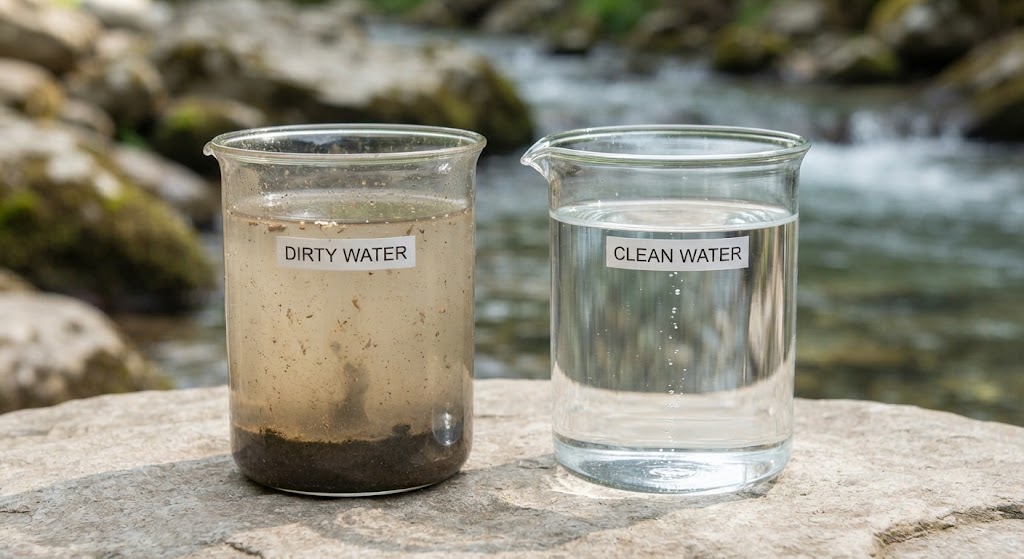
A clear-flowing stream or spring is generally preferable to stagnant water, although clear-looking water isn’t necessarily safe to drink. Micro-organisms that can make you ill are often invisible.
Avoid water that is obviously polluted, contains chemical contamination, has an unusual smell or is downstream of potential sources of contamination. A filter designed to remove bacteria and protozoa cannot necessarily make chemically contaminated water safe.
If you have access to a treated drinking-water supply, that is normally the safer choice.
Check What Your Filter Removes
Not all water filters do the same thing and I would avoid buying a cheap Chinese water filter just based on the price.
Before relying on one outdoors, read the manufacturer’s instructions and understand what it is designed to remove. Some filters are designed to remove bacteria and protozoa, while others also provide protection against viruses or certain chemicals.
A filter that removes sediment and some micro-organisms does not automatically make every source of water safe to drink.
This is one of the most important things to understand about outdoor water treatment: filtered doesn’t always mean safe from every possible contaminant.
Let Very Dirty Water Settle First
If the water contains a lot of mud or visible sediment, don’t immediately put it through your filter.
Where practical, collect the water and allow the heavier particles to settle. You can then carefully take clearer water from the top.
Some filters can also be used with pre-filters or cloths to remove larger particles. This can reduce the amount of dirt reaching the filter and may help prevent it becoming clogged.
Fill the Dirty Water Container
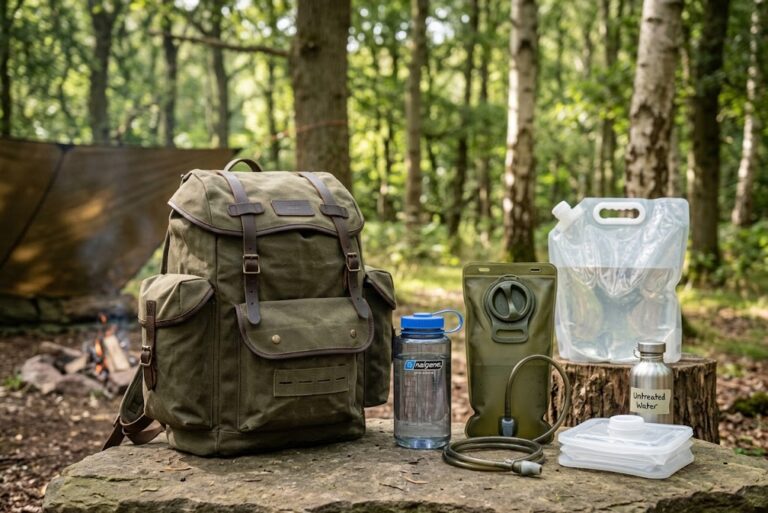
Many portable filters have a dirty-water bottle, reservoir or bag that connects directly to the filter.
Fill this container from your chosen source without allowing the clean end of the filter or clean bottle to touch the untreated water.
This is particularly important when you’re filtering into a bottle that you intend to drink from. You don’t want to contaminate the clean side after doing all the work of filtering the water.
Attach the Filter Correctly
Connect the filter exactly as instructed by the manufacturer.
Make sure the connections are secure and that the water is flowing in the correct direction. Some filters have an arrow or other marking showing which end is the inlet and which is the clean-water outlet.
Don’t improvise connections or bypass part of the filter simply because the water is flowing slowly.
Filter the Water
Once everything is connected, operate the filter according to its design.
A squeeze filter may require you to squeeze a dirty-water bottle or reservoir, while a pump filter may require repeated pumping. Gravity filters allow water to pass through the filter gradually without you having to pump it.
Don’t force the system beyond the manufacturer’s instructions. If the flow becomes unusually slow, the filter may need cleaning or maintenance.
Keep Clean and Dirty Water Separate
This is one of the easiest mistakes to make.
Keep the untreated water container and the clean-water container separate, and don’t allow the clean end of the filter to touch any dirty surfaces.
If you put the clean bottle down on muddy ground and then drink from it, you could easily contaminate it again.
Think of your setup as having two sides: dirty water in, clean water out. Keep them separate throughout the process.
Check the Filtered Water
Filtered water should normally look clearer, but appearance alone does not prove that it is safe.
If the water still looks unusual, smells strange or contains visible particles, stop and investigate rather than assuming the filter has done its job.
Follow the instructions for your particular filter and use an additional treatment method if the conditions or manufacturer’s guidance require one.
Know When You Need More Than a Filter
Some situations require additional water treatment.
For example, if your filter is not designed to remove viruses and there is a realistic risk of viral contamination, filtering alone may not be sufficient. Boiling or an appropriate chemical treatment may be needed depending on the circumstances and the equipment you have.
Always follow the instructions for your filter and any additional treatment product carefully.
Look After Your Filter
A water filter is not maintenance-free.
Different filters have different cleaning, drying and storage requirements, so follow the manufacturer’s instructions rather than assuming every filter can be treated in the same way.
Some filters must be protected from freezing because ice can damage the internal filter material. If your particular filter has this limitation, take it seriously.
After a trip, clean and store the filter as instructed so that it is ready for the next one.
Don’t Let the Filter Freeze
This deserves particular attention if you’re using a filter during winter.
Water trapped inside some filter cartridges can freeze and expand, potentially damaging the filter. The damage may not be obvious from the outside, but it can compromise the filter’s ability to work properly.
If your filter manufacturer warns against freezing, keep the filter somewhere protected from freezing temperatures, including overnight.
Carry a Backup
A filter can be extremely useful, but relying entirely on one piece of equipment isn’t always sensible.
For longer trips, consider carrying a backup water-treatment method appropriate for your situation. This could be a method such as water purification tablets or another treatment system, depending on what you are carrying and what hazards you may encounter.
Also carry enough water to cover the possibility that your planned source isn’t usable.
Safety When Collecting Water
Take care when approaching natural water sources. Banks can be slippery, fast-flowing water can be dangerous and apparently shallow streams can have surprisingly strong currents.
Don’t enter moving water simply to reach a better-looking collection point if you can collect water safely from the bank.
Remember that clear water can still contain organisms that cause illness, so don’t assume that water is safe simply because it looks clean.
Practise Before You Need It
Take your filter on a straightforward camping trip and practise using it before relying on it during a long walk or remote adventure.
Learn how quickly it filters water, how much effort it takes, how to clean it and how much water you can realistically process. Make sure everyone in your group knows which container is for untreated water and which is for drinking water.
The more familiar you are with the system, the less likely you are to make a mistake when you’re tired, cold or dealing with poor weather.
Make Water Treatment Part of Your Routine
Using a water filter is a useful outdoor skill, but the filter is only one part of the process. Choosing a sensible water source, preventing cross-contamination and understanding what the filter can and cannot remove are just as important.
Treat every natural water source with care, follow the instructions for your equipment and have a backup plan when the consequences of getting it wrong are serious.
🔒Ready to test your survival skills?
Join Survival Guides UK for free, complete challenges, earn badges and increase your Survival Level.
JOIN FREE →
CRAIG BURR
FOUNDER · SURVIVAL GUIDES UK
I'm Craig, the person behind Survival Guides UK. I created SGUK because I wanted somewhere people could learn real outdoor skills in a practical, straightforward way — from lighting a fire and tying knots to navigation, campcraft and everything in between.
You can read more about the story behind SGUK here as well as our approach here.