How to Carry and Transport Water Outdoors
Finding and treating water is only part of staying hydrated outdoors. You also need to be able to carry, transport and protect your water supply.
The way you carry water affects how much you can take, how easily you can access it and how much effort you need to use while travelling.
More importantly, poor handling can contaminate water that you have already collected or treated.
Good water transport is therefore about more than simply putting a bottle in your rucksack.
What You’ll Learn
By the end of this lesson, you will understand:
- How to choose suitable water containers
- How much water you may need to carry
- How to prevent contamination during transport
- How to distribute water around your equipment
- How to protect water containers from damage
- How to manage water during longer journeys
Equipment
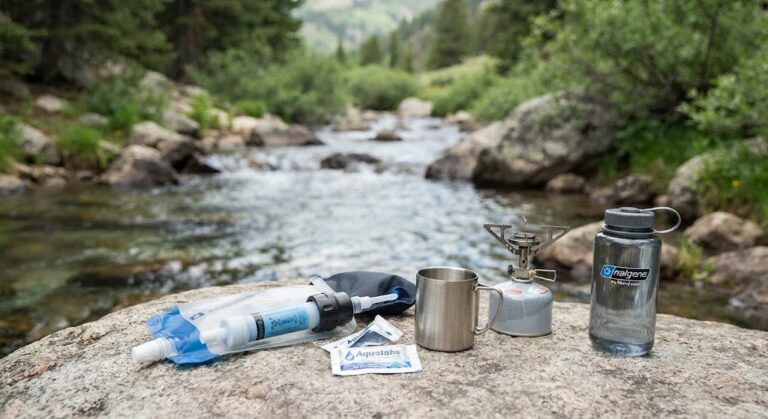
You may need:
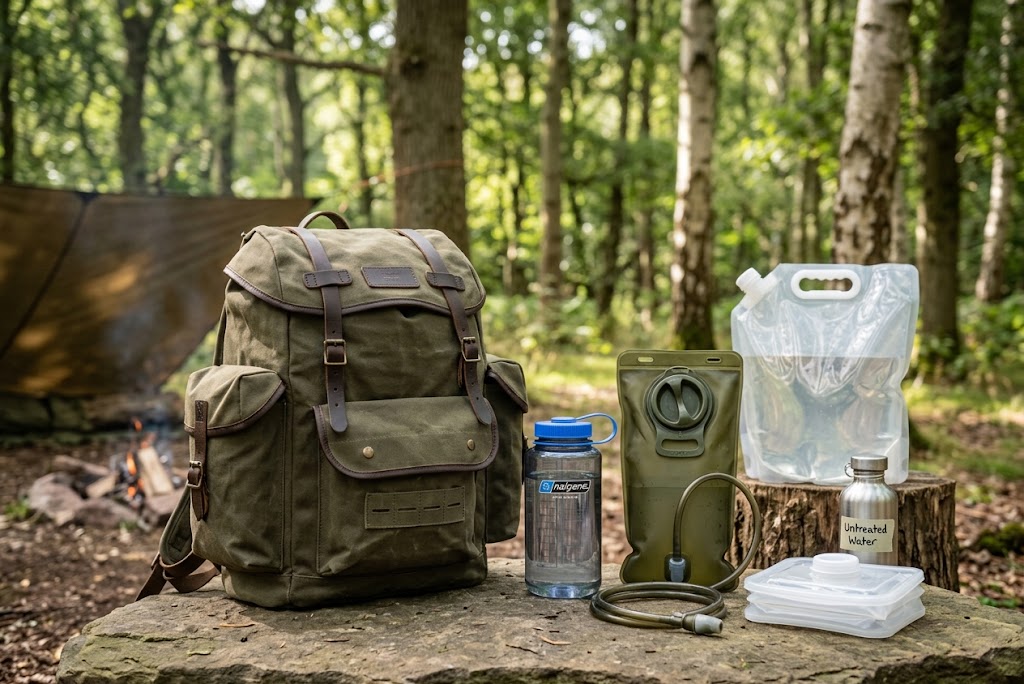
- Reusable water bottles
- A hydration bladder
- Collapsible water containers
- A larger container for transporting additional water
- Your normal rucksack or carrying system
- A separate container for untreated water when necessary
Choose containers designed for carrying drinking water and follow the manufacturer’s instructions for their use and cleaning.
Prerequisites
You should understand the basics of finding and collecting water outdoors.
You should also know how to treat water appropriately before drinking it and understand the difference between untreated and treated water.
Choose the Right Container
Your container should be suitable for the type of journey you are undertaking.
For a short walk, a single reusable bottle may be enough.
For a longer journey, you may need several containers so that your water supply is distributed rather than relying on one large container.
Common options include:
Reusable Bottles
Bottles are simple, durable and easy to access.
They are particularly useful when you want to know exactly how much water you have remaining.
Hydration Bladders
A hydration bladder allows you to drink while walking without repeatedly removing a bottle from your rucksack.
However, the tubing and mouthpiece need to be kept clean and protected.
Collapsible Containers
Collapsible containers are useful when you need to carry additional water but do not want an empty container taking up the same amount of space.
They can be particularly useful when transporting water between a source and a campsite.
Keep Drinking Water Clean
Your water container should be treated as part of your water-treatment system.
Keep the inside of the container clean and avoid touching the inside of the bottle, cap or mouthpiece unnecessarily.
Keep the lid closed when you are not drinking.
If a container has been used for untreated water, do not assume that it is suitable for storing treated water without appropriate cleaning.
A useful principle is:
Clean water needs clean equipment.
Separate Treated and Untreated Water
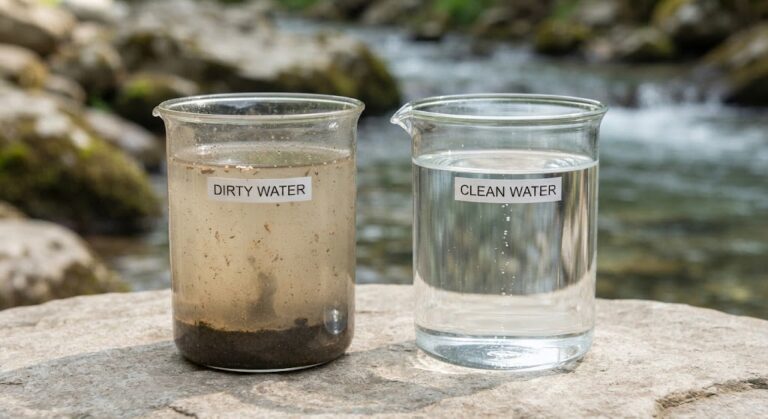
If you are collecting untreated water during a journey, keep it separate from your drinking supply.
For example, you might have:
- One container for collecting untreated water
- A filter for treating it
- Separate clean bottles for treated water
Do not pour untreated water into a bottle that you intend to use for drinking water without cleaning it appropriately.
Likewise, avoid allowing untreated water to come into contact with your filter outlet, clean containers or other equipment used after treatment.
How Much Water Should You Carry?
There is no single amount that works for every outdoor journey.
Your requirements depend on factors such as:
- The length of the journey
- Weather conditions
- Temperature
- Physical activity
- Terrain
- Your access to reliable water sources
- Whether you can safely refill along the way
A short walk with a reliable water supply nearby is very different from a long journey across an area where water may be unavailable.
Rather than choosing a fixed amount for every trip, consider the entire journey.
How much do I need before I start?
Where can I refill?
Can I safely treat the water there?
What happens if my planned source is unavailable?
These questions are more useful than simply deciding to carry a particular number of litres.
Distribute Water Around Your Rucksack
Water is heavy.
One litre of water weighs approximately one kilogram, before the weight of the container is added.
If you are carrying several litres, this can become a significant part of your overall pack weight.
Where practical, distribute your water so that it does not create an awkward load.
Keep heavy items close to your back and positioned so that the rucksack remains balanced.
Avoid placing a large amount of weight on one side.
A badly balanced water load can make walking uncomfortable and may affect your stability on uneven ground.
Protect Your Containers
Water containers can be damaged by sharp equipment, rough ground and excessive pressure.
When packing them:
- Keep them away from sharp objects
- Protect fragile containers from unnecessary impact
- Make sure lids are properly closed
- Check for leaks before starting
- Avoid overfilling containers that may expand or contract with temperature
A small leak can become a major problem if you discover it several hours into a journey.
Prevent Leaks
Before leaving, turn each container into a simple leak test.
Check:
- The lid
- The seal
- The connection between a hydration bladder and its hose
- Any folding or collapsible sections
- The condition of the container itself
Then pack it somewhere where a leak will cause as little damage as possible.
A waterproof outer bag can provide an additional layer of protection, but it should not be relied upon to fix a damaged container.
Carrying Water on Longer Journeys
Long journeys require more planning because carrying all your water from the beginning may not be practical.
Instead, divide the journey into sections.
For each section, identify:
Starting water supply → expected consumption → refill point → treatment → next section
This allows you to think about water as a resource that needs managing throughout the journey.
Do not rely entirely on a single water source.
If a stream shown on a map is dry, inaccessible or unsuitable for collection, your plan should allow for another option.
Water During Hot Weather
Warm conditions can increase the importance of managing your water supply carefully.
You may need to consider:
- Starting with an adequate supply
- Identifying reliable refill opportunities
- Avoiding unnecessary exertion during the hottest part of the day
- Protecting your water from excessive heat
- Monitoring how much water remains
Do not wait until your supply is almost empty before thinking about the next refill.
Water During Cold Weather
Cold conditions create different problems.
You may be less aware of thirst, and water containers can potentially freeze.
Keep containers protected from freezing where practical, particularly if the water is essential to your journey.
Hydration systems can also be affected by freezing temperatures, so consider whether bottles may be more reliable in the conditions you expect.
Carrying Water for a Group
If you are travelling as part of a group, water planning becomes a shared responsibility.
Do not assume that one person will automatically carry all the additional water.
Distribute the load sensibly according to the group’s circumstances and the capabilities of the people carrying it.
For young people, water loads should be appropriate to their age, size and the activity being undertaken.
Group leaders should also consider what would happen if someone loses their water, becomes separated from the group or needs additional water.
Practical Exercise
Pack your normal outdoor rucksack with the amount of water you would realistically carry on a longer day outdoors.
Then check:
- How much water are you carrying?
- How much does it weigh?
- Where is the weight positioned?
- Can you access your drinking water without unpacking everything?
- Are all containers secure?
- What happens if one container leaks?
- Where could you refill during the journey?
- How would you treat that water?
Now remove one of your water containers.
Think about how you would adapt your journey if part of your water supply became unavailable.
This exercise turns water carrying from a simple packing task into a proper part of journey planning.
Final Tip
Don’t just carry water — manage it.
Know how much you have, where it is, how to access it, where your next reliable source is and how you will treat additional water if necessary.
A well-managed water supply gives you options. A poorly planned one can quickly become a serious problem.
🔒Ready to test your survival skills?
Join Survival Guides UK for free, complete challenges, earn badges and increase your Survival Level.
JOIN FREE →
CRAIG BURR
FOUNDER · SURVIVAL GUIDES UK
I'm Craig, the person behind Survival Guides UK. I created SGUK because I wanted somewhere people could learn real outdoor skills in a practical, straightforward way — from lighting a fire and tying knots to navigation, campcraft and everything in between.
You can read more about the story behind SGUK here as well as our approach here.