How to Use Water Purification Tablets
Water purification tablets are a useful way of treating water when you’re camping, hiking or travelling somewhere that you cannot rely on the water supply. They are small, lightweight and easy to carry, which makes them particularly useful as a backup to a filter or as part of an emergency water-treatment kit.
The important thing is that purification tablets are not simply something you drop into any bottle and drink immediately afterwards. You need to start with the best water source you can find, use the correct number of tablets for the amount of water you have, and give the treatment enough time to work. Different products also contain different chemicals and have different instructions, so the manufacturer’s instructions should always take priority.
Choose Your Water Source Carefully
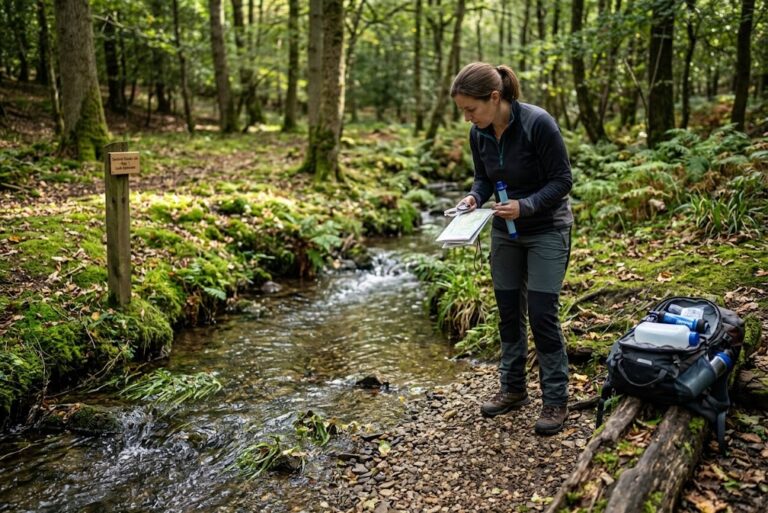
Purification tablets work best when you start with water that is reasonably clear. If you have a choice, look for flowing water away from obvious sources of contamination such as livestock, sewage, roads, campsites and areas where chemicals or other pollutants may enter the water.
No purification tablet should be treated as a way of making heavily polluted water safe. Chemical contamination, fuel, pesticides and many other pollutants are not necessarily removed by chemical water treatment. If the water looks or smells badly contaminated, find another source rather than trying to treat it.
Let Dirty Water Settle
If the water contains a lot of mud or suspended material, allow it to stand for a while so that some of the sediment can settle towards the bottom. You can then carefully collect the clearer water from the top.
For particularly cloudy water, you can also pass it through a clean cloth or suitable pre-filter before using the purification tablets. This does not make the water safe by itself, but removing some of the dirt can make the treatment more effective and improve the taste.
Check the Tablets Before Using Them
Read the packaging before you start. Purification tablets are not all the same, and the amount required can vary depending on the product and the volume of water being treated.
Check the expiry date and make sure the tablets have been stored as recommended. If the instructions say that a particular tablet is suitable for a certain volume of water, measure your water as accurately as you reasonably can rather than guessing.
Never assume that tablets from one packet can be used according to the instructions for another product.
Add the Correct Number of Tablets
Put the required amount of water into a clean container and add the number of tablets specified by the manufacturer.
If you’re treating water in a bottle, make sure you know its actual capacity. A bottle that looks like it holds roughly a litre may contain considerably more or less, and that can affect the amount of treatment required.
Once the tablets have been added, close the container and shake it gently if the instructions recommend doing so. This helps distribute the treatment throughout the water.
Treat the Bottle Cap and Threads
One easy mistake is to treat the water inside the bottle while leaving contaminated water around the mouth, cap or threads.
After adding the tablets, make sure the treated water comes into contact with the inside of the cap and the areas where you will drink from. Some manufacturers specifically recommend loosening the cap after shaking and allowing treated water to wet the threads before tightening it again. Follow the instructions for your particular product.
This matters because there is little point treating the water inside the bottle if you immediately drink it through a contaminated mouthpiece.
Wait for the Full Treatment Time
This is one of the most important parts of using purification tablets. Do not drink the water as soon as the tablet has dissolved.
The treatment needs time to work, and the required waiting period depends on the product, the organisms being targeted and sometimes the temperature of the water. Follow the exact waiting time printed on the packaging.
Cold water can require longer treatment with some products, so never assume that the same waiting time applies in every situation.
If you’re heading out for the day, it can be useful to treat water before you actually need it. That way, the treatment time has passed by the time you need a drink.
Keep Untreated and Treated Water Separate
Once you have treated some water, take care not to contaminate it again.
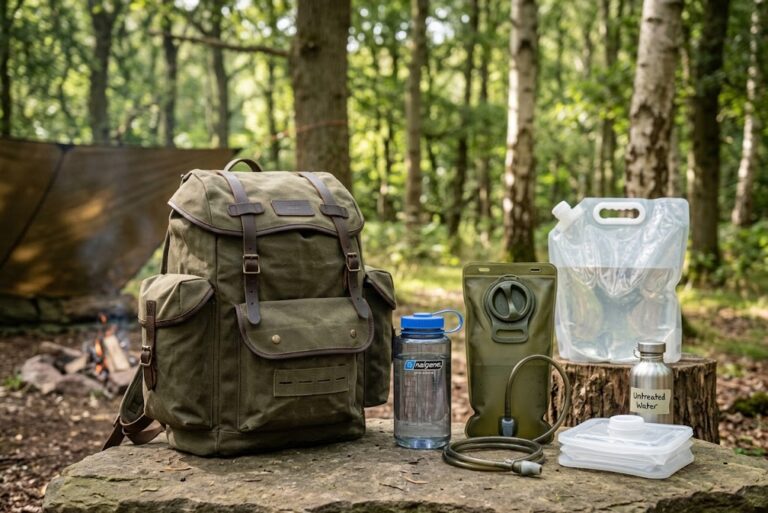
Keep dirty bottles, containers and hands away from the treated water, and don’t pour untreated water into a container that still contains treated water. If you’re carrying both, make it obvious which container contains water that is ready to drink.
This is particularly important when you’re filling several bottles at a campsite or during a longer trip. Good water treatment is partly about avoiding cross-contamination.
Expect a Change in Taste
Some purification tablets can leave a noticeable taste or smell in the water. This does not necessarily mean that something has gone wrong; it can simply be a characteristic of the treatment.
If the product instructions allow it, chilling the treated water can make the taste less noticeable. Some products also provide instructions for reducing the taste after the required treatment time, so check the packaging rather than adding something that might interfere with the treatment.
Know What Purification Tablets Can and Cannot Do
Purification tablets can be very useful, but they are not a universal solution for every water problem.
The effectiveness depends on the active ingredient and the organisms the product has been tested against. Some treatments are effective against bacteria and viruses, while their effectiveness against certain protozoa can vary. They also do not generally remove chemical pollutants, heavy metals, fuel or other dissolved contaminants.
That is why choosing a good water source is still important. Treatment is an extra layer of protection, not an excuse to collect water from the first stream you come across.
Tablets or a Water Filter?
Purification tablets and water filters have different strengths, so carrying both can be useful.
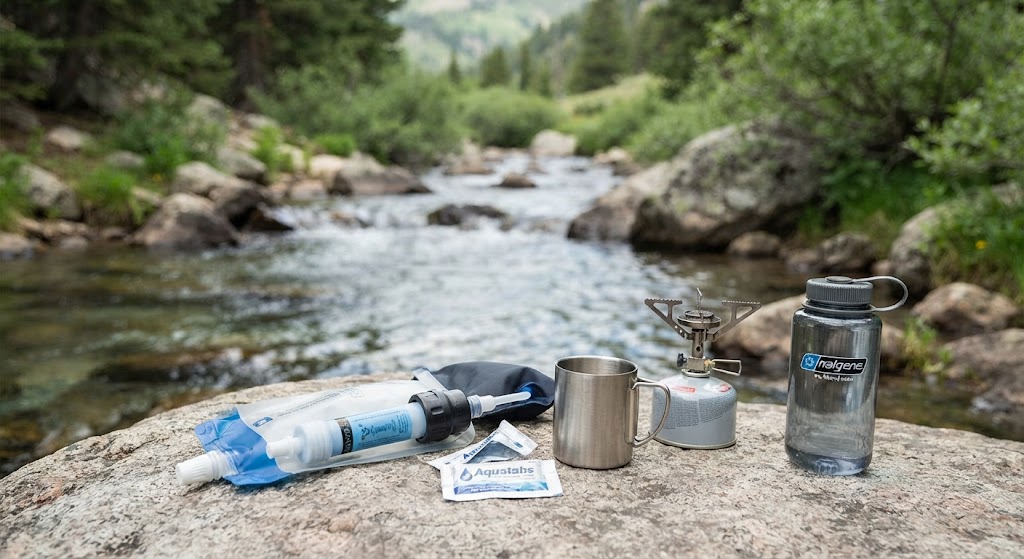
A filter can quickly remove particles and, depending on the type, organisms such as bacteria and protozoa. Tablets can provide chemical treatment and may be useful as a backup if a filter becomes blocked or damaged. Some filters do not remove viruses, so a suitable chemical treatment may provide an additional layer of protection where the risk warrants it.
For longer trips, the best approach depends on where you’re going, the likely water sources and what hazards you might encounter. Check exactly what your equipment is designed to remove rather than assuming that either method deals with everything.
Carry a Backup
Purification tablets take up very little room, so there is usually little reason not to carry a small backup supply when you’re relying on treated water outdoors.
Keep them in their original packaging where possible, protect them from moisture and check their expiry date periodically. They are particularly useful if your main water-treatment method fails or you unexpectedly need to stay out longer than planned.
Safety When Using Water Purification Tablets
Always follow the manufacturer’s instructions and use only the recommended dose. Do not deliberately increase the dose because you think it will make the water safer, and do not shorten the treatment time because you are thirsty.
If the water is suspected of containing chemical contamination, fuel, pesticides or other pollutants, find a different source rather than relying on purification tablets. If you are unsure whether a particular tablet treats a specific organism or waterborne hazard, check the product information before relying on it.
Remember that untreated water can make you ill even when it looks completely clean. Clear water is not necessarily safe water.
Practise Before You Need Them
Water purification tablets are simple to carry, but it’s worth practising with your actual equipment before you depend on it outdoors. Learn how much water your bottles hold, read the instructions on your tablets and work out how you will keep treated and untreated water separate.
Once you’ve used them a few times, the process becomes straightforward. When you’re tired, cold or dealing with an unexpected situation outdoors, knowing exactly what to do is much better than trying to work it out for the first time.
Make Water Treatment Part of Your Routine
Purifying water is one of those outdoor skills that is mostly about doing the simple things correctly. Find the best water source available, remove excess sediment when necessary, use the correct treatment for the amount of water you have, wait for the full treatment time and avoid contaminating the water afterwards.
The tablets themselves may be tiny, but they are only one part of the process. Good water treatment starts with making sensible decisions about where your water comes from.
🔒Ready to test your survival skills?
Join Survival Guides UK for free, complete challenges, earn badges and increase your Survival Level.
JOIN FREE →
CRAIG BURR
FOUNDER · SURVIVAL GUIDES UK
I'm Craig, the person behind Survival Guides UK. I created SGUK because I wanted somewhere people could learn real outdoor skills in a practical, straightforward way — from lighting a fire and tying knots to navigation, campcraft and everything in between.
You can read more about the story behind SGUK here as well as our approach here.