How to Ration Water and Food Outdoors
When you’re outdoors for longer than expected, one of the most useful skills you can have is knowing how to manage the food and water you’ve already got. Running out is rarely caused by one big mistake. More often, supplies gradually disappear because you’re drinking whenever you feel like it, eating larger portions than planned or failing to keep track of what remains.
Rationing isn’t about going hungry or refusing yourself water. It’s about making sensible decisions with the supplies available and adjusting your plans before you reach a point where you have nothing left.
Work Out What You Have
Before you start rationing anything, you need to find out exactly what you’re working with. Count your water bottles, check how much they contain and look through your food rather than relying on memory.
If you’re with a group, make sure everyone knows roughly how much is available. It is much easier to make sensible decisions when you know that there are three litres of water left and enough food for one more meal than when everyone is simply guessing.
If you’re on a planned trip, this is something you should ideally do before leaving. Knowing your starting supplies gives you something to compare against as the day goes on.
Work Out How Long It Needs to Last
The next question is how long your supplies may need to last.
If your walk was supposed to take four hours but you realise you’ve taken a wrong turn and may be out for several more hours, you need to start thinking differently about what you have. If you’re camping and the weather has delayed your departure, the same principle applies.
Don’t assume that the original timetable still applies. Reassess your situation and consider whether you need to change your route, turn around or seek help rather than simply trying to make your supplies last indefinitely.
Prioritise Water
Water is generally more important to manage carefully than food. Your body can cope with missing food for considerably longer than it can cope with serious dehydration, so don’t treat food and water as if they are interchangeable resources.
This also means you should not deliberately avoid drinking water just because you’re worried about running out. If you’re thirsty, particularly in warm weather or while exercising, your body is giving you useful information. The better approach is to monitor how much you have, reduce unnecessary exertion and look for a safe opportunity to obtain and treat more water if necessary.
Drink Little and Often
If you have a limited supply, constantly taking large drinks can make it disappear surprisingly quickly. On the other hand, trying to avoid drinking for long periods is not a sensible solution.
A better approach is to drink normally and sensibly, taking regular drinks rather than repeatedly becoming very thirsty and then drinking a large amount at once. Adjust how much you drink according to the conditions, your activity level and your own needs.
In hot weather or during strenuous activity, you may need considerably more water than you would on a cool, easy walk.
Reduce Unnecessary Water Loss
Sometimes the best way to make your water last longer is to reduce how much water your body is losing.
If conditions allow, slow down rather than pushing yourself unnecessarily hard. Seek shade when it is hot, avoid unnecessary exertion and protect yourself from excessive sun exposure. If you’re carrying a heavy pack, don’t keep walking at a fast pace simply because that was your original plan.
The less energy you waste, particularly in hot conditions, the easier it is to manage your supplies.
Don’t Ignore Signs of Dehydration
Rationing water should never become more important than your health.
Thirst, a dry mouth, dark urine, tiredness, headache and dizziness can all be signs that you need to pay attention to your hydration. More serious dehydration can cause confusion, weakness and other dangerous symptoms.
If someone is becoming seriously unwell, don’t simply tell them to drink less because you’re trying to make the water last. Change the plan, seek help and prioritise their safety.
Divide Food Into Meals
Food is easier to ration when you divide it into sensible portions rather than eating directly from a large packet.
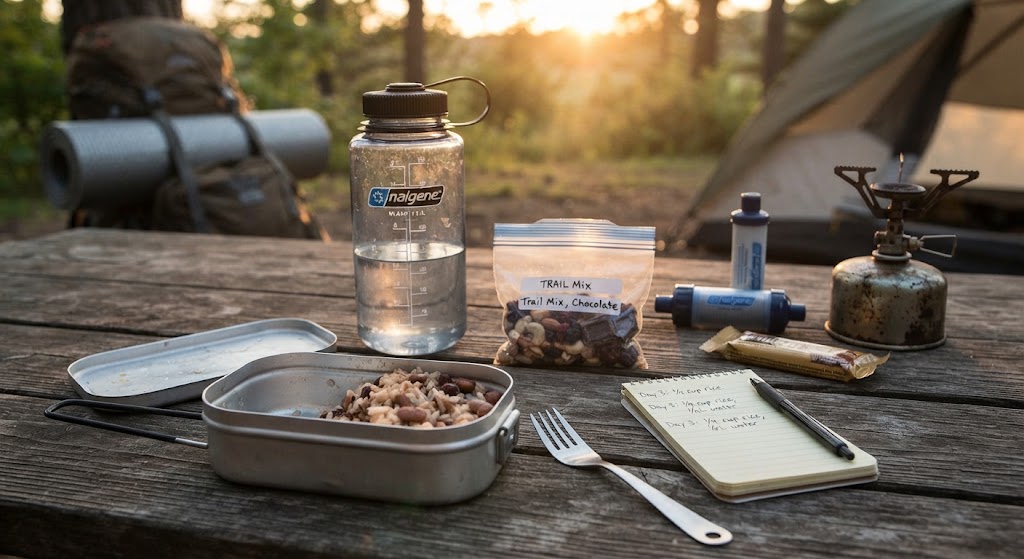
If you have enough food for three meals, work out roughly what those meals will be before you start eating. This makes it much harder to accidentally eat half of your supplies during the first part of the trip and discover later that you have very little left.
Small snacks can also be useful during a long walk, particularly foods that provide a useful amount of energy without taking up much space.
Don’t Eat Everything Because You’re Hungry
After a long period of walking, it’s normal to feel very hungry. The problem is that hunger can make it tempting to eat far more than you planned.
Take a sensible portion, eat it slowly and then reassess how you feel. If you know that you still have several hours to go, keeping some food back can be more useful than having a large meal immediately.
This becomes particularly important when you don’t know exactly when you’ll next be able to get food.
Keep Some Food in Reserve
If your supplies allow it, keeping a small emergency reserve is a useful habit.
Don’t treat everything in your rucksack as food that must be eaten according to the original schedule. Keeping something back means you have a little more flexibility if the journey takes longer than expected.
A reserve could be a high-energy snack or another food that travels well and doesn’t require complicated preparation.
Check Your Supplies Regularly
Don’t wait until you’re almost empty before checking what remains.
Every so often, take a quick look at your water and food and compare it with how much longer you expect to be outside. If you’ve used more than planned, recognise that early and adjust your plans.
This is one of the biggest differences between managing supplies well and simply hoping they will last.
Don’t Waste Water
Think about where water is being used, not just what you’re drinking.
For example, if you’re camping, consider how much water you’re using for cooking and cleaning as well as drinking. You don’t need to avoid basic hygiene, but you should be conscious of unnecessary waste when your supply is limited.
If you’re carrying water for a specific purpose, keep enough aside for that purpose rather than accidentally using it all earlier in the day.
Find More Water Safely
If you realise that your water supply is not going to last, don’t wait until the last few drops before thinking about where more might come from.
Depending on where you are, you may be able to find another water source and treat the water using an appropriate filter, purification tablets or another suitable method. Natural water sources are not automatically safe to drink, even when they look clean.
Your water-treatment method should be something you understand and have practised before you need it.
Know When to Change Your Plans
Rationing is not always the answer.
If you’re becoming dehydrated, the weather has changed, you’re injured or you realise that the journey is going to take much longer than expected, the sensible decision may be to turn around, shorten the route or seek help.
A good outdoor skill is knowing when a problem can be managed with the supplies you have and when you need to change the plan altogether.
Food and Water for Children
Children need particular care because they may not recognise or communicate thirst, hunger or exhaustion as reliably as an adult.
Don’t encourage children to severely restrict their food or water simply to make supplies last longer. Instead, plan appropriate amounts before the trip, carry enough for the conditions and keep an eye on how they are coping.
For group activities, leaders should have a clear plan for food and water rather than expecting young people to manage limited supplies themselves.
Safety When Rationing Food and Water
Never deliberately dehydrate yourself to make water last longer. If someone is showing signs of serious dehydration, confusion, collapse or significant illness, treat it as a medical problem rather than a rationing exercise and seek appropriate help.
Don’t eat wild plants, berries or other natural foods simply because your packed food is running low unless you are completely certain they are safe and you are legally and responsibly able to collect them.
If your supplies are running low because you are lost or delayed, focus on solving the bigger problem. Staying in a safe location, navigating correctly and getting help may be far more important than trying to stretch a small amount of food and water indefinitely.
Practise Managing Your Supplies
You don’t need to wait for an emergency to learn this skill. On your next day walk, take a planned amount of food and water and keep track of what you use.
Notice how much water you actually drink in different weather and how much food you need during a normal day outdoors. That information will make future trip planning much more accurate.
Plan Your Supplies Before You Leave
Good rationing starts before the trip begins. Work out how long you’ll be outside, consider the weather and activity level, take enough food and water for the conditions and carry a sensible reserve for delays.
If something does go wrong, the aim isn’t to survive on as little as possible. It’s to stay calm, look after yourself and the people you’re with, make the supplies you have last sensibly and change your plan before a manageable problem becomes a serious one.
🔒Ready to test your survival skills?
Join Survival Guides UK for free, complete challenges, earn badges and increase your Survival Level.
JOIN FREE →
CRAIG BURR
FOUNDER · SURVIVAL GUIDES UK
I'm Craig, the person behind Survival Guides UK. I created SGUK because I wanted somewhere people could learn real outdoor skills in a practical, straightforward way — from lighting a fire and tying knots to navigation, campcraft and everything in between.
You can read more about the story behind SGUK here as well as our approach here.