What to Do If You Run Out of Water
⚠️ SAFETY FIRST
Running out of water can become a medical emergency, particularly in hot weather or during strenuous activity.
If you have no safe drinking water, don’t keep pushing on as though nothing has happened. Stop, reduce exertion, protect yourself from heat and get help or move towards a known safe water source if you can do so safely.
Never assume that clear-looking water is safe to drink.
What Should You Do If You Run Out of Water?
Running out of water is one of those problems that can start small and become serious surprisingly quickly.
You might have:
The important thing is not to panic.
Running out of water doesn’t necessarily mean you’re in immediate danger.
But it does mean you need to change your priorities.
Stop. Reduce water loss. Work out your options. Get help if necessary.
1. Stop and Assess the Situation
Before doing anything else, stop.
Ask yourself:
How much water do I actually have left?
Check all your bottles and containers.
You may have more than you thought.
Then consider:
Don’t immediately start walking faster to reach your destination.
That can increase your water requirements.
2. Reduce Physical Activity
If you’re out of water, reduce unnecessary exertion.
This is particularly important in hot weather.
Stop for a while.
Find shade if available.
Avoid unnecessary climbing.
Don’t run.
Don’t continue an activity simply because you’re trying to reach a checkpoint by a particular time.
The more you exercise, the more fluid your body can lose through sweating.
💧 THE GOLDEN RULE
When water becomes limited, don’t waste it — and don’t waste your body’s water either.
Reducing exertion can be just as important as finding another source.
3. Get Out of the Heat
If it’s hot, find shade.
Your priorities may change from:
“How do we finish the hike?”
to:
“How do we stay cool and safe?”
Heat increases the risk of dehydration and heat-related illness.
If you’re with a Scout group, stop the activity and tell your leader.
If you’re alone, consider whether you need to contact someone rather than continuing.
4. Check Whether You Have Another Safe Source
Before looking for water in the wilderness, consider whether there’s a known safe source nearby.
Depending on where you are, this could include:
A reliable source of drinking water is much better than taking a gamble on an unknown stream.
If you’re on an organised Scout activity, tell your leader rather than independently leaving the group to search for water.
5. Don’t Drink the First Water You Find
This is one of the most important survival lessons.
A stream can look:
and still contain harmful microorganisms.
Potential contamination can come from:
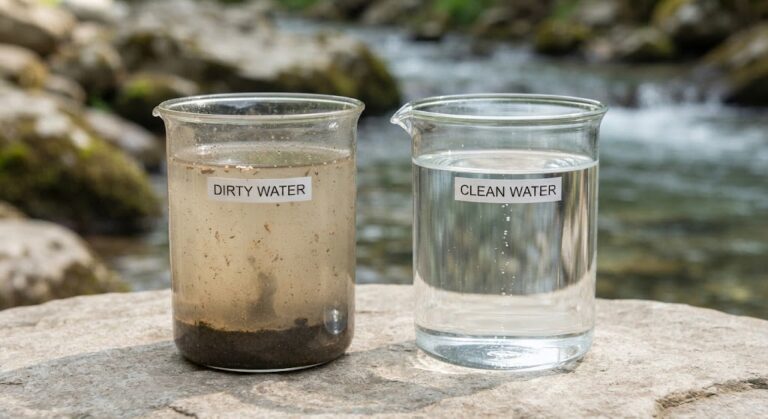
Clear water isn’t necessarily safe water.
🚱 LOOKING CLEAN ISN’T THE SAME AS BEING SAFE
Never assume that water is safe to drink simply because it looks clean.
Natural water should normally be treated before drinking unless you know it comes from a safe, potable source.
6. If You Find Natural Water, Think Before You Drink
If you have no safe drinking water and find a natural source, consider:
Where did this water come from?
Is there livestock upstream?
Are there signs of pollution?
Is there a safer source nearby?
Can the water be treated?
A flowing stream is not automatically safe.
A puddle isn’t automatically unsafe either — but it is likely to require treatment and careful assessment.
The aim is to find the cleanest reasonably available source and then make it safe using an appropriate purification method.
7. Purify Natural Water
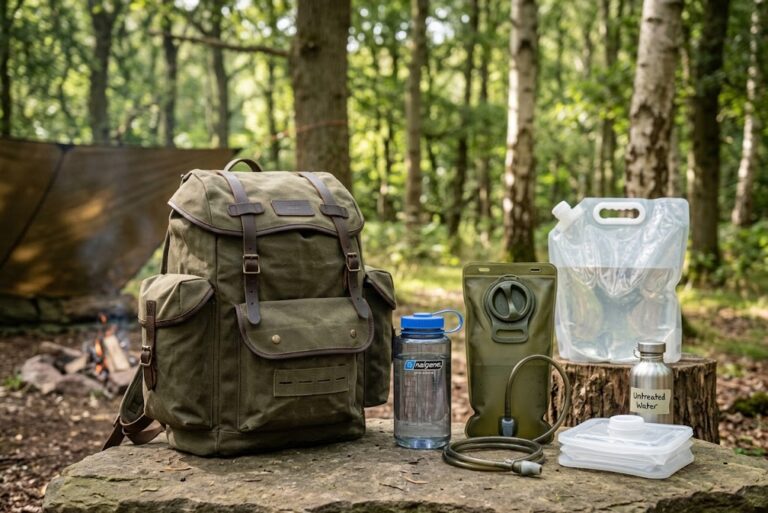
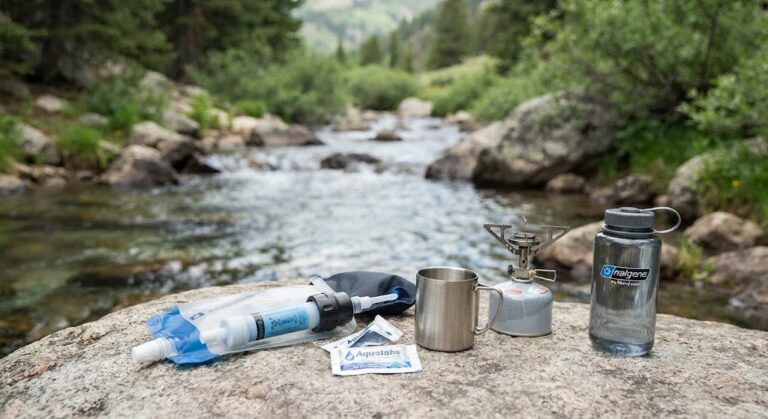
If you’re carrying suitable water-treatment equipment, use it according to the manufacturer’s instructions.
Depending on your equipment and circumstances, treatment may involve:
Different methods have different limitations.
For example, some filters don’t remove viruses or chemicals.
Boiling can kill many disease-causing organisms, but it doesn’t remove chemical contamination.
This is why source selection matters as well as treatment.
🔥 REMEMBER
Filtering isn’t the same as purifying.
Know what your equipment is designed to remove before relying on it.
8. Boiling Water
Boiling is one of the most established ways of treating water for drinking.
If you’re using boiling as part of your emergency water plan, bring the water to a proper boil and follow appropriate public-health guidance for the duration and method.
Then allow it to cool in a clean container.
Remember:
Boiling doesn’t remove chemicals or other non-biological contaminants.
Don’t collect water from a visibly polluted source and assume boiling will make it safe.
9. What About Rainwater?
Rainwater can sometimes provide a useful emergency source, particularly if you’re able to collect it before it has picked up contaminants from the ground or dirty surfaces.
For example, you might collect rainwater using:
But don’t assume collected rainwater is automatically safe.
Use clean collection equipment and treat water appropriately before drinking.
10. What About Dew?
You may hear survival stories about collecting dew from grass.
It is possible to collect moisture from vegetation, but the amount obtained can be very small.
It is not a reliable replacement for carrying enough drinking water.
Don’t spend hours collecting tiny amounts of moisture when you’re becoming dehydrated and could instead be getting help or reaching a known safe water source.
11. Don’t Drink Seawater
If you’re near the coast, you may be tempted to use seawater.
Don’t.
Drinking seawater increases the amount of salt your body has to deal with and can make dehydration worse.
The same principle applies to other highly salty or contaminated water.
12. Don’t Drink Urine
This is another common survival myth.
Drinking urine is not a sensible way to solve dehydration.
It contains waste products and salts and isn’t an appropriate substitute for drinking water.
If you’re out of water, focus on:
Reducing water loss.
Finding a safe supply.
Getting help.
🧭 SURVIVAL MYTH
“If you’re desperate, drink anything.”
No.
Some water sources can make you significantly more ill.
The goal is safe hydration, not simply putting any liquid into your body.
13. Don’t Eat Snow Without Thinking
If you’re in a cold environment, snow may look like an obvious water source.
But eating large quantities of snow can lower your body temperature and requires energy to melt.
If snow is your only potential water source, it should be melted and treated appropriately rather than simply eating handfuls of it.
In the UK, this is unlikely to be your main concern on most Scout activities, but it’s a useful survival principle.
14. Watch for Dehydration
If you’ve run out of water, monitor yourself and everyone with you.
Early signs can include:
More serious dehydration can cause:
If someone is seriously unwell, get emergency medical help.
🚨 DON’T WAIT UNTIL SOMEONE COLLAPSES
If someone becomes confused, very weak, faint or seriously unwell after running out of water, treat it as a medical concern.
Get help rather than trying to push on.
15. Water Isn’t the Only Issue in Hot Weather
If you’re out of water during hot weather, you also need to think about heat illness.
Watch for:
Confusion, loss of consciousness or other serious symptoms can indicate heatstroke, which is an emergency.
Don’t assume someone is simply thirsty.
What If You’re With Scouts?
This is particularly important.
Tell your leader immediately.
Don’t try to solve the problem secretly.
A leader may have:
If a Scout runs out of water, the rest of the group should also be assessed.
Don’t allow someone to continue walking simply because they don’t want to hold the group up.
What If You’re Hiking Alone?
If you’re alone, you need to make decisions more cautiously.
If you’re still near a known safe location, return to it only if you can do so safely.
If you’re uncertain about your location, don’t wander around looking for water.
Use your phone if possible.
Contact someone.
Share your location.
If the situation is becoming dangerous, call for emergency help.
Should You Follow a River?
Not automatically.
A river or stream may eventually lead towards civilisation, but it could also lead you:
Watercourses can also be dangerous in their own right.
If you don’t know where you are, don’t blindly follow water downhill.
What If You Know a Water Source Is Nearby?
This is different.
If you know there is a safe drinking-water source a short distance away, and you can reach it safely, that may be the best option.
For example:
You know there’s a public drinking-water point at the campsite you’re walking towards.
That’s very different from:
“There must be a stream somewhere over that hill.”
Don’t turn a water shortage into a navigation problem.
A Simple “OUT OF WATER” Plan
You could teach Scouts this simple sequence:
STOP
Stop and assess the situation.
SHADE
Get out of direct heat where possible.
SAVE
Conserve the water you have left.
SOURCE
Look for a known safe water supply.
TREAT
If using natural water, treat it appropriately.
SIGNAL
Tell someone or get help if necessary.
MONITOR
Watch for signs of dehydration or heat illness.
Prevention Is Better Than Finding Water
The best solution to running out of water is not running out in the first place.
Before an activity:
Check the weather
Hot weather increases water requirements.
Plan your route
Know where reliable water supplies are available.
Carry enough
Take an appropriate amount for the activity.
Carry extra where appropriate
Especially for longer or remote activities.
Use suitable bottles or hydration systems
Make sure they’re secure and easy to access.
Tell someone your plan
This is particularly important for longer hikes.
🎒 KIT TIP
Don’t just ask:
“How much water do I need?”
Ask:
“What happens if my hike takes twice as long as expected?”
A delay can turn an adequate water supply into an inadequate one surprisingly quickly.
A Useful Scout Activity
This topic can make a good water-planning exercise.
Give Scouts a hypothetical hike and ask:
“How much water would you take?”
Then introduce changes:
The weather becomes hotter.
The hike takes two hours longer.
One water bottle leaks.
The water point is closed.
Ask them:
“What would you do now?”
This teaches Scouts to think about contingencies, rather than simply calculating one perfect amount of water.
Final Thoughts
Running out of water is a situation you want to avoid, but knowing how to respond can prevent it becoming a serious emergency.
If it happens:
Stop.
Reduce exertion.
Get out of the heat.
Tell someone.
Look for a known safe water supply.
If you have to use natural water, treat it appropriately and understand the limitations of your purification method.
And most importantly, don’t let the desire to finish the hike override the need to stay safe.
💧 THE BIG IDEA
When you run out of water, don’t panic and don’t wander off blindly looking for some.
Reduce water loss.
Stay cool.
Find a safe source.
Treat natural water.
Get help when necessary.
🔒Ready to test your survival skills?
Join Survival Guides UK for free, complete challenges, earn badges and increase your Survival Level.
JOIN FREE →
CRAIG BURR
FOUNDER · SURVIVAL GUIDES UK
I'm Craig, the person behind Survival Guides UK. I created SGUK because I wanted somewhere people could learn real outdoor skills in a practical, straightforward way — from lighting a fire and tying knots to navigation, campcraft and everything in between.
You can read more about the story behind SGUK here as well as our approach here.