What to Do If You Are Swept Into Fast-Moving Water
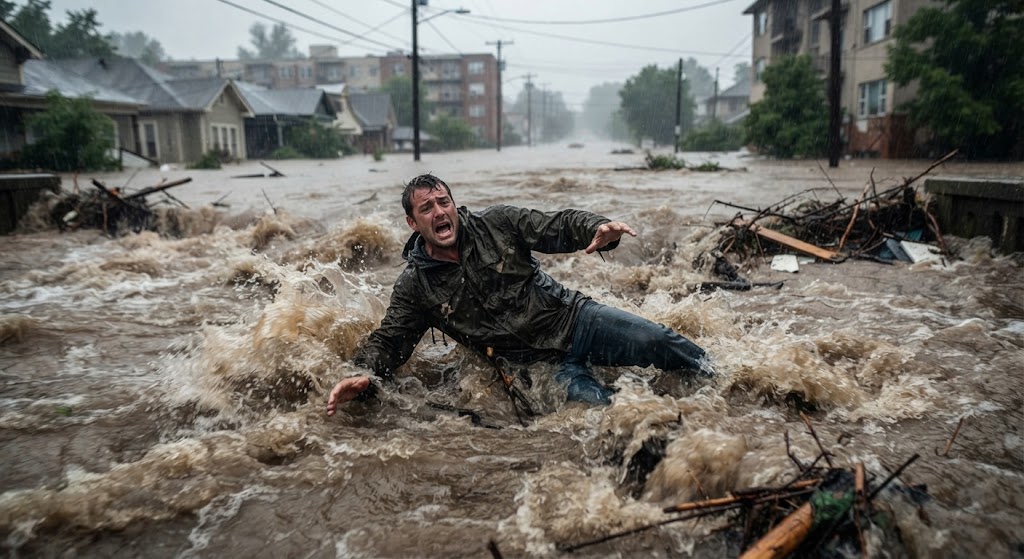
Being swept into fast-moving water is a serious emergency.
The current can move you much faster than you can swim, and obstacles beneath or above the surface may be difficult to see. Trying to fight directly against the current can quickly lead to exhaustion.
The most important thing is to stay calm, protect your airway and use the current to help you reach a safer position.
What You’ll Learn
By the end of this lesson, you will understand:
- What to do immediately after entering fast-moving water
- How to position your body
- Why you should avoid standing too early
- How to look for a safe exit
- How to deal with obstacles
- Why rescuing another person can be dangerous
- When to call for emergency assistance
Equipment
There is no item of equipment that can replace the basic principles in this lesson.
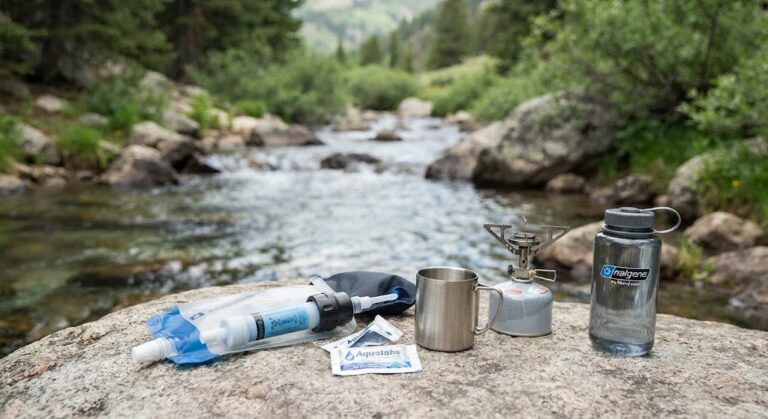
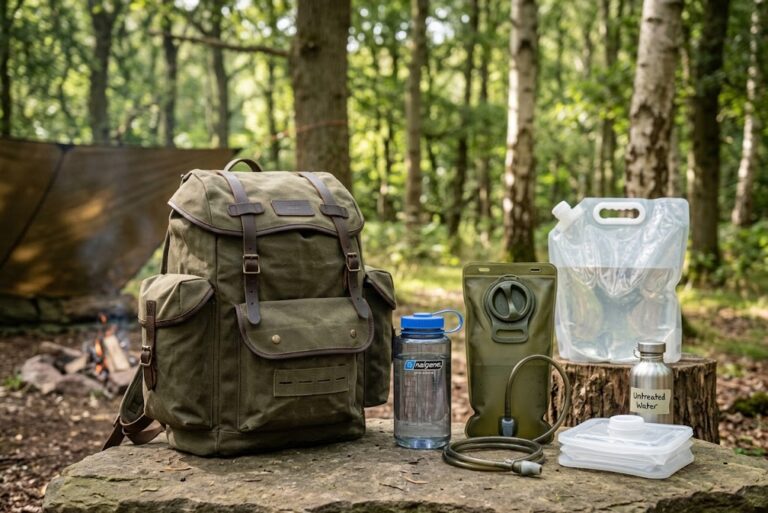
When travelling near moving water, useful equipment may include:
- A properly fitted buoyancy aid where appropriate
- Waterproof clothing
- A whistle
- A mobile phone protected from water
- A dry bag for essential equipment
The correct equipment depends on the activity and environment.
Prerequisites
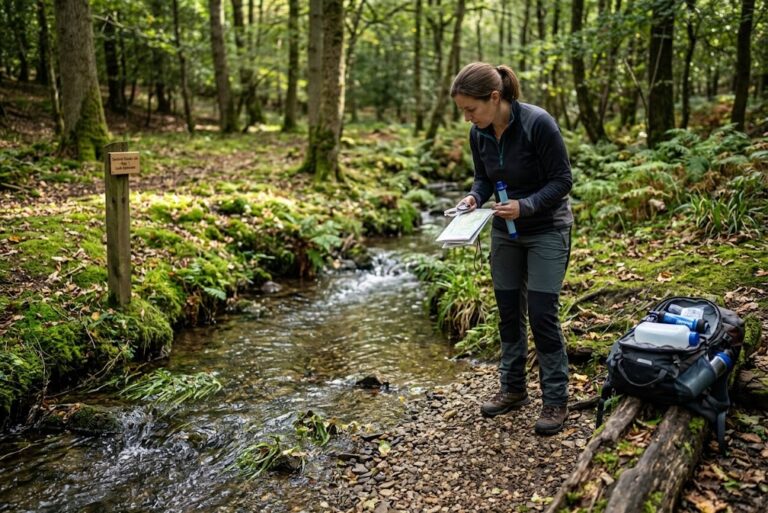
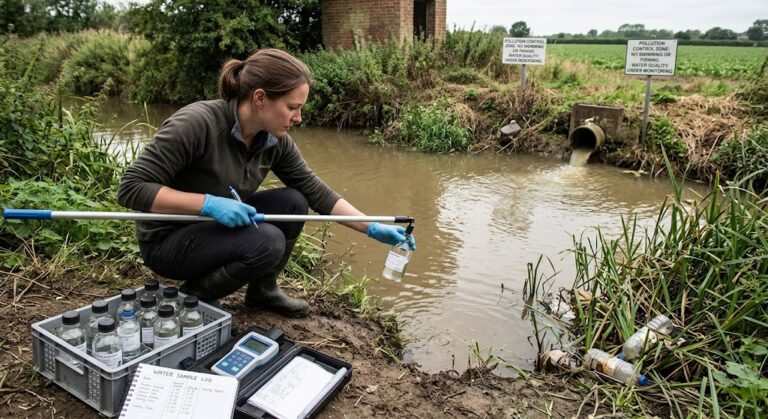
You should already understand how to assess streams and rivers and how to avoid entering unsafe water.
This lesson is about an emergency situation, not a technique for deliberately entering fast-moving water.
Your First Priority: Keep Your Airway Clear
If you are swept into moving water, your immediate priority is to keep your mouth and nose above the surface.
Try not to panic.
Take controlled breaths whenever you can and concentrate on staying afloat.
If you are wearing a buoyancy aid, allow it to provide flotation rather than fighting against it.
Position Yourself on Your Back
If you are being carried downstream by a strong current, a useful defensive position is to lie on your back with your feet pointing downstream.
Keep your head above the water.
This position allows you to see what is approaching and helps protect your head and upper body from some obstacles.
Keep your feet up rather than allowing them to become trapped beneath the surface.
Do Not Try to Stand Too Early
One of the most important principles in fast-moving water is to avoid immediately trying to stand.
Your feet can become trapped between rocks or other obstacles while the force of the current pushes against your body.
This can hold you underwater.
Instead, remain on your back until you reach water that is sufficiently shallow and slow-moving to allow you to regain your footing safely.
Look Downstream
While floating, look ahead.
Try to identify:
- The direction of the current
- Large rocks
- Fallen trees
- Rapids
- Weirs
- Bridges
- Narrow channels
- Areas where the water appears calmer
- Possible places to reach the bank
You may have only a short amount of time to react, so use the time available to identify the safest possible escape.
Move Towards the Bank When You Can
If you can safely control your position, work towards the bank.
Do not attempt to swim directly against a powerful current.
Instead, use your arms and legs to angle yourself towards the nearest suitable bank or slower-moving water.
Your goal is not necessarily to reach the original point where you entered the water.
Your goal is to reach safe water and solid ground.
Avoid Obstacles
Moving water can carry you towards obstacles surprisingly quickly.
If you see a rock or other obstacle ahead, try to move around it rather than directly towards it.
Keep your feet downstream and your head protected.
If you cannot avoid an obstacle, protect your head as much as possible and maintain your ability to breathe.
Do not attempt to climb onto unstable objects in the current.
What About Trees and Branches?
Fallen trees and branches are particularly dangerous in moving water.
Water can pass through the gaps while holding a person against the obstruction.
If you see a fallen tree or other debris ahead, try to move away from it as early as possible.
Do not deliberately swim underneath or towards debris.
Watch for Weirs and Other Structures
Weirs and other artificial structures can create powerful recirculating currents.
If you are being carried towards one, try to move away from it as early as possible.
Do not attempt to swim directly towards or over a weir.
If you can reach the bank before the structure, do so.
If you are unable to escape the current, concentrate on keeping your airway clear and seek emergency assistance as soon as possible.
Don’t Fight the River
Trying to swim directly against a strong current can rapidly exhaust you.
Instead, concentrate on:
Breathe → Float → Look → Move towards safety
Use your energy to control your position and reach the bank rather than attempting to overpower the entire current.
Getting Out of the Water
Once you reach slower-moving or shallow water, look for a stable exit.
Do not automatically climb out at the first piece of bank you see.
The bank may be:
- Steep
- Muddy
- Undercut
- Unstable
- Covered in slippery vegetation
Move towards a section where you can safely get out.
Once you are clear of the water, move away from the edge if possible.
What If You Lose Your Equipment?
Your equipment is replaceable.
Your priority is getting yourself out safely.
Do not swim back into fast-moving water to retrieve a rucksack, walking pole or other item.
If something has been swept away, leave it.
What If Someone Else Is Swept Away?
This is where people can make a dangerous mistake.
Your instinct may be to jump into the water after them.
Do not automatically enter fast-moving water to rescue another person.
A person attempting an unplanned water rescue can quickly become a second casualty.
From the bank, look for safer ways to help.
You may be able to:
- Alert the person to keep their airway clear
- Direct them towards the bank
- Extend or throw suitable rescue equipment from a safe position
- Alert other people
- Call 999 and ask for the appropriate emergency service
Do not put yourself into the same danger without the training and equipment required for that type of rescue.
Call for Emergency Help
If someone has been swept into dangerous moving water, call 999 if emergency assistance is required.
Give the emergency services as much useful information as possible:
- Your location
- The name of the river or watercourse if known
- Your direction of travel
- Nearby landmarks
- Any bridges or access points
- Where the person was last seen
If you are able to provide your location accurately, do so.
Do not delay calling for help while attempting a dangerous rescue yourself.
After Getting Out
Getting out of the water does not necessarily mean the emergency is over.
You may be:
- Cold
- Exhausted
- Shaking
- Injured
- Disorientated
Move away from the water’s edge and assess yourself.
If you are wet and conditions are cold, deal with the risk of becoming excessively cold as soon as possible.
Check for injuries and seek medical assistance if necessary.
If you have been submerged or swallowed water, pay attention to how you feel afterwards and seek medical advice if you develop concerning symptoms.
Practical Exercise
This is not an exercise to perform in fast-moving water.
Instead, practise the decision-making process somewhere safe.
Imagine that you have fallen into a river and are being carried downstream.
Identify:
- Where the current would take you
- The major obstacles downstream
- Possible safe exit points
- Areas of slower water
- The nearest accessible bank
- Where you would call for emergency assistance
Then imagine that someone else has fallen in.
Practise explaining what you would do without entering the water yourself.
The objective is to make the correct response familiar before an emergency occurs.
Final Tip
If you are swept into fast-moving water, don’t waste your energy fighting the current.
Protect your airway, keep your feet downstream, look for hazards and work towards safe water and a suitable exit.
And if someone else is swept away, remember that a second casualty helps nobody.
Get help, give clear instructions and use a safer rescue method rather than automatically entering the water yourself.
🔒Ready to test your survival skills?
Join Survival Guides UK for free, complete challenges, earn badges and increase your Survival Level.
JOIN FREE →
CRAIG BURR
FOUNDER · SURVIVAL GUIDES UK
I'm Craig, the person behind Survival Guides UK. I created SGUK because I wanted somewhere people could learn real outdoor skills in a practical, straightforward way — from lighting a fire and tying knots to navigation, campcraft and everything in between.
You can read more about the story behind SGUK here as well as our approach here.