How to Deal With Waterborne Contamination
Water can become contaminated in many different ways. Animals, people, sewage, flooding, agricultural activity and pollution can all affect a water source.
Some contamination is obvious, while some cannot be seen, smelled or tasted.
For anyone spending significant time outdoors, understanding waterborne contamination means knowing how to reduce the chance of contamination in the first place, how to treat water appropriately and what to do if you think you have already been exposed.
What You’ll Learn
By the end of this lesson, you will understand:
- What waterborne contamination means
- How outdoor water can become contaminated
- The difference between microbiological and chemical contamination
- How to reduce contamination when collecting water
- Why different treatment methods have different limitations
- What to do if you suspect you have consumed contaminated water
- How to prevent spreading illness to others
Equipment
Depending on the situation, you may need:
- Clean water containers
- An outdoor water filter
- Water purification tablets or another suitable disinfectant
- A means of boiling water
- Hand-cleaning supplies
- Separate containers for untreated and treated water
Use treatment equipment according to the manufacturer’s instructions.
Prerequisites
You should understand how to assess an outdoor water source and how to use the water purification method available to you.
You should also understand the importance of keeping untreated and treated water separate.
What Is Waterborne Contamination?
Waterborne contamination occurs when harmful substances or organisms enter water.
For outdoor activities, an important category is microbiological contamination.
This can include microorganisms such as:
- Bacteria
- Viruses
- Protozoa
- Other parasites
Some can cause gastrointestinal illness, while others can cause more serious disease.
Water can also contain chemical contaminants, including substances that may have entered the environment through pollution, agriculture or other human activity.
The two types of contamination need to be considered separately because a treatment method that deals with microorganisms may not remove harmful chemicals.
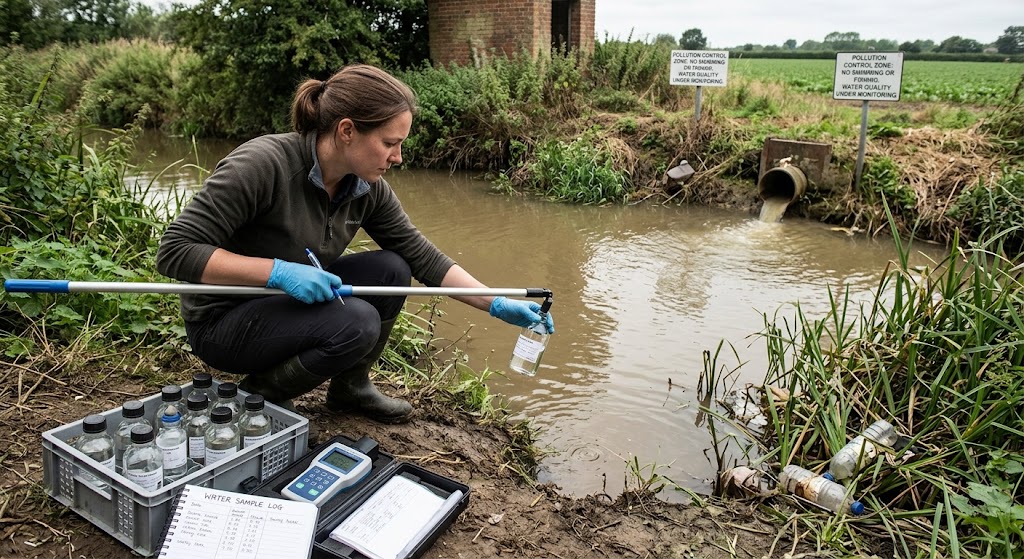
How Does Water Become Contaminated?
Outdoor water can be contaminated through several routes.
Animals
Animals can introduce faecal contamination into streams, rivers, lakes and other water sources.
This can happen directly when animals enter or drink from the water, or indirectly when rainfall carries animal waste into the water.
People
Human activity can introduce contamination through sewage, poor sanitation, litter and other sources.
Busy campsites and popular recreation areas can therefore present different risks from remote water sources.
Agriculture
Runoff from agricultural land can carry material into watercourses.
Livestock access, manure and other agricultural activities can affect water quality.
Flooding
Floodwater can carry contamination from a wide area.
It can bring together sewage, animal waste, soil, rubbish and other material that would normally be separated from a water source.
After flooding, water should be treated with particular caution.
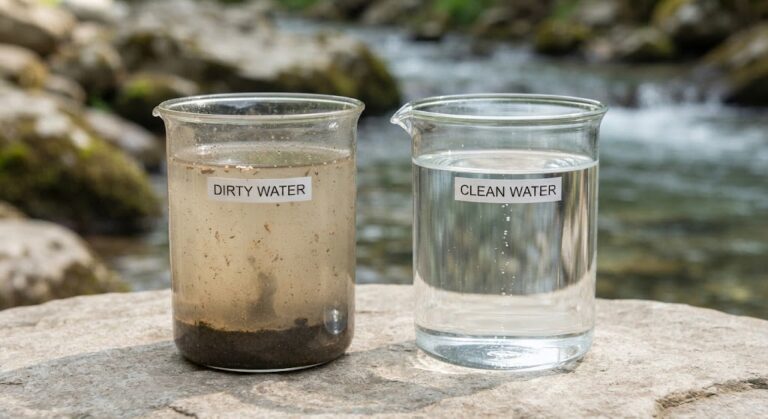
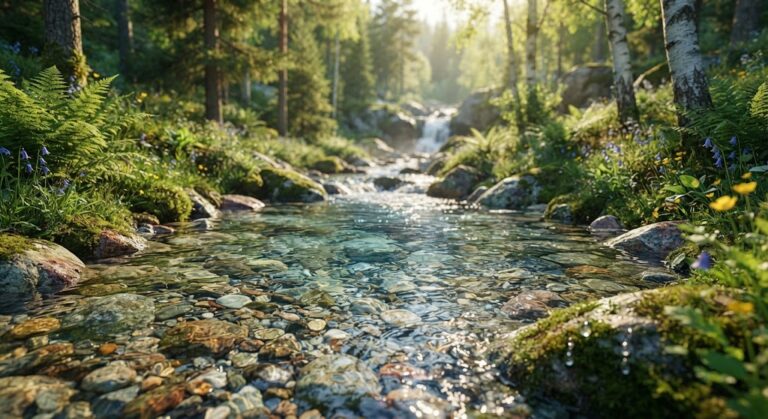
Not All Contamination Looks Dirty
This is one of the most important lessons.
Water can be:
- Clear
- Cold
- Fast flowing
- Free from visible debris
and still contain microorganisms that could cause illness.
Likewise, water can look dirty without you knowing exactly what has caused the problem.
Never use appearance alone to decide that water is safe to drink.
Microbiological Contamination
Microorganisms are one of the main concerns when drinking untreated outdoor water.
Different organisms behave differently, which is one reason why no single treatment method should automatically be assumed to remove every possible hazard.
Appropriate filtration, boiling or chemical disinfection can reduce microbiological risks, depending on the method and the organisms involved.
Always check what your particular treatment system is designed to handle.
Chemical Contamination
Chemical contamination is different.
A filter or purification tablet designed to deal with microorganisms may not remove dissolved chemicals or other pollutants.
Boiling is also not a universal solution for chemical contamination.
In some circumstances, heating contaminated water can concentrate substances as water evaporates.
For this reason, visibly polluted water should generally be avoided rather than relying on treatment equipment to make it safe.
If you have a choice, choose a better water source.
How to Reduce Contamination Before Treatment
The easiest contamination to deal with is contamination you avoid in the first place.
When collecting water:
- Choose the best available source.
- Avoid obvious pollution.
- Look for signs of animal or human contamination.
- Consider recent rainfall and flooding.
- Use clean collection equipment.
- Keep untreated water away from clean equipment.
- Treat the water using an appropriate method.
This reduces the amount of contamination that your treatment system has to deal with.
Prevent Cross-Contamination
Cross-contamination happens when contamination is transferred from one place to another.
For example, you could collect untreated water in a container and then accidentally use that same container to store treated drinking water.
You could also touch a clean bottle opening with dirty hands or allow untreated water to contact the outlet of a filter.
Think about the process as two separate zones:
UNTREATED
Collection container → untreated water → filter inlet
TREATED
Filter outlet → clean container → drinking
Keep the two sides separate.
What If Your Water Becomes Contaminated?
If you believe your treated drinking water has been contaminated, do not simply assume it is still safe.
If practical, discard it and treat a fresh supply.
Clean or replace the contaminated container or equipment as appropriate before using it again.
Do not pour questionable water into a clean container and then continue using the container for drinking water.
What If You Accidentally Drink Contaminated Water?
If you realise that you have accidentally consumed potentially contaminated water, do not panic.
The appropriate response depends on the circumstances, what the water may have contained and whether symptoms develop.
Monitor yourself for signs of illness such as:
- Diarrhoea
- Vomiting
- Stomach cramps
- Nausea
- Fever
- Signs of dehydration
If you become unwell, seek appropriate medical advice. More serious symptoms, severe dehydration or significant deterioration require prompt medical attention.
If you are part of an organised group, tell the responsible leader or adult rather than keeping it to yourself.
Don’t Try to Make Yourself Vomit
If you suspect that water may have contained a chemical contaminant, do not automatically assume that making yourself vomit is the correct response.
Different substances require different responses.
If there is a possibility of chemical poisoning, seek urgent medical advice and provide information about the substance or source if known.
In the UK, the NHS provides guidance on suspected poisoning and emergency treatment.
Watch for Dehydration
Waterborne illness can become particularly serious outdoors because diarrhoea and vomiting can cause significant fluid loss.
Signs of dehydration can include:
- Thirst
- Darker urine
- Passing urine less frequently
- Dry mouth
- Dizziness
- Tiredness
More severe dehydration can be an emergency.
If someone becomes seriously unwell, confused, very weak or unable to keep fluids down, seek urgent medical assistance.
Don’t Spread the Problem
If someone develops a suspected waterborne illness during a group expedition, campsite stay or other outdoor activity, consider the possibility that other people may also have been exposed.
Do not share drinking bottles or personal items.
Maintain good hand hygiene, particularly after using toilets and before preparing or handling food.
If multiple people become ill after using the same water source, report this to the person responsible for the activity and seek appropriate medical advice.
When Should You Abandon a Water Source?
Sometimes the correct response to suspected contamination is to stop using the source altogether.
Consider abandoning a source if you discover:
- Chemical pollution
- Sewage contamination
- Significant animal waste
- Flood contamination
- An unexplained oily film
- A strong chemical smell
- Another obvious pollution event
Do not rely on a normal outdoor filter simply because it is the equipment you happen to have.
Treatment equipment has limitations.
Practical Exercise
Choose a hypothetical outdoor water source and work through the following scenario:
You arrive at a stream after heavy rainfall.
The water is flowing quickly and is noticeably cloudy.
There are fields upstream and signs that livestock have been in the area.
Work through these questions:
- What possible sources of contamination can you identify?
- Would you collect the water immediately?
- What could you do to reduce sediment?
- What treatment equipment would you use?
- Would you need more than one treatment stage?
- How would you store the treated water?
- What would you do if the water had an unusual smell or visible pollution?
- What would you do if someone later became ill?
The aim is to practise recognising contamination risks before you need to deal with them in a real situation.
Final Tip
The best way to deal with waterborne contamination is to prevent it reaching you in the first place.
Choose water sources carefully, keep clean and dirty equipment separate, treat water appropriately and never assume that clear water is automatically safe.
If a source shows signs of serious pollution, the safest decision may be to find another source rather than trying to make heavily contaminated water drinkable.
🔒Ready to test your survival skills?
Join Survival Guides UK for free, complete challenges, earn badges and increase your Survival Level.
JOIN FREE →
CRAIG BURR
FOUNDER · SURVIVAL GUIDES UK
I'm Craig, the person behind Survival Guides UK. I created SGUK because I wanted somewhere people could learn real outdoor skills in a practical, straightforward way — from lighting a fire and tying knots to navigation, campcraft and everything in between.
You can read more about the story behind SGUK here as well as our approach here.