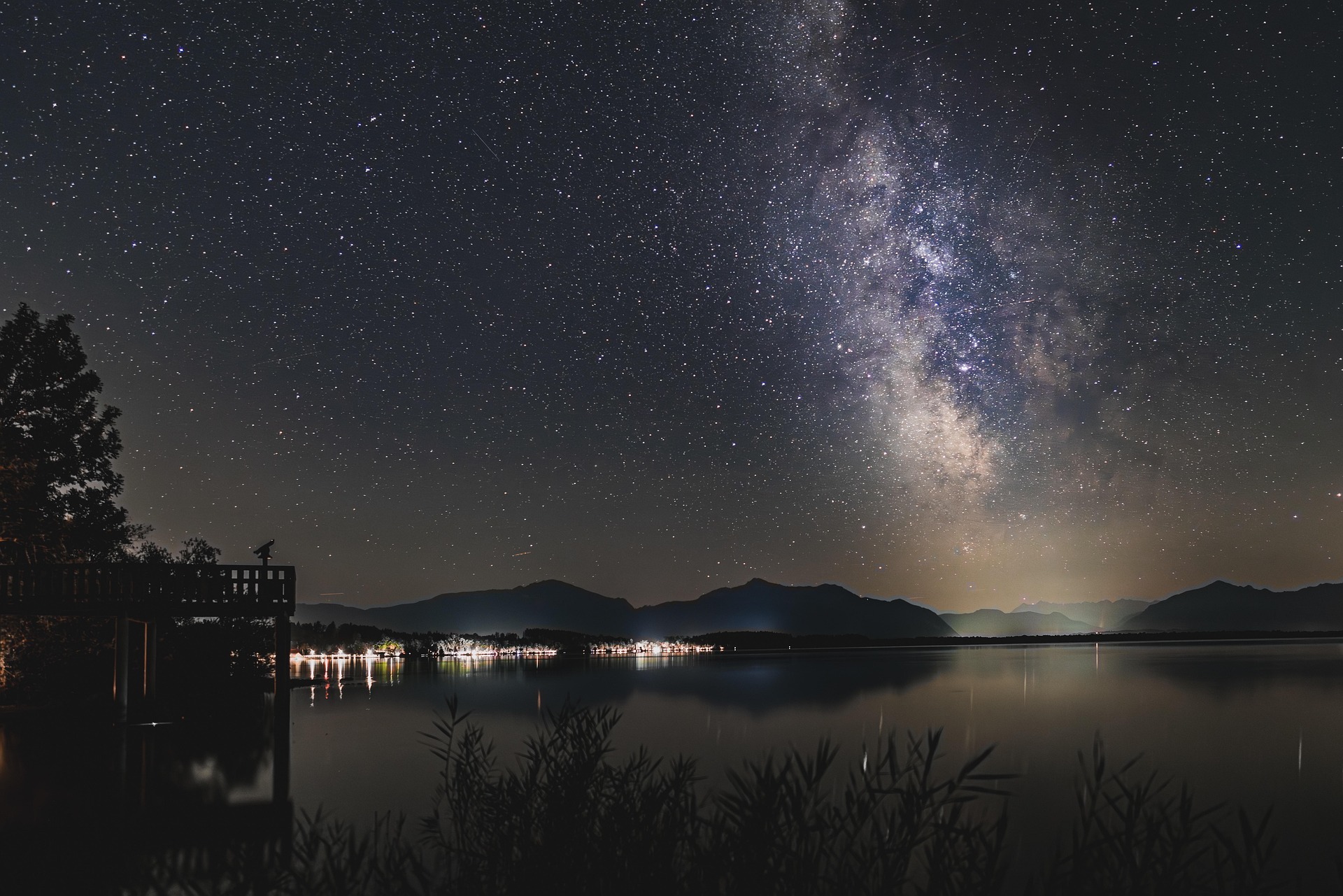
Water Safety at Night
Water can become significantly more difficult to assess after dark.
Rivers, streams, lakes and ponds may be difficult to see, while slippery ground, uneven banks and hidden obstacles become harder to identify. Even a familiar campsite can present additional risks when visibility is poor.
For Scouts, the safest approach is to treat darkness as an additional hazard and plan accordingly.
Why Darkness Changes Water Safety
During daylight, you can see the water’s edge, surrounding ground and potential hazards.
At night, depth and distance can be difficult to judge.
A dark patch may be water, shadow or a hole in the ground.
This makes it much easier to misjudge where you’re walking.
Keep Away From the Water’s Edge
There is rarely a reason to walk directly beside a river, lake or pond at night.
Keep a sensible distance from the edge and use established paths or agreed routes where possible.
Don’t approach the water simply because you want to see it in the dark.
Use a Head Torch
A suitable head torch allows you to keep both hands free while walking.
Use it when moving around camp or travelling along a route after dark.
Make sure you know how to operate your torch before leaving.
Don’t Rely on Your Torch Alone
A torch helps you see, but it doesn’t make an unsafe route safe.
The beam may not reveal deep water, unstable banks or hazards outside its range.
Slow down and pay attention to the ground around you.
Know Where the Water Is
Before darkness arrives, make sure Scouts know where nearby water is located.
If a river, pond or lake is close to camp, explain which areas are out of bounds.
Clear boundaries are particularly important once visibility decreases.
Keep Routes Clear
Walkways around camp should be checked before night-time activities begin.
Remove or manage unnecessary trip hazards where appropriate.
Pay particular attention to:
A hazard that is easy to see during the day can become much harder to spot at night.
Be Careful Near Rivers
Moving water is especially difficult to assess in darkness.
You may not be able to see the current properly or judge how far the water extends.
Stay well away from the edge and don’t attempt to investigate the water at night.
Avoid Unplanned Water Crossings
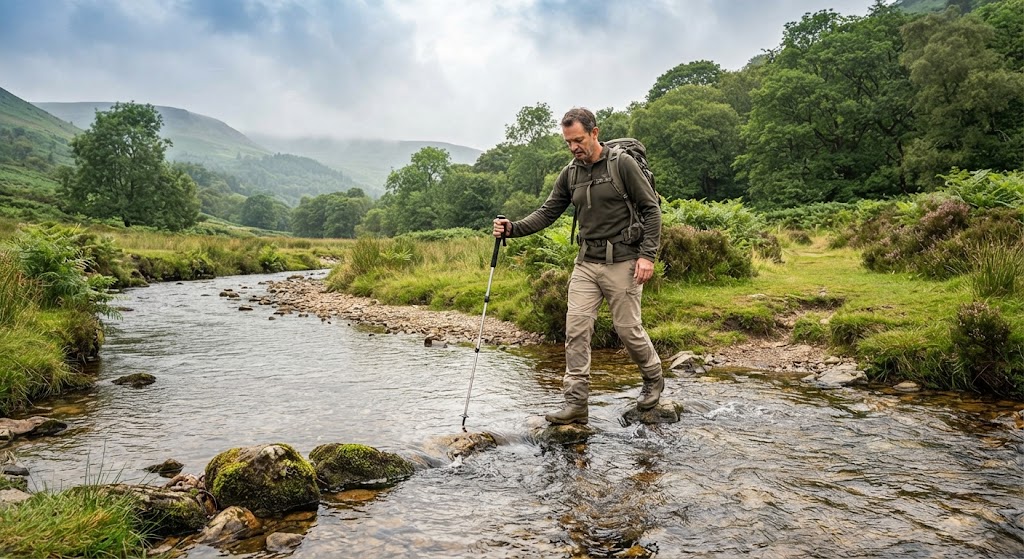
Never decide to cross a stream or other watercourse after dark simply because it appears shallow.
Poor visibility makes it harder to assess depth, current, footing and exit points.
Use an established route or bridge where appropriate.
If a planned crossing isn’t suitable, follow the alternative arrangements.
Don’t Swim at Night
Swimming in natural water at night introduces additional hazards.
Depth, underwater obstacles, currents and exit points can all be difficult to identify.
Outdoor swimming should only take place as part of an appropriately planned activity with suitable supervision and safety arrangements.
Watch Your Step
Ground near water is often damp or muddy.
At night, you may not be able to see slippery surfaces until you’ve stepped onto them.
Walk rather than run and take particular care on slopes and uneven ground.
Use the Buddy System Where Appropriate
Depending on the activity, Scouts may be required to move around in pairs or groups.
Follow the arrangements set by the leader.
Don’t leave camp alone without permission.
If you become separated from your group, stop and follow the agreed procedure rather than continuing towards an unfamiliar area.
Keep Track of Your Location
Darkness can make familiar places feel unfamiliar.
It’s easy to walk in the wrong direction when visibility is poor.
Stay aware of where you are and use appropriate navigation methods where required.
What If You Hear Water?
Hearing a river or stream at night doesn’t mean you need to investigate it.
In fact, the sound may make the water seem closer than it actually is.
If you aren’t sure where you are, stop and contact your leader rather than walking towards the sound.
If Someone Goes Missing
If a Scout doesn’t return as expected, tell the leader immediately.
Don’t organise an unplanned search towards nearby water.
The leader should follow the appropriate missing-person and emergency procedures for the activity.
Younger Scouts
Younger Scouts should have simple, clear rules around water after dark.
They should know:
Older Scouts
Older Scouts can learn to identify how darkness changes risk.
Ask them to consider how a route that is straightforward during daylight might become unsuitable at night.
This develops useful planning and risk-awareness skills.
Leader Notes
Identify nearby water during the daytime and make sure relevant boundaries are understood before darkness falls.
Consider lighting, routes, supervision and emergency access when planning evening activities.
Don’t assume that because Scouts know the site during daylight, they will automatically navigate it safely at night.
Safety
Keep Scouts away from the edges of rivers, lakes and ponds at night unless the activity specifically requires access and has appropriate controls.
Do not allow unplanned swimming or water crossings after dark.
Use suitable lighting when moving around camp.
Keep routes clear of unnecessary hazards.
Maintain appropriate supervision and group arrangements.
If someone enters the water or becomes missing near water, raise the alarm and follow the appropriate emergency procedures.
Learning Outcomes
Scouts can learn to:
Final Thought for Scouts
Water doesn’t become more dangerous simply because the sun has gone down.
It’s our ability to see the hazards that changes.
Stay back from the edge, use your light, follow the agreed route and never assume that a familiar place is automatically safe in darkness.
🔒Ready to test your survival skills?
Join Survival Guides UK for free, complete challenges, earn badges and increase your Survival Level.
JOIN FREE →
CRAIG BURR
FOUNDER · SURVIVAL GUIDES UK
I'm Craig, the person behind Survival Guides UK. I created SGUK because I wanted somewhere people could learn real outdoor skills in a practical, straightforward way — from lighting a fire and tying knots to navigation, campcraft and everything in between.
You can read more about the story behind SGUK here as well as our approach here.