Safe Stream Crossings for Scouts
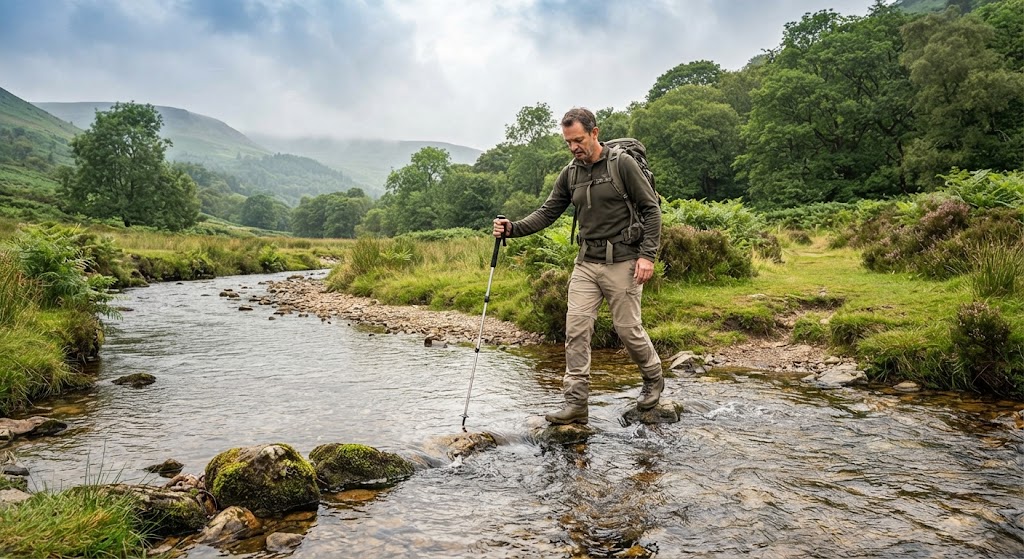
Crossing a stream can look like a simple outdoor challenge, but even shallow water can present serious hazards.
Moving water can affect balance, slippery rocks can cause falls, and water levels can change quickly after rainfall. For Scouts, the safest crossing is often the one that has been properly planned rather than improvised.
Do You Need to Cross?
The first question should always be:
Do we actually need to cross?
If there is a bridge, suitable alternative route or established crossing point, that may be a better option.
Never enter a stream simply because crossing it looks like a fun challenge.
Check the Conditions
Before considering a crossing, assess the water and the surrounding area.
Look at:
If conditions are uncertain, don’t cross.
Never Underestimate Shallow Water
Shallow water can still be dangerous.
Moving water pushes against your legs and can make it difficult to maintain your balance.
A person who falls may also be swept into deeper water or against rocks and other obstacles.
Depth isn’t the only factor that matters.
Watch the Current
Look at how quickly the water is moving.
Fast-flowing water should be treated with particular caution.
Don’t assume that because you can see the bottom, the crossing is safe.
Water can be powerful even when it isn’t deep.
Be Careful With Rocks
Rocks in streams can be extremely slippery.
Algae, mud and constant water movement can make them difficult to stand on.
Don’t use stepping stones simply because they appear convenient.
If the footing isn’t secure, find another option.
Check the Banks
The entry and exit points are just as important as the water itself.
Look for stable, gradual banks where you can safely approach and leave the stream.
Avoid steep, muddy or undercut banks.
A crossing isn’t suitable if you can get into the water but can’t safely get out.
Think About Recent Rain
Rainfall can change a stream very quickly.
Water levels may rise and currents may become stronger.
This can happen even if it isn’t raining at the exact location where you’re standing.
After heavy or prolonged rainfall, reconsider whether a crossing is appropriate.
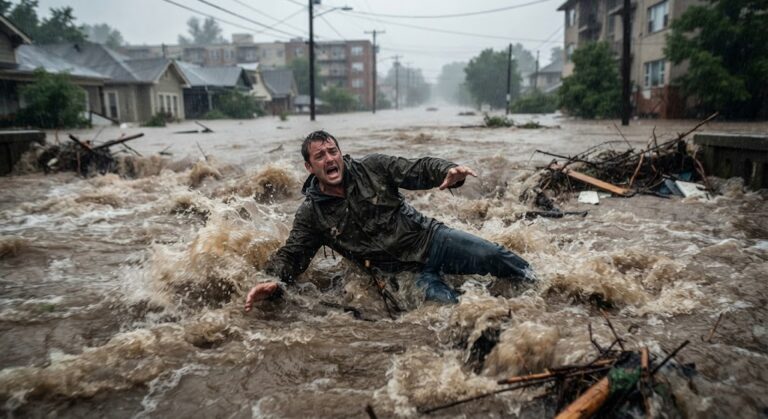
Don’t Cross Floodwater
Never attempt to cross flooded water simply because a route used to be passable.
Floodwater can hide holes, debris and damaged ground.
It can also move much faster than it appears.
If water has risen significantly, use an alternative route and follow the activity plan.
Use a Bridge Where Available
A suitable bridge is generally preferable to entering moving water.
Follow any restrictions or signs and don’t overcrowd the bridge.
If the bridge itself appears damaged or unsafe, don’t use it.
Tell the leader and find an appropriate alternative.
Never Link Arms
It may seem sensible for a group to link arms while crossing moving water.
This can create additional problems if one person falls.
A group crossing should only be carried out using an appropriate method that has been planned and supervised for the particular situation.
Don’t Carry Unnecessary Equipment
If a planned crossing is taking place, equipment should be managed carefully.
Loose equipment can affect balance or become lost in the water.
Any crossing method should account for what participants are carrying and whether equipment needs additional protection.
Stay Together
Follow the instructions of the activity leader.
Don’t decide independently to cross somewhere else.
If a Scout is uncomfortable with the conditions, they should tell the leader rather than feeling pressured to continue.
Don’t Turn It Into a Challenge
Stream crossings can easily become competitive.
Avoid racing, jumping between rocks or trying to cross difficult sections to impress others.
The objective is to complete the activity safely, not to find the hardest possible route.
What If Conditions Change?
If the water rises, the current becomes stronger or the weather deteriorates, stop and reassess.
A crossing that was suitable earlier may no longer be suitable.
Changing the route is not failure.
It’s good outdoor decision-making.
Younger Scouts
Younger Scouts should not be expected to judge a stream crossing independently.
They should follow clear instructions from their leaders and stay within the agreed boundaries.
Use the opportunity to teach them that “shallow” doesn’t always mean “safe.”
Older Scouts
Older Scouts can learn to assess potential crossing points as part of navigation and expedition training.
Ask them to identify hazards and explain why one location might be preferable to another.
The assessment should be made from a safe position before anyone approaches the water.
Leader Notes
Any planned water crossing should be included in the activity’s risk assessment and should reflect the actual conditions on the day.
Consider whether an alternative route or bridge is available.
Don’t allow Scouts to feel that they have to complete a crossing because it was included in the original plan.
Conditions can change, and changing the plan is often the correct decision.
Safety
Never attempt to cross fast-flowing or floodwater.
Avoid unstable, steep or undercut banks.
Don’t enter water where the depth, current or underwater conditions are unknown.
Use bridges or alternative routes where appropriate.
Never allow Scouts to cross independently.
Maintain suitable supervision and follow the activity’s risk assessment and procedures.
If conditions become unsuitable, abandon the crossing and use a safer alternative.
Learning Outcomes
Scouts can learn to:
Final Thought for Scouts
A stream crossing isn’t about proving how adventurous you are.
The best crossing is the one that gets everyone safely to the other side.
And sometimes, the best decision is not to cross at all.
🔒Ready to test your survival skills?
Join Survival Guides UK for free, complete challenges, earn badges and increase your Survival Level.
JOIN FREE →
CRAIG BURR
FOUNDER · SURVIVAL GUIDES UK
I'm Craig, the person behind Survival Guides UK. I created SGUK because I wanted somewhere people could learn real outdoor skills in a practical, straightforward way — from lighting a fire and tying knots to navigation, campcraft and everything in between.
You can read more about the story behind SGUK here as well as our approach here.