How to Store Collected Water
Once you’ve collected water outdoors, storing it properly is just as important as collecting it carefully.
Good storage helps prevent dirt and other contaminants from getting into the water and makes it easier to keep track of which water has been treated and which hasn’t.
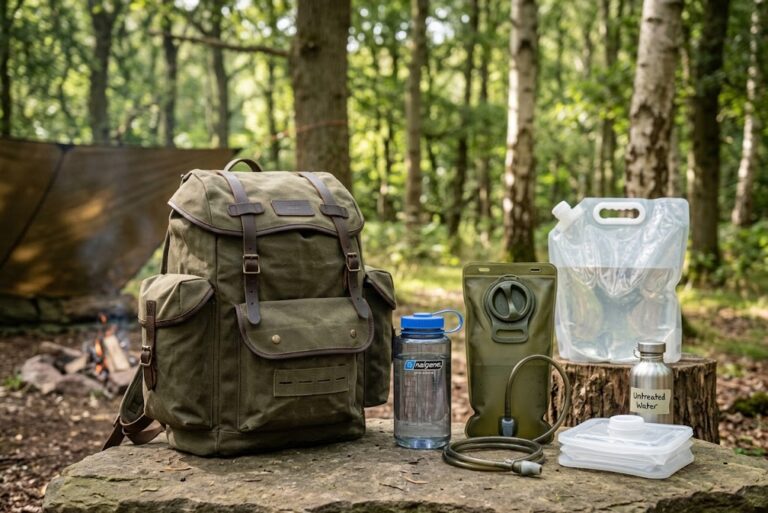
Use a Suitable Container
Use a clean container that is suitable for storing water.
It should be in good condition and have a secure lid where possible.
Never use a container that has previously held fuel, chemicals or other hazardous substances.
Clean the Container First
Before filling it, make sure the container is clean.
If the container has been used previously, clean it using the appropriate method before collecting water.
Don’t assume that a container is clean simply because it looks clean.
Keep the Lid On
Once the container has been filled, close it.
A lid helps keep out:
Avoid leaving collected water in an open bucket or container unnecessarily.
Keep Water Off the Ground
Place stored water somewhere stable and clean.
Avoid putting the container directly into mud, standing water or other dirty areas.
This also reduces the chance of the container being knocked over.
Keep Untreated Water Separate
If you’re storing water that hasn’t yet been treated, make this clear.
Keep untreated water separate from water that is ready to drink.
This prevents treated water from becoming contaminated again.
Label Your Containers
For Scout activities involving multiple containers, simple labels can be useful.
You might identify containers as:
This reduces confusion, particularly when several people are using the water supply.
Don’t Dip Into the Container
Try not to put hands, cups or dirty equipment directly into stored water.
Instead, pour water out when practical.
This helps prevent one person’s hands or equipment from contaminating the rest of the supply.
Keep Drinking Water Away From Dirty Equipment
Don’t store drinking water beside fuel, waste, muddy boots or other dirty equipment.
A clean storage area helps reduce the chance of accidental contamination.
Protect It From Heat
Where practical, keep stored water somewhere cool and out of direct sunlight.
This can also make drinking water more pleasant in warm weather.
Follow any storage instructions associated with your particular container or treatment method.
Don’t Store Water Indefinitely
Collected water shouldn’t simply be forgotten in a container.
For planned activities, work out how much water is required and manage the supply appropriately.
If water has been stored for an extended period, follow the relevant guidance for the container and treatment method rather than assuming it remains suitable.
Check the Container
Before using stored water, check the container.
Look for:
If you’re unsure whether the container or water has become contaminated, don’t assume it is safe.
Remember Treatment
Storage doesn’t purify water.
Water collected from a natural source may still contain harmful microorganisms or other contaminants.
Follow the appropriate treatment procedure before drinking it.
If water has already been treated, protect it from recontamination during storage.
Younger Scouts
Younger Scouts can learn the simple rule:
Collect it clean, keep it covered and keep it separate.
A labelled container can help them understand the difference between untreated and drinking water.
Older Scouts
Older Scouts can take responsibility for organising a small water-storage system during an appropriate camp activity.
They can consider where containers should be placed, how they should be labelled and how to prevent treated water from becoming contaminated.
Leader Notes
For group activities, establish a clear system for identifying untreated and treated water.
Consider how containers will be transported, stored and accessed.
Make sure Scouts understand that treating water once doesn’t mean it can then be handled carelessly.
Preventing recontamination is part of safe water management.
Safety
Use clean, suitable containers.
Keep containers securely closed.
Store water away from contamination sources.
Keep untreated and treated water separate.
Don’t use containers that have held hazardous substances.
Follow the appropriate treatment and storage guidance for the water and equipment being used.
Learning Outcomes
Scouts can learn to:
Final Thought for Scouts
Collecting water is only half the job.
Once you’ve got it, look after it.
Keep it clean, covered, clearly identified and protected from contamination until it’s needed.
🔒Ready to test your survival skills?
Join Survival Guides UK for free, complete challenges, earn badges and increase your Survival Level.
JOIN FREE →
CRAIG BURR
FOUNDER · SURVIVAL GUIDES UK
I'm Craig, the person behind Survival Guides UK. I created SGUK because I wanted somewhere people could learn real outdoor skills in a practical, straightforward way — from lighting a fire and tying knots to navigation, campcraft and everything in between.
You can read more about the story behind SGUK here as well as our approach here.