10 Outdoor Skills Challenges to Try This Weekend
There is a big difference between knowing how an outdoor skill works and being able to use it when you actually need it. That’s why challenges can be such a good way to learn new skills. Instead of simply reading another guide, give yourself something to achieve and see how you get on. It is also a great way to see where improvements need to be made.
You don’t need a whole weekend away to do these. Some can be done in your garden, a local park or a familiar walking route. Pick a few that interest you, or try all ten and see which skills need more practice.
1. Navigate Without Your Phone
Choose a short route somewhere you know reasonably well and try navigating it using a map and compass rather than your phone.
Before you leave, work out where you are starting, where you are going and which features you expect to see along the way. Then put the phone away.
The challenge isn’t simply reaching the destination. Try to stay aware of where you are throughout the walk. Look at the map, compare it with the landscape and use obvious features such as paths, woods, streams, buildings and hills to confirm your position.
If you get something wrong, stop and work out where you actually are rather than immediately reaching for your phone.
2. Light a Fire Using One Method
If you have somewhere suitable and safe to light a fire, choose one method and give yourself the challenge of getting a fire going without using a lighter.
You could use matches, a ferrocerium rod or another appropriate fire-lighting method you’ve been learning.
The interesting part is that the fire itself is only half the challenge. Collecting and preparing suitable tinder and kindling, building the fire correctly and keeping it going all require different skills.
Don’t make the challenge unnecessarily difficult. Choose safe conditions and follow any local rules or restrictions on fires. The aim is to practise the skill, not to prove that you can overcome dangerous conditions.
3. Tie Five Knots From Memory
Pick five useful knots and see if you can tie them without looking at instructions.
You might choose a reef knot, clove hitch, bowline, sheet bend and round turn and two half hitches.
Don’t worry if you have to think about the first few. That’s exactly what the challenge is for. Once you’ve tied each one, check that you’ve tied it correctly and remind yourself what the knot is actually useful for.
For an extra challenge, mix the pieces of rope up and see whether you can identify each knot by looking at it.
4. Plan a Short Route
Choose a walk you’ve never done before and plan the route yourself.
Work out where you’ll start, where you’ll finish, roughly how far you’ll travel and how long you expect it to take. Look at the terrain rather than concentrating only on the distance.
Check the weather before you go and think about whether the route still makes sense if conditions change.
You can also mark a sensible point where you would turn around if you’re running late or the weather deteriorates. Good route planning isn’t about creating the most complicated itinerary possible. It’s about understanding what you’re actually going to do before you set off.
5. Build a Shelter
Find a suitable place where you can practise building a simple temporary shelter without damaging the environment.
You could use natural materials that are already loose on the ground, or practise with a tarp and some cord instead.
Give yourself a time limit, perhaps 30 minutes, and see what you can create.
Once it’s built, think about whether it would actually keep you reasonably protected from wind and rain. Look at where the entrance is, how water would run away from the shelter and whether there is enough space for you and your equipment.
A shelter that looks impressive isn’t necessarily a useful shelter.
6. Spend an Hour Without Your Phone
This one sounds simple, but it can be surprisingly difficult.
Go somewhere suitable outdoors and spend an hour without using your phone for entertainment, navigation or checking notifications.
Instead, pay attention to what is around you. Listen to the sounds, watch the weather, look at the landscape and notice things you would normally walk straight past.
You could turn it into an observation challenge by making a mental note of ten things you hadn’t noticed when you first arrived.
The point isn’t to pretend that phones are bad. It’s to practise being comfortable paying attention to your surroundings rather than constantly looking at a screen.
7. Make a Useful Outdoor Meal
Choose a simple meal that you can prepare outdoors using appropriate equipment and a safe cooking method.
Plan what you need before you leave. Measure out ingredients, pack everything logically and think about how you are going to carry and prepare it.
Then try cooking the meal without repeatedly going back into the house for something you’ve forgotten.
This is a surprisingly good test of preparation. A simple meal can involve food storage, equipment choice, fire or stove skills, water management, timing and cleaning up afterwards.
And, of course, you get to eat the result.
8. Test Your Observation Skills
Take a short walk somewhere familiar and deliberately slow down.
Choose five things to look for before you start. They could include different types of trees, animal tracks, signs of other people using the area, changes in the ground or signs that the weather has recently changed.
Don’t just look directly in front of you. Look up, look down and look behind you occasionally.
When you finish, see how many of the things you noticed you can remember.
The more often you practise this, the easier it becomes to notice small details without deliberately searching for them.
9. Pack a Rucksack for a Day Out
Give yourself a realistic scenario and pack everything you would need for it.
For example, imagine you’re going on a six-hour walk with a changeable weather forecast.
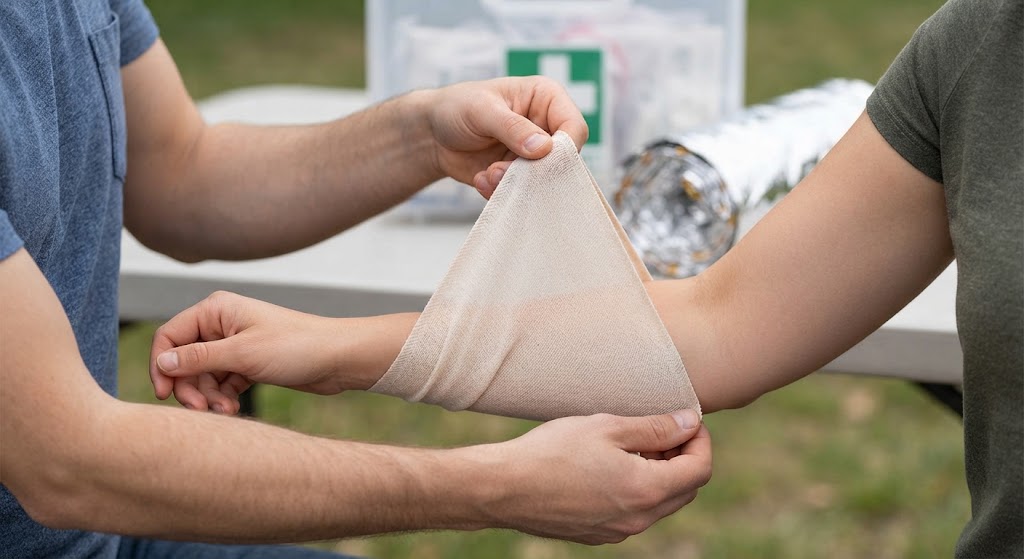
Think about clothing, food, water, navigation, first aid, emergency equipment and anything else that makes sense for the route and conditions.
The challenge is not to see how much you can fit into your rucksack. It’s to see whether you can pack sensibly without carrying a load of things you’ll never use.
Once you’ve finished, go through everything and ask yourself why you’ve packed each item.
10. Teach Someone Else a Skill
Choose one outdoor skill you understand reasonably well and teach it to someone else.
It could be a knot, a navigation technique, how to read a map, how to pack a rucksack or how to set up a tent.
Try not to simply demonstrate it and then do it for them. Explain what you’re doing, let them have a go and give them time to work things out.
This is one of the best ways to find gaps in your own knowledge. If you can’t explain why you’re doing something, it’s often a sign that you don’t understand that part of the skill as well as you thought.
Turn It Into a Weekend Challenge
You don’t need to complete all ten challenges to make this worthwhile. In fact, trying to squeeze everything into one weekend could turn it into a chore.
Instead, pick three that are slightly outside your comfort zone.
For example, you could plan a route on Saturday morning, practise some knots in the afternoon and finish with an observation challenge on Sunday. Someone who is more interested in campcraft might choose fire lighting, shelter building and outdoor cooking instead.
The important thing is to actually have a go.
Make a Note of What You Learned
At the end of the weekend, take a few minutes to think about what happened.
Which challenge was easier than expected? Which one exposed a gap in your knowledge? Was there something you could do in theory but struggled with in practice?
Those observations are useful because they tell you what to practise next.
You might even keep a simple list of challenges you’ve completed and skills that still need work. Over time, you’ll end up with a much better picture of your abilities than you would from simply ticking off articles you’ve read.
Keep Making the Challenges Harder
Once you’ve completed a challenge comfortably, change one thing.
Navigate a slightly longer route. Tie the knots in a different order. Cook a more complicated meal. Try the same skill in less favourable weather, where it is safe and sensible to do so.
You don’t need to make every challenge extreme. Small increases in difficulty are often enough.
The goal is to move from I’ve read about this to I’ve tried this, and eventually to I can actually do this when I need to.
That’s where outdoor skills start becoming useful rather than simply interesting.
🔒Ready to test your survival skills?
Join Survival Guides UK for free, complete challenges, earn badges and increase your Survival Level.
JOIN FREE →
CRAIG BURR
FOUNDER · SURVIVAL GUIDES UK
I'm Craig, the person behind Survival Guides UK. I created SGUK because I wanted somewhere people could learn real outdoor skills in a practical, straightforward way — from lighting a fire and tying knots to navigation, campcraft and everything in between.
You can read more about the story behind SGUK here as well as our approach here.