How to Protect a Wet Map
A map is one of those pieces of outdoor equipment that is easy to take for granted until it gets soaked and starts to fall apart in your hands. Once the paper becomes wet, it can become difficult to fold, markings can smudge and the map may start to tear surprisingly easily. Keeping it protected in the first place is much easier than trying to rescue it afterwards. Luckily, this isn’t difficult to do with a little bit of preparation before heading out.
Use a Proper Map Case
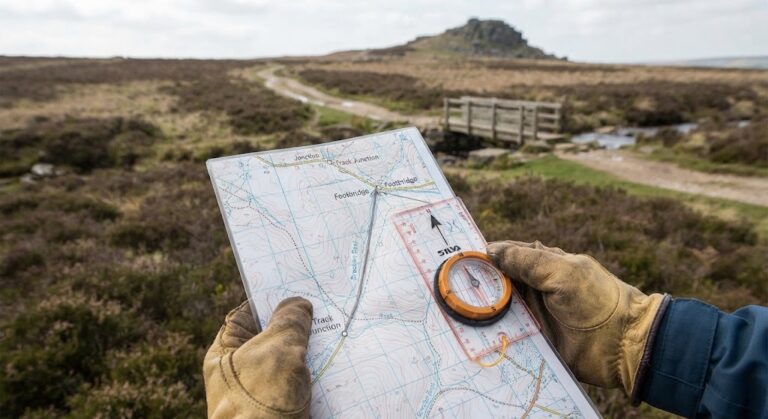
One of the cheapest and simplest ways to protect a map is to keep it inside a waterproof map case.
A good map case lets you read the map while keeping rain away from the paper. It should be large enough for the map to sit comfortably inside without constantly being folded into an awkward shape.
If you’re using a map case, make sure it is properly closed before heading out. A waterproof case is only useful if water can’t easily get inside.
Don’t Rely on a Plastic Bag
A resealable plastic bag can be useful as an emergency solution, particularly for protecting spare maps or other paperwork in your rucksack but they should not be relied upon if you can help it.
It isn’t always ideal for using a map while walking, though. A map can be awkward to unfold inside a small bag, and repeatedly taking it in and out gives rain plenty of opportunities to get inside.
For regular navigation, a proper map case is generally much easier to use.
Fold the Map Before You Need It
Trying to unfold a full map in strong wind and rain is not much fun.
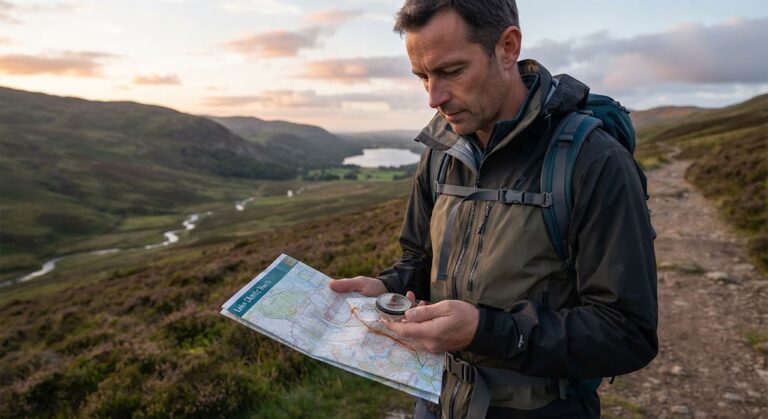
Before setting off, fold the map so that the part of the route you are using is easy to see. You can then keep the relevant section facing upwards inside your map case rather than repeatedly unfolding the whole thing.
As you move along the route, you can refold it when necessary.
Keep the Map Out of the Rain When You’re Not Using It
If you’re checking your route, don’t leave the map lying around while you sort something else out.
Even a short period of exposure can allow rain to soak through paper, particularly in heavy weather. When you have finished checking it, put it back inside its case or somewhere protected.
It is a small habit, but it can make a big difference over several hours outdoors.
Protect It Inside Your Rucksack Too
Your map should still have some protection even when it is packed away.
Don’t simply push it into the bottom of a rucksack where it can end up underneath wet clothing, muddy equipment or a leaking water bottle. Keep it somewhere accessible and protected.
A waterproof map case can double as storage, but a separate dry bag or waterproof compartment can provide another layer of protection if you’re carrying spare maps.
Don’t Put a Wet Map Straight Back in Your Bag
If your map has already become wet, try not to immediately fold it up and push it into your rucksack.
Wet paper is much weaker than dry paper. Folding and unfolding it repeatedly can cause it to tear, particularly along existing creases.
If you have somewhere sheltered, open it out carefully and allow it to dry as much as possible before packing it away.
Handle Wet Paper Carefully
A wet map can feel surprisingly fragile.
Try not to pull hard on the corners or drag it across rough surfaces. If it is stuck to another wet surface, separate it carefully rather than forcing it apart.
If you need to move it, support as much of the map as possible rather than lifting it by one corner.
Don’t Try to Dry It With Direct Heat
It can be tempting to put a wet map directly next to a stove, heater or other strong heat source.
Avoid doing this. Rapid drying can damage the paper, distort the map or cause it to become brittle. It is much better to let it dry gradually somewhere warm and well ventilated.
If you’re camping, simply finding a sheltered place where the map can be opened out safely may be enough.
Keep Your Route Markings Waterproof
If you mark a route directly onto your map, think about what you’re using.
Some pens can smudge badly when exposed to water. If you regularly mark routes, use a suitable waterproof or water-resistant pen and test it on an old or spare map first.
You don’t want to discover that your carefully marked route disappears as soon as the rain starts.
Carry a Backup
If you’re relying heavily on a paper map for navigation, carrying a second copy can be worthwhile on longer or more remote trips.
The spare doesn’t necessarily need to be unfolded and ready to use. It can simply be kept sealed inside a waterproof bag as a backup if the main map becomes damaged.
You should still have the navigation skills to use the map rather than relying on a phone alone, particularly where mobile coverage or battery life could be an issue.
Don’t Forget Your Map Case Can Get Wet Inside
A common mistake is assuming that anything inside a map case is automatically protected.
Condensation, an imperfect seal or water getting in while you’re opening the case can still make the inside damp. Check the case occasionally, particularly during a long wet day.
If you notice water inside, deal with it rather than carrying on as though everything is fine.
Have a Plan for Really Bad Weather
Heavy rain can make map reading difficult even with good equipment.
If conditions become particularly unpleasant, find somewhere reasonably sheltered to stop and check your route rather than standing in an exposed place trying to hold a map in the wind.
This also gives you a chance to check that the map is still dry and usable before continuing.
A Wet Map Isn’t Necessarily Ruined
If your map gets wet, don’t assume that it is immediately useless.
Handle it carefully, keep it as flat as possible and allow it to dry gradually when you can. Once dry, it may still be perfectly usable, although the paper might be more fragile than before.
The important thing is to avoid making the damage worse.
Protect the Map Before You Need It
The best time to think about keeping your map dry is before the rain starts.
Use a suitable map case, fold the map around the section you need, keep it somewhere sensible when you’re not using it and carry some form of backup protection for longer trips.
A little preparation means that when the weather turns wet, you can concentrate on navigating rather than trying to rescue a soggy map.
🔒Ready to test your survival skills?
Join Survival Guides UK for free, complete challenges, earn badges and increase your Survival Level.
JOIN FREE →
CRAIG BURR
FOUNDER · SURVIVAL GUIDES UK
I'm Craig, the person behind Survival Guides UK. I created SGUK because I wanted somewhere people could learn real outdoor skills in a practical, straightforward way — from lighting a fire and tying knots to navigation, campcraft and everything in between.
You can read more about the story behind SGUK here as well as our approach here.