How to Treat Sprains and Strains
Sprains and strains are common outdoor injuries. A slip on a muddy path, an awkward landing, a twisted ankle or simply pushing a muscle too hard can leave someone in pain and unable to carry on normally.
A sprain affects a ligament, which is the strong tissue connecting bones around a joint. A strain affects a muscle or tendon. The two can feel quite similar at first, so the immediate approach is generally about protecting the injured area, controlling pain and swelling, and deciding whether the person needs further medical attention.
Stop the Activity
The first thing to do is stop whatever caused the injury.
Don’t encourage someone to walk it off or carry on because the injury doesn’t look particularly serious. Continuing to put stress through a painful ankle, knee, wrist or other injured area can make the problem worse.
Help the person get somewhere safe and comfortable. If you’re outdoors, think about the wider situation as well. Move away from steep ground, traffic, water or other hazards if you can do so safely.
Protect the Injured Area
Protect the injury from further damage.
For an ankle or foot injury, this might mean keeping weight off it and supporting the area. For an injured wrist or arm, avoid movements that cause pain and support the limb if necessary.
Protection doesn’t necessarily mean keeping the body part completely still for days. The aim during the early stages is to prevent further injury while the initial pain and swelling settle.
Rest It Initially
Give the injured area a chance to settle.
For the first couple of days, avoid activities that make the pain worse and don’t return immediately to running, climbing, sports or other strenuous activity. If the injury is affecting a leg, don’t put unnecessary weight through it.
Once pain allows, gentle movement is generally better than keeping the joint completely still for a prolonged period. This can help prevent stiffness as the injury begins to recover.
Use Ice for Pain and Swelling
A cold pack can help reduce pain and swelling during the first couple of days.
Wrap an ice pack or a bag of frozen food in a cloth or tea towel rather than putting ice directly against the skin. Apply it for up to about 20 minutes at a time, with several hours between applications.
If you’re outdoors, a cold stream or snow might seem like an obvious substitute, but don’t put an injured body part directly into extremely cold water or against ice. You also need to consider the risk of causing a cold injury to the skin.
Apply Compression
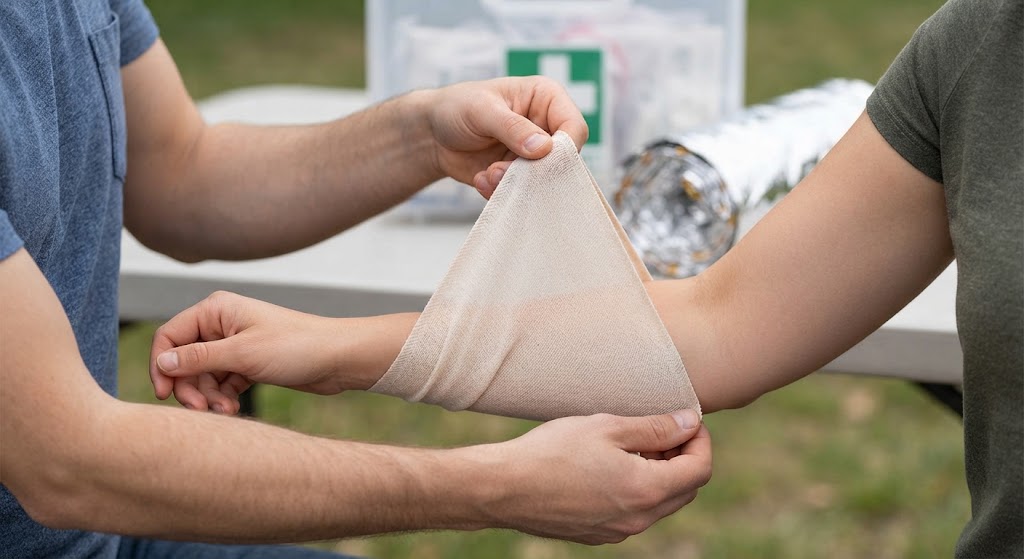
A bandage can provide support and may help reduce swelling.
Wrap it firmly around the injured area, but don’t make it so tight that it causes problems with circulation. Check the fingers or toes beyond the bandage for changes such as numbness, tingling, unusual coldness or a change in colour.
If those problems develop, loosen the bandage.
Compression should provide support, not create another injury.
Elevate the Injury
If possible, raise the injured body part, particularly when it is swollen.
For example, someone with an injured ankle can sit or lie down with the leg raised on a rucksack, folded clothing or another suitable support.
Elevation is particularly useful when resting and can help with swelling during the early stages.
Avoid Heat, Alcohol and Massage at First
During the first couple of days after a sprain or strain, NHS guidance recommends avoiding things that may increase swelling, including heat, alcohol and massage.
That means avoiding a hot bath or heat pack on a fresh injury and resisting the temptation to massage a painful, swollen area straight away.
The priority is to protect the injury and let the initial inflammation settle.
Start Moving Again Gradually
As the pain improves, start using the injured area gently.
Don’t wait until every trace of discomfort has disappeared before moving it, but don’t force movements that cause significant pain either. Gradual movement can help prevent stiffness and begin restoring normal function.
For someone who has injured an ankle while hiking, for example, this might mean gentle movement followed by gradually increasing the amount of weight they put through it as they become more comfortable.
Don’t return straight to strenuous activity just because the swelling has gone down.
Know When the Injury Might Be More Serious
Not every injury that looks like a sprain or strain is actually one.
A fracture or another significant injury can sometimes initially look like a sprain. Be particularly cautious if there is severe or worsening pain, substantial swelling or bruising, or the person cannot put weight on the injured limb or use it normally.
If you heard a crack when the injury happened, the body part has changed shape or is at an unusual angle, or the area has become numb, tingling, unusually cold or changed colour, seek urgent medical help. These can be signs of a more serious injury, including a broken bone.
When to Get Medical Help
Most straightforward sprains and strains can be managed without hospital treatment, but some need professional assessment.
In the UK, NHS 111 can advise you about injuries that are very painful, becoming worse, significantly swollen or bruised, difficult to move, or preventing you from putting weight on the affected area.
An urgent treatment centre can also deal with problems such as sprains, strains and suspected broken bones, and may be able to arrange an X-ray when appropriate.
Call 999 or go to A&E for signs of a potentially serious injury such as an obvious deformity, numbness or tingling, or skin that has become blue, grey or unusually cold.
Treating a Sprain or Strain Outdoors
When an injury happens on a walk or camp, treatment is only part of the decision.
Think about whether the person can safely continue, whether they can walk without making the injury significantly worse, how far they are from help and what the weather and terrain are like.
A minor ankle injury on a short walk near a road is very different from the same injury several miles into remote countryside in worsening weather.
Don’t let the fact that someone can walk persuade you that they should walk several miles. Sometimes the sensible decision is to stop, get help or arrange a safe way out.
Carry a Simple First-Aid Kit
A small outdoor first-aid kit can make dealing with a sprain or strain much easier.
Useful items include a triangular bandage, conforming or crepe bandage, cold pack, plasters, dressings and gloves. Your kit should match the activities you actually do and the level of first aid you have been trained to provide.
It’s also worth knowing how to use the equipment before you need it. A bandage that stays in the bottom of a rucksack isn’t much help if you’ve never practised applying one.
Learn to Recognise Your Limits
The most useful first-aid skill isn’t always knowing exactly what injury has occurred. It is knowing when to stop, protect the person, monitor them and get further help.
If someone has a painful injury that isn’t improving, can’t use the affected body part normally or has symptoms suggesting something more serious, don’t assume it is simply a sprain or strain.
When you’re outdoors, making a sensible decision early can prevent a manageable injury from becoming a much bigger problem.
🔒Ready to test your survival skills?
Join Survival Guides UK for free, complete challenges, earn badges and increase your Survival Level.
JOIN FREE →
CRAIG BURR
FOUNDER · SURVIVAL GUIDES UK
I'm Craig, the person behind Survival Guides UK. I created SGUK because I wanted somewhere people could learn real outdoor skills in a practical, straightforward way — from lighting a fire and tying knots to navigation, campcraft and everything in between.
You can read more about the story behind SGUK here as well as our approach here.