Lost in the Woods Team Challenge
Activity Overview
Difficulty: Intermediate
Time: 60 minutes
Group size: 11-20
Best for: Scouts
Skills: Survival, teamwork, decision-making, navigation, communication
Scouts are given a realistic lost-in-the-woods scenario and must work as a team to decide what to do, what equipment to use and how to attract attention. The challenge focuses on good decisions rather than speed.
What You’ll Learn
Scouts will practise:
- Staying calm in an emergency situation
- Deciding what to do first
- Using equipment wisely
- Communicating as a team
- Recognising safe and unsafe choices
- Thinking through a survival situation
🟢 SAFETY – LOW RISK
This is primarily a scenario-based activity, so Scouts should remain within a clearly defined area.
Make sure everyone understands that the scenario is simulated. If you include a short outdoor practical section, avoid roads, water, steep ground and other hazards.
Equipment
- Scenario cards
- Survival equipment or realistic substitute items
- Paper and pens
- Whistles
- Bright fabric or clothing
- Rope
- Compass
- Water bottle
- Basic first aid kit
Prerequisites
No advanced survival skills are required. Scouts should understand basic outdoor safety and the importance of staying together when lost.
Instructions
1. Set the Scene
Give the Scouts the following scenario:
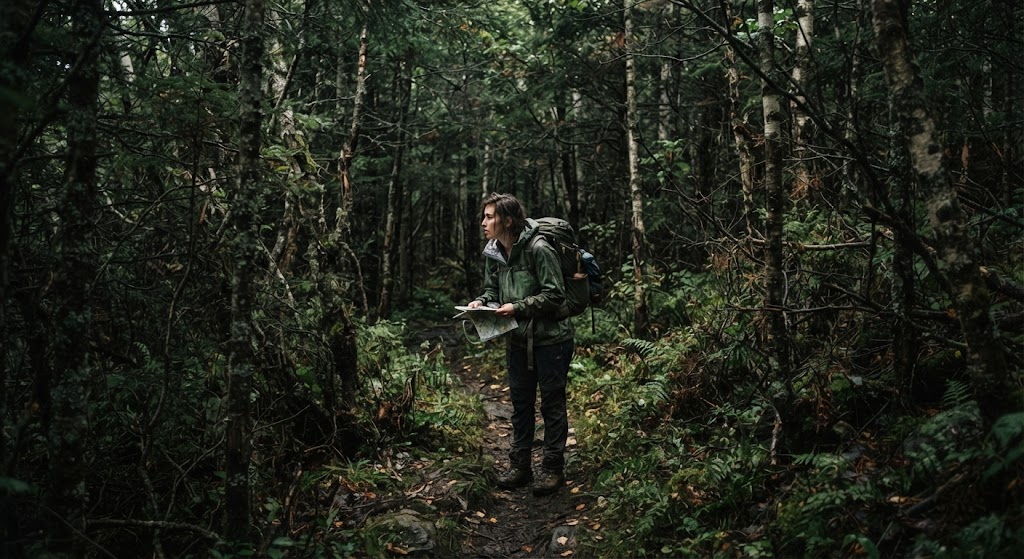
“Your team has become separated from the rest of your group while walking through woodland. You don’t know exactly where you are. You have some equipment with you and need to decide what to do.”
Give teams a few minutes to discuss the situation before revealing any further information.
2. Present the Equipment
Give each team a selection of equipment.
Include useful items alongside less useful ones, such as:
- Compass
- Water bottle
- Whistle
- Rope
- Torch
- First aid kit
- Waterproof jacket
- Food
- Notebook
- Unnecessary heavy item
Ask teams to decide what they would use and why.
3. Make the Plan
Teams must agree on their plan.
They should consider:
- Should they stay where they are?
- How could they attract attention?
- How could they make themselves easier to find?
- Who should take responsibility for different tasks?
- What should they do if the weather changes?
- What should they do if someone becomes injured?
Encourage Scouts to explain the reasons behind their decisions.
4. Add New Problems
Introduce problems one at a time.
For example:
“It is getting dark.”
Then:
“One person has a minor injury.”
Then:
“You hear something in the distance but don’t know whether it is another group.”
Give teams a few minutes to adapt their plan each time.
5. Team Challenge
Give each team five minutes to produce its final survival plan.
They should decide:
- Where they would stay
- How they would attract attention
- How they would keep the group together
- What equipment they would use
- What they would do if their first plan failed
Each team then presents its plan to the rest of the group.
6. Compare the Decisions
Discuss the different approaches.
Ask:
- Which decisions were most important?
- Did anyone choose to move when staying put would be safer?
- Which equipment was genuinely useful?
- How did teams deal with uncertainty?
- Did everyone have a role?
Use the discussion to reinforce that staying calm and making sensible decisions is more important than trying to act quickly.
Final Tip
Don’t tell Scouts the “correct” answer immediately. Let them defend their decisions first, then use the discussion to explore what would make their plan safer and more effective.
🔒Ready to test your survival skills?
Join Survival Guides UK for free, complete challenges, earn badges and increase your Survival Level.
JOIN FREE →
CRAIG BURR
FOUNDER · SURVIVAL GUIDES UK
I'm Craig, the person behind Survival Guides UK. I created SGUK because I wanted somewhere people could learn real outdoor skills in a practical, straightforward way — from lighting a fire and tying knots to navigation, campcraft and everything in between.
You can read more about the story behind SGUK here as well as our approach here.