60-Minute Activity Plan: The Weather Watch Challenge
A practical weather activity for Scouts that turns weather observation into a team investigation. Young people learn how to recognise changing conditions, record observations and make sensible outdoor decisions based on what they can see around them.
Rather than relying entirely on a weather forecast, this activity encourages young people to develop the habit of looking at the sky, ground and surroundings and thinking about what those signs might mean.
Activity Overview
Time: 60 minutes
Group size: 8–24 young people
Suitable for: Beavers, Cubs and Scouts
Location: Mainly outdoors, with an indoor alternative
Main skills: Weather observation, outdoor awareness, recording information, teamwork and decision-making
Teams become weather-watch crews.
They investigate the conditions around them, learn a few simple weather clues and then use their observations to make decisions about a fictional outdoor activity.
The session finishes by comparing the teams’ predictions and discussing why weather can be difficult to predict perfectly.
Before You Start
Check the weather forecast and conditions before the meeting so you know what you’re likely to encounter.
You’ll need paper or weather-recording sheets, pencils and perhaps a simple compass. A thermometer is useful but isn’t essential.
Prepare several weather scenario cards for the final challenge. Examples include a hiking trip, outdoor cooking session, camping night or short activity in an exposed area.
You can also bring photographs of different cloud types if the weather on the day doesn’t provide much to observe.
Avoid turning the activity into a formal meteorology lesson. The focus is on practical observation and sensible decisions.
Safety
Normal outdoor supervision and site boundaries apply throughout the activity.
Don’t encourage young people to approach exposed areas, water, trees or other hazards simply to get a better weather observation.
If there is lightning, severe wind, extreme heat or other dangerous weather, move the activity indoors and use photographs or previously recorded observations instead.
Don’t allow young people to handle unfamiliar weather instruments without appropriate supervision.
Make it clear that observations made during the game aren’t a substitute for checking an appropriate weather forecast before a real outdoor activity.
0–10 Minutes: Look Up
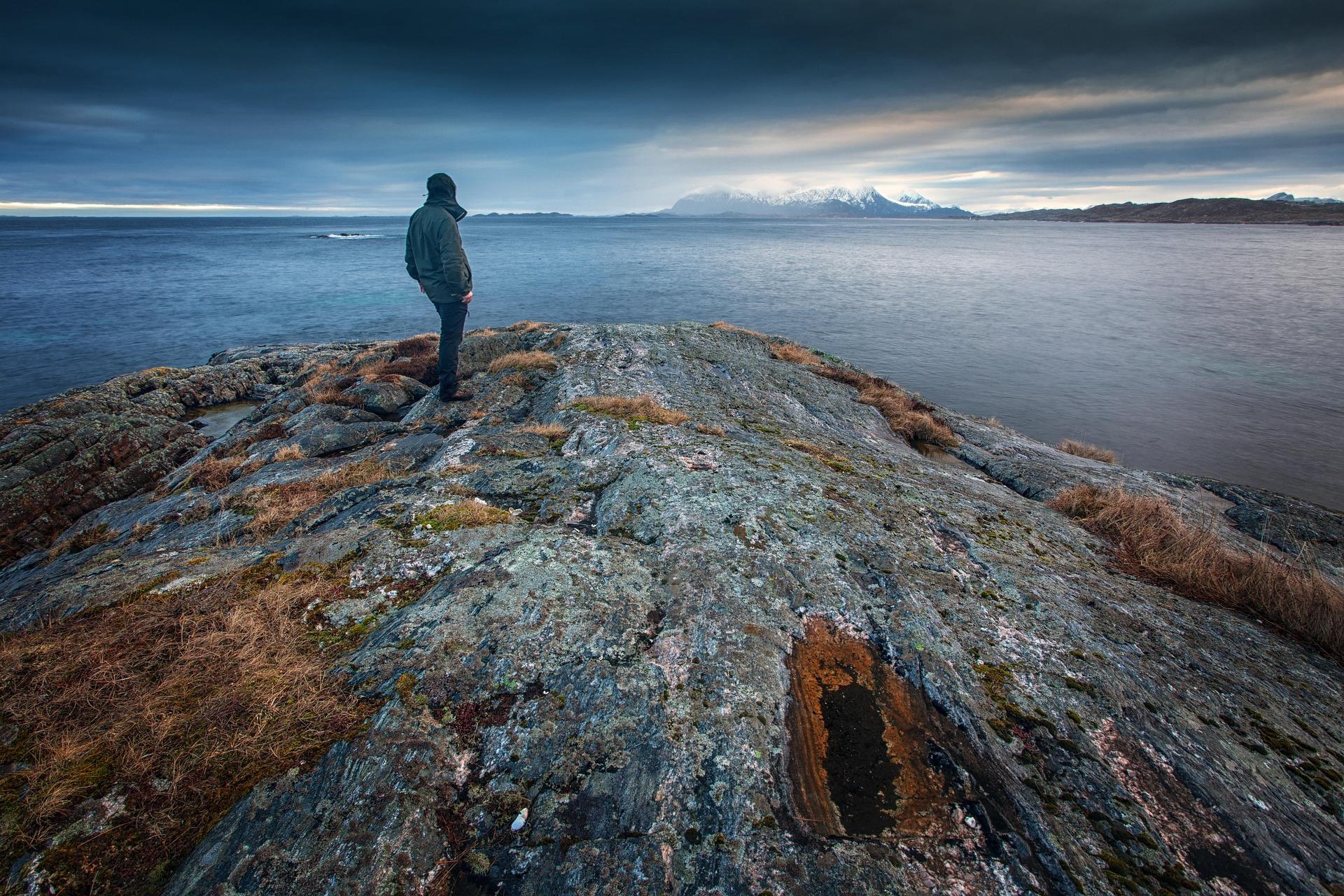
Take the group outside and ask everyone to spend a minute simply looking around.
Don’t explain what they’re supposed to find.
Ask:
“What can you tell about today’s weather without looking at a forecast?”
Encourage observations rather than predictions.
They might notice cloud cover, wind direction, wet ground, temperature, visibility or how trees are moving.
Write some of the answers down.
Then ask:
“Which of those things might give us a clue about what happens next?”
This introduces the difference between observing something and interpreting what it might mean.
10–20 Minutes: Weather Detectives
Split the group into small teams.
Give each team a simple observation sheet.
Ask them to record several things:
Cloud: What does the sky look like?
Wind: Can you feel it? Which direction does it appear to come from?
Ground: Is it dry, damp, muddy or wet?
Visibility: Can you see distant landmarks clearly?
Temperature: Does it feel warm, cool or cold?
For younger children, use tick boxes and pictures.
Older Scouts can make more detailed notes and use a compass to estimate wind direction.
Bring the teams back together and compare their observations.
You’ll probably find that different teams noticed different things.
That’s a useful lesson in itself.
20–30 Minutes: Cloud Clues
Introduce a few basic cloud types using photographs or the sky itself if conditions are suitable.
Don’t worry about requiring everyone to remember complicated names.
Instead, focus on broad observations.
Are the clouds:
Explain that clouds can provide clues about changing weather, but they aren’t a guarantee of what will happen.
For Cubs and Scouts, introduce a few common cloud names if appropriate.
For Beavers, keep it as simple as thin clouds, fluffy clouds and big dark clouds.
30–42 Minutes: Weather Forecast Challenge
Now give each team a fictional outdoor scenario.
For example:
“Your team is planning a two-hour walk this afternoon.”
Give them a selection of observations:
The wind is increasing.
Dark clouds are approaching.
The temperature is falling.
Visibility is becoming poorer.
Ask:
“Would you continue with the plan, change it or postpone it?”
Teams must decide and explain why.
There doesn’t have to be a single correct answer.
What matters is whether they’ve considered the evidence and made a sensible decision.
For older Scouts, introduce a second set of observations halfway through and ask them to reconsider.
This demonstrates that good decisions can change when new information appears.
42–52 Minutes: Make Your Own Forecast
Give each team five minutes to produce a very short weather forecast.
They should describe:
What the weather is doing now.
What they think might happen next.
What this means for an outdoor activity.
Beavers can draw their forecast.
Cubs can give a short spoken forecast.
Scouts can present it as though they’re briefing a group before setting off on a hike.
Encourage them to separate facts from predictions.
For example:
“The wind is currently coming from the west.”
is an observation.
“The wind will become stronger.”
is a prediction.
That distinction is important.
52–57 Minutes: What Would You Change?
Give the group one final scenario:
“You are halfway through an outdoor activity and the weather is changing.”
Ask what signs would make them consider changing their plans.
Encourage answers such as worsening visibility, increasing wind, heavy rain, dropping temperatures or the appearance of lightning.
The important lesson is that outdoor decisions shouldn’t be based on stubbornly sticking to the original plan.
57–60 Minutes: Weather Review
Finish by asking each team to give one observation they found particularly useful.
Then ask:
“Can you ever be completely certain what the weather will do?”
Use the question to reinforce the main message.
Forecasts are useful, but observation remains important once you’re actually outside.
Good outdoor planning means checking the forecast and paying attention to what’s happening around you.
Adapting for Different Ages
Beavers
Keep observations simple and visual.
Use weather picture cards and ask Beavers to match conditions to suitable clothing or activities.
A good final challenge is:
“It’s cold, windy and raining. What would you change before going outside?”
Cubs
Introduce simple weather recording.
Cubs can keep track of cloud, wind and temperature and then make a short forecast.
Give them simple scenarios where they must decide whether an activity should continue.
Scouts
Make the activity more analytical.
Scouts can record observations at the start and end of the session and compare them.
Introduce weather forecasts, wind direction, cloud development and changing conditions.
Ask them to make a practical go/no-go decision for a fictional hike or camp activity and justify it using the evidence.
Leader Notes
Don’t worry if the group’s predictions aren’t accurate.
The aim isn’t to turn young people into professional forecasters.
The valuable skill is learning to notice change.
One useful variation is to repeat the observation exercise near the end of the meeting. Ask what has changed since the beginning.
Has the wind increased?
Has the cloud changed?
Has the temperature felt different?
This makes the activity more concrete because young people are comparing two real sets of observations rather than simply talking about weather.
It’s also worth reinforcing that some weather signs are more useful than others and that a single observation should rarely be treated as proof of what will happen.
Learning Outcomes
By the end of the activity, young people should have had opportunities to:
Final Thought for Leaders
Weather is one of the few things an outdoor leader can’t control.
What we can control is how well we prepare and how willing we are to adapt.
The Weather Watch Challenge gives young people an early introduction to that mindset. They learn that being outdoors isn’t just about looking at a forecast before leaving — it’s also about keeping your eyes open once you’re outside.
That simple habit can become an important part of safe and confident outdoor activity.
🔒Ready to test your survival skills?
Join Survival Guides UK for free, complete challenges, earn badges and increase your Survival Level.
JOIN FREE →
CRAIG BURR
FOUNDER · SURVIVAL GUIDES UK
I'm Craig, the person behind Survival Guides UK. I created SGUK because I wanted somewhere people could learn real outdoor skills in a practical, straightforward way — from lighting a fire and tying knots to navigation, campcraft and everything in between.
You can read more about the story behind SGUK here as well as our approach here.