How to Purify Water Outdoors
Finding water outdoors is only part of the challenge. Water that looks clean can still contain microorganisms that can make you ill, so knowing how to purify it is an essential outdoor skill.
The safest approach is to treat collected water before drinking it. Depending on the situation, this can involve filtering the water, boiling it, using suitable water purification tablets, or combining more than one method.
Different methods deal with different types of contamination, so understanding what each one does is just as important as knowing how to use it.
What You’ll Learn
By the end of this lesson, you will understand:
- Why apparently clean outdoor water may still be unsafe
- How to remove dirt and sediment before treatment
- How boiling can make water safer to drink
- How water purification tablets work
- What outdoor water filters can and cannot remove
- Why combining treatment methods can be useful
- How to store treated water safely
Equipment
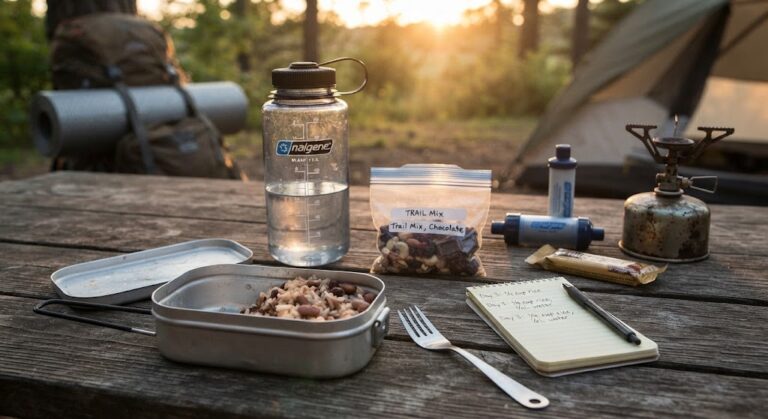
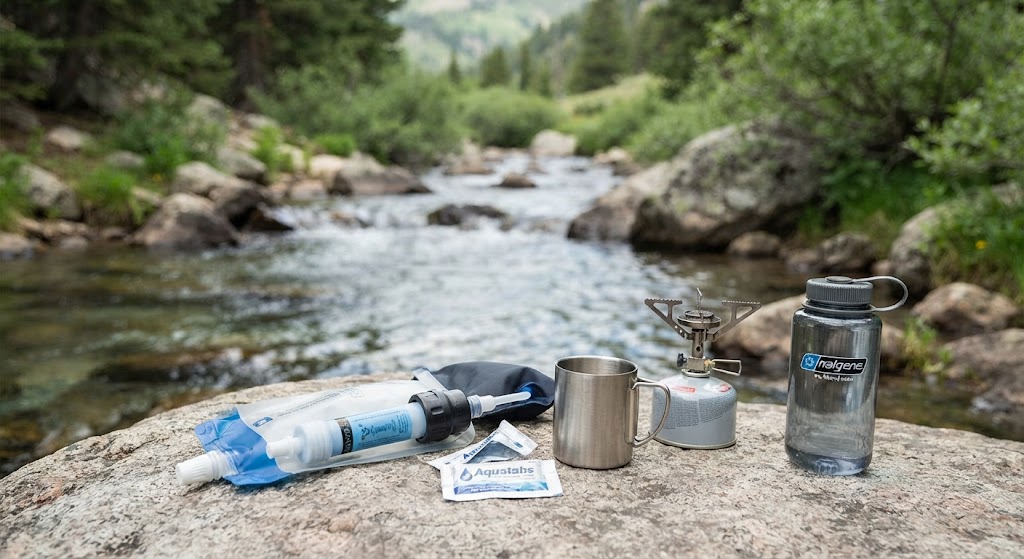
For a practical water purification exercise, you may need:
- A clean water container
- A suitable outdoor water filter
- Water purification tablets designed for drinking water
- A camping stove or suitable means of boiling water
- A heatproof container
- A clean bottle or other container for treated water
Always follow the manufacturer’s instructions for filters, purification tablets and other treatment equipment.
Prerequisites
Before purifying water, you should know how to collect it without unnecessarily contaminating either the water source or your equipment.
It is also useful to understand how to identify potentially safer water sources and recognise signs that a source may be contaminated.
Why Does Outdoor Water Need Purifying?
Streams, rivers, lakes, ponds and other natural water sources can contain harmful microorganisms even when the water appears clear.
Surface water is particularly vulnerable to contamination because material from the surrounding land, animals and human activity can enter it. The Drinking Water Inspectorate identifies surface water sources such as streams as having a higher risk of faecal contamination than groundwater.
This means you should not assume that clear, fast-flowing water is automatically safe to drink.
Purification is about reducing the risk before drinking the water.
Step 1: Choose the Best Water You Can Find
Start with the safest available source rather than relying entirely on treatment to fix a poor source.
Avoid water that:
- Has an unusual smell or colour
- Contains obvious pollution
- Has a visible oily film
- Is close to obvious sources of contamination
- Has dead animals or large amounts of animal waste nearby
- Is downstream from an area where contamination may have entered the water
If you have a choice, cleaner-looking water with less sediment is generally easier to treat.
Remember that treatment does not necessarily remove every possible chemical contaminant. The Drinking Water Inspectorate notes that treatment methods need to be selected according to the contaminants present in the source.
Step 2: Remove Dirt and Sediment
If the water is cloudy or contains visible particles, allow it to settle before treatment where practical.
You can then carefully pour the clearer water into another clean container, leaving sediment behind.
A suitable filter can also remove many particles and improve the clarity of the water. Filtration is a physical treatment method, but filtration and disinfection are different processes. Water treatment systems commonly use several stages, such as settling or pre-filtration followed by filtration and disinfection.
This distinction is important.
A filter that removes particles does not automatically make every source of water safe to drink.
Step 3: Filter the Water
Outdoor water filters are designed to physically remove contaminants from water.
The exact performance depends on the particular filter, so always check what your filter is designed to remove.
Some filters are primarily intended to remove sediment and particles, while others are specifically designed to reduce or remove microorganisms.
Use the filter according to its instructions. Do not assume that because water has passed through a filter it is automatically safe.
If the filter manufacturer specifies that the filtered water still needs disinfecting, carry out the additional treatment.
Step 4: Boil the Water
Boiling is one of the most useful ways to make water safer to drink when you have a reliable way to heat it.
Bring the water to a proper rolling boil and then remove it from the heat and allow it to cool safely.
The Drinking Water Inspectorate states that boiling water is effective against bacteria, viruses and parasites, including Cryptosporidium.
Boiling does not, however, remove every possible chemical contaminant. This is why choosing the best available water source remains important.
Take care when handling boiling water because it can cause serious burns.
Step 5: Use Water Purification Tablets
Water purification tablets are another option when boiling is impractical.
Use tablets specifically intended for treating drinking water and follow the instructions supplied with the product.
Pay particular attention to:
- The amount of water being treated
- The number of tablets required
- The required contact time
- Any instructions about cloudy water
- The product’s expiry date
Chemical disinfection works by killing or inactivating harmful microorganisms. Its effectiveness depends on factors including the disinfectant, the microorganisms present, water quality, dosage and contact time.
Do not guess the dosage or shorten the required treatment time.
Step 6: Consider Using More Than One Method
In some situations, using more than one treatment method can provide an additional barrier.
For example, you might:
- Collect the cleanest water available.
- Allow sediment to settle.
- Filter the water.
- Disinfect it by boiling or using a suitable purification product.
- Store the treated water in a clean container.
This is an example of the multiple-barrier approach used in water treatment, where different stages deal with different risks.
For normal outdoor use, you do not necessarily need every possible treatment method. Choose the approach that is appropriate for the water source, your equipment and the circumstances.
Step 7: Store Treated Water Safely
Purifying water is pointless if you immediately contaminate it again.
Use a clean container and avoid touching the inside of the bottle, lid or container with dirty hands.
Keep treated water separate from untreated water and clearly distinguish the two if you are carrying both.
When transferring water through a filter or into another container, take care not to allow untreated water to contact the clean equipment or treated water.
What Purification Cannot Fix
One of the most important lessons is that no single treatment method should be treated as a magic solution.
For example, a filter may remove particles but not necessarily deal with every microorganism or dissolved contaminant. Chemical disinfection may be affected by cloudy water and other characteristics of the source. Boiling can deal with microorganisms but does not remove all chemical contamination.
The Drinking Water Inspectorate describes water treatment as a process that may require several stages depending on the contaminants involved.
The best strategy is therefore:
Choose the best source → reduce contamination → treat the water → protect the treated water.
Practical Exercise
The best way to learn water purification is to practise the process before you actually need it.
Using clean water, practise setting up your outdoor filter and transferring water between containers without contaminating the clean container.
If you have purification tablets, practise calculating the correct amount of water and reading the manufacturer’s instructions.
You can also practise boiling water safely using your normal camping equipment.
The aim is not simply to know that water can be purified. You should be able to carry out the process calmly and correctly when you are outdoors.
Final Tip
Never judge drinking water by appearance alone.
Clear water can still contain harmful microorganisms. Treat water using a method appropriate to the source and your equipment, and always follow the instructions for the treatment system you are using.
Good water skills are not about finding the perfect-looking stream. They are about knowing how to make a sensible decision and reduce the risks before you drink.
🔒Ready to test your survival skills?
Join Survival Guides UK for free, complete challenges, earn badges and increase your Survival Level.
JOIN FREE →
CRAIG BURR
FOUNDER · SURVIVAL GUIDES UK
I'm Craig, the person behind Survival Guides UK. I created SGUK because I wanted somewhere people could learn real outdoor skills in a practical, straightforward way — from lighting a fire and tying knots to navigation, campcraft and everything in between.
You can read more about the story behind SGUK here as well as our approach here.