How to Tie a Prusik Knot | Step-by-Step Guide
The Prusik knot is a friction hitch that allows a loop of cord to grip a larger rope when loaded and slide along it when the load is released.
It is an important ropework knot because it demonstrates how friction can be used to create a movable attachment point.
The knot is made using a loop of cord wrapped around a rope several times, with the loop then passed through itself.
What You’ll Learn
By the end of this guide, you should be able to:
- Tie a Prusik knot around a rope.
- Understand how the friction hitch grips.
- Recognise a correctly tied Prusik knot.
- Check that the knot is properly dressed before use.
Equipment
- A length of suitable cord tied into a loop.
- A larger rope around which the cord can be wrapped.
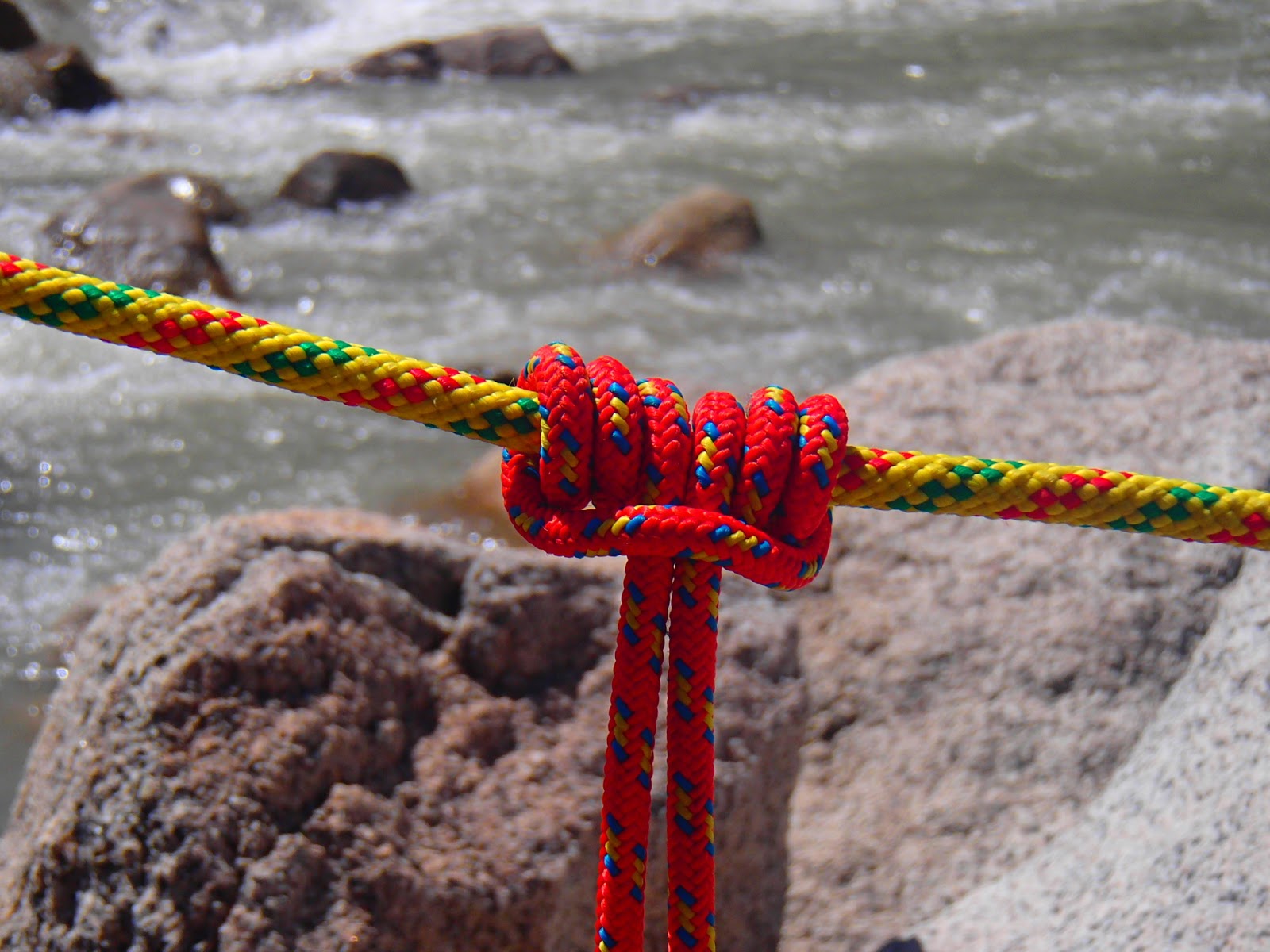
Using contrasting colours makes the knot easier to see while learning.
Understanding the Knot
A friction hitch grips a rope through friction rather than relying on a fixed stopper knot.
The Prusik knot is normally tied using a loop of cord that is smaller in diameter than the rope it is attached to.
The number of wraps affects how strongly the hitch grips. More wraps generally provide more friction, although the exact performance depends on the ropes and cord being used.
How to Tie a Prusik Knot
1. Place the cord behind the rope
Take the loop of cord and place it behind the main rope.
Bring both sides of the cord forward so that the loop hangs below the rope.
2. Pass the loop through itself
Take the lower part of the cord loop and pass it around the main rope and through the inside of the loop.
Pull it through so that the cord wraps around the main rope.
3. Make another wrap
Repeat the process.
Pass the loop around the main rope and back through itself again.
4. Add another wrap
Repeat once more to create a third wrap around the main rope.
The wraps should sit neatly alongside each other rather than crossing over one another.
5. Dress the knot
Pull the cord to bring the wraps together.
Arrange the wraps so they sit neatly and evenly around the main rope.
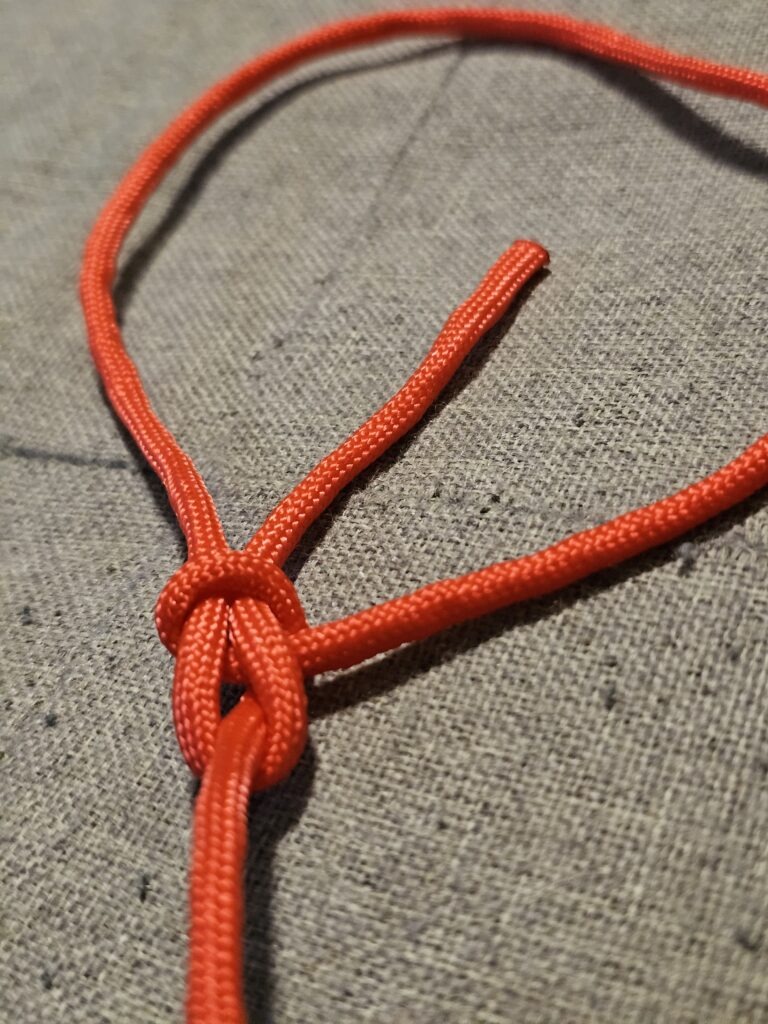
The finished hitch should look like several parallel wraps around the rope with the two sides of the cord forming the loop below.
6. Test the grip
Apply gentle tension to the loop.
The Prusik should grip the main rope rather than sliding freely.
Release the tension and check that you can deliberately move the hitch along the rope.
How to Check Your Prusik Knot
Before using the hitch, check that:
- The cord is wrapped around the main rope several times.
- The wraps sit neatly alongside each other.
- The cord has passed through itself correctly.
- There are no crossed or twisted wraps.
- The loop is properly dressed.
- The hitch grips when loaded.
- The hitch can be moved when the load is released.
If the hitch slips when it should be gripping, stop and investigate rather than relying on it.
Common Uses
Prusik knots can be useful for:
- General ropework.
- Creating adjustable attachment points.
- Learning friction-hitch techniques.
- Certain tensioning and hauling systems.
- Certain climbing and rescue systems when used by trained people with appropriate equipment and procedures.
The Prusik is also a useful foundation for learning other friction hitches.
Important Safety Information
The performance of a Prusik knot depends on the rope and cord being used, their diameters, construction, condition and the way the hitch is tied.
A Prusik that works correctly with one combination of rope and cord may not perform in the same way with another.
Do not use a Prusik knot for climbing, rescue, abseiling or other life-safety applications based solely on this guide. Those applications require appropriate equipment, training and tested rope systems.
Always test the hitch before relying on it and inspect the rope and cord for damage or excessive wear.
Final Tip
The key to learning a Prusik is neat, parallel wraps.
Start with three wraps and practise making each one sit neatly beside the previous wrap. Once you understand how the wraps create friction, it becomes much easier to understand why the hitch grips under load and slides when released.
🔒Ready to test your survival skills?
Join Survival Guides UK for free, complete challenges, earn badges and increase your Survival Level.
JOIN FREE →
CRAIG BURR
FOUNDER · SURVIVAL GUIDES UK
I'm Craig, the person behind Survival Guides UK. I created SGUK because I wanted somewhere people could learn real outdoor skills in a practical, straightforward way — from lighting a fire and tying knots to navigation, campcraft and everything in between.
You can read more about the story behind SGUK here as well as our approach here.