How to Choose a Safe Walking Route
⚠️ SAFETY FIRST
A route that looks easy on a map may be much more difficult on the ground.
Before setting out, consider the weather, terrain, distance, daylight, your group’s ability and any specific hazards along the route.
If conditions change or the route becomes unsafe, turn back or change your plans. Reaching the end of a walk is never more important than getting everyone home safely.
Choosing a walking route is one of the most important parts of planning an outdoor adventure.
It’s tempting to start with the question:
“Where do we want to go?”
A better question is:
“What route can we safely complete in the conditions we expect?”
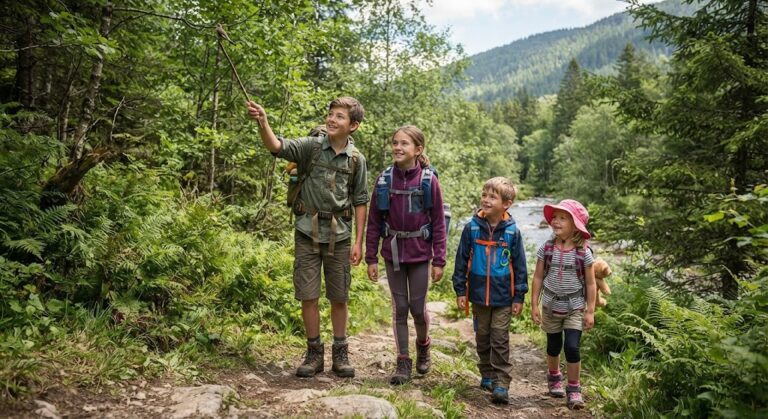
A route that is perfect for an experienced hillwalker may be completely unsuitable for a group of younger Scouts.
Likewise, a route that is easy on a dry summer afternoon can become difficult after heavy rain, snow or strong winds.
Choosing a safe route is about understanding the people, the terrain and the conditions before you set off.
Start With a Map
A good walking route begins with a good map.
A detailed paper map can show much more than roads and paths.
You can identify:
Learning to read these features allows you to understand what the walk might actually be like.
For longer or more remote walks, a proper map and compass should remain part of your navigation equipment even if you’re also carrying a phone.
🗺️ MAP TIP
Don’t just look at where the route starts and finishes.
Look carefully at everything in between.
A line between two points can hide a lot of information.
Think About the Distance
Distance is one of the easiest things to underestimate.
A route might only be a few miles long, but hills, muddy ground, difficult navigation and stops can make it take much longer than expected.
A useful starting point is to consider the experience and fitness of everyone taking part.
A route suitable for an adult who regularly hikes may be too demanding for a younger group.
Remember that the slowest member of the group often determines the pace.
That’s not a problem.
It’s simply something to plan for.
Look at the Contours
If you’re using a map with contour lines, don’t ignore them.
Contours show changes in elevation and can tell you whether a route is relatively flat or involves significant climbs and descents.
Two walks might both be five miles long.
One could be a gentle woodland walk.
The other could involve several steep climbs.
The distance is the same.
The difficulty isn’t.
🏔️ NAVIGATION TIP
Distance tells you how far. Contours help tell you how hard.
For Scout activities, this is an excellent opportunity to teach young people that maps contain information that isn’t immediately obvious.
Consider the Terrain
Think about what the ground will actually be like.
Will you be walking on:
Terrain affects both speed and safety.
A muddy path can become exhausting.
Wet rocks can become slippery.
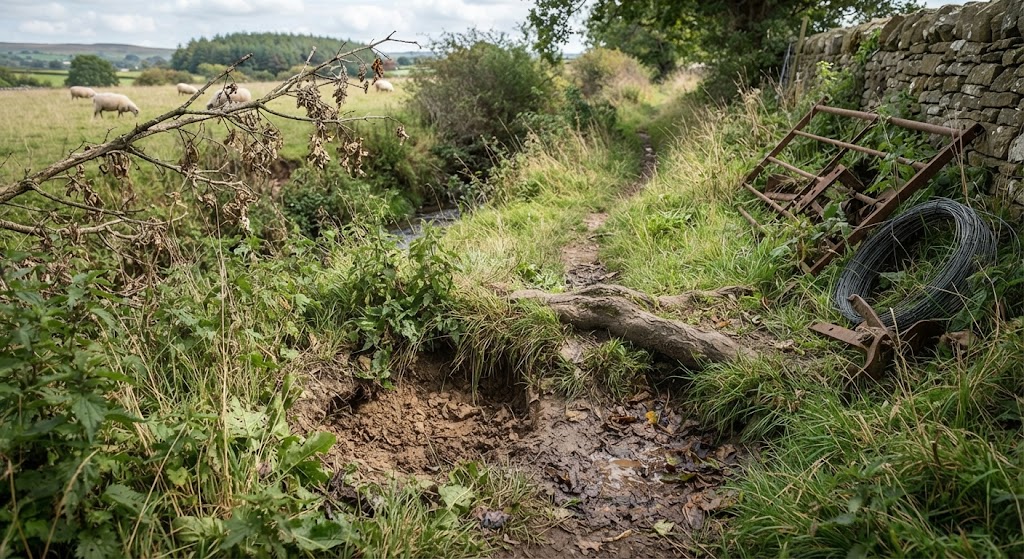
Long grass can hide holes.
A steep descent can be much harder than it appears from a photograph.
Choose a route that matches the ability and footwear of the people taking part.
Check the Weather
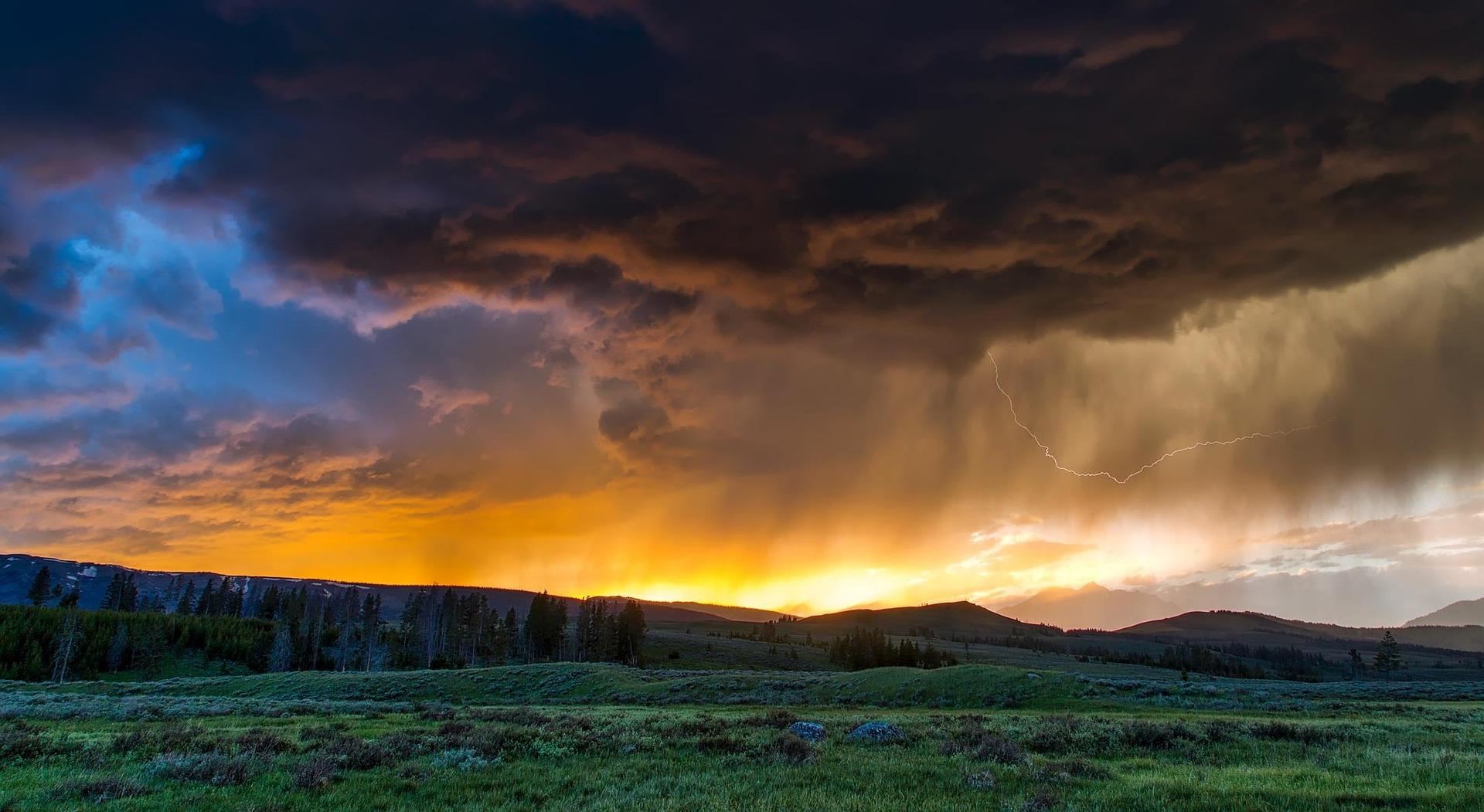
The same route can be completely different in different weather.
Heavy rain can turn a stream crossing into a serious hazard.
Strong winds can make exposed paths dangerous.
Fog can make navigation difficult.
Snow can hide paths, rocks and other hazards.
Hot weather can increase the risk of dehydration and heat illness.
Before setting off, check the forecast and think about what it means for your route.
🌦️ WEATHER TIP
Don’t choose a route based on today’s weather if you’re walking tomorrow.
Plan for the conditions you are actually likely to encounter.
Think About the Time of Year
Season matters too.
A path that is straightforward in summer may be muddy in winter.
Daylight hours are much shorter in winter.
Snow and ice can change routes significantly.
Spring and summer can bring long vegetation and muddy ground, while autumn can produce slippery leaves and reduced daylight.
Ask yourself:
“What will this route be like at this time of year?”
Check for Water
Rivers, streams and other water features deserve particular attention.
Look at your map before setting off.
Identify any rivers or streams the route crosses and find out whether there are bridges.
Don’t assume that because a route crosses a stream on a map, the crossing will always be safe.
Heavy rainfall can change water levels quickly.
If the route depends on crossing moving water without a proper bridge, consider whether there is a safer alternative.
Avoid Unnecessary Hazards
A good route doesn’t have to be the most adventurous route.
If two routes reach the same destination and one involves an exposed cliff edge while the other follows a safer path inland, ask why you would choose the more hazardous option.
Adventure is great.
Unnecessary risk isn’t.
For Scout groups in particular, the best route is usually one that provides an enjoyable challenge without exposing the group to hazards they don’t need to encounter.
Think About Roads
Road crossings are easy to overlook when planning a countryside walk.
A route might be mostly off-road but still require you to cross busy roads.
Look carefully at the map.
Identify where roads are crossed and consider:
Don’t assume that a quiet-looking country road is automatically safe.
Think About Access
Not every line shown on a map means you can simply walk wherever you want.
In the UK, different types of paths and access land have different rules.
Footpaths, bridleways, restricted byways and roads are not interchangeable.
Check current access information where necessary and follow signs on the ground.
If a route is temporarily closed, don’t ignore the closure simply because your map says the path exists.
Check for Temporary Closures
Outdoor routes can change.
Forestry work, flooding, landslides, maintenance, events and other activities can result in temporary closures or diversions.
Before setting out on an unfamiliar route, check for current information from the relevant landowner, park authority or local access organisation where appropriate.
A map isn’t necessarily a live picture of what’s happening on the ground today.
Plan an Escape Route
One of the best route-planning habits is to think about what happens if things don’t go according to plan.
What if someone becomes injured?
What if the weather gets worse?
What if someone becomes exhausted?
What if you’re running out of daylight?
Look for places where you could shorten the walk or leave the route safely.
Roads, settlements and accessible tracks can provide useful alternatives.
🧭 ROUTE-PLANNING TIP
Don’t just plan the route in. Plan the way out.
A good walking route has options if something goes wrong.
Know Where You Can Get Help
For longer walks, know roughly where you are and where help could reach you.
Take note of useful landmarks and access points.
If you’re using a map, knowing grid references is particularly useful.
This can make communicating your location much easier if you need assistance.
For Scout leaders, this should form part of the wider activity planning and emergency arrangements.
Consider Mobile Phone Signal
It’s useful to know whether your phone is likely to work, but don’t make your route dependent on having signal.
Rural areas and valleys can have poor coverage.
Forests can also reduce signal.
A phone is a useful backup.
It shouldn’t be your only navigation method.
📱 REMEMBER
No signal doesn’t mean no navigation.
A map and compass don’t need a network connection.
Think About Your Group
A safe route is not just about the landscape.
It’s about who is walking it.
Consider:
A route that is suitable for ten experienced adults may not be suitable for ten young Scouts.
Good route planning starts with the people, not the destination.
Don’t Make the Route Too Long
It’s easy to get carried away when planning.
You find an interesting landmark, add another hill and decide to finish somewhere slightly further away.
Suddenly a short walk has become an exhausting expedition.
Build in time for:
And leave yourself some margin.
⏱️ WALKING TIP
A route that finishes comfortably within your available daylight is much better than one that only works if everything goes perfectly.
Plan for Getting Lost
Even experienced walkers can make navigation mistakes.
Your route should be understandable enough that you can recognise when you’ve gone wrong.
Look for obvious checkpoints such as:
A bridge.
A road junction.
A distinctive building.
A stream.
A path intersection.
A change in direction.
These give you opportunities to confirm your position.
Don’t wait until you’ve been walking for an hour to discover that you took the wrong path.
Use the Route as a Learning Tool
For Scouts, route planning can be part of the activity.
Rather than giving young people a completed route, give them a map and a destination.
Ask them to choose between several possible routes.
Then introduce different conditions.
It’s raining heavily.
One person has a minor injury.
You have one hour less daylight than expected.
A bridge is closed.
Ask them how they would change the route.
This teaches them that navigation isn’t simply about following a line on a map.
It’s about making decisions.
Don’t Be Afraid to Turn Around
Perhaps the most important route-planning skill is knowing when to abandon the plan.
You might discover:
The weather is much worse than forecast.
The path is flooded.
Someone is becoming exhausted.
A route is unexpectedly dangerous.
You have less daylight than expected.
Turning around isn’t failing.
It’s good judgement.
🥾 GOOD WALKING RULE
The destination is optional. Getting home safely isn’t.
A Simple Route-Planning Method
Before setting off, work through the route from beginning to end.
Ask:
Where are we starting?
Where are we finishing?
How far is it?
How much climbing is involved?
What terrain will we encounter?
Where are the water crossings?
Where are the roads?
What happens if the weather changes?
Where could we shorten the route?
What happens if someone gets injured?
Will we finish before dark?
If you can answer those questions, you’re already much better prepared.
What to Carry
The equipment you need depends on the walk.
For a short, easy walk near civilisation, you may need relatively little.
For a longer or more remote route, your equipment should reflect the greater consequences of something going wrong.
Appropriate clothing, water, navigation equipment, a phone and basic first aid are sensible starting points.
As the route becomes more remote or demanding, you may also need emergency shelter, additional food, a torch and other equipment.
The key is:
Carry what you need for the route you’re actually walking.
Tell Someone Your Plans
If you’re heading out independently, tell someone where you’re going and when you expect to return.
For organised Scout activities, appropriate plans should already be in place.
If the route changes significantly during the walk, make sure the relevant people know where you are going when practical.
A simple route plan can make a huge difference if someone needs to find you.
A Good Route Is a Flexible Route
It can be tempting to become attached to the route you’ve planned.
You’ve spent time researching it.
You’ve marked it on the map.
Everyone is looking forward to reaching the destination.
But conditions matter more than plans.
If the weather changes, adapt.
If the ground becomes unsafe, change route.
If someone becomes unwell, stop.
If you’re running out of daylight, shorten the walk.
Good outdoor leaders and experienced walkers aren’t the people who always complete the original plan.
They’re the people who make sensible decisions when the plan stops working.
Final Thoughts
Choosing a safe walking route isn’t simply about finding an interesting destination.
It’s about matching the route to the people, the weather, the terrain and the equipment available.
Use your map.
Look at the contours.
Check the weather.
Think about water and roads.
Consider daylight.
Plan alternatives.
And always leave yourself some margin for the unexpected.
The best walking route isn’t necessarily the longest, highest or most adventurous.
It’s the one that gives you a good day outdoors without taking unnecessary risks.
🥾 THE BIG IDEA
Plan the walk you can safely complete, not the walk you wish you could complete.
Know your route.
Know your group.
Know the conditions.
Have a backup plan.
And if things change, be prepared to turn around.
🔒Ready to test your survival skills?
Join Survival Guides UK for free, complete challenges, earn badges and increase your Survival Level.
JOIN FREE →
CRAIG BURR
FOUNDER · SURVIVAL GUIDES UK
I'm Craig, the person behind Survival Guides UK. I created SGUK because I wanted somewhere people could learn real outdoor skills in a practical, straightforward way — from lighting a fire and tying knots to navigation, campcraft and everything in between.
You can read more about the story behind SGUK here as well as our approach here.